A trek to Mount Kailash and Lake Manasarovar. June-July 1985
It came like a dream come true, the call letter from the Ministry of External Affairs for briefing and medical check up. The revelation that I was indeed one of the lucky persons selected out of hundreds of seekers for a visit to the far and remote land that had glowed through the ages in literature and folklore as the pilgrims’paradise,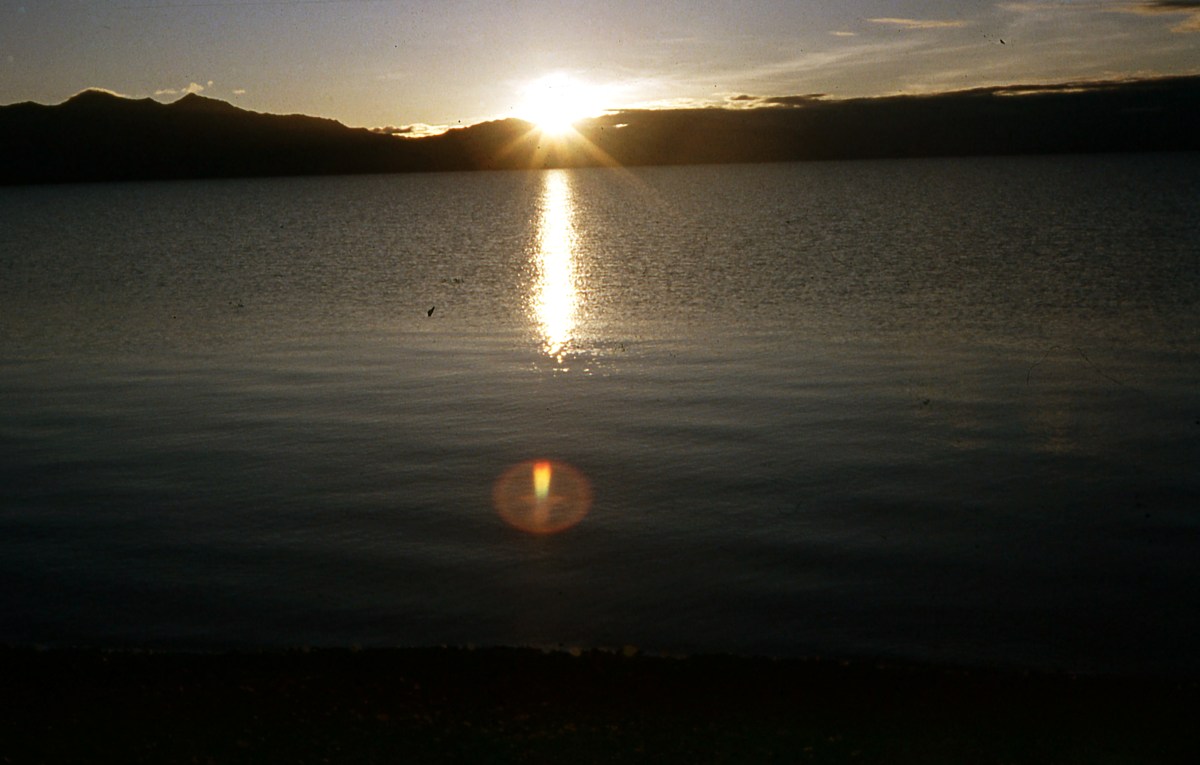 brought joy and excitement; and the fact that only five days remained to begin the journey, made excitement electric.
On the morning of June 15, by 6 am sixteen of us gathered at the office of the Kumaon Mandal Vikas Nigam in Delhi. Being the last one to be inducted in the group I had no introduction with anyone. The group was a strange socio-cultural mix of people from all over the country. The Liasion Officer was an IAS from Mahrashtra; a hydel expert and a merchant from Hyderabad; a lady social scientist from Karnataka; a lawyer and a spice cultivator from Tamil Nadu; a Gujarati couple; a jeweller and a theatre owner from Lucknow; a mechanical engineer from Bhopal; a sufi master of mathematics from Jalandhar; an architect, a chartered accountant (who quit his job for this trek), an ex-service man and an advertising professional from Delhi. The age group too varied from the youngest being 24 to the oldest 54.
Boarding the bus I found only one seat available next to this young man wearing khakhi shorts, dark glasses and almost lost in the music blaring out of his headphones. He didn’t even give me a glance. After about two hours drive the bus halted for a short break that’s when we formally introduced each other. Shankar Lahiri was a first-timer for a trek and had no religious qualms. Munching his bite of purri he casually mentioned that for next morning he was carrying a brick of butter in his ruck-sack. I almost fell of the floor thinking about the sack left on top of the bus on this hot June day and about the mess he will have to clear with everything soaked in butter for the rest of the next four weeks. Shankar became my walking partner.
Our journey to the holy land started with the bus taking us to Champawat. Next day’s run took us through the forest-filled hills of Pithoragarh district of Kumaon to Dharchula, the village on the India-Nepal border – two shores of the Kali river joining or separating the two countries. Another 19 kms on the third day and the bus dropped us at the last roadhead – Tawaghat. This place, a peculiar valley corner, with two ferociously flowing rivers – Kali Ganga and Dhauli Ganga; their confluence from hereon is simply called Kali.
At Tawaghat the baggage was distributed to the porters and the mules hired by a few members. Sixteen was not a large number but it did make a crowd. Our relationship; to each other seemed to have stabilized; after the early awkward stage of sizing one another. Now, as the trek was to begin, our common objective strung us together like a bunch of flowers in a vase. And the emotion-charged ‘Jai Shiv Shankar’ that we all sang together reverberated through the valley like one voice, and created a merry momentum.
The caravan moved on and the strain of the steep climb began to trace its lines on the trekkers’ faces in the very first hour. It turned out to be a puffing pilgrimage as almost the entire group began gasping and panting after covering the first two thousand feet in two hours. Fortunately, it was a neatly laid-out pathway that rendered the climb and intermediate rests rather easy. For Shankar and myself, it gave a good start. The 9 km walk from Tawaghat to Pangu led us into a green charming valley — scattered all around were terraced fields of maize and paddy.
The trek from Pangu to Gunji, the last habitation on this side of the Kumaon hills, varied in grade from moderate to very hard and the distance of approximately 69 kms mounted from 3000 ft to 13,000 ft. The places in-between that offered campsites were Sirkha, Malpa, Jibtti, Garbayang, Budhi and Gunji. Valleys of Chiya Lake and Garbayang made a study in contrast well worth mentioning. Chiya Lake Pass bloomed with millions of flowers and was animated by birds and insects making their presence felt by their twitter and ceaseless chorus. Garbayang, on the other hand, was a desolate, sinking village. It made a pathetic sight with crumbling cracking endlessly disappearing mud houses. The whole area, in fact the entire hillock on which the village nestles is sinking, occasional catastrophic land divides hastening the ruin.
From Gunji the effect of altitude slowly started building. The trek to Kalapani, the snout of river Kali, had steep ascents and dangerous slopes leading to the vast, open and rather barren valleys; the desert-like look of neighbouring Tibet was quite evident here itself. The role and assistance of ITBP personnel deserved praise.
The 9 km trek from Kalapani to Navidang was a climb with slow gradient which brought us near the snowline. On a clear day one could see peak Appi in close proximity. At 14,500ft we were 7km short of Indo-Tibetan border (McMohan Line). The trek got harder as glacial moraines spilled down across the route. The last day’s trek took us to Lipu La (pass), 16,700ft, where Tibetan porters waited across the Line to pick our baggage. On both sides of the Pass the surroundings were vast snow desert with moss and snow lichen decorating the mosaic in patches. Because of strong winds and fear of avalanches, we crossed the Pass before 6 am. The chill together with the hard climb took its toll on the inexperienced trekkers (read pilgrims) who showed signs of fatigue but were motivated enough to egg on.
After a steep descent on the glacial mass, skidding down the fresh soft snow on the Tibetan side, we surrendered ourselves in the hands of Tibetan porters who took our loads. The prospect of an early bright sun held a warning finger, urging us to be quick. The first probing rays of the sun began to sponge darkness off the ranges to our left, revealing peak after peak, creating a soft beauty that touched tenderly like butterfly wings. Then, as if by a sleight of invisible hands, a blast of sunlight revealed the entire range artistically chiseled by wind, rain and sun. Miniatured by the scale of mountains we stood spellbound in the narrow and windy valley. But such dreamy visions are evanescent and were soon rubbed out by realities we were about to experience.
A few Chinese Patrol riders, mounted on mules, zoomed into us from nowhere. We had not bargained for such a swashbuckling scenario replacing the morning magnificence we had just witnessed. The change was dramatic. Obviously, the Chinese riders intended to have a closer look at all of us. They shouted some instructions to the porters meant for us not to photograph the area as we were barely 4 kms down the border. Then, as dramatically as they had come, they galloped away, the shoed hoofs of the mules drummed a dusty dance raising spiraling columns of clouds behind which the riders soon disappeared.
We descended slowly to flatter ground with rocky surroundings. The 19km stretch between Lipu La and Taklakot underwent a metamorphosis in terrain as we went along. Very soon we discerned traces of a village far off which filled out as we approached nearer, the greyish brown habitats with hills for a backdrop. In such vastness one looses the sense of direction and orientation. At village Bala dogs’ barking rang out our arrival and the childrens’ voices filled the air. Rest of the inhabitants kept their distance as if bound by some secret pledge, an oath of compulsive silence. Singularly unresponsive they shunned every possible communication channel we offered.
Taklakot was still a few kilometres across the Map Chu (Karnali River). The ancient rope bridge announced beginning of the village. On its opposite bank, a congregation, a market of sort that reminded me of the old writings that talked of the famous Silk Route and Taklakot Mandi, a major post on the Silk Route connecting China with India, Russia and the Middle East. It’s from here that the famous Chinese silk used to go to Arab kingdoms and sheikhdoms in exchange for salt and other necessities of life.
Immediately after crossing Karnali we could see signs of development – slow-moving beetle-like army trucks ferrying loads across the passes facing us, the electrical wires overhead hanging like webs vomited by giant spiders and the blare of public address systems in the midst of the otherwise still, barren and desolate valley – all juxtaposed incongruously, almost shocking. Something more unexpected was in store for us. We were unceremoniously stopped and asked to board an army truck. Docilely we followed — we had to. Little did we realize then that the sixteen of us were littered like cattle with our baggage stuffed in the same truck. Dismayed and somewhat annoyed at this unwholesome treatment — we started questioning each other of our probable destination.
The truck moved and before we could find an answer or settle down we were jerked up in another surprise – for the truck halted in a matter of three minutes by the side of a building which looked like a government office – a big hall with barracks around it. The porters motioned us to get down as they opened the back hold. Then, as if surprises lay at every step for us, we found six or seven beautiful Tibetan girls, neatly dressed in white and blue, materializing from nowhere. Their eyes and faces flashed with innocent smiles of welcome. We stood dazed for seconds unable to reconcile dream with reality.
The formality of checking our passports and baggage done, we were formally introduced to our interpreter and guide Mr. Dorjee and the Chinese officials managing the Rest House. Finally, we were guided to our rooms. Disbelief danced in each glance we cast from thing to thing that was inside. A spring bed with thick soft mattress which sank to the pressure of a finger, fancily-printed warm quilts and exquisitely silk-embroidered pillow covers completed the bed. A lamp, fine example of Chinese handicraft, stood by the side of the bed. A wooden table with a bone-China tea-mug, a glass, a thermos full of hot water and a jar of Chinese green tea leaves, also lay by the bedside. A hand-towel with dragon painted on it hung on a wodden peg. A pair of fine foam slippers and a washing bucket under the bed with a sandal soap cake inside it were so thoughtfully provided.
Our hosts were all smiles. Curiosity and keenness to communicate glanced from their eyes as much as from ours but language had its barrier. So we made a virtue of mutual muteness and did the next best thing – exchanged speaking glances, shedding an aroma of culture.Later we came to know that only two Chinese officials could understand English while none of us knew Tibetan or Chinese. Our interpreter, Mr. Dorjee, had graduated in Sanskrit literature from Benaras Hindu University.
After eight days of nonstop trek we finally had a day for rest and acclimatization at Taklakot (14,800 ft). Moving around the village mixing with people and having mock conversation was great fun. The only thing known to the locals about us was that we were from Hindusthan, the land where Dalai Lama lived. Although the very name of their spiritual head was uttered in hush-hush tones. The simplicity of the people was akin to the soil in which they worked and lived. The pattern of their lives had fitted them to a mould.
After visiting a family camping by the roadside we made friends with four Chinese doctors posted at the local dispensary. A volleyball in their possession was willingly spared at our request. What followed next was some sort of unumpired game of volleyball, free for all, played at an altitude of 15,000 ft where little effort drains out energy ten times faster than in the plains.
Next morning, once again, sixteen of us were bundled into an army truck with our baggage to boot and the onward journey resumed. By 3 pm we reached Hor, the starting point for the parikrama (circumambulation) of the Holy Manasarovar driving along the shores of Rakshas Tal without getting a glimpse of the Manas enroute. The campsites here were small and in the absence of basic facilities for a large group we were divided into two batches, while one batch proceeded for Manasarovar parikrama; the other left for Mount Kailash. I opted for the second batch to visit Kailash first. After about an hour’s drive north, we were blessed with a view of the mountain of our dreams, Mount Kailash. The view was simply stunning.
Involuntarily, a succession of prayers and homage to Lord Shiva, the principal deity of the Himalaya, who is believed to reside on the top of Mount Kailash, filled the air. For one hour we were driven straight ahead on flat, parched ground at times virtually over running the herds of wild asses and thousands of pure white rabbits which appeared from nowhere. It seemed interminable, without an end in sight. Nearing the foot of Mount Kailash we saw a thatched mud-house which looked a total contrast to the Rest House at Taklakot. We had reached Tarchen. An old Tibetan attendant lodged there helped us in lighting fire and, at times, in fetching water from a nearby stream.
Evening was spent discussing plans for the next morning’s trek to Dira-Phuk, our next point of halt. The yaks/jhabus supposed to carry our luggage had not arrived and our guide expressed his doubts about their arrival. Hurried arrangements were made for porters to lift the loads.
The night temperature dropped below freezing point and the morning chores involving water were painful, the stream outside the hut had frozen. Our trek from Tarchen began at about 8 am. The climb started almost abruptly. The barrenness of the Tibetan plateau filled our minds with emptiness and the harshness of the surroundings gripped our senses. The eye preferred to shy away from the glaring snow-peaks looking for softer objects like a bush, a small flower, or even perhaps a bird, for relief and reassurance. But nothing save the massive mountains which dominated and angled upwards, maintained the much-needed motivation.
Mighty and challenging Mount Kailash sat in it’s solitary splendour, its gorgeous silvery summit piercing the heavenly blue, 22,038 ft high. ‘It seems to stand as an immediate revelation of Almighty in concrete form.’ The peak is tetrahedral in shape and cannot be isolated during circumambulation around its base. The total distance of the parikrama is about 52 kms. Clouds played hide and seek with the perpetually snow-clad peak. It made one of the grandest beauty spots in the Himalaya.
For once, Mt. Kailash was hidden from view. That broke the magnetic spell, for our eyes had remained glued to it and we got an opportunity to stand and stare around for other views. I recalled mention of various monasteries in the area and looked around but no trace of them appeared anywhere in sight. These apparently had been destroyed in the sixties during the Chinese cultural revolution. In their places what was left were some giant ‘Mani Walls’, mounds of stones piled on top of one another. A few Laptche (heaps of stones generally raised on top of a ridge or pass or end of an ascents), with colourful streamers fluttered over them, were there. Most of the stones were inscribed with the holy mantra Om Mani Padme Hum. These telltale signs of once flourishing cultural and religious houses now destroyed made one sad.
Unable to identify the landmarks ourselves or get any information from the porters, we missed geographical details of the area to our considerable regret. The porters even refused to stop for rest and showed no interest whatsoever in giving any information. Perhaps it was too painful a story for them to tell. The trek was a mere formality of completing the religious ritual. With the help of a powerful tele-lense I located a dilapidated and possibly uninhabited monastery far-off on a ridge across the glacial melt.
At the southern foot of Kailash is a line of smaller mountains set in a belt of perpendicular wall, presenting a fine view of the amphitheaters of Barkha plains and a gallery of mountain peaks extending up to the Indian border displaying unique scenes. As a matter of fact every side of Kailash has a peculiar grace and beauty of its own. There’s something indescribably fascinating in going around Kailash, each hour presenting a new scenery and each turn revealing in fresh view of its beauty and grandeur.
By late evening we reached a spot which seemed the dead end of the trail with thousands of feet deep gorge to our left, the snow-covered Mount Kailash to our right and a fast-flowing glacial melt in front. Tents were to be pitched across the swift stream. Wet moss-covered boulders strewn in the stream were tricky to negotiate and resulted in soaked shoes, freezing feet and for some a holy dip in the bone-chilling stream. Hurriedly, tents were erected and the campfire provided comfort. A mug of hot soup was a treat. Strong winds were building up and once in a while we could hear the roar and thunder of an avalanche tumbling down some slope. We spent a night that was far from quiet.
Rarified atmosphere and the height of about 17,000 ft had its toll on most of us. Headache, uneasiness and inability to sleep resulted in an uncomfortable day ahead. As if that was not enough, the weather turned form bad to worse. Dark clouds soon announced their intention and hail began. The climb from Dira-Phuk to Dolma La, the highest point in our trek at 17,700 ft, turned out to be an unexpected experience. Every step in the loose boulder-ridden region was an effort. Slowly and with great patience we covered a distance of three and a half kms in four hours. It was close to one in the afternoon and the temperature stood close to freezing point.
On the eastern end of Kailash is a small beautiful oval-shaped lake, Gauri kund, of greenish-blue waters, almost frozen then. None of us could muster courage enough to go down one kilometer that separated us from the lake and pay homage to the holy waters. Our requests to the porters to fetch us some water were instantly declined looking at the misty clouds gathering fast around us. Money however worked here as elsewhere. We had three jars full. The weather cleared after a while and a little sunshine kept comfortable company throughout the terrible descent to Zuthul.
At sunset, the whole of Kailash range suddenly became a fiery region throwing us into a trance. The dark sapphire-blue of the sky turned a blue so enchanting and the tranquility of the hour so overpowering that we were filled with ecstasy. ‘Twilights are unusually long here, there is plenty of light nearly an hour before sunrise and after sunset. Moonlight perhaps is the brightest on the Tibetan plateau.’
Next day’s trek was comparatively easier. Descending east on this narrow track hid Mount Kailash from our view. The clockwise parikrama brought us back to the starting point at Tarchen. Behind our camp, at Tarchen, were also the remains of an erstwhile monastery, a few remaining walls described the magnificence of the edifice. With the oncoming season of Indian and Tibetan pilgrimages, a small mandi had mushroomed here too.
That evening, a lady porter by chance made a mention of a place about 65 kms away from Tarchen, interpreted by a few as Tirtha Puri. The news was thrilling. Since we had read about this place and a truck was readily available, we requested our guide-interpreter to arrange to take us there. The request was firmly turned down since no free movement after the parikrama was permissible.
Next day at Tarchen was intended for rest, the group from Manasarovar was to come to Kailash and our group was to be taken to Manasarovar. On arrival of the other group, we once again made a request for a trip to Tirtha Puri. This time Mr. Dorjee raised the question of paying for the transport. It turned out to be quite exorbitant. Imagine, charging US$ 25 per person for the transport! Yet we agreed, pooled in the money, and off we went. The truck-ride took us through the plains occasionally fording rivulets. Tons of dust spiralled up and settled on us. The uncomfortable ride brought us into a calcified thermal region. It seemed as if the entire region was crumbling down because of the volcanic thermal activity under the surface. It looked fascinating. There were at least five active thermal sprouts gushing out hot liquid tracing deep green scars all around. The flatter ground was very hot for bare feet to tread. The calcified mounds, as if neatly painted in pure white with yellow ochre streaks shaded dark-brown, looked from distance like crouching zebras. A monastery dedicated to Lord Padmasambhava was located far off on top of a hillock. The climb was quite rewarding. We met the attending Lama. It remained quite unexplained as to how he survived here with virtually no human habitation anywhere around for about 30 sq. kms. Indian frontier was barely 10 kms as the crow flies. The Himalayan divide bifurcating the two countries was visible. For three of us who remained in the monastery a little longer than others, another surprise was in store. While we were coming down towards the parked truck, we heard the blowing of a conch-shell, it echoed. We stood confused as to the right source of the celestial sound. Soon we detected a small red flag flying about 1000 ft high on a ridge to our right. A narrow track guided us to the approach below the ridge. We saw a cave decorated with streamers and mani stones. Hesitatingly entering the cave we discovered a lama in prayer. The place was quiet and dark, the interior, the burning of incense and the soft chanting of mantras mesmerized us. Holding our breaths we stood there for sometime and then a nod from the lama made us sit down in front of him. He did not speak to us at all, a bow in reverence got us his blessings and some prasad. It was quiet bizarre.
From here began our journey to the Lake Manasarovar. After dropping our friends who were to stay at Kailash, we proceeded towards Hor. The campsite, a congregation of thatched huts, was reached by late evening. At Hor, we found some more company in a Chinese Geographical Research Team who had come to survey the region around Manas. The evening was spent well chatting and sharing dinner with our new friends.
Manasarovar is believed to be the first lake known to mankind. It is the abode of peace and sanctity. ‘No language in the world has words forceful enough to describe the view from its shores over the lake. All is so indescribably quiet, so ethereally transparent and transitory, so subtle and sensitive that one falls victim to illusion.’ The sacred vast expanse of Manas stretches extensively on Tibetan plateau. Hanging at a height of 15,000 ft, the lake has a circumference of approximately 87 kms and has a maximum depth of 300 ft. It is probably the highest fresh water take in the world.
The circumambulation around Manas is almost along the flat banks of the lake, at places the banks are marshy and the soil spongy, while at others it’s hard. During daytime it gets quite hot around the waters but one gets to see a lot of life forms. There’s plenty of fish in Manas. While rabbits and rats are aplenty, the famous golden swan can be spotted by a lucky few. At places herds of wild mules can be spotted as well.
The waters, though very cold, lured us for a swim which we could not resist. The whole region being at an average altitude of above 15,000 ft, was very cold. It has a peculiar weather. One moment there is scorching sunshine, the next hail and snow and mist fall fast and furious, causing cold. Then, after a short interval, the sun shines again from a clear, bright sky. The magic of the Tibetan plateau has rightly inspired someone to say:
Mansarovar kaun parkhe, bin badal him barse
The region is also the source of four major rivers that find their way to the Indian subcontinent – Indus, Brahmaputra, Karnali and Sutlej. At a distance of about four kms from Manas is the famous Rakshas Tal where Ravana of Lanka fame was said to have done a penance to propitiate Lord Shiva – Mahadev.
The journey from Hor to Yarngo was not a very happy one. The total trek, being almost 22 kms, involved negotiation of a few fast-flowing streams and at one particular point quite deep waters. We reached Yarngo late in the night. Just one small tent was available for the eight of us to sleep under.
Next day’s walk started rather late. Two of our fellow members on mules rode quite fast as also the porters who were probably in a hurry to reach the next camp at Chiu. Myself and two others who were doing the parikrama on foot, were left well behind. Our movement was slowed down further by severe heat during noon time. By about 9 pm when it was nearing dark, we reached a point from where two pathways diverged. Unfortunately for us, we took the wrong one and blundered into the densely dark wilderness for about 4 kms. The loss of sense of direction, darkness, chill and the fear that fastens itself on one’s mind on straying away into the unknown, made it worse. We started backwards, retracing our steps and were freezing in the open. It was a night before full moon, so with some luck shed by the silvery moon, we were able to spot a dilapidated hut where groups earlier visiting Manas used to stay. Though empty and unprotected the room provided much-needed refuge. All our efforts to light a fire failed miserably. With no food and extra warm clothing, the end seemed near. However, the night was spent jogging, keeping ourselves warm and not letting anyone sleep. The morning arrived like a benediction. Life seemed to be worth living. Soon we managed to find our camp, famished and dehydrated, but the sight of our mates filled us with so much joy that it absorbed all pain.
At Chiu campsite, a little distance away, on top of a ridge about 1500 ft high was a monastery re-erected a few years ago. On one side the monastery overlooked the shores of Manas, while the other provided a fine view of Mount Kailash. It was a full moon night and I didn’t want to miss this great opportunity sheer for the inconvenience of cold and a short climb of 1500 ft. Only three of us agreed to spend time watching the moon rise over Manas and pour silver over Mt. Kailash. Eagerly awaiting the moon rise we were drinking mugs of salt tea offered by our generous lama hosts. Every little reflection of moonlight seemed to be splitting into a thousand strands of silver on the lake waters and every wave on its vast bosom towing molten silver to the shores bursting into millions of twinkling stars on the sand. Slowly, the moon ascended and almost illuminated the entire region with ethereal light. We stood wrapped in serene beauty, the quietness was enchanting. The magic of the moment gripped all of us. It was a sight worth waiting for one’s entire life. Shuddering in the cold and clinging to our cameras, we managed to click the shutters so as to capture a few shots of the memorable moonrise over Manas. The moonlight shifted slowly and shone over Mount Kailash. The clear sky held millions of stars which twinkled as if bidding us good-bye and we knew time had come to say good-bye to the surrealistic world we were privileged to watch – the world of Manas and Mount Kailash. And with a twinge of sadness, reluctantly, we parted.
The oncoming snow and the chill of the night drove us back to our sleeping bags. We waited for the morning hatefully thinking of the cranking Chinese Army truck to bundle us back to Taklakot. The prospect appeared debilitating like an anticlimax. It was more than 15 days we had spent between the Indian village of Tawaghat and our dream destination – Mount Kailash and Lake Manasarovar.
Unluckily, none of us was a painter or a poet to paint or compose a poem on the beauty and sublimity of the place. But if a venture like ours can be treated like a peg to hang our tale on, well, we have done it. Why, we have done more! We have brought plenty of pictures and even filmed a short movie for our friends to see and share with us the sights we saw.
When I watch this treasure in private, memory rushes me with a whirl of wings and I begin to swim in the memory-melt. Kailash and Manasarovar are indeed idyllic spots on this earth, ideal for any trekkers’ itinerary.
Jewel of the snows

 Ankahi. Unsaid.
Like me back
LikeLiked by 1 person