संस्कृत के महाकवि दंडी ने क़रीब डेढ़ हज़ार साल पहले एक वाक्य कहा था- गद्यम् कवीनाम् निकषम् वदंति| क्यों कहा था कि गद्य कवि की कसौटी है, नहीं मालूम| लेकिन कोई रचना जब इन साहित्यिक विभाजनों के बीच खड़ी हो, तो समझना मुश्किल हो जाता है कि कौन किसका निकष है|
कई गद्यकारों की प्रशंसा और ख्याति इसलिए होती है कि उनकी रचना कविता की तरह तरल है, मखमली है| पर अगर गद्य ऐसा हो जिसे केवल गद्य कहना अपर्याप्त हो, तो? राजिंदर अरोड़ा कविताएं लिखते हैं, उनका मर्म समझते हैं पर गद्य को इस तरह अभिव्यक्ति देना कि वह सपने जैसा दिखने लगे, चमत्कार लगे, और कुछ नहीं तो एक कठिन साधना है|
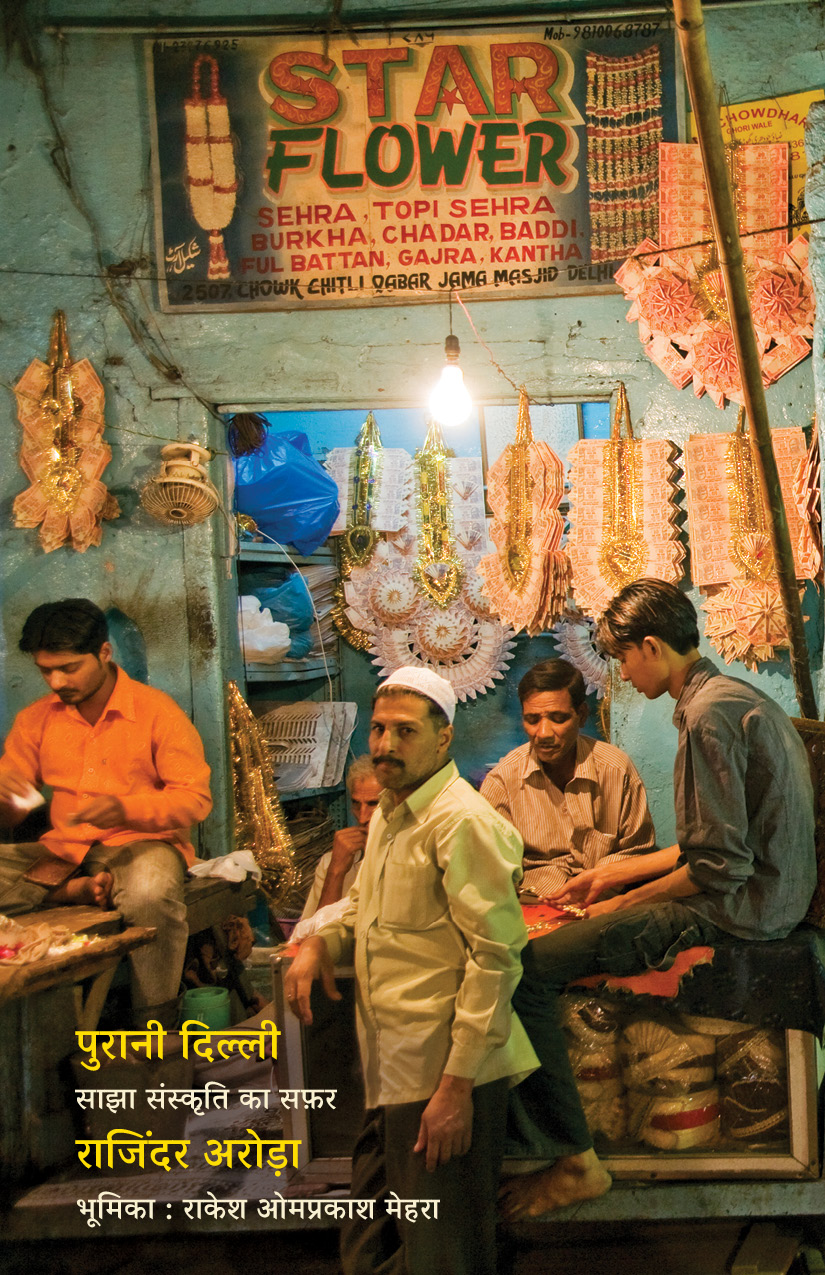
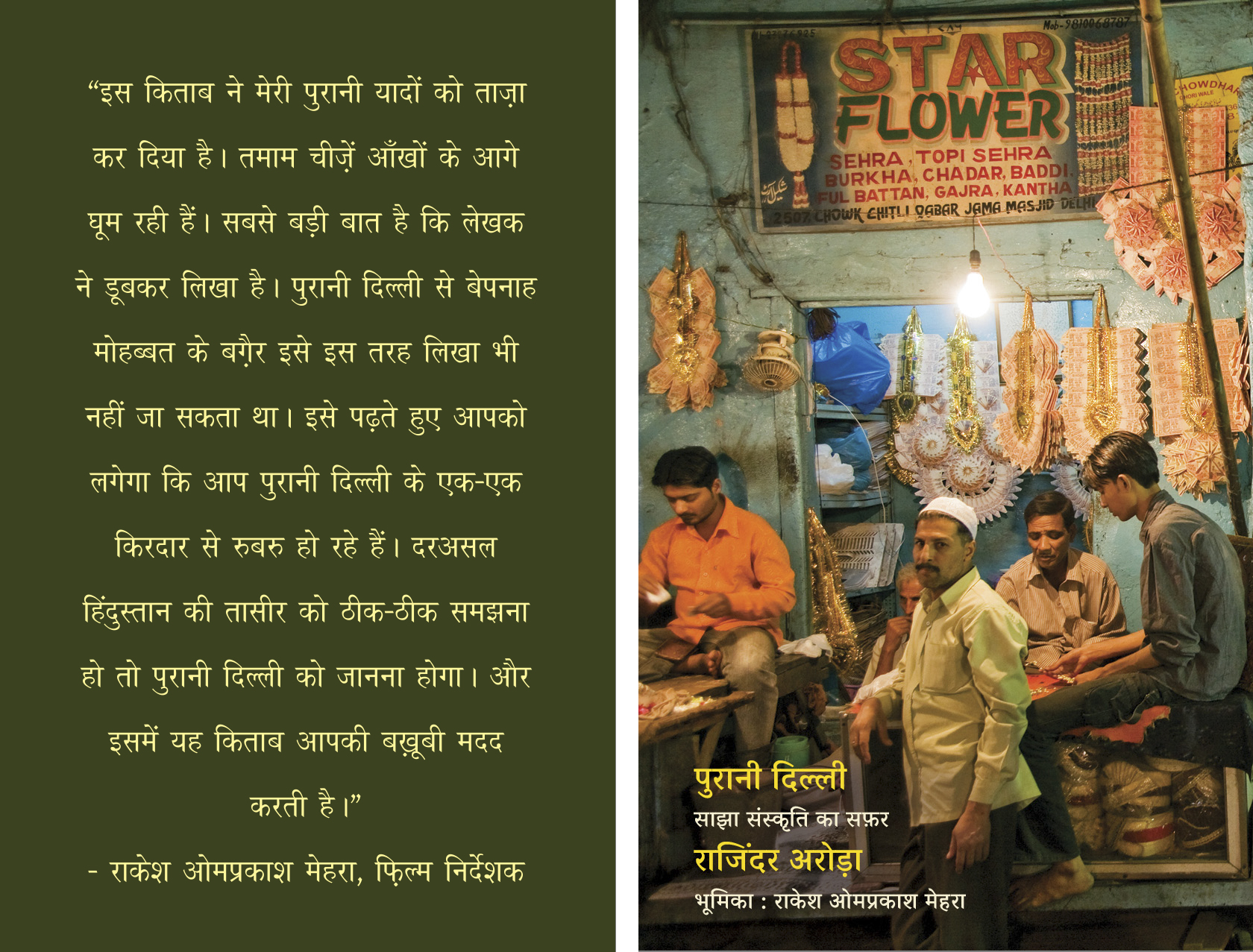
‘पुरानी दिल्ली-साझा संस्कृति का सफ़र’ (2026) ऐसी ही एक रचना है, जो सपने में उँगली पकड़कर शाहजहानाबाद के चक्कर लगवाती है| सम्मोहित करने वाले चटख रंगों के साथ, जैसे कुछ भी उद्ध न हुआ हो| इसकी तहरीर डर पैदा करती है कि सुकून का वह सपना टूट न जाए| राह में छूटी उँगली तो फिर थामी जा सकती है, लेकिन सपने में उसका छूटना वहशत पैदा करता है कि कहीं आँख खुलते ही सारा तिलिस्म बिखर न जाए| उसमें पात्र हैं, उनका परिचय है, मंज़रकशी है और यह एहसास भी कि जो कहा जा रहा है, क़दीमी है| किताब से गुज़रते हुए हम में शायद यह सिफ़त पैदा हो जाए कि हम अदब के साथ उसके सामने पेश आ सकें जो हमारा था और रहेगा|
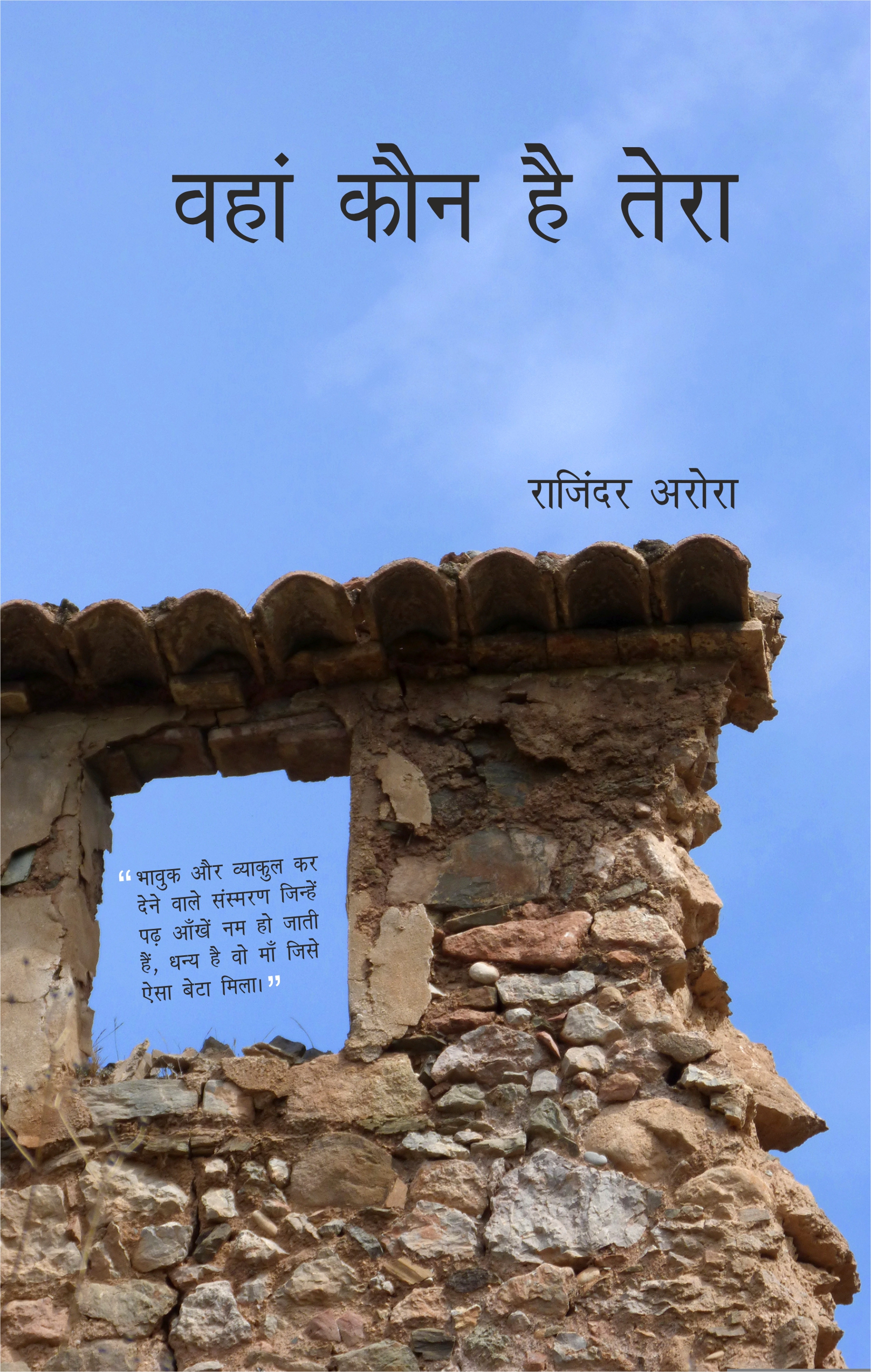
उनकी दूसरी किताब ‘वहाँ कौन है तेरा’ भी इसी साल 2026 में छपी| वह बेहतरीन और बेमिसाल याद-दहानी का नमूना है| उसी तरह सपना है| माँ की स्मृति में उनके आखिरी बरसों की यह दास्तान माँ पर किसी मुकम्मल कविता से बड़ा बयान है| दोनों किताबें जो अक्स छोड़ जाती हैं, उनकी रेखाएं, शिल्प, कहन और रंग एक पल को भी मद्धम नहीं पड़ते| वे लगभग एक साँस में लिखी गई रचनाएं हैं, जिन्हें एक साथ न पढ़ना बेहतर होगा कि दो सपनीली इबारतें गड्ड-मड्ड न हों| ऐसा करना तभी और केवल उस सूरत में मुमकिन हो सकता है जब तस्वीर और उसकी तासीर दिल के अंदर जज़्ब हो| जो अंदर नहीं होता उसके बाहर दिखने के इमकान काम होते हैं|
PURANI DELHI: SAAJHA SANSKRITI KA SAFAR By Rajinder Arora Leftword Publication, 2026, pp. 140, INR 250.00
The spatiality of Rajinder Arora’s Purani Delhi: Saajha Sanskriti Ka Safar, presents itself not as a static geographic entity, but as a hyper-inscribed palimpsest whose urban textuality actively destabilizes the totalizing impulses of both colonial historiography and postcolonial majoritarianism. To engage with Arora’s work is to enter a deconstructive hermeneutic wherein Shahjahanabad ceases to be an architectural relic of a fallen empire and becomes, instead, an ongoing, highly contested locus of différance. Drawing upon, albeit unconsciously, the theoretical frameworks of Jacques Derrida’s archival hauntology and Gayatri Chakravorty Spivak’s interrogations of subaltern agency and epistemic violence, this text undertakes a critical retrieval of saaja sanskriti—a shared, composite cultural apparatus whose very material existence interrogates the rigid, binary logic of communal territorialization. The opening reflections, inaugurated through Rakesh Omprakash Mehra’s evocative framing of the historic core as ‘Purani Delhi, Hamare Desh ka Aaina’ (‘Old Delhi, the Mirror of Our Nation’), positions the city as a crucial aporia: a mirror that simultaneously reflects the foundational possibilities of secular pluralism and the structural fractures of contemporary socio-political consciousness.
The fundamental tension animating Arora’s prose lies in the dialectical interplay between imperial geometry and subterranean subaltern practices. In dissecting the genesis of Shahjahanabad, framed within the chapter ‘Dilli ke Dil mein Shahjahanabad’ (‘Shahjahanabad in the Heart of Delhi’), the narrative refuses a simplistic, teleological chronicle of royal sovereignty. Instead, it turns its analytical gaze toward the liminal micro-spaces: the gali-kuchas, katras, and bazaars, where the absolute decrees of the sovereign are subtly subverted, translated, and hybridized by everyday urban actors. This dynamic becomes strikingly evident in Arora’s treatment of Princess Jahanara’s architectural intervention in ‘Jahanara ka Khwaab’ (‘Jahanara’s Dream’). Here, the dream of Chandni Chowk is decoded, not merely as a passive aesthetic gesture, but as an assertion of gendered agency that disrupted the patriarchal spatiality of the royal court. By tracing how her design inaugurated a public sphere predicated on fluid mercantile circulation and contemplative aesthetic leisure, Arora restores the female subaltern presence to the very epicentre of urban design, demonstrating that the layout of Old Delhi was never purely an assertion of male Mughal autocracy.
This spatial subversion is intrinsically linked to the linguistic heteroglossia that defines the city’s identity. The chapters detailing ‘Urdu ki Raushni: Mehfil-e-Adab’ (‘The Light of Urdu: Literary Assemblies’) and ‘Urdu Bazaar: Kitabat ka Jadu’ (‘Urdu Bazaar: The Magic of Calligraphy’), analyse language, not as a neutral communicative instrument, but as an embodied, material practice that spatializes tolerance. In the mehfils and scribal workshops of Old Delhi, the Urdu language functioned as a counter-hegemonic matrix where traditional hierarchies of caste, creed, and class were momentarily suspended in the collective production of literary and calligraphic beauty. Arora mournfully documents the decline of kitabat—the vanishing art of manual calligraphy—not out of a romantic, retrograde nostalgia, but as a critique of modern techno-capitalism and mechanical reproducibility, which together have eroded the tactile, somatic bond between the artisan, the written word, and the urban commons. Language in this milieu acts as an unwritten socio-cultural contract, a vernacular glossolalia that resists the rigid boundaries imposed by modern bureaucratic languages.
Central to Arora’s deconstructive project is the elevation of sensory history as a legitimate counter-archive. Through his exploration of multi-religious harmony in ‘Ishwar Allah Tero Naam’ (‘God and Allah Are Your Names’) and culinary traditions in ‘Eid ka Ganga-Jamuni Zayqaa’ (‘The Composite Flavour of Eid’) alongside the transition ‘Murg Musallam se Butter Chicken tak’ (‘From Murg Musallam to Butter Chicken’), the act of eating together, commensality, is reconfigured as a radical ethic of hospitality. Derrida’s formulation of ‘hostipitality’, which outlines the latent tension and absolute openness required to welcome the ‘Other’, finds its visceral expression in the Ganga-Jamuni tehzeeb of Old Delhi’s foodways. Arora details how culinary formulas traversed rigid religious boundaries, producing a shared, non-verbal sensory vocabulary that rendered sectarian puritanism obsolete. The historical shift from the intricate, slow-cooked royal preparations of the pre-Partition era to the rapid, tandoor-based adaptations introduced by Punjabi refugees post-1947 encapsulates a profound socio-spatial transformation. The bazaar thus emerges as a contact zone where trauma, displacement, and survival are continuously digested, re-negotiated, and transformed into new modes of urban co-existence.
The historical axis of the book tilts decisively in the narrative of ‘Takht se Taamir tak, 1857-1947’ (‘From Throne to Reconstruction, 1857–1947’), where Arora confronts the catastrophic ruptures that sought to dismember the organic fabric of the city. The anti-colonial uprising of 1857 and the tragic partition of 1947 represent moments of violent epistemic and physical intervention. Following the 1857 rebellion, British colonial authorities executed a systematic program of urbicide, demolishing vast swathes of residential areas surrounding the Red Fort to establish clear sightlines for artillery, thereby attempting to transform an organic human habitat into a panoptic military zone. Yet, as Arora demonstrates, the resilience of saaja sanskriti lay in its fluid adaptability; the city’s cultural memory retreated into the subterranean micro-architecture of the mohalla, surviving through oral testimonies and shared ritual practices. Similarly, in addressing the demographic cataclysm of 1947, the text avoids the simplistic tropes of linear victimization, choosing instead to map how remaining residents and newly arrived displaced populations forged an unwritten pact of mutual economic and cultural survival, effectively transforming the loss of the imperial Takht (throne) into a grassroots project of democratic Taamir (reconstruction).
The aesthetic dimensions of the city extend even into its vertical geography, as captured in ‘Aasman ke Do Khwaab: Kabutarbazi aur Patangbazi’ (‘Two Dreams of the Sky: Pigeon-Flying and Kite-Flying’). Arora analyses the traditional sports of pigeon-flying and kite-flying as intricate spatial manoeuvres that temporarily liberate the urban dweller from the dense, heavily monitored terrestrial alleys below. The sky above Shahjahanabad becomes a vast, unregulated arena where territorial claims, poetic rivalries, and inter-community negotiations are conducted through a specialized vocabulary of flight. By documenting these spatial performances along with a curated glossary of hyper-local idioms in ‘Kuch Sthaniya Shabd’ (‘A Few Local Words’), Arora builds an impregnable linguistic archive that captures the fleeting, ephemeral qualities of Old Delhi’s intangible heritage.
Furthermore, Arora’s theoretical labour operates across the epistemological divide between sovereign history and subaltern memory. In chapters such as ‘Ek Shehenshah, Ek Shehar, Do Mazhab’ (‘One Emperor, One City, Two Religions’), the author challenges the rigid, post-colonial historiographical tendency to compartmentalize the city’s population into antagonistic communal silos. The text foregrounds the concept of pados (neighbourhood proximity) as an active ontological force. In the daily transactions of the katras and bazaars, religious identity is not erased, but rather deployed through a complex, negotiated performance of mutual reliance and spatial intimacy. Arora shows that the pluralistic ethos of Old Delhi was not merely an abstract philosophical ideal held by elites, but a material necessity produced by the spatial density of the city itself. The shared walls of havelis, the intertwined entryways of gali-kuchas, and the overlapping sounds of the temple bell and the Azaan created a sensory milieu where absolute isolation from the religious Other was structurally impossible.
In examining the socio-economic underpinnings of this shared life, ‘Hunar aur Peshe’ (‘Crafts and Professions’) serves as a crucial locus of materialist analysis. Arora maps how specialized artisanal knowledge—from silver-leaf beating (vark) to perfume distillation (ittar) and zardozi embroidery—demanded cross-community supply chains and collaborative production networks. The Hindu merchant, the Muslim artisan, and the Sikh trader were bound not merely by commercial interest, but by a shared labour ecology that generated its own vernacular ethics. By centering these subaltern crafts, Arora demonstrates that the true custodians of saaja sanskriti were not the royal patrons, but the working-class craftspeople whose daily labour inscribed composite culture into the very material fabric of the city’s commodities.
The critique extends into the morally ambiguous and often marginal sites of the urban landscape, as explored in ‘Bazaar-e-Husn’ (‘The Market of Beauty’). Rather than adopting a moralistic tone, Arora analyzes the kotha (courtesan salon) as a significant institutional site of cultural production and aesthetic education. The courtesans (tawaifs) of Old Delhi were pivotal agents in the preservation and development of classical Hindustani music, kathak dance, and Urdu etiquette (tehzeeb). By deconstructing the bourgeois, Victorian morality inherited through colonial legislation, Arora reveals how these spaces functioned as rare enclaves of female financial independence and cultural authority within a broadly patriarchal urban structure.
The theoretical sophistication of Arora’s text lies in its radical refusal to collapse the complexities of Old Delhi into a singular, sentimental archive. By systematically interrogating how marginal subjects, localized trade practices, and spatial rituals continuously resist totalizing state apparatuses, the book constructs a robust, subaltern-oriented methodology for reading the postcolonial city. The trajectory mapped across chapters like ‘Urdu Bazaar: Kitabat ka Jadu’, demonstrates that scribal practices were not merely decorative crafts, but epistemological interventions that preserved counter-narratives of the city’s history against the homogenizing drives of modern printing presses and colonial record-keeping. The physical manuscript, handwritten by a katib, becomes a site where human labour, bodily discipline, and artistic subjectivity converge to challenge the alienation of modern urban life.
Moreover, the materialist reading of urban leisure in ‘Aasman ke Do Khwaab: Kabutarbazi aur Patangbazi’, uncovers an intricate politics of spatial reclamation. In a densely built environment where terrestrial ground is heavily commodified and monitored, the roof (chhat) and the sky emerge as alternative, democratic public spheres. The practice of kabutarbazi (pigeon-flying) creates an intangible network of aerial territories, where flock movements respond to rhythmic commands, whistle signals, and subtle gestures. This vertical geography functions outside the jurisdiction of formal property rights and state mapping, offering a fluid spatial canvas where subaltern actors assert mastery, prestige, and community belonging. Arora interprets these aerial games as embodied performances of freedom, wherein the marginalized subjects of Old Delhi temporarily escape the constraints of their economic precariousness to command the skies.
Similarly, the examination of culinary evolution in ‘Murg Musallam se Butter Chicken tak’ presents a rich study in urban hauntology: the presence of lost historical horizons continuing to shape the present. The transition from the slow-cooked, aromatically complex Murg Musallam of Mughal royal banquets to the robust, tomato-and-butter-rich Butter Chicken born in the post-Partition dhabas of Daryaganj mirrors the broader democratization and commercialization of urban space. Arora reads the dish not merely as a gastronomic innovation, but as a palatable historical compromise. It signifies the physical arrival of displaced Punjabi refugees, the survival strategies of trauma-ridden populations, and the ultimate fusion of distinct regional palates into a new, resilient urban identity. Foodways, in Arora’s formulation, become a somatic memory bank where trauma is ingested and transformed into a shared, sustaining substance.
The methodological choice to conclude the volume with ‘Kuch Sthaniya Shabd’ (‘A Few Local Words’) and formal citations in ‘Sandarbh’ (‘References’) highlights the academic and political commitment of the text. By compiling a glossary of hyper-local street lexicon—terms born of the gali-kuchas, trade guilds, and domestic inner-courtyards (sehn)—Arora performs an essential act of linguistic conservation. This vernacular lexicon acts as a protective boundary against the linguistic flattening caused by standardized, state-sanctioned languages. The vocabulary preserved in these pages carries within it the nuances of an untranslatable urban ethos, where humour, intimacy, trade jargon, and philosophical worldview are inextricably linked.
Expanding upon this linguistic resistance, the text constructs a profound meditation on the ontology of memory as a counter-archival strategy. When official archives, dominated by colonial gazetteers, state inventories, and majoritarian re-writings, deliberately omit the quiet co-existence of working-class communities, the body itself becomes the repository of history. Arora demonstrates how the physical muscle memory of the artisan, the sensory memory of the street cook, and the auditory memory of the neighbourhood qawwali, perform an ongoing act of historical preservation. The gali (lane) is not merely a path for transit; it is an acoustic chamber where echoes of past conversations, poetic recitations, and seasonal cries of street vendors (pheriwalas) continuously reverberate, challenging the linear, chronological time of modern capitalist development.
In analysing the architecture of domestic and commercial spaces, Arora investigates the spatial logic of the haveli and the katra as microcosms of collective living. Unlike modern urban housing units designed for atomized nuclear families, the haveli with its open sehn (courtyard) demanded a continuous negotiation of privacy and community. The open doors, shared terraces, and interconnected rooftops made absolute secrecy impossible, cultivating an atmosphere of radical transparency and forced empathy. Arora reads this architectural layout as a physical embodiment of saaja sanskriti, wherein the architectural form actively prevents the isolation of the self from the collective body. Similarly, the katra—a gated commercial and residential compound centered around a specific trade—fostered an economic solidarity that transcended religious identity. In these micro-spaces, economic survival was intimately tied to mutual trust, rendering communal conflict financially and socially self-destructive.
Arora’s historical gaze also critically addresses the gendered dynamics of urban space beyond the kotha and the imperial court. Through subtle observations scattered across the text, the domestic interior emerges as a vital, albeit historically obscured, domain of cultural reproduction. Women within the zenana (female quarters) developed their own linguistic idioms, folk songs, culinary innovations, and informal micro-economies. They preserved oral traditions, managed ritual calendars that often blurred the lines between Hindu and Muslim festivals, and maintained networks of neighbourhood support that cushioned families during times of crisis. By bringing these domestic narratives into conversation with the public histories of the bazaar and the court, Arora dismantles the patriarchal bias of urban historiography, proving that saaja sanskriti was sustained as much by the quiet labour of women within the courtyard as by the public declarations of poets and politicians.
In its overarching execution, Purani Delhi: Saaja Sanskriti Ka Safar functions as a profound critique of contemporary urban alienation. Arora’s prose performs the very hybridity it describes, blending high literary Hindi with Persianized Urdu expressions and localized street vernacular to challenge the sterile, monocultural idioms of contemporary state discourse. By refusing to treat Old Delhi as a dead historical artifact, Arora transforms the city into an active, living trace that persistently haunts the present. The work stands as an indispensable intervention in urban humanities and postcolonial studies, proving that the ethics of shared space, embodied memory, and radical hospitality preserved within the narrow lanes of Shahjahanabad remain vital blueprints for imagining an inclusive, democratic future against the rising tides of socio-spatial segregation.
कमरे बुहारने और अलमारी के शेल्फ़ दराज़ साफ करने से खोई हुई चीज़ तो शायद मिल जाए पर गुज़रा वक़्त और पूरी हो चुकी माँ कहां मिलती है – कितना भी खोज लो – वो जो एक बार गई सो गई – ढूंढते रहो, बुलाते रहो फिर – अब ना आने वली वो ।
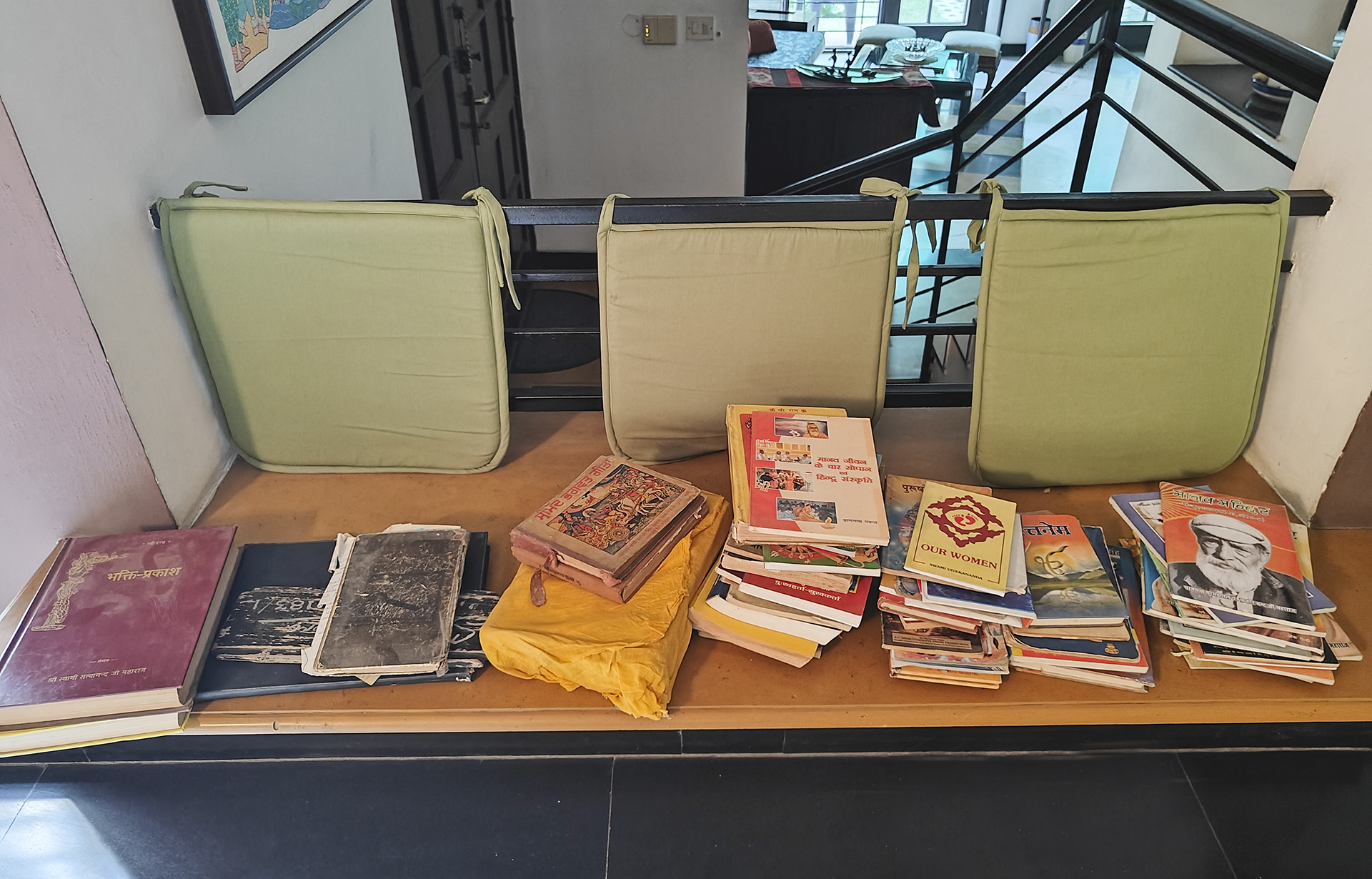
सूने, खाली कमरे में अपनी ही आवाज गूँज कर वापस लौट आती है और फिर नज़र आती है मुस्कुराती हुई तस्वीर जो दीवार से पूरे घर का मुआयना कर रही है। घबराहट में मैं इधर-उधर देखने लगता हूँ आंखें मलते हुए नीची कर लेता हूँ और फिर एक और ठंडी सांस ले रोज़मरा के फ़िज़ूल कामों में लग जाता हूँ। माँ के पलंग के साथ वाली दो साइड टेबल के नीचे माँ की अपनी किताबों का ज़खीरा बाहर निकाला गया। ये वो किताबें हैं जिन्हें माँ हफ्ते-दस-दिन में पढ़ती और दोहराती रहती – बाकी किताबें पढ़ने के बाद उनकी लाइब्रेरी के शेल्फ में बेसमेंट में चली जाती है। ये सब किताबें उनके हाथ की पहुंच में रहने से उन्हें एक तसल्ली रहती थी।
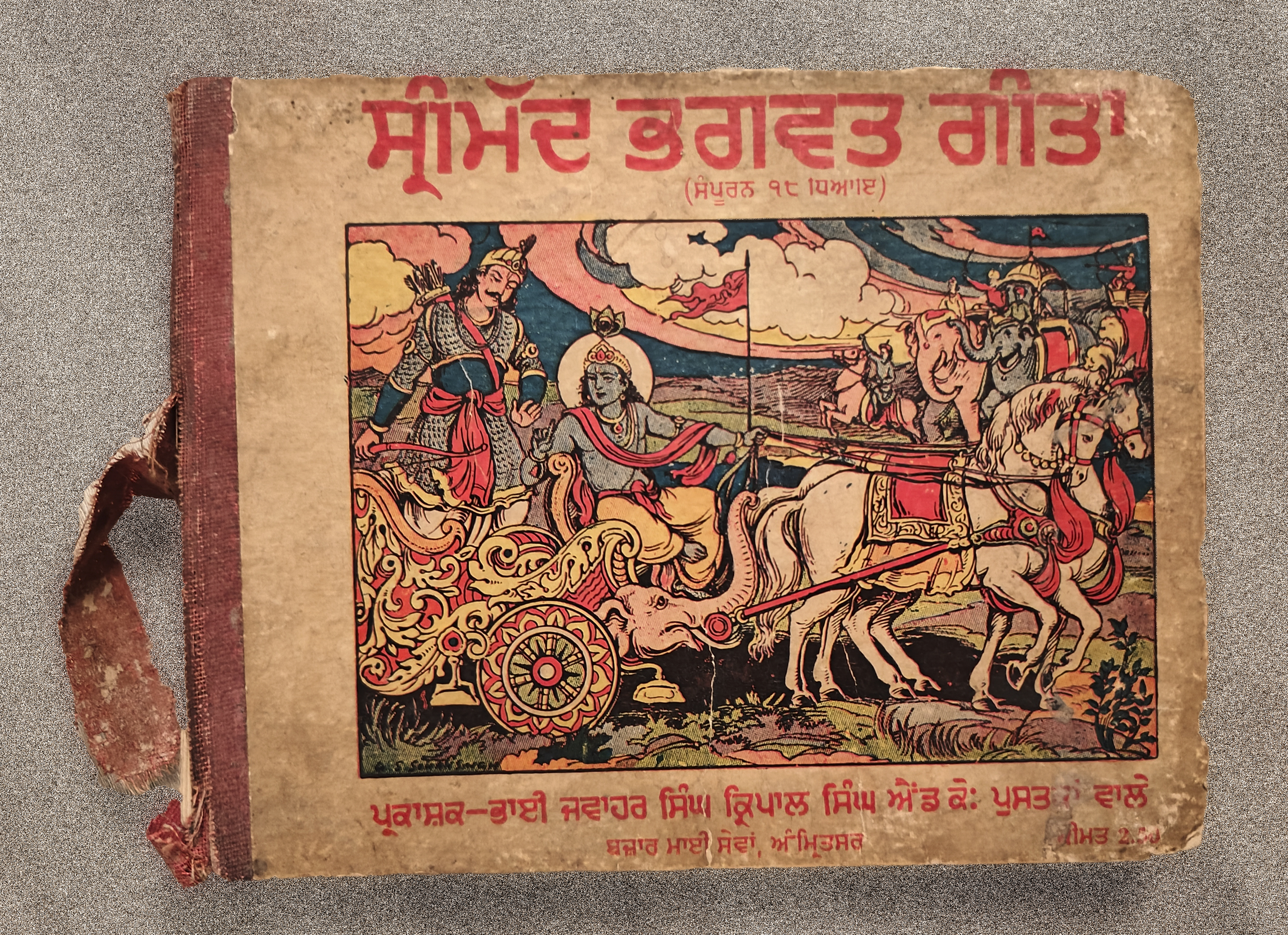
माँ को गुजरे चार महीने हो चले हैं । इन सब किताबों को झाड़ कर कल साफ किया गया। वैसे तो सब बेहतरीन किताबें हैं पर इनमें दो ज़रूरी किताबें हैं – एक है गुरुमुखी लिपि, यानि पंजाबी, की गीता और दूसरी कबीर रचनावली। आप देख सकते हैं कि गीता की जिल्द पूरी तरह से खुलने लगी है जिसे कल मैंने अपने हाथों से दुरुस्त कर दिया (हाँ, मुझे जिल्दसाज़ी आती है) दूसरी वाली के भी पन्ने खुल कर बिखर रहे थे तो वो भी धीरज से एक एक पन्ना इकट्ठा कर ठीक की गई।
इनमें से पंजाबी की गीता ज्यादा जरूरी है, इस के लिए नहीं कि वो “गीता” है, इसलिए कि वो किताब मेरी नानी चंद्रावती ग्रोवर ने मेरी माँ को दी थी। पंजाबी की ये गीता सन 1941 में अमृतसर की छपी है – यकीनन नानी ने लाहौर या झंग में खरीदी होगी (अब लकीर के उस पार) । नानी को गुरुमुखी और उर्दू पढ़नी आती थी, हिंदी और अंग्रेजी नहीं। शायद ये माँ के दहेज़ में आई होगी या फिर शादी के बाद माँ को किसी खास मौके पर मिली होगी। मोटे अक्षरों में छपी 216 पन्ने वाली इस गीता की कीमत कुल ढाई रुपये है। इसकी जिल्द पर चिपकी रंगीन तस्वीर देख कर यकीन नहीं होता कि आज से 85 साल पहले भी ब्लॉक से इतनी खूबसूरत रंगीन छपाई हो सकती थी। खाली हाथ जाने वाला कुदरत का उसूल गलत है। और कुछ साथ जाए या ना जाए किताबें साथ जरूर जानी चाहियें । माँ कितना मिस करती होगी इन किताबों को ।
A death leaves behind a physical and emotional architecture that the living must navigate. Things, even memories, left behind by the one who has gone is the memento mori for the survivors.
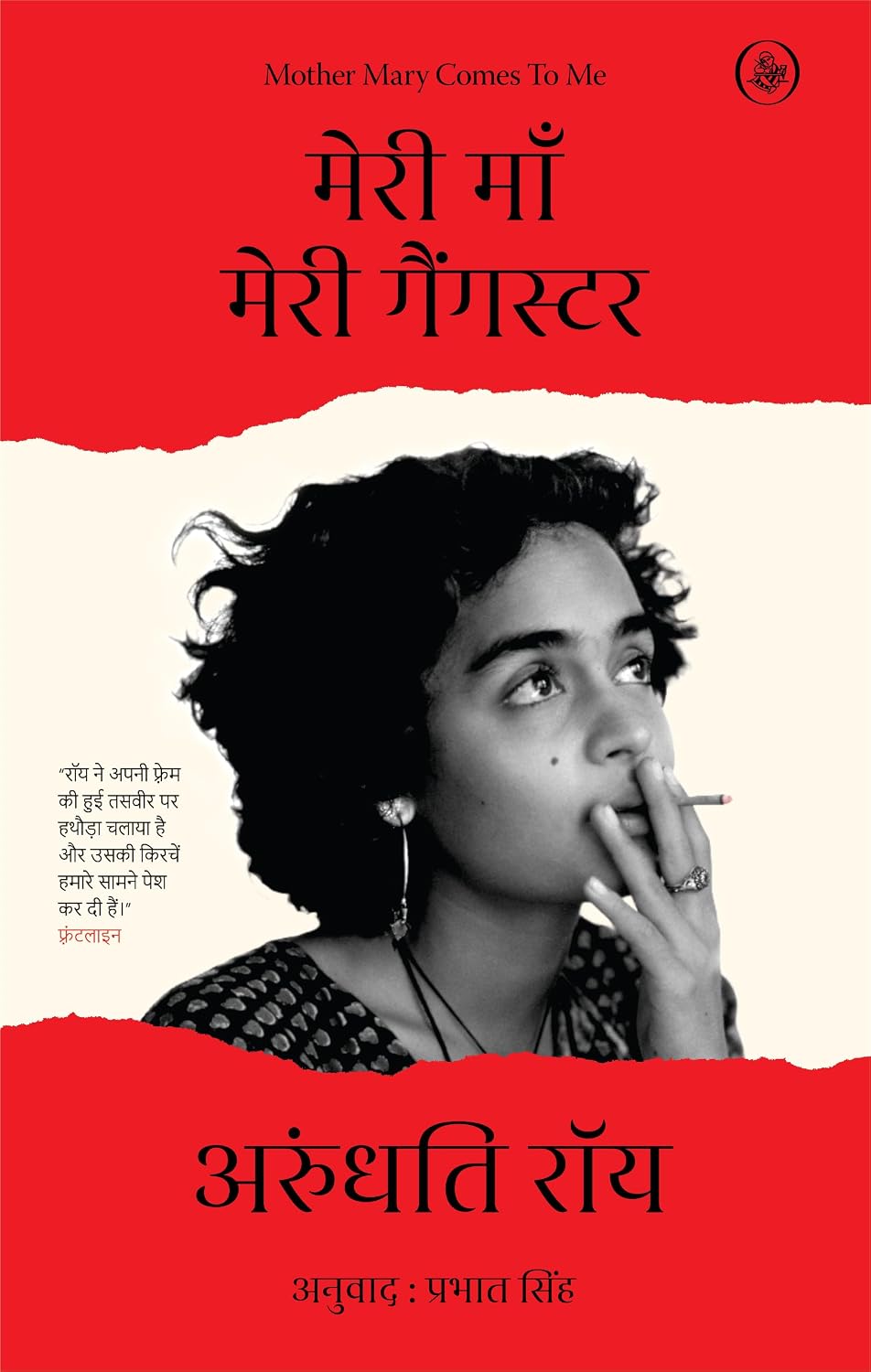
कुछ किताबें के साथ ज़िंदगी के वो पल जुड़े होते हैं जिनमे सिमटी यादें सिर्फ किताब तक महफ़ूज न रह कर हमे बीती घटनाओं के उस घेरे में बांध लेती हैं जो मार्मिक और बेशकीमती होती है – प्रभात भाई की अनुवादित इस किताब के साथ कई ऐसी यादें और पल जुड़े है। इसमे कोई दो राय नहीं की प्रभात भाई का किया किसी भी किताब का अनुवाद अर्थ और विवेचन से परे उनके अपने शब्दों से किताब के प्रसंग को नया आयाम देते हुए हिन्दुस्तानी भाषा के पढ़ने वालों को अपनी सहजता से बांध लेता है। हालांकि ये किताब तो अभी मेरे हाथ नहीं लगी पर बीते दो साल में प्रभात जी के किये कम-अज़-कम चार किताबों के अनुवाद ने ना सिर्फ पढ़ने वाले को बल्कि उनके लेखकों भी मंत्रमुग्ध किया है। बाज़ किताबें के बारे में ये कह कर बात खत्म नहीं की जा सकती कि भाषा या अनुवाद बेहतरीन है पर मैं अपनी तरफ से जोड़ना चाहूँगा कि ये किताब अब सिर्फ एक मासूम गैंगस्टर की ना रह कर कई दिग्गजों या गैंगस्टरों की हो गई है।
जब इस किताब का अंग्रेज़ी संस्करण आया था, तब मेरी माँ बीमार थीं, बिस्तर पर थीं, और रजनी ने उन्हें किताब के कुछ भावुक व संवेदनशील हिस्से पढ़कर सुनाए थे। रजनी साथ-साथ उनका अनुवाद भी करती जा रही थी, वो अनुवादित शब्द आज भी मेरे ज़हन में ताज़ा हैं। हालाँकि माँ अब हमारे बीच नहीं हैं, फिर भी मैं उन हिस्सों को अपने मन में दोबारा से ताज़ा करना चाहता हूँ और अब नए सिरे से वही हिस्सा माँ को पढ़कर सुनाना चाहता हूँ, यह कहते हुए कि “यह वो असल और सही अनुवाद है जो आपको सुनाना चाहिए था।”
नहीं मालूम कि प्रभात भाई बार बार ऐसा कैसे कर पाते हैं पर मूल बात का सही मतलब, आसान और बोलचाली भाषा में समझाने वाला अनुवाद ही उनकी खासियत है जो सब को अच्छा लगता है, वो जिसमें केवल शब्दों को नहीं बदला जाता, बल्कि हिंदी की तहज़ीब में असल शब्दों को ढाल कर, उसके शऊर, लहजे, अदब और अंग्रेजी से आने वाली कहावतों की भाषाई सटीकता का भी वो बखूबी से ध्यान रख लेते हैं। अनुवाद ऐसा ही होना चाहिए जिसे पढ़कर बात बिल्कुल साफ़ समझ आए, भाषा का बहाव तरन्नुम में रहे और पढ़ने में ऐसा लगे कि शब्दों के पीछे कोई धुन बज रही है। अंग्रेजी पढे तो देर हो चुकी अब हिन्दुस्तानी की शहद चखनी बाकी है। प्रभात भाई को मुबारक के साथ –
I am waiting to read the translated text of these beautiful and haunting lines from the book, “Tonight I will wander on open roads. Tonight I have some time off, even from my dreams”.
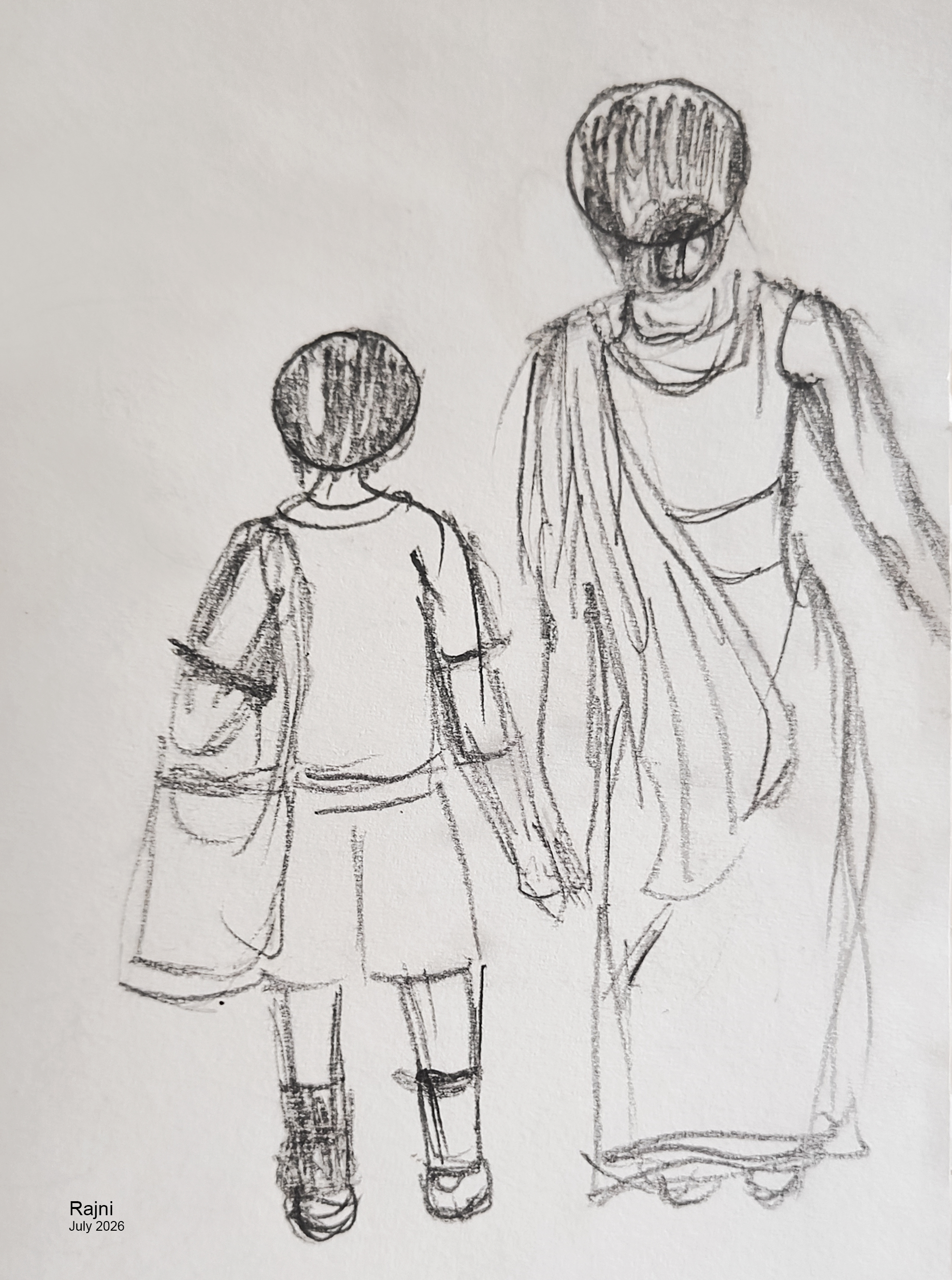
Ma escorted me to school ‘only’ on days when one of my shenanigans crossed the limits of discipline and I had to be reprimanded by everyone, including her. Recalling conversations with Ma, Rajni made this poignant pencil drawing of the most gentle human connection: a bond of trust and protection that she conveyed every time she held my hand irrespective of my mischiefs. Who will accompany me to school now that Ma has been gone?







You must be logged in to post a comment.