
May you continue to illuminate our world with such insightful writing as Lapujhanna.
You have all your fingers on the pulse of your reader, and through your characters, also on the significance of individual and collective human behaviour and actions. For a lay reader some of these actions (of your characters) may be meaningless or could be inferred as trivial – a humorous interlude – and these could be seen as actions directed at no person, but, deeper meanings of these are significant to our understanding of who and why we are, what we are as a society.
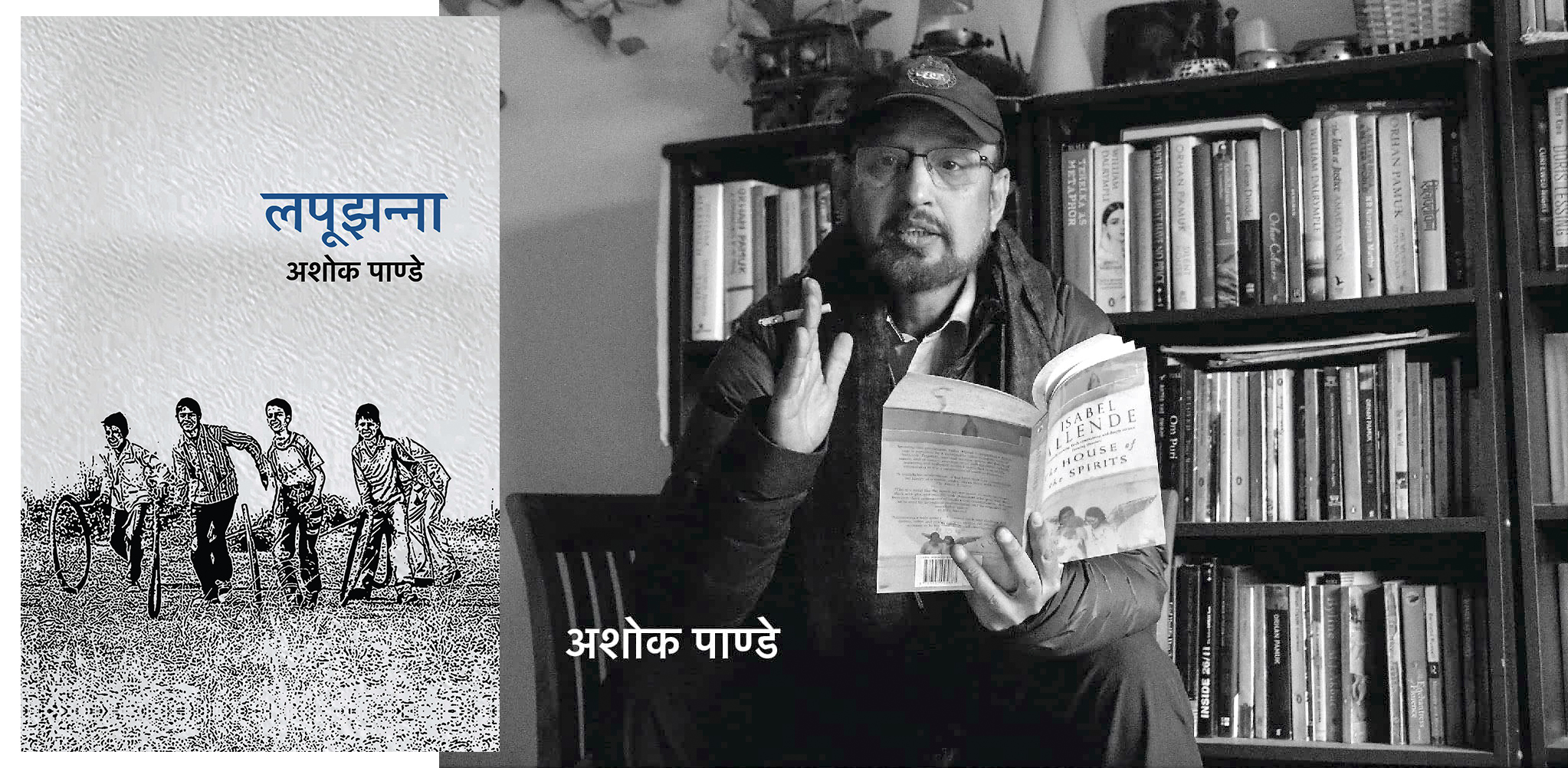
As a writer you trap your readers, hold her in a spell, like a magician does to its audience. A ten-year old protagonist/narrator navigates the minefield of suburban or small town India, and, through his loveable gang of friends, blows up every decent notion of parenthood and childhood a society could/should have. A slightly older character, that too a vagrant, a child abused and violated pushed to the street, manages to steer and guide the reader where he wants. That is his power. As a reader you are at his will and command, you start missing this ‘misfit’ if he doesn’t appear for two pages. This character forces the readers to start mimicking his traits and accept them publicly, as a matter of pride. Look at what Laffatu has done! He has brought your fan following to start conversing in his demeanor. The character lisps and stutters yet no one feels sheepish or embarrassed at openly siding with him, joining his street-gang-like style and even speaking the way Laffatu does. In Urdu, Lappujhanna is pronounced Laffujhanna that in English would be loosely foolish, idiot, jerk or dimwit.
Wow! It is simply a wow thing for an author that his characters are being ‘adopted’ by his readers as ‘their children’. It is only the parents of a growing up adorable toddler who start babbling like the child. On social media, your reader starts conversing in the words and style of the character, succumbs to it consciously and deliberately, knowing fully well that there is a certain shame associated with this disability in our society.
The story or that one dynamic character doesn’t stop hammering us. One character is not enough for the plot. The other ‘gang members’ and tertiary characters too hit us–relentlessly, mercilessly. Not one of them stays static even for a paragraph, even Lal Singh, the roadside Bum-pakora seller who watches the town pass by him every day. He is a banker to ‘his sweet-gang’ not just of the tainted money but ideas too – he is a saviour – a friend, philosopher and guide to the emotionally tormented bunch of youngsters – a second kitchen, a second mother away from their own household. The parents, family, classmates, shopkeepers, teachers, neighbours, girls & women (supposedly the emotional anchors), workers, even the locations – each one – in their shortest of remarks – rip open the ugly seams of our society. Devoid of love, care and grooming the youth oscillate between hope and frustration. If one wants to teach a subject called ‘the state of the nation’ this one book should be on the curriculum.
This work of art is a must read for students of behavioral science.There is a certain rousing rhythm, a kind of music of the Spaghetti era of Westerns that runs through the book without it being there explicitly. A John Wayne, Clint Eastwood, Paul Newman or a Strother Martin lurking somewhere. One can almost hear muted shrieks and muffled vocals, stretched strings of sobbing guitars, tower bells sounding fear, a steam rail engine trundling over desert tracks, sound of hoofs trotting on rocky west bearing bad omen, a bullet hitting and ricocheting off a metal drum and the precious water draining out of it, a pistol fired somewhere and a hyena crying in the dark. These sounds may not be audible to all but their echoes resonate. Reading Lapujhanna took me back to the time when I first read Raag Darbari. Ashok Pande’s writing reminds me so much of the noted satirist Shrilal Shukla ji. May you continue to illuminate our world with such insightful writing as Lapujhanna.
15 February 2022
 Ankahi. Unsaid.