
Doctor with a Nehru Cap
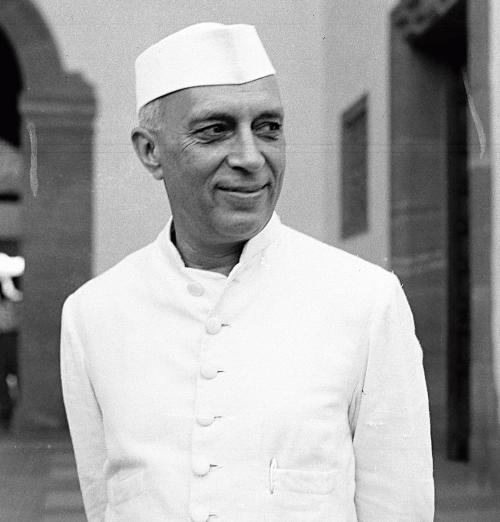
At six feet two inches he was a tall man and could be spotted easily from a distance even in a crowd. Added to his lanky and frailframe was his white Nehru cap sitting on a bald pate completing his charismatic persona. He always wore white – a long white achkan with chooridar pajamas went well with the shining black Pishori sandals and the round black frame of his glasses. He walked as if in a hurry, his long arms matching the stride. In his left hand a brown leather bag lent him an air of authority. His eyes probed deep into the body and mind of the person in front of him. One could see the tiny red veins on his long dainty fingers, as if sculpted from translucent marble, as he held an arm to check the pulse. Other than the missing red rose, everything about him resembled Pandit Jawaharlal Nehru.
No, I never saw a steth in his hands or around his neck. He was unlike a doctor and more of an angel. Fair, handsome, soft-spoken Dr Abrol moved with the grace of a prince when out attending to a patient, in the present case it was me. In his “clinic” he sat on a tall wooden chair with little else on his table covered with a white cloth. A glass bottle with watery liquid and cotton swab at its bottom had a tilted thermometer in it. A wooden tray with a couple of shining spoons, a torch light, a long tongue depressor, another one with a small round mirror at one end; rolls of gauge, a packet of cotton, a bundle of cut white paper and some knick-knacks rested on the left edge.
Behind him, a row of big and small glass bottles with liquids of varied colours were placed on a shelf dividing his space with that of the pharmacist/chemist (called compounder). All bottles had cork caps and small white labels with the name of the potion hand-scribbled on them. Just below them were beakers, stainers, pipet tubes, spatulas, two gleaming white marble mortar & pestles next to a jar of water jostling for space on a counter. A low flame burner was lit though not in use.
His ‘hospital’, as people called it, was always crowded. So much so that his patients waited or sat on the footpath extending right outside his small space. Those in pain or uncomfortable used part of the kerbside as a bed. Time and again he would get up from his chair and attend to those crying or moaning in pain, patting and reassuring them of relief.
The year was 1964, I was all of eight and it was possibly my first real encounter with pain. One morning I woke up with a stye on my left eye. Before the day was over the stye had swollen to a point that I could barely open my eye. It hurt like crazy. A thick discharge stuck my eyelids. My fingers involuntarily scratched the eye resulting in more pain and more fluid discharge. At night, as we lay together in bed my sibling poked my eye. All hell broke loose. I burst out crying and couldn’t sleep the night.
Next morning I was taken to “Topi Wala Doctor“, as Dr. Abrol was lovingly and popularly known around the neighbourhood. Among us children, he was known as the one who gives “Doodh ka Injection“, a doctor who gives ‘Injections of Milk’. I suppose this rumour must have been the handiwork of a cruel mother whose child disliked milk. Much later I got to know that it was “Milk of Magnesia” that people talked about. It was given for relief from constipation and had nothing to do with milk. Those days the injection really hurt – needles were thick and syringes a terror contraption. The very thought of an injection made me cry and I howled all the way to his clinic. Our childhood had the double disadvantage – if a child cried for any reason s/he was beaten or spanked by parents all the more. So I was paraded like a wailing sheep all the way from our home to Dr Abrol’s clinic with Ma repeatedly drubbing me with firm hands. As a child my
threshold for pain or an injection prick was all but absent. On that particular day I was given a large handkerchief to stuff in my mouth as Dr Abrol burst the stye, cleaned my face and applied some medicine. Unlike today, parents then could terrorize their children. However, Dr Abrol was kind and loving. He held me in his lap as I sobbed. Patted me repeatedly and mockingly reprimanded my mother for hitting me. Next to his ‘clinic’ was a grocery store from where he got two ‘toffees’ for me. He asked me about my Nanaji and uncles (Mamas) and added that he will complain to them about my Mom. I came back happy. Dr Abrol was my hero, both in treating me and in scolding my Mom.
I don’t remember large fancy hospitals or nursing homes in Delhi of the 60s or the 70s which are currently ubiquitous at every turn in a locality. Doctors too were far and few. A doctor was considered a demi-God, their profession divinity personified. We had small time dispensaries where doctors (even compounders) treated with love and laughter. Medication was minimal, there was an emphasis on prevention and home cures.
Family doctors, mostly relatives, visited homes and nursed people with medicines – powder ‘pudiyas’ or dark bitter liquids made inhouse. ‘Dadi Ma ke Nuskhe‘ were broadcast over radio, television and found a prominent place in every newspaper and magazine worth its name. Medicinal Herbs were known to most households. Also there were Hakeems, Vaids and Tibbi practitioners offering traditional medicine for most common or day-to-day ailments charging very little fee. Only seriously ill were taken to hospitals and even then one didn’t have to sell all one had and pawn some more to be treated. We didn’t have medical insurance.
Large government or Trust-run hospitals treated masses without any fee or with very little. Beat this – nearly 60% of childbirths happened at home.
Mankind and science have progressed leaps and bounds in the last fifty years. Medical advancements, timely treatment and pharmaceutical research, together with easy access to doctors and facilities has saved millions of lives, constantly making life happier and bearable for all of us. We must thank them all. We must respect them and we must listen to their advice. So why am I writing all this? Is something missing? Yes. I miss doctors like my ‘Topi Wale Dr Abrol Saheb’. I miss the ‘time’ he spent listening to me. I miss his loving pat, his chat. I miss warm fingers that held my pulse, the cold touch of bell on my wrist and the tubes in his ears which convinced me that Dr Abrol was listening to my body – the voice of my ailment, and, that soon the angel in him would set me right. I miss the humane – the benevolence and compassion.
 Ankahi. Unsaid.