
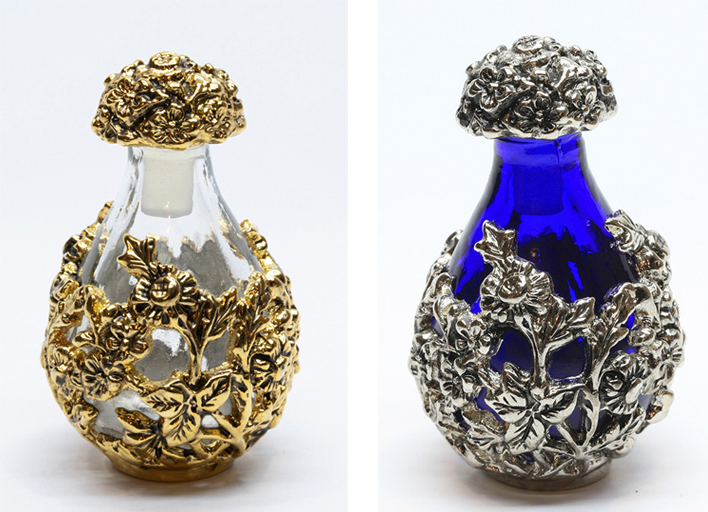
This is a Tear Bottle. Believe me, it is to collect what poets from generations have romanticised as Anmol Ashq. You are supposed to fill this bottle with your tears and leave it at the grave or the cremation site, as a parting gift to your dear one. Trust me, you can really fill it with tears, your own only, to express grief and sorrow.
The ‘tear bottle’ tradition has endured for more than 3,000 years. These were common in many ancient societies. They are still produced in the Middle East, Andalusia, parts of Europe and African regions even today. Tear bottles were prevalent in ancient Rome too, when mourners filled small glass vials or cups with their tears and left them in burial tombs as symbols of love and respect to the departed being.
Sometimes women were even paid to cry into “cups”, as they walked along the mourning procession. The legend goes those crying the loudest and producing the most tears received the most compensation, just like our own the Rudalli’s from Rajasthan. The more anguish and tears produced, the more important and valued the deceased person was perceived to be.
Records tell us that the Tear Bottles reappeared during the Victorian period of the 19th century. Mourning ladies collected their tears in bottles with special stoppers that allowed the tears to evaporate. The mourning period would end when the tears had evaporated. Similarly, during the American Civil War women collected their tears during the period of separation from their husbands. The collected ‘saline’ was proof of their love for the husband.
These petit decorative glass bottles have been romanticised to share tears of love, joy, sympathy, and remembrance. The captivating bottles are also called a ’lachrymatory’ which, at the time of burial, were placed in a large vase and buried with loved one to express honour and devotion.
In ancient Greece and Rome, a small glass or earthen vessel filled with the tears of those who weep and left in the graves as a present for the dead.
I know where one can order these bottles but I won’t tell you or wish you that. Mourners can even get a copy of an extensive catalogue delivered to their mailbox before they order. I wonder what we are supposed to do with ‘Tears of Joy’, save them or let them run.
Indian mothers, specially mothers from Hindi films of the 60s and the 70s, would mock the size of these bottles. Famous mother characters like Nirupa Roy, Durga Khote, Lalita Pawar and Dina Pathak could fill buckets in three hours.
ख़ुशी में भी आँखें भिगोते हैं आसूँ , इन्हें जान सकता नहीं ये ज़माना , मैं खुश हूँ मेरे आसुंओं पे न जाना
 Ankahi. Unsaid.