”Somewhere between right and wrong, there is a garden. I will meet you there.”
– Maulana Jalaludin Rumi
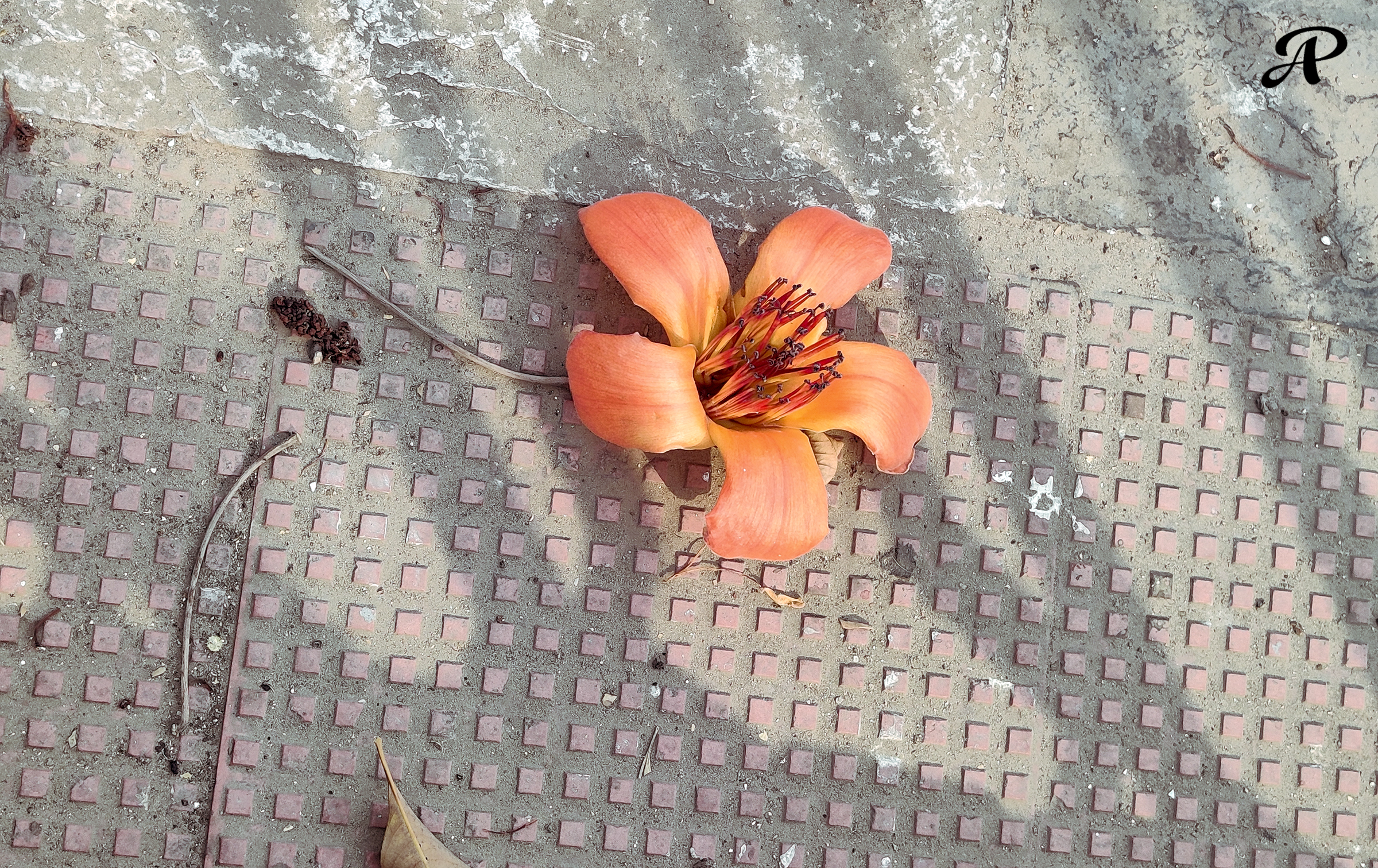
And, whatever be the reason or the season – you can’t propose with a semal flower.
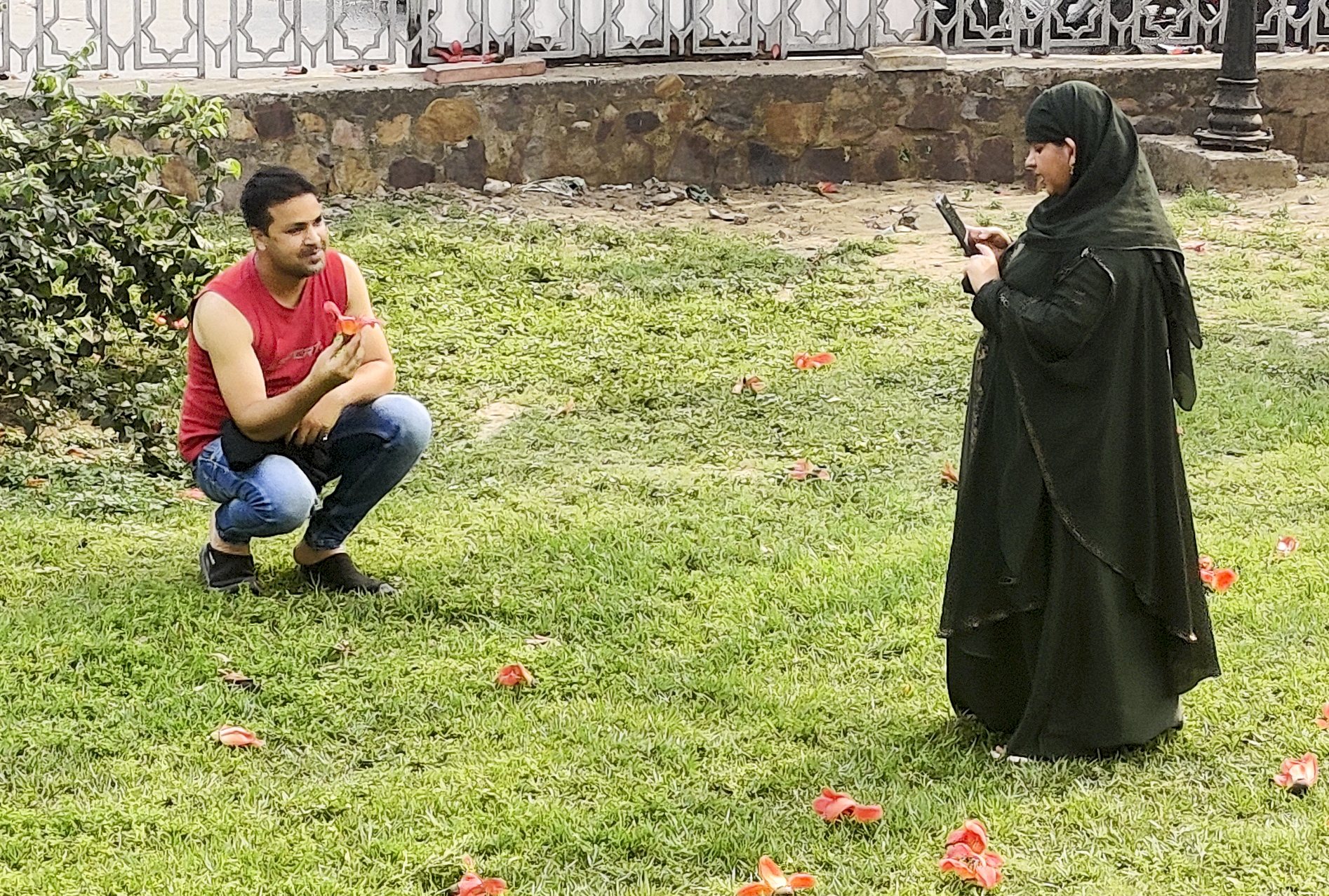
This, that, and all between.

”Somewhere between right and wrong, there is a garden. I will meet you there.”
– Maulana Jalaludin Rumi
And, whatever be the reason or the season – you can’t propose with a semal flower.



A few more days of singing ‘spring in the air’ and then summer will be at our doorstep. What is the point of the month of Fagun when just one day of Holi effectively drains all colours from the coming season. Ah! It will soon be hot. It is hot. Hot with a capital H and a monotonous spread of molten yellow. Sun and only the Sun rules with Heat as his princess with sweeping powers. Heat of varied numbers and intensities is all we get to talk about. From the 20s in the morning to 40s at noon and 30s in the evenings – only the mercury scale varies but the killing effect of heat remains the same. Golden mornings soon turn to fireball noons and frying-pan evenings.
But come to think of it, the last two summers haven’t been so dreadful – at least we didn’t feel so. We have mostly been indoors. April to September of 2020 was not even noticed. The doors were shut tight for the fear of virus. With no industrial or commercial activity there were no power cuts. Air conditioners worked non-stop. Last year, 2021, too was relatively comfortable keeping indoors – the second wave was still on, the fear still raw.
Two years, yes, it has been two years since we locked ourselves in our cocoons. A fear that had gripped us, held sway over us. Overnight life changed for all of us. Saving and keeping your life was more important than any other thing. Think of the earlier times when one didn’t miss work even for a day despite running high fever or a fractured foot.
The fear of C virus is still there partly but finally people have chosen to step out. It is not like what it was beginning 21st March 2020. Masks are still on, people try and maintain distance when they meet, the Macbethian fear of washing hands has become a habit, rushing for a RTPCR test the moment there are symptoms of flu has become a Commandment, however false. Whatever the fear or despite it, people want to step out and find the possibility to get their lives back. Enough they say, the virus we are told is here to stay so we must learn to live with it.
Everyone wants to believe that there is a possibility to live life again, live it like the ‘earlier normal’ they knew. Or at least, there is a hint of it, a promise of ‘the normal’ coming back. To catch up with friends and claim that elusive hug which one has been thinking of; go out for a walk in Lodi Garden; once again meet up and have coffee in CCD; hit the old bar; have that roadside plate of chaat, tikki or golgappa; a catch-me-if-you-can teaser calls for showing up at DePauls, an elusive pajama party or calm sit-down dinner with your special pals. All of this seems possible now.
There are limited restrictions, bad news is not circulating on WhatsApp, in newspapers or on television. Offices have opened, metros are chugging and people are going back to work. After a long time it feels that we are closer to a resolution, that the new mutations in future will be kind to us or won’t be murderous at the least.
There is some amount of negativity still but the life-threatening fear is not there. A lot of friends have lost jobs. Professionals rue lack of work. New assignments and contracts are not coming. Old clients have fallen out or are cribbing about contract amounts, businesses are functioning at less than half capacities.
Despite all that I see a change of another kind, a positive one where people want to reach out and do small little things the moment they hear of your difficulties, problems or pain.
People who had fought or were not on talking terms are getting over the differences, overlooking and forgetting rifts and making up for all the lost time. Friendship pacts are being renewed. Small get-togethers and parties are being organized in open spaces and roof tops. People are laughing more and yearning to pack as much happiness as is possible in an evening.
Those who had spent the last two years all by themselves, alone is the word for it, realize that it is people who are more important than things. That life is about being happy, keeping good health, laughter and friends. A video call is not what it is to connect to a person – a jhaphi, a high-five or a slap on the back is what is wanted. People are dying to connect, to meet, to hug, to celebrate togetherness. A friend tells me that he had started conversing and ‘made friends’ with a lizard during the damp and dreadful days of monsoon 2021. People are yearning for company. Everyone has stories to tell, sad stories, not-so-sad stories, stories of tragedies and losses; of months spent in near solitary confinement, of being told that they had lost the job, of accepting food from a charity, of having suffered depression, of surviving penniless for days till a neighbor came to learn of it.
Last week I spoke to a friend who is a professional photographer. Other than whatever he did on his own choice he hasn’t had any paid assignments in one year. Reflecting back on his life he said, “…after some of the best years of my life the last two were very difficult. It was not only about no earnings, it was about total uncertainty – be it health, work or future. It seems that life is teaching me a lesson. I am making up with people with whom I have had misunderstanding over the years. Reaching out to former colleagues and reviving collaborations. Generally trying to heal the past and overcome rifts. I find nothing matters more than the people around me.”
I suppose that is the sentiment most of us echo. All of us have gone through a lot and are now yearning to connect, to get back in touch, to reach out and be reached to – and generally have a presence around us. Two years of lonesomeness has pushed us to want to celebrate togetherness. And the togetherness will not be complete without sharing our stories – stories of love, of friendship and of family. Do just that, share your story.

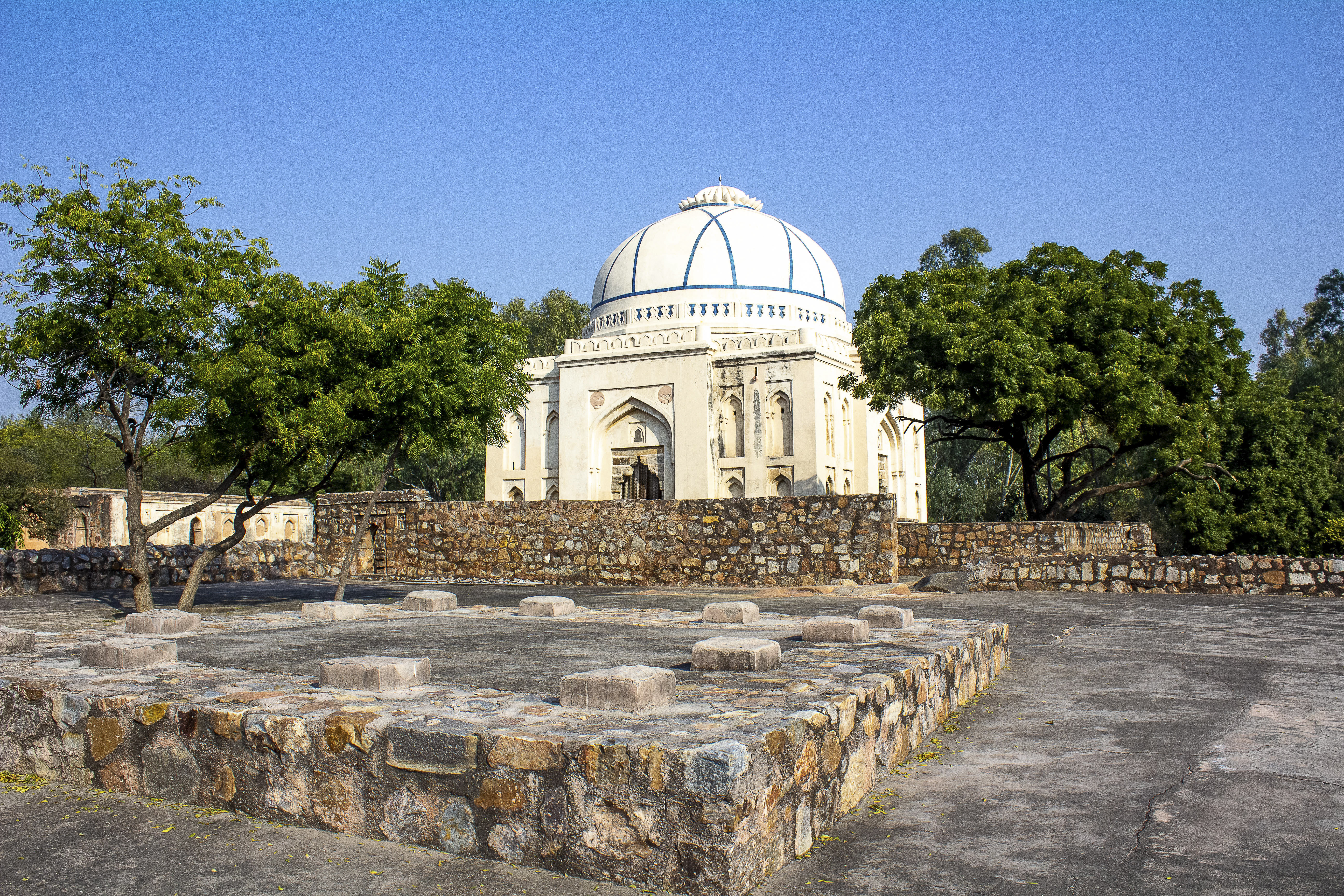
Have you ever heard of ‘Tughlaq Gardens’? Just like Lodhi Garden or Mughal Gardens! No? Well, well, poor Tughlaqs could never get the gardens of their era to survive. Nor did the generations coming after them made any effort to restore them to their original glory. It is believed that between the five or six generations of Tughlaq dynasty – they built some 1500 gardens in and around Delhi and the Deccan area. One of them has partially survived in the upmarket, rich South Delhi neighbourhood of Vasant Vihar. Over the last five years a lot of effort has gone into reviving it. DDA together with some responsible citizens of the area surrounding it have put in a lot of effort to rescue this abandoned child.
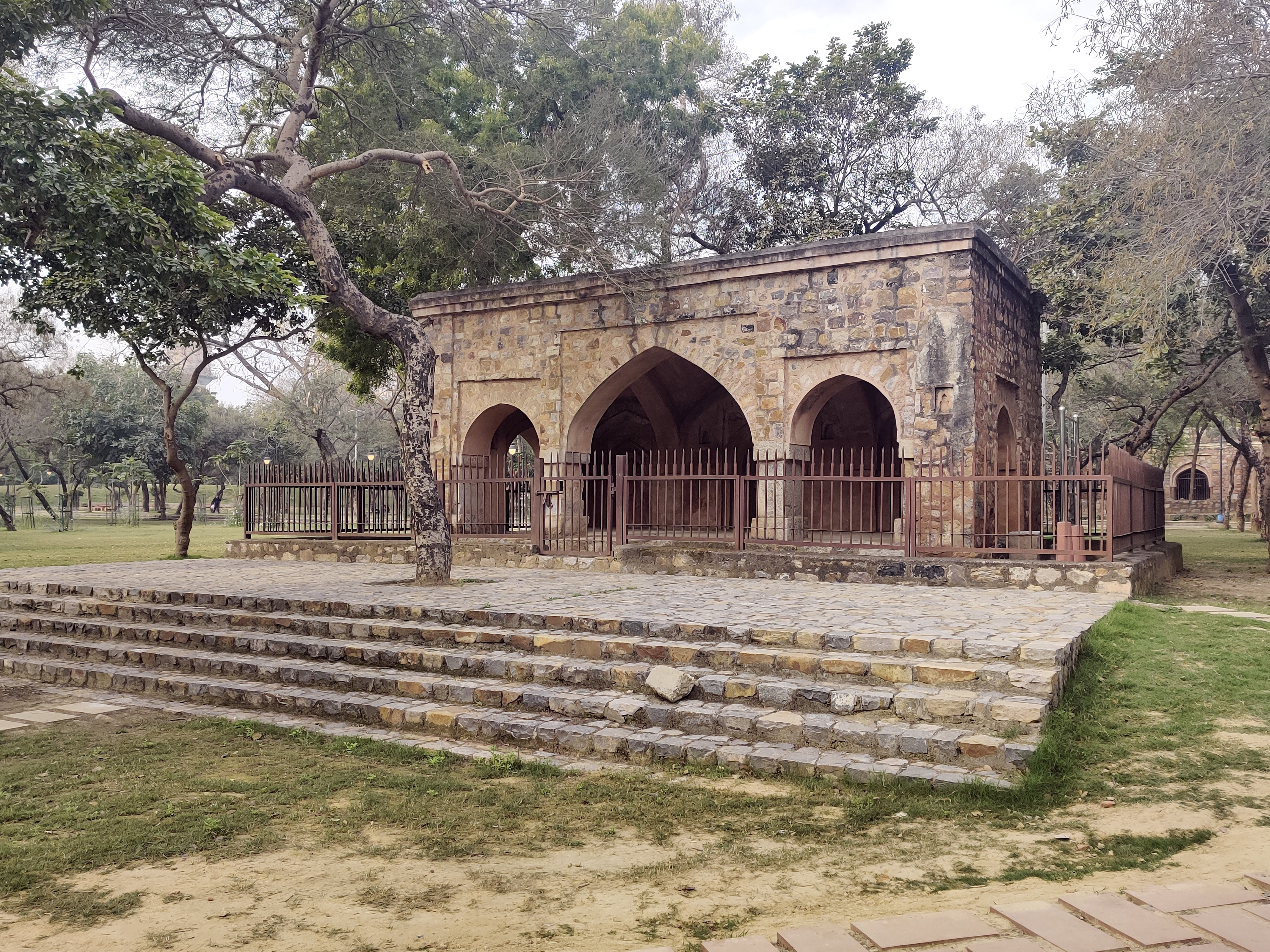
Just like an abandoned child, an orphan, a monument too can fall prey to bad elements. In the case of monuments that are hidden behind rocky outcrops, in the jungle or behind the unkempt foliage – it is all the more easy for vagabonds and addicts to use these for their nefarious activities and as a place of solace away from the eyes of society and the law enforcing authorities. This was the case with Bara Lao Ka Gumbad before the Archaeological Survey of India took the monument under its care. A family had been living inside the 600 years old Lodi/Tughlaq era monument for over 40 years or ‘for three generations’ as they claimed. Located inside the 45 acre DDA Park in Vasant Vihar, this monument lay abandoned for over 100 years. Residents of the surrounding bastis and the land mafia kept encroaching upon the rocky land which had been secured by DDA. A local politician even created a large structure on the land to store LPG gas cylinders. A family having created their ‘living quarters’ inside the royal monument refused to vacate the same and had to be legally evicted but it was too late. By then they had painted the insides and damaged the inner and outer walls of the monument at many places. To preserve this piece of our heritage and to protect it from future encroachment, the entry to the monument has since been restricted. But for the period about when it was built, not much is know about the structure. The surrounding garden is from the Tughlaq era. Historians believe that Muhammad Bin Tughlaq (1290-1351) who ruled over the Sultanate of Delhi (son of Ghiyas-ud-Din Tughlaq) created over 1500 gardens in and around Delhi of his time. Firoz Shah Tughlaq (1309-1388) contributed further to the development of many more gardens in Delhi much before the Mughals came and ruled Delhi or the Lodi’s created what is now called Lodhi Garden. It was Babur the Great who defeated the army of Ibrahim Lodi in 1526 at the famous battle of Panipat.
The Tughlaq Dynasty Ghiyasuddin Tughlaq (1320-24); Muhammad Tughlaq (1324-51); Firoz Shah Tughlaq (1351-88); Mohammad Khan (1388); Ghiyassuddin Tughlaq Shah II (1388); Abu Baqr (1389-90); Nasiruddin Muhammad (1390-94); Humayun (1394-95); Nasiruddin Mahmud (1395-1412)
With a short takeover by the Sayyid dynasty (ruling at that time in Punjab) the seat to rule Delhi was taken over by a Pashtun Tribe from Afghanistan. Bhalul Khan Lodi was the first in the Lodi dynasty to have taken over the power from Sayyids in 1456. The Lodi dynasty ruled Delhi till their defeat at Panipat at the hands of Babur.
The Lodi Dynasty Bahlul Khan Lodi 1451–1489; Sikandar Lodi 1489–1517; Ibrahim Lodi 1517–1526; Mahmud Lodi 1526-1527

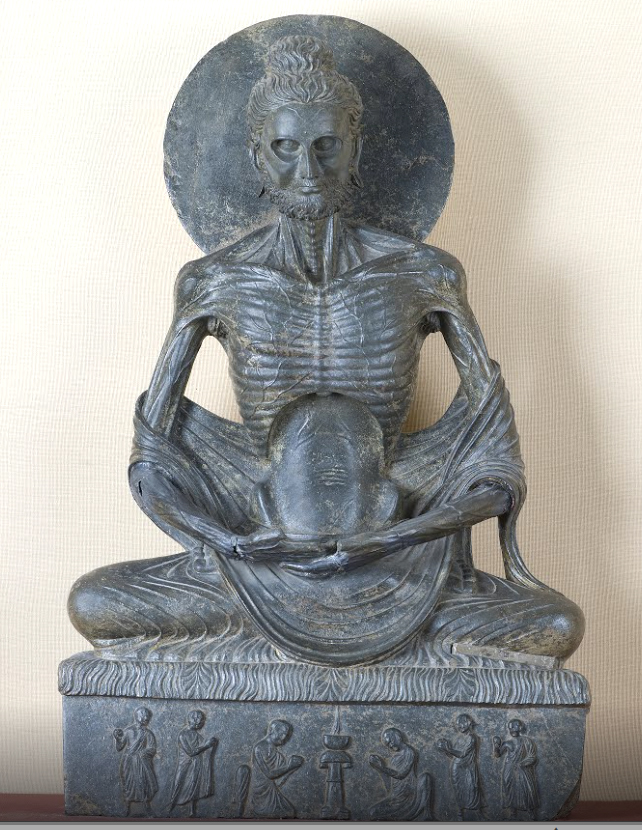
Yes. the famous Fasting Siddhartha (3rd CE) of Lahore Museum. When I faced it at the entrance to the Gandhara Gallery of Lahore Museum nearly two decades back, to me this stunning sculpture was the Lord Himself. Sad, that the left arm was broken during a cleaning procedure in 2014. Known as the ‘jewel of Lahore Museum’ this piece of art ranks not only as one of the finest specimens of Gandhara Art but also as one of the rarest antiquities. I believe the artisan who crafted that piece must have lived that suffering. Look at the details of veins, arteries, ribs, the folds in the skin, the dried bones. Gautama apart, even the artist wanted to end the suffering of the world. This image shows an exceptional degree of Gandhara devices employed in the sculpture. Maya Joshi is an eminent scholar, I suppose she has addressed your disquiet about Buddhism to some extent.
My picture of the sculpture from my book on Lahore.
 Ankahi. Unsaid.
You must be logged in to post a comment.