<PDA> ‘Arriving early today’, the text message announced late last night. How would the messenger know that it had been a forever wait. I receive, confirm and sign ‘ बहुत देर कर दी मेहरबां आते आते’. Love is… a long wait.
This, that, and all between.

<PDA> ‘Arriving early today’, the text message announced late last night. How would the messenger know that it had been a forever wait. I receive, confirm and sign ‘ बहुत देर कर दी मेहरबां आते आते’. Love is… a long wait.


Elizabeth Brunner (1919-2001)
There was nothing special about that Sunday, and if I can recall it clearly, nothing special either about the walk through the Daryaganj Book Bazaar. A usual lazy morning, cacophony of crowded streets, crawling traffic skirting cows and bulls majestically occupying the road, vehicles squeezing past the crowd spilling on road from the narrow footpath. Stall after stall I stopped and checked for new additions with familiar vendors, bumping into strangers and smiling at them, rummaging through stack after stack of books, putting aside a few titles, contemplating and then putting them back, bargaining at times and then submitting to the demand, and lastly worrying about the weight I will have to lug to the parking way off at Delhi Gate.
This is one bazaar I am never ready to leave soon despite the long tiring walk from the edge of Asaf Ali Road to Jama Masjid and back twice over. Sitting on this pavement I have enjoyed umpteen glasses of extra sweet hot chai served by Rafeeq whose brother Faizan has a motorbike repair shop just short of the bend where Daryaganj foot-over-bridge once used to be.
Depending on the weather, on getting back home, I would celebrate the new additions to my library with a steaming cup of coffee or a chilled beer. The first thing I do with a new acquisition is to pencil mark the date of purchases on the inner back cover and then flip through the pages to get a hang of the book. This one is marked October 21, 2018-2088. You may wonder what 2088 is after the date. Well, that is my code for the cost of the book. Subtract the Year from the number after that and that is the amount I paid for the book. Genius, isn’t it.
This title is ‘Company Paintings in 19th Century India’ by Gavin Teller. Here and there the text has been underlined in pencil. There are other markings too, a tick here or a question mark there. At a couple of places the ‘year’ of a painting has been corrected and text has been added in a very tiny illegible hand along the caption to the painting or the picture. It seems that the earlier owner was either an artist or an art student. It is a large format book, slightly bigger than regular A4, hardbound. The jacket is missing. The red binding cloth is fraying at the edges. The corners are broken but the paper and print quality is excellent. At 70 rupees it is a steal. A few pages have large circular brown patches, presumably moisture around the binding seam. A familiar smell prompted me to leave the book open in the muted sunlight filtering through the window.
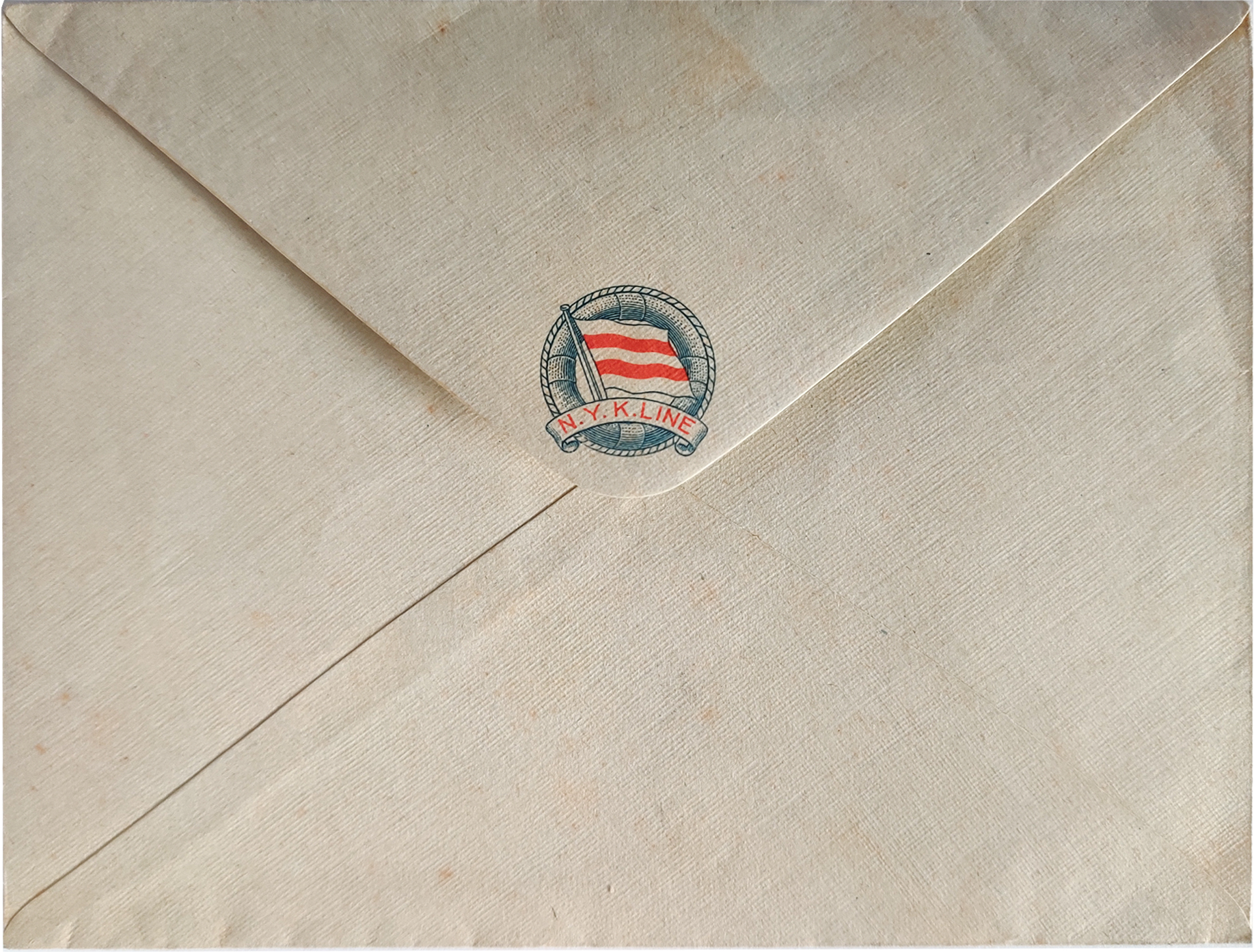
By evening the book had had a decent sunbath. As I picked it up and turned to put it on the shelf something slid out of its pages and fell. It was a ‘small’ bluish-grey envelope with the seal of a shipping liner (N. Y. K. Line). At 3.5 x 2.5 inch, the envelope was the size of a Business Card. Its flap or the lip had not been sealed or pasted to the body instead it was folded in. The paper texture and the envelope style suggested that it was not Indian and it was also not something that was from the recent past. Feeling the elegantly embossed seal I knew it was precious. I could sense there was something inside the envelope and that excited me all the more. A letter ! A love letter ! Or a letter from an important person in history to another one. Ah! So many thoughts crossed my mind. My heart raced, the beat pounding so fast that I had to sit down to control myself. I kept both the book and the envelope on the table, grabbed my phone and took a picture of both. Keeping the envelope securely I flipped through every single page of the book looking for any other paper, object or marking that I could relate to the envelope. None. On doing a G-check I found that NYK Line is a Japanese shipping company operating since 1885. https://twitter.com/nyklineofficial @nyklineofficial
It may sound crazy and unbelievable but some of the things I have found in old/used books are: a horoscope birth chart (kundli), postage stamps, a rolled cigarette, a doctor’s prescription, photograph, an empty envelope addressed to a woman, marijuana leaves (yes, more than one) and paper currency. A friend shared that she has found letters, dried bubble gum, postcard, pictures of god, paper napkin with a sketch, a library card, a tuft of hair and even a film negative. (think of the ghazal जिस तरह सूखे हुए फूल किताबों में मिले). But the one I found on that Sunday was something of treasure.
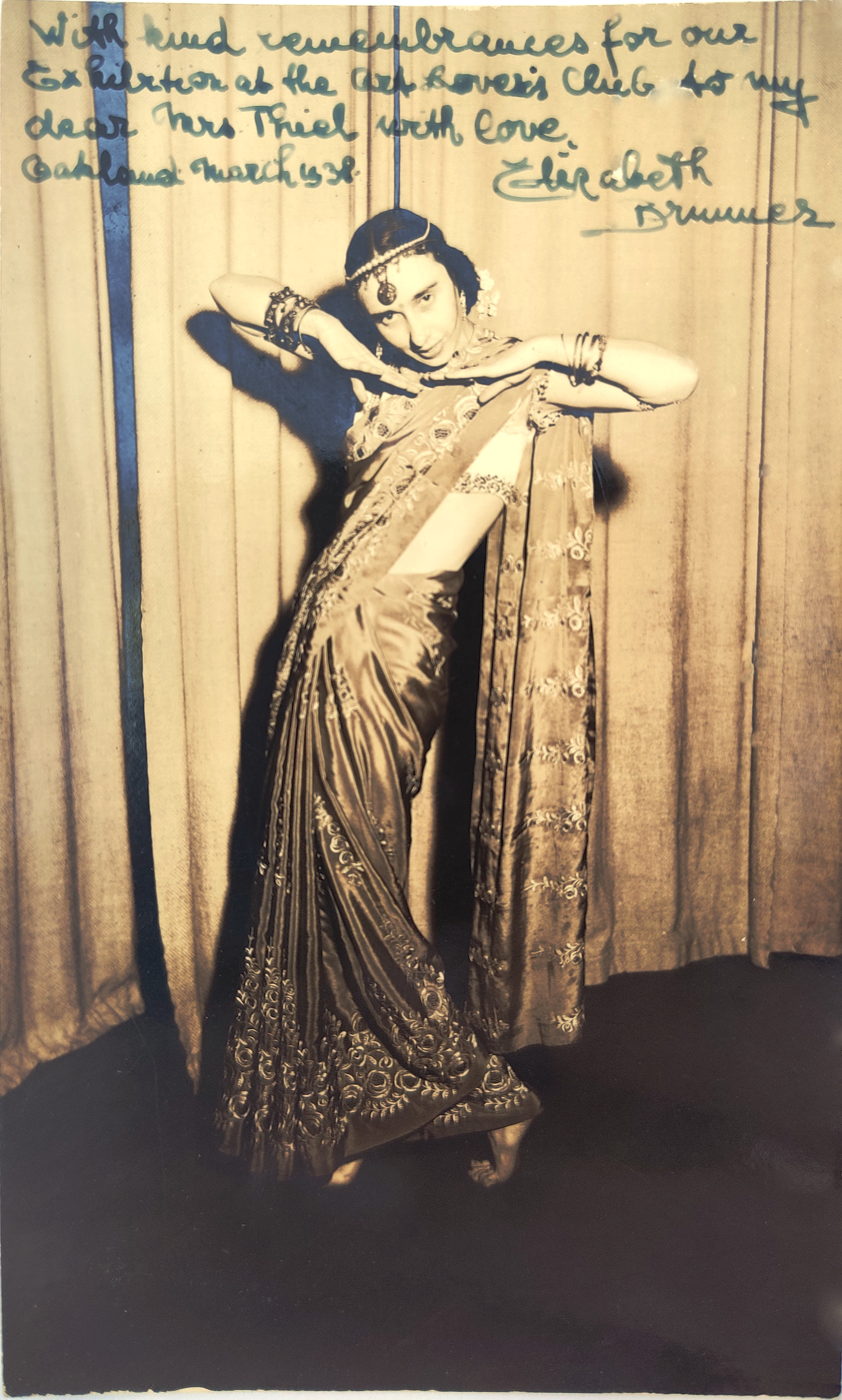
Coming back to the envelope I opened it very carefully so that I don’t damage it or even leave an extra crease on it. Peeping in I could see that it was an old photograph. I didn’t want to touch it or pull it, turning the envelope upside down I shook it a couple of times. The picture fell out on the couch white side up. Even before I could see the picture I read the message inked on its back in an elegant handwriting which narrated the event described its sender. What I was holding in my hand was a piece of history going 84 years back. Yes, EIGHTY FOUR years. It was a studio shot of one of the renowned artists from Europe. The message read:
With kind remembrances for our exhibition at the Art Lovers Club to my dear Mrs Thiel with love. Oakland, March 1938, – Elizabeth Brunner
Well, well, if you have heard of, or know of, Elizabeth Brunner you would know who I am talking about. Elizabeth Brunner (1919-2001), the Hungarian artist, came to India in 1930 with her mother, Elizabeth Sass Brunner, and made this country her home. She was all of 20 when she landed here and spent the rest of her life in India.
In India they travelled extensively to Bengal, Kashmir, Maharashtra, Rajasthan and Gujarat during the time when the Indian independence movement was at its peak. She and her mother
were deeply influenced by Hindu and Buddhist philosophy and thought. They met, interacted with, and painted portraits of greats like Rabindra Nath Tagore, Mahatma Gandhi, Maharani Gaytri Devi, Benode Behari Mukerjee and many more eminent Indians of that time. They spent a long time in Shantiniketan. After India’s independence Elizabeth Brunner settled in Delhi and stayed in a house in Rabindra Nagar in Central Delhi. She was an important and regular visitor to the Hungarian Centre at 1 Janpath, Delhi. The last exhibition of her artworks was held here in the year 2000 almost an year before she passed away.
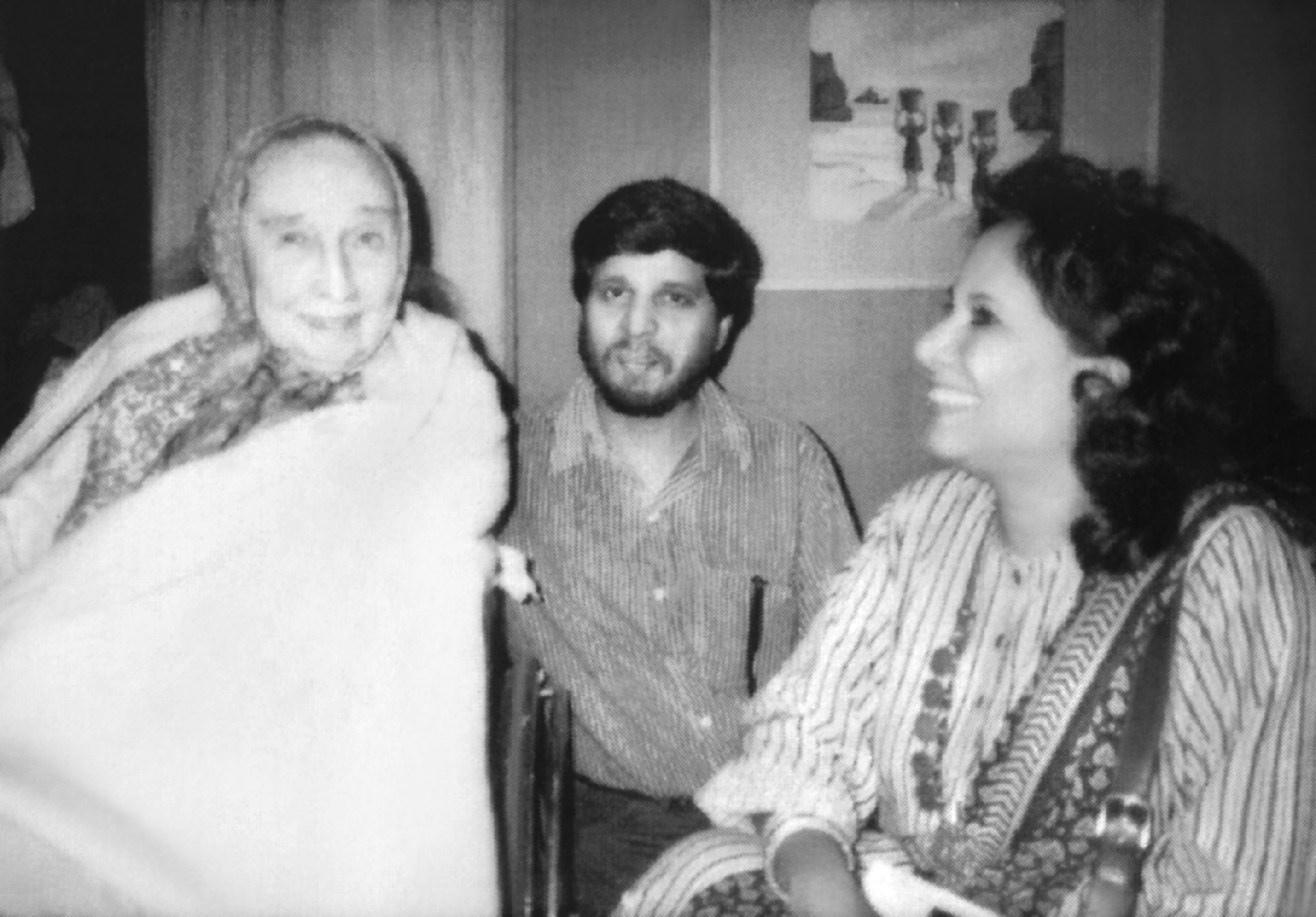
That’s where I met her, at the Hungarian Cultural Centre. In the picture shared earlier, on my right is Ms Elizabeth Brunner and on the left is Sukanya Rahman, a renowned classical dancer and visual artist. Sukanya is the daughter of Odissi dancer Indrani Rahman and architect Habib Rahman. The photo is by Ram Rahman who cannot find the original colour negative or a decent print. This one has been scanned from a laser print.

There was nothing special about that Sunday, and if I can recall it clearly, nothing special either about the walk through the Sunday Book Bazaar at Daryaganj. A usual lazy Sunday morning, cacophony on crowded streets, the crawling traffic skirting cows and bulls majestically occupying the road and squeezing past the crowd on the narrow footpath. I stopped and checked the new additions with familiar vendors, smiling at strangers, rummaging through stack after stack, putting aside a few titles and then putting them back, bargaining at times and then submitting to the demand, and lastly worrying about the weight I will have to lug to the parking at Delhi Gate. This is one bazaar I am never ready to leave soon despite the tiring walk from the edge of Asaf Ali Road to Jama Masjid and back twice over. Sitting on this pavement I have enjoyed umpteen glasses of extra sweet hot chai served by Rafeeq whose brother Faizan has a motorbike repair shop just short of the bend where Daryaganj foot-over-bridge once used to be.

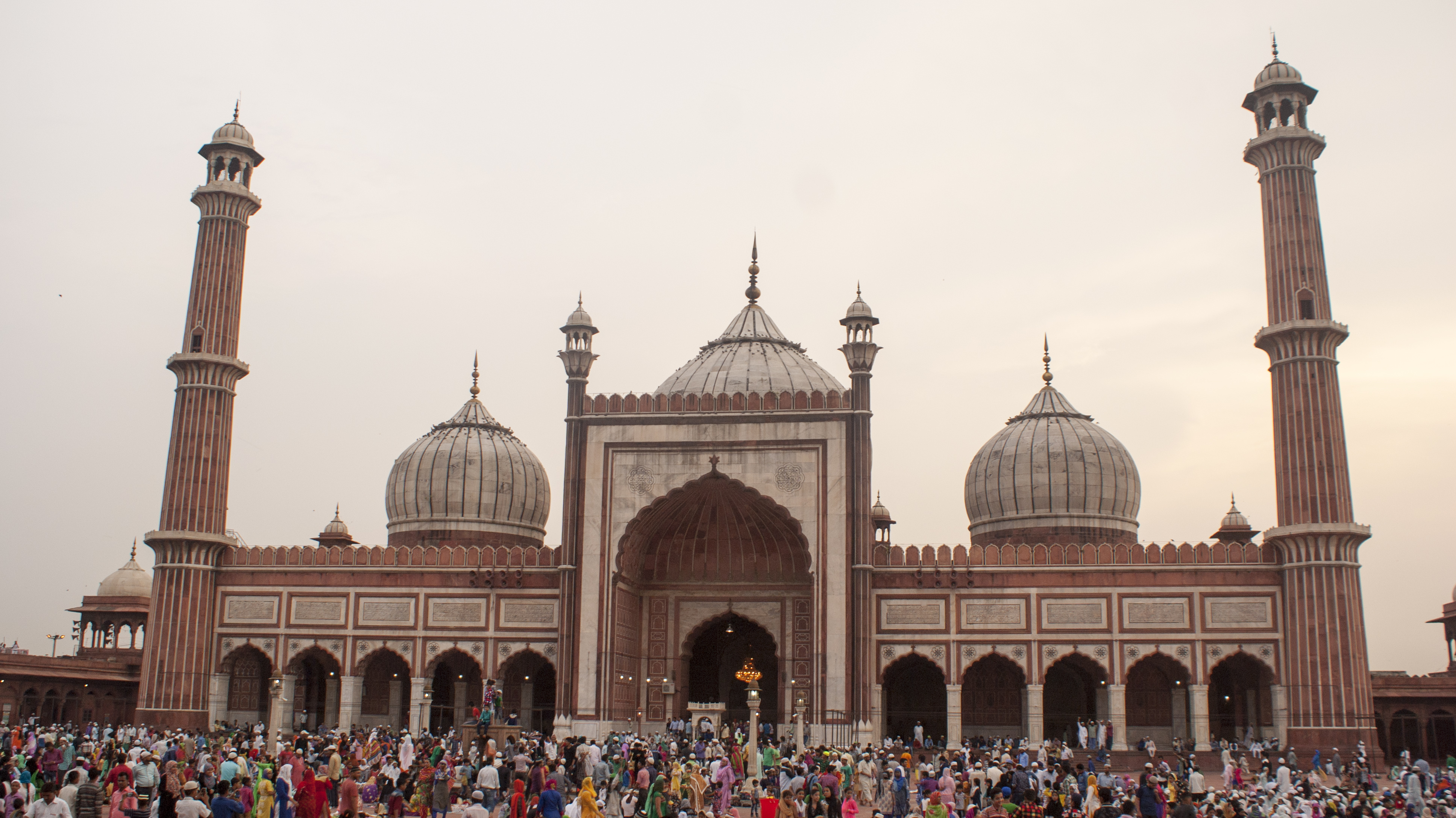
Wonder if the God listens to its faithful or not, but somewhere I feel it is very unfair on those who fast for an entire month, every single day for the month of Ramzan. But, to us kafirs, this month gives a limitless opportunity to gorge on delicacies from sehri (at dawn) to iftar (at dusk) day after day without having to fast.
With no iftar invitation coming my way this year I called my friend Azhar and decided to enjoy an iftar evening at Delhi’s Jama Masjid. Probably the finest Jama Masjid I have seen. A Jama Masjid literally means, a mosque where Friday prayers are offered. On Azhar’s asking I reached outside Delite theatre at Asaf Ali Road at 5.30pm from where he accompanied me through the busy lanes and bylanes of puraani Delhi. Although the day had been cloudy and sultry, by the time we reached Matia Mahal and crossed Urdu Bazaar there was a gentle breeze flowing above us giving much needed relief. On the crowded streets vehicular smoke and dust ruled, but inside the bazaar smell of kebabs, tikkas, gosht being cooked in deghs and biryani was all encompassing.
For the devouts heading to end their day’s fast after the evening namaaz, the smell of good food is a torturous ordeal. One is hungry & thirsty, counting every minute for that moment when one will be able to fulfil his roza and take a few swigs of sherbat or munch a khajoor (date) – at that time – to pass through a street where every inch of space is decked up with food, food and more food is a torture to the even the strongest of beings. The road to gate number 3 of the Masjid was completely blocked from all sides. It was difficult even to walk and find your way past thousands of people, rickshaws, scooters and cars.
The magnificent Masjid, with its imposing red stone wall ran to my right. It was past 6.15 when we reached that point where there was a long queue at the security check. From outside I could see the last of sun rays shimmering through the southern minaret and lazily resting on the ramparts. Adjusting my bag with one hand and clutching my shoes in the other, I ran past the crowd to land on the crowded square courtyard. Hundreds of families in their colourful attires had taken up each inch of available space. Somehow struggling my way through them I reached the central water pond where too there was a queue of people waiting for their turn to do vaju (ablution).
Once past them I managed to reach the main entry facing Red Fort. Having positioned myself strategically facing the Masjid. I managed to catch the setting sun behind the western minar and the smaller dome on its side. The announcement for iftar (for the rozedars to end the fast) came as a loud bang of a fire cracker after which there was a call by the muezzin. I had found my friends Azhar, his brother and Shoaib comfortably positioned in a corner next to the main prayer area. Food had already laid, there were dates, fruit salad, bananna fritters, pakoras, kebabs sherbat and chilled water.
By the time we finished eating the call to prayers, next namaaz, had already been announced. Wow!!! What a scene it was. As the lights were lit over the largest mosque in the country, Shahjehanabad the city of the Mughals came alive. Thousands of faithful quickly took position in neatly formed rows to offer prayers as the Imam read prayers from the scriptures. It takes all of 20 minutes for the prayers to be over and then it is time to gorge on more food as people scramble their way out of Jama Masjid to hit the colourful bazaars and food streets all around it offering lip-smacking delicacies.
As I came out of the Masjid having thanked my friends and having made peace with the God, I was amazed to see the jam-packed bazaar below the main gate, past the steps where a canal used to run till a few years back. With dozens of people crowding at each shop, it was difficult to negotiate way past the crowd of men women and children busy buying artificial jewellery, clothes, household goods, gifts, sevaiyaan and kebabs. Colourfully decorated streets on all sides of Jama Masjid were lit with strings of tiny LED lights had the spirit of festivity. Shimmering streamers and flags tied from one end of the bustling street to the other were like a low-hanging canopy of stars coupled with paper lanterns, a reminder of the times gone by.
Fasting and feasting, thats what Ramzan is all about to me.
Merri Dilli – from New Delhi to Old Delhi. 21 June 2016, Summer

A yellow moon in a green sky!
Does the breeze moan, stars sulk and cry?
Is that what happens on the longest night?
they call winter solstice.
the winds dont whisper or
tell stories any more
they hiss
Soulless is this withering garb
Why have you abandoned me, O Muse
in this valley of
where I search for words
and only write silence
Born to clouds and thunder
I am darkness that births light
A storm collecting raindrops
Don’t take life seriously. We and everyone around us is going to die anyway.
Take the revenge and settle that score here and soon. There is no other life time.

 Ankahi. Unsaid.
You must be logged in to post a comment.