How can ‘design’ help us think differently about death?
A series of interesting conversations among the international design community about “Death and design: the creative projects confronting society’s ultimate taboo.”
“The visual language of death has stagnated, and creatives have a vital role to play in how future generations face its complex subjects. Here, we chat to a design research practice dedicated to death, and delve into some of the topics covered at their recent conference, from symbols of death and branding the end of life, to ‘traumacore’.
Death: it’s a topic that often feels like no one really wants to talk about. Especially, that is, in the buttoned-up culture of avoiding difficult topics that the UK is so well known for. But whether we like it or not, death is something every single person will deal with in their lifetime, and one day encounter themselves.”
Death and Design? While the world deliberates the essential nature and icons of death, I wonder if the Indian design community has ever given it a thought.
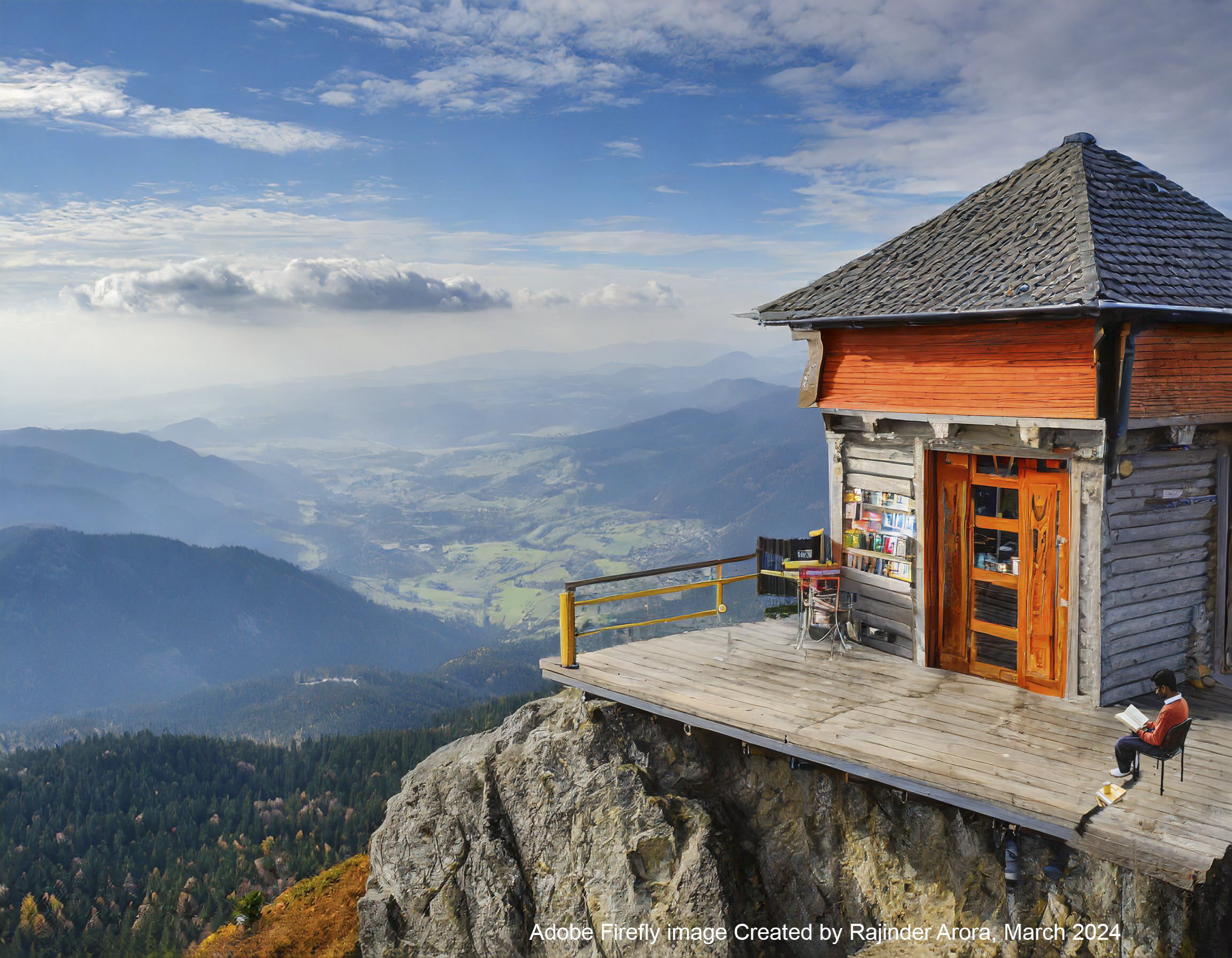
Chinese man builds bookstore on a mountaintop. Yes, he’s a poet.
A 57-year-old “self-styled poet” (aren’t they all?) has spent $116,000 of his own money to build a bookstore in a mountaintop village. Oh, and it’s shaped like the number 7 and contains 7,000 books. No, this is not a parable.
As Jiang Libo told the South China Morning Post:
Before my bookshop was built, the closest bookshop or library to this village was in a town about 30km away. I’ve found fewer and fewer people read books, and bookstores generally are struggling. My thought is: when villagers are idle, or kids are on holiday, they can come to read books. Isn’t that wonderful?
Yeah, I suppose it is pretty wonderful, if not a little nutty. The store, located in Zhejiang province, on the eastern coast, is appropriately named Milestone Bookstore, and news of its unusual location has gone viral on Chinese social media.
Poets worldover, the gauntlet has been thrown. Your move.
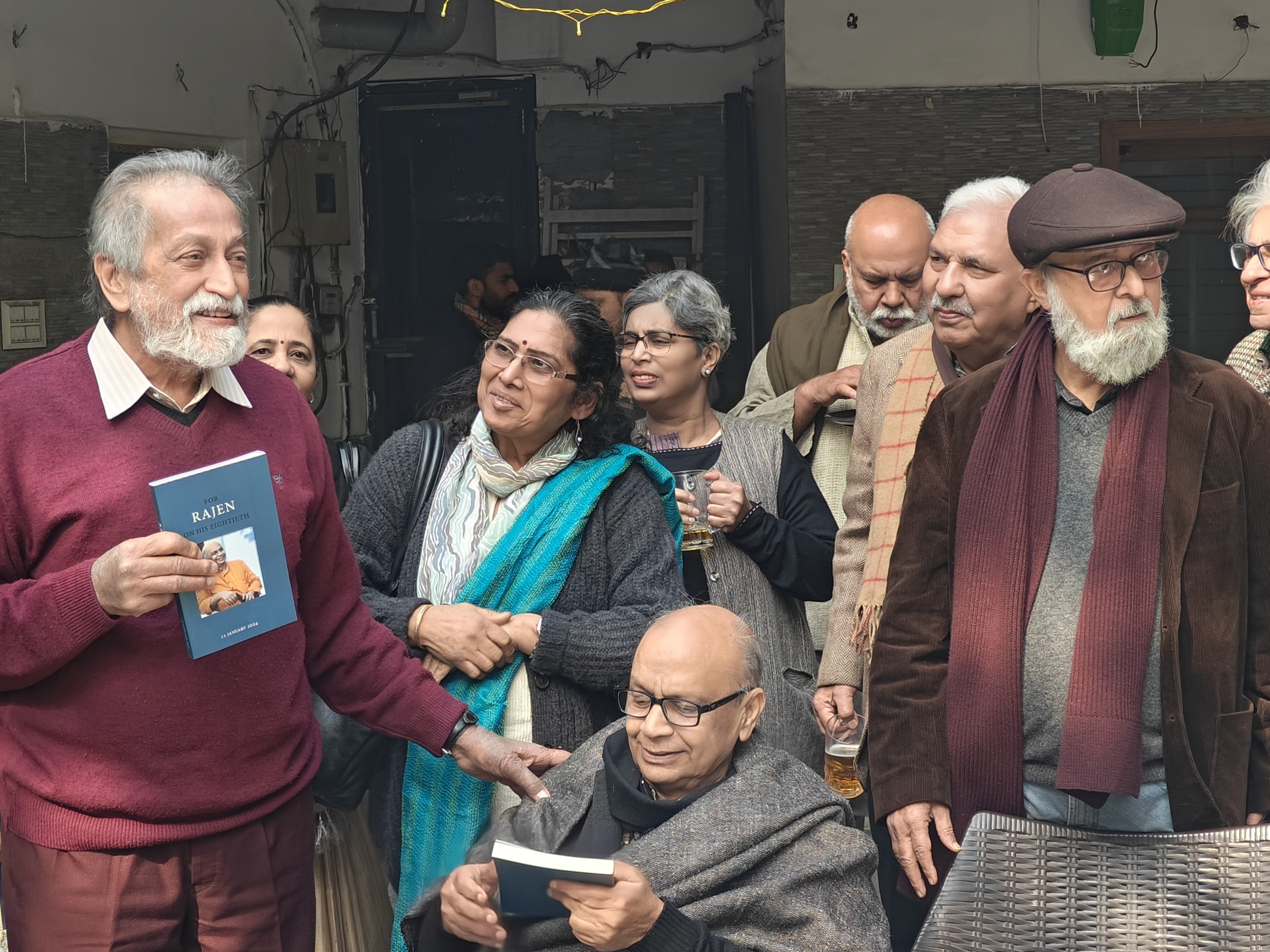
‘Tumhari politics kya hai bhai?’ was Rajen’s affront to the man who was upset over LK Advani’s arrest. We all knew the man’s leanings and were warning him of the consequences of such communal acts. It was a couple of days after Lalu Prasad Yadav had stopped Advani’s Rath Yatra and had him arrested in Samastipur, Bihar in 1990. On a cold October morning chairs had been pulled out of the tiny Sahmat office at VP House and a few of us were sitting in pale sunlight sipping lemon tea. Lalu Yadav knew where this yatra or the saffron brigade was heading and so did Rajendra Prasad or Commissar Rajen as all of us called him. I was introduced to Rajen only a few months before this incident and we were discussing a document that had to be designed for Sahmat.
In a way I had known of Rajen even before I met him or was really introduced to him formally. I happened to know, and was friends with, some of his friends from purani Delhi. An acquaintance of his was my neighbour. A common friend, a senior journalist, was known to me for nearly a decade before I met Rajen.
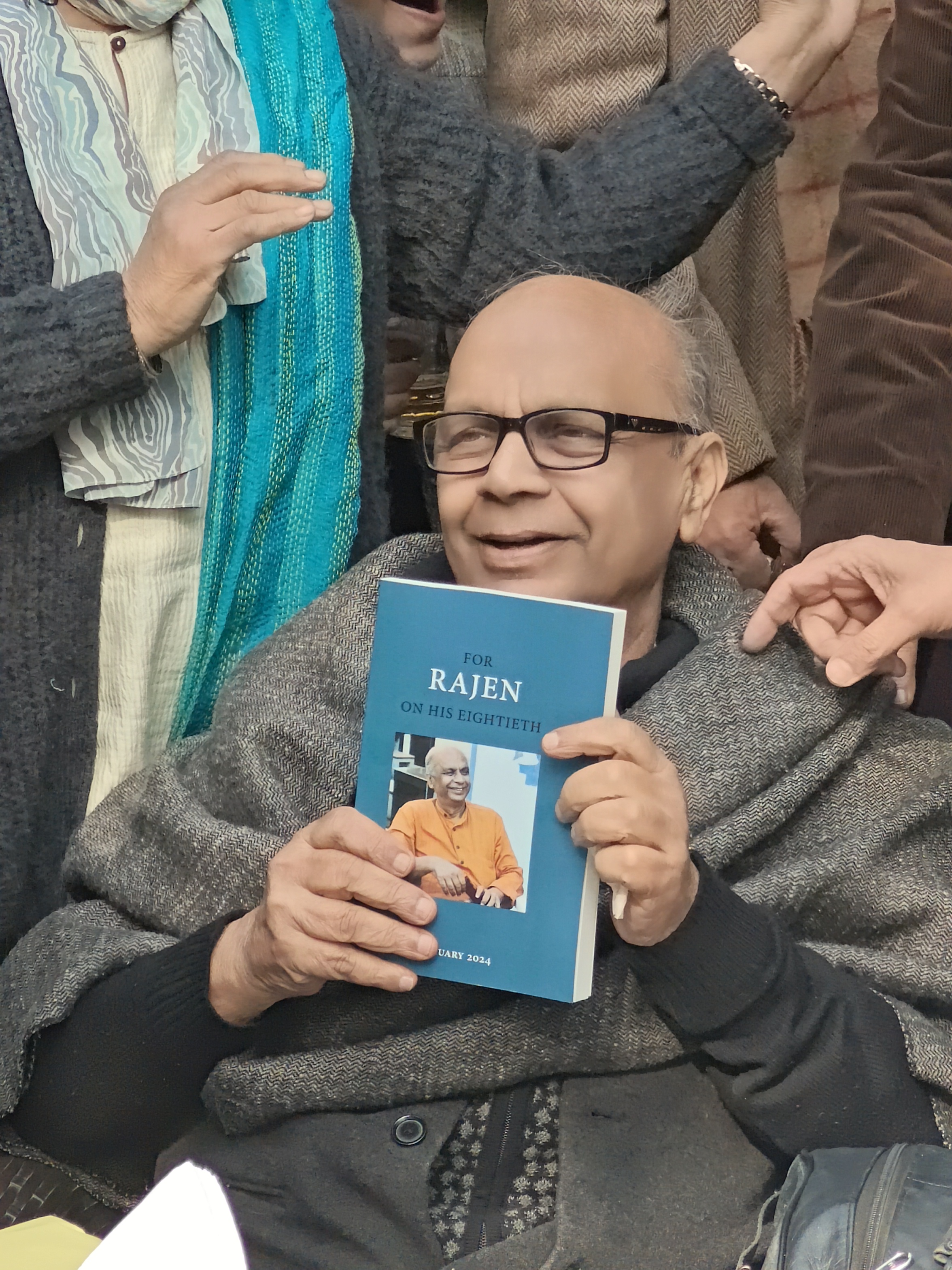
Thirty-four years of association, of walking together, of protests, of working for causes close to the hearts of all at Sahmat, of art and activism, of standing up together each time the people of this ‘socialist, secular, democratic republic’ have been threatened by vicious communal and divisive forces. Thirty-four years is a long time to know someone and I can claim that Rajen is a dear friend who has been an inspiration in ways more than many.
Something that foxes me is that all these thirty-four years Rajen has never taken ‘leave of absence, a break, a vacation, a sabbatical or a casual chhutti. So much so that I don’t remember if he was ever unwell which would have given him at least an excuse to skip visiting Sahmat office. He was and is always there – even when half the town is shut, even when there is nothing, political or cultural, demanding intervention. Not a day passes without him at Sahmat, where scores of people visit to meet him and seek his counsel, to network, to share good and bad news from across the country. For many a journalist talking to Rajen is a lead to ‘serious stories’.
In our collective fight for communal harmony, secularism, freedom of speech, shrinking space for dissent, attacks on minorities and other similar issues Sahmat, over the last three decades, has been more vocal and far ahead of even political parties in debating the issues and organising people. In all these contested spaces Rajen has largely shaped Sahmat’s course over the years.
Selfless guide and comrade Rajen almost always not only led the way democratically but also kept the flock together in every project and never ever sought a mention or an acknowledgement for himself. Despite all the arguments, difference of opinions and even hot exchange of words one would find Rajen smiling the next morning and ready to take on the next challenge.
A committed Marxist, an analytical mind, an avid reader, a foodie, Rajen loves romantic shayri (though I have never heard him recite). A repository of ‘everything Delhi’ – Rajen is my go to man when in doubt over anything ‘politically correct’. I wish he remains my guiding polestar and enjoys good health and a joyous life.




 Ankahi. Unsaid.
You must be logged in to post a comment.