Sisters share more than just the mother – they share memories, morsels and mirth. As sisters age together they share bodily pains and aches, develop identical creases on their faces and near-similar throbbing blue veins under wrinkled skins in which the biological code of generations is embedded. Well past their nineties, sisters start looking like identical twins with similar, puzzling faces. Their toothless smiles and groggy grunts sound so much alike that their own children can confuse one for the other. When they huddle together with faces covered, their own sons falter in picking the Mother from the Massi.
Only when I looked closely did I find that my massi had slightly broader nails on her long dainty fingers. Ma’s fingernails were naturally manicured into perfect rounded shapes, she rarely filed them, rounded the tips or even applied nail enamel. Earlier in life Ma would chew nails when anxious.
Having lost my mother six weeks ago, I am here in Suratgarh to see my Massi who is Ma’s immediate older sibling. Having been privy to their phone calls, thrice a day for over two decades, I can vouch that the attachment between two sisters who lived past ninety is a rare, beautiful masterpiece shaped by nearly a century of shared existence. Their connection transcends words, relying on a silent, comforting telepathy built over nine decades. They are living mirrors for one another, anchoring each other to reality and providing a unique comfort that nobody else can duplicate. Massi threw up her hands and cried for an hour upon seeing me. It was very difficult to control her and I wanted her to pour out the grief.
Ma and Massi shared a private universe of memories (from Jhang, Lahore, Rohtak and Patna), remembering the same childhood home, their parents, and the trials of the Partition era that we have only read about in history books. For years their bond provided an unmatched sense of emotional security, offering each other a safe harbour where they could be themselves: ‘Sisters Without Pretense’.
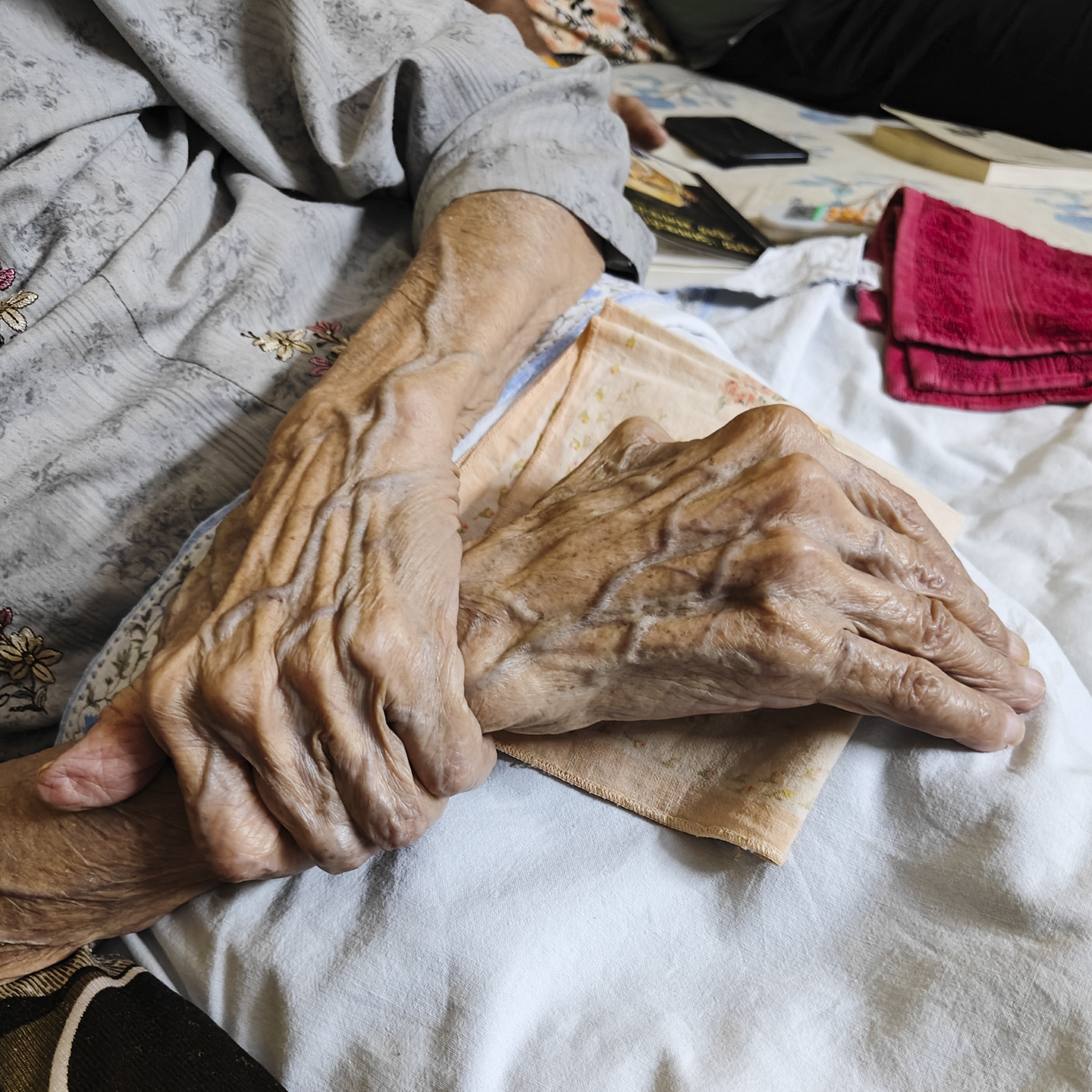
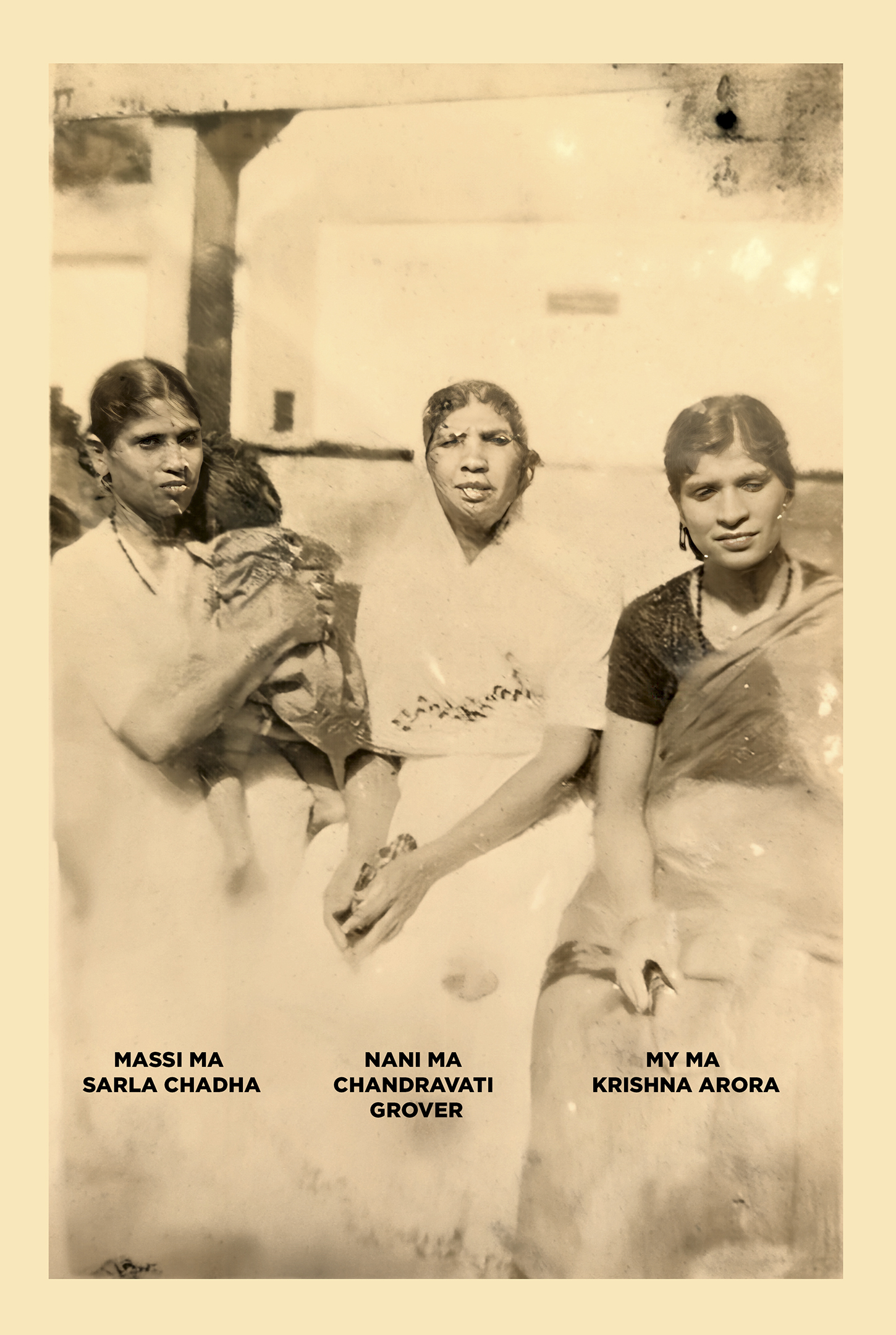
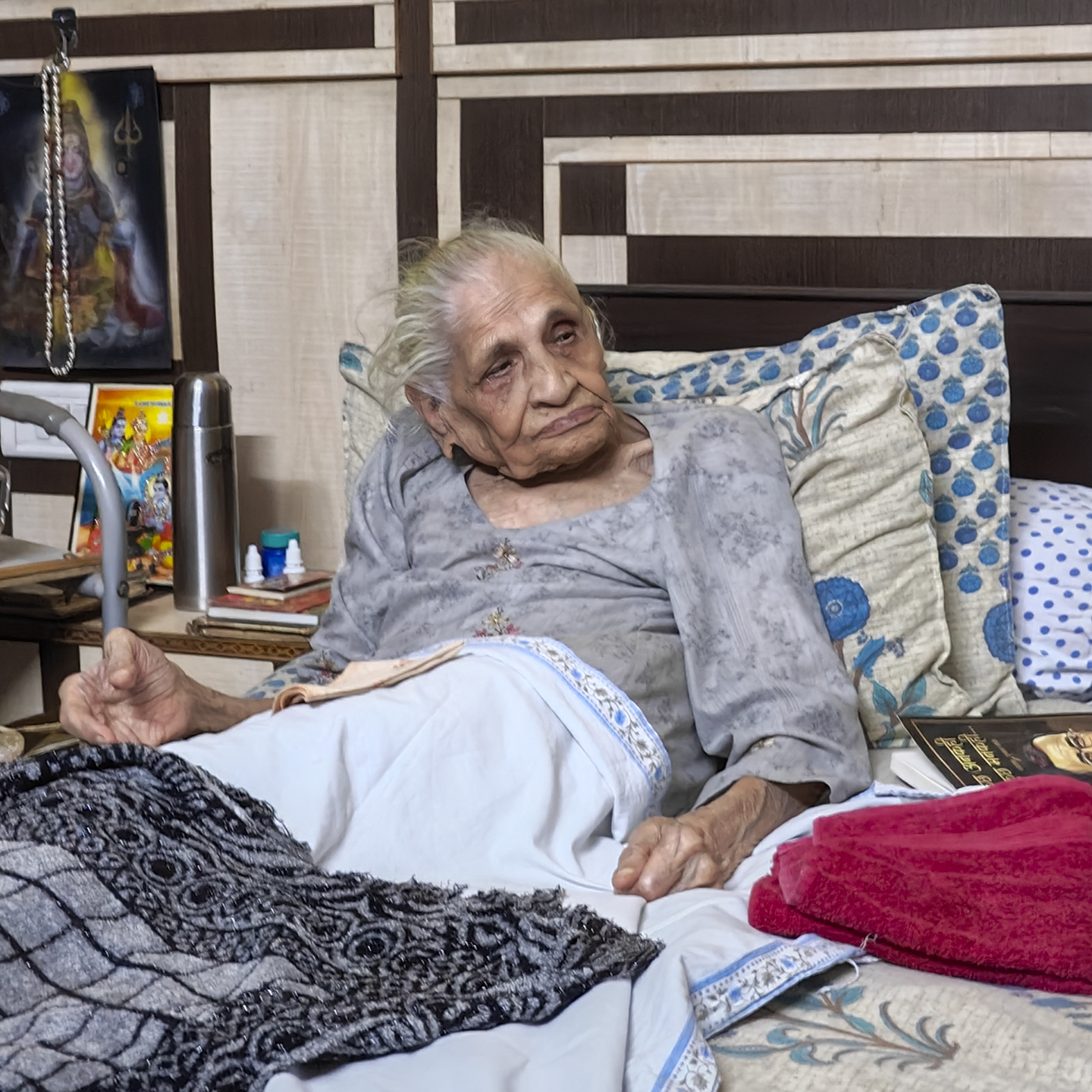
Meeting Sarla Massi was something I owed my mother and myself—a plan that couldn’t materialize because of Ma’s detriorating health. Meeting her favourite nephew (me), massi is at peace and I too feel at peace when I stand in front of Ma’s photo. ‘Ma, we met her, Sarla auntie is fine.’ In this poignant picture from the 50s, the sisters share a special moment with their Mom, my Nani, Chandravati. And the other picture is of Sarla auntie and her hands from a few days ago. This is the last piece of our Suratgarh sojourn.
In the last 24 hours I have seen more portraits and pictures of Raghu Rai (on digital platforms) than I had ever imagined they even existed. It is sad that Raghu Rai is no more. He had been suffering for a few months. It is nice to see friends and acquaintances pouring out their love for him, and in turn, projecting their proximity to Raghu Rai. It is a veritable RR show online, an exhibition of his pictures some of which he wouldn’t even have known people cherished so much – friends, peers, fan, and acquaintances.
While a photographer is in the process of making a picture or when he is busy composing them, he doesn’t realise that he too becomes a subject of curiosity, an image himself. People knew him, people loved him as an icon, a star photographer and people adored him wherever he went. He would talk, he would explain politely and share the nuances of an art of which he was undoubtedly a master. Amateurs and youngsters in photography community addressed him as Guru and Ustaad and wanted to record their meeting with him. Undoubtedly his was a photogenic face too, handsome and his smile too could launch a few ships.
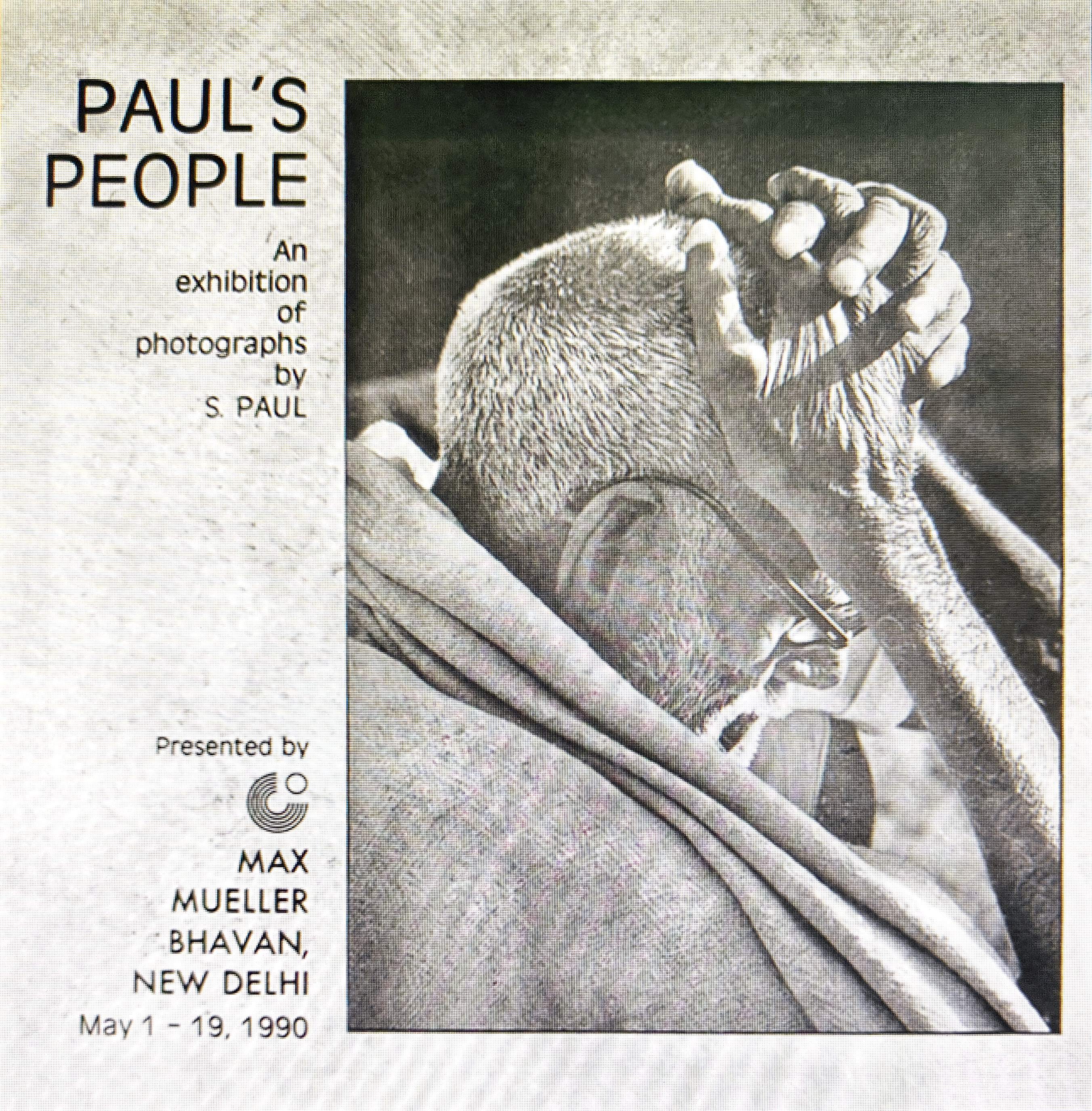
I can’t claim that he was my friend, yet our association and connection was such that we did treat each other as a friend. The first time I met him was in 1989 at his house in Rabindra Nagar next to Khan Market, Delhi. A UK based client of ours insisted on using one of Raghu’s Taj Mahal picture on the cover of his travel catalogue. Those were the days when film was used in cameras, pre-digital days. I had to pickup a 35mm colour slide from him and hand over a big amount for ‘one’ picture. He was a celebrity then and he is a celebrity now, thirty-seven years later. Even before I met Raghu Rai or had any association with him I had known his older brother S. Paul for whom we had designed and published a catalogue of his pictures. A show of S Paul’s pictures was organised by Max Mueller Bhavan, Delhi. I must say his pictures were very impressive.
As an advertising agency we are dealing with big names in photography all the time, whether for arranged shoots (industrial, architectural, food, fashion, product) or to buy stock pictures. That one meeting brought us closer and we kept meeting at art shows, galleries, social dos or at events organised by Kodak or Fuji. Ever since our meeting at SAHMAT events we got even closer.
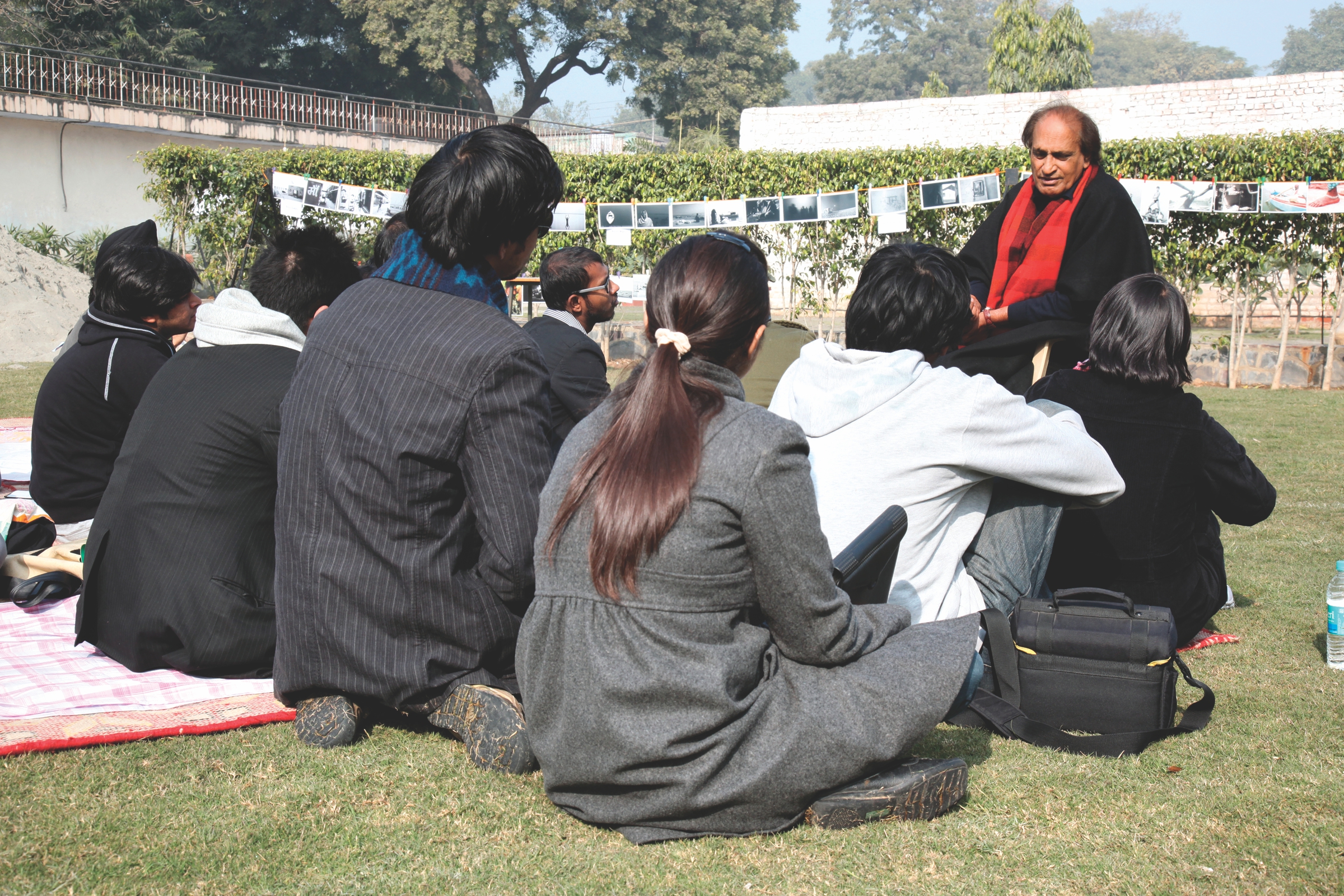
For some strange, and unknown reason I addressed him Prabhu (lord of photography??) and he would shoot back ‘Lal Pari’. About this moniker he once explained, “I have seen you many times wearing different red kurtas. Long back I saw you with your long hair bouncing off the shoulders, thus the name.” I nodded; you couldn’t argue with Raghu. I attended one of his photography workshops which he conducted open-air at the gorgeous location of Ojas Art gallery in Mehraulli. A large manicured green lawn, anchored around a banyan tree with its entangled roots hanging from its strong branches and its large leaves reaching for the earth. A tree that itself is associated with many renowned folklores was an aptly location for the master storyteller whose ‘pictured tales’.
I had never imagined that there was even a remote chance to see so many of Raghu Rai’s pictures in one go, one day without having to move from house or visiting a gallery. A very large number of Raghu’s pictures are being shared online today; pictures that are artistically superb, iconic and are a story by themselves. These pictures are being shared because they are liked by masses and are a part of public memory. Thats a way condolences are shared.
One can’t disagree with people posting his marvellous pictures but then RR was known for his keen eye, the game he played with his subjects, the locale, the foreground and background, the light and shade and the very story that moment had. RR was known for capturing a story in his pictures – sometimes those were poetry or a song; an ongoing movement that brought forth a particular moment that he captured – the one that had both, the before and after in it. And then he hung that picture for all of us to see and feel the fierceness of a sand storm, a village rising from the dust and embracing air travel,
Just like my mother, his family also came to India from Jhang where he was born. He shared it with with me after I had visited Lahore with my parents on a trip looking for their parental houses before the Partition. Raghu was eight years younger to my mother and they had shared the same mohalla. His keen eyes must have observed the ever changing subcontinent and the trauma of the uprooted families. He mentioned that he had been to Lahore long-long back in 1978 to locate their house and that for him too it was hugely emotional moment. Yet, he made full use of the opportunity and mingled with the crowd as he went about taking hundreds of pictures of the people and localities. There is very touching picture of him riding a donkey on a street, crowded with people surrounding him while he enjoyed all the attention – which all Indians get across the border.
His pictures were defining visual voices of modern India. Impressed by an exhibit of his work in Paris in 1971, Henri Cartier-Bresson, possibly the world’s greatest photographer in his day, nominated Raghu Rai to join Magnum Photos in 1977.
Today, photographers across the country are grieving a loss, but are also celebrating the life of a giant that rose above others to make his images immortal or outlive time.
Raghu Rai was not only a photographer with a keen observant eye but an artist who brought forth the aesthetics of a moment in his pictures. One can find RR pictures of almost all important events of the country from the 1970s onward. In mid-seventies, he was at the Maharishi Mahesh Yogi Ashram in Rishikesh photographing the phenomena in pop-music called the “Beatles”. His eyes found art where his contemporaries only found news. Like someone said, “Raghu’s evolution was meteoric. He raised news pics into world art. This was independent of his exceptional eye on the Taj Mahal, Mother Teresa, Dalai Lama, all the contemporary musicians. No war photographer had mixed valour, victory with a deep sense of tragedy as in his coverage of the Bangladesh war.” For those of us who shared a space in social and cultural activism, Raghu would be found standing with all for any cause. His haunting picture of a half-buried child after the Bhopal Gas Tragedy or the labour movement or even the plight of the migrants during Covid are silent sentinels of our times.
He was there, almost everywhere. Raghu Rai was in Ayodhya at the pivotal moment in Indian history when the Babri masjid was demolished. Not just that he documented the tragedy for posterity, he was at the receiving end from the Kar Sevaks who assaulted him and other photographers and his camera equipment was also damaged.
Not that I ever went with him on a photo-sortie, but I know by his sheer demeanour in all else that he did—that Raghu was never in a rush. He almost mathematically calculated every aspect of composing a shot and taking a picture I saw him taking pictures of the display of his own show in such thoughtful ways that one wonders what formule or theorems went on in his mind while making a frame.
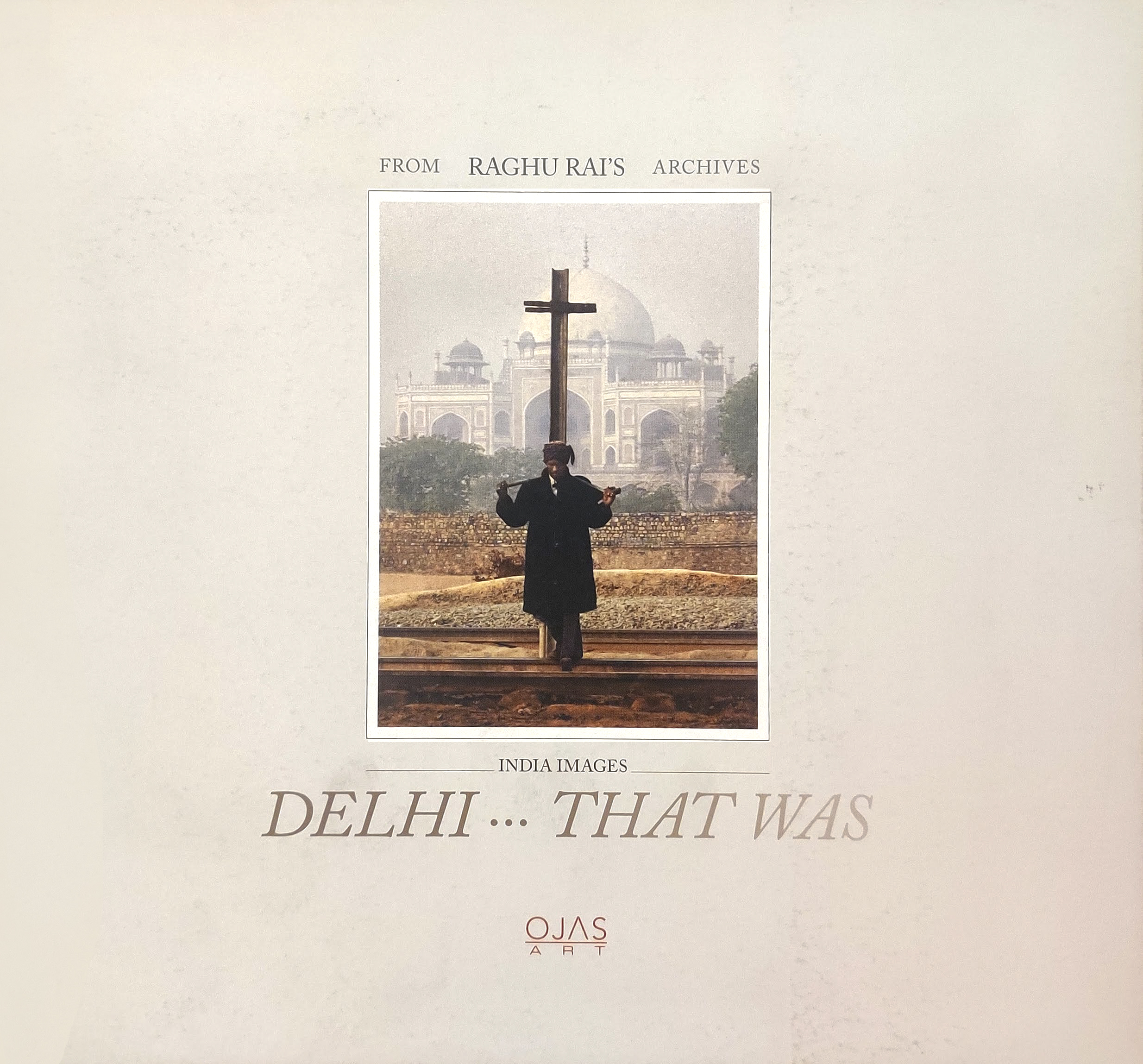
As a design agency we had the privilege of designing and printing catalogues of Raghu Rai’s shows that were assigned to us by art galleries. These catalogues gave me a chance to interact with RR on personal level for many reasons – be it technical or simply emotional. The last catalogue I did for him was for a show that exhibited photographs of three senior photographers of Delhi; namely Habib Rahman, Madan Mahata and Raghu Rai. The show was titled “Delhi… That Was”. Some of the finest pictures of these three greats were on display. On the day of the opening, Raghu went around the entire gallery interpreting each image for us who were keen to listen to him. Late Habib Rahman and Madan Mahatta would have been very happy that day listening to their pictures being deconstructed.
In Raghu Rai we have lost a visual historian, an artist, a photographer and a extraordinary human being.
P.S.: Social media platforms are a treat today to see some of Raghu Rai’s pictures that one had not seen before. It is also a rare day when we got a break from the seeing the sullen pictures of a rotten politico and his brigade.
How can ‘design’ help us think differently about death?
A series of interesting conversations among the international design community about “Death and design: the creative projects confronting society’s ultimate taboo.”
“The visual language of death has stagnated, and creatives have a vital role to play in how future generations face its complex subjects. Here, we chat to a design research practice dedicated to death, and delve into some of the topics covered at their recent conference, from symbols of death and branding the end of life, to ‘traumacore’.
Death: it’s a topic that often feels like no one really wants to talk about. Especially, that is, in the buttoned-up culture of avoiding difficult topics that the UK is so well known for. But whether we like it or not, death is something every single person will deal with in their lifetime, and one day encounter themselves.”
Death and Design? While the world deliberates the essential nature and icons of death, I wonder if the Indian design community has ever given it a thought.
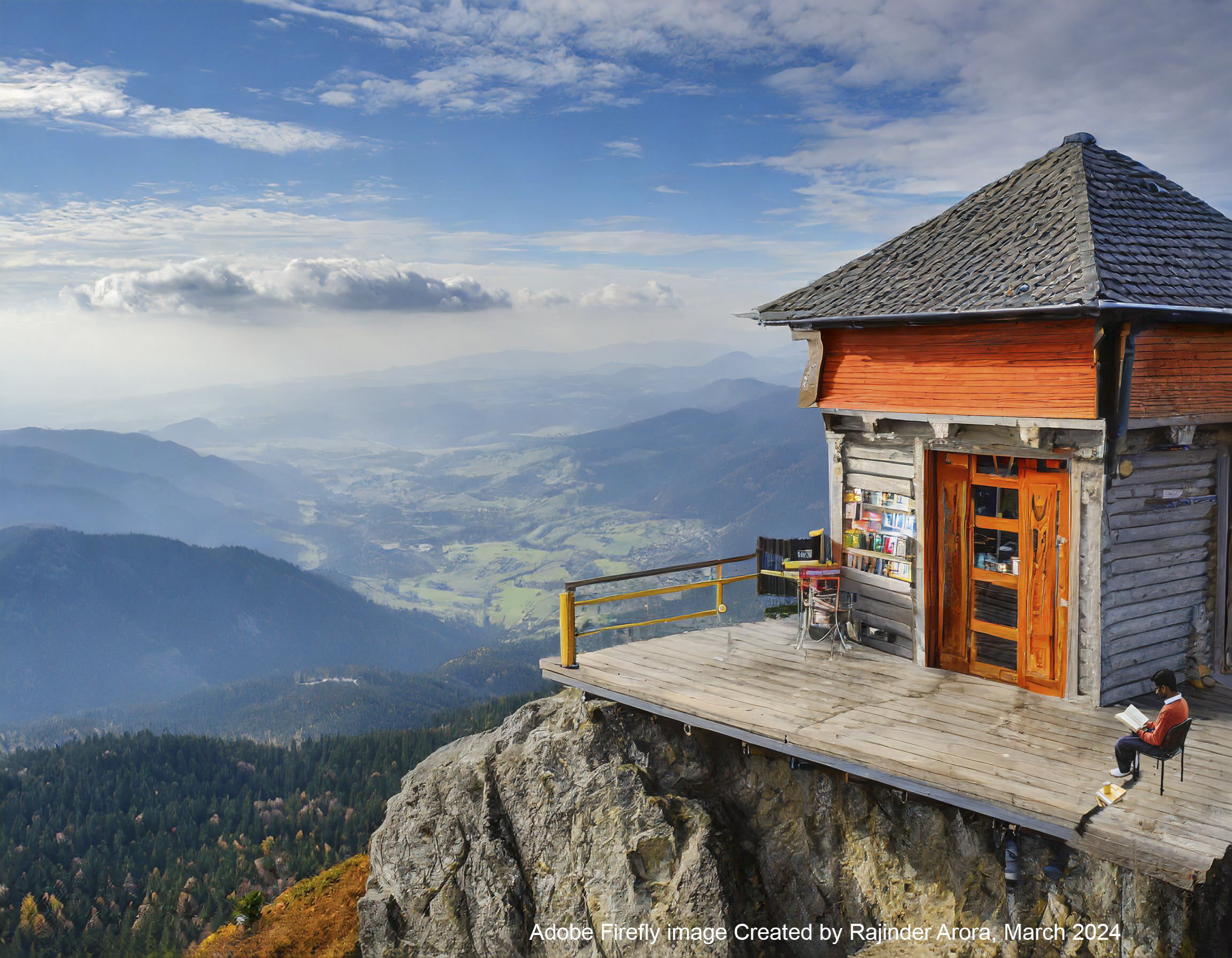
Chinese man builds bookstore on a mountaintop. Yes, he’s a poet.
A 57-year-old “self-styled poet” (aren’t they all?) has spent $116,000 of his own money to build a bookstore in a mountaintop village. Oh, and it’s shaped like the number 7 and contains 7,000 books. No, this is not a parable.
As Jiang Libo told the South China Morning Post:
Before my bookshop was built, the closest bookshop or library to this village was in a town about 30km away. I’ve found fewer and fewer people read books, and bookstores generally are struggling. My thought is: when villagers are idle, or kids are on holiday, they can come to read books. Isn’t that wonderful?
Yeah, I suppose it is pretty wonderful, if not a little nutty. The store, located in Zhejiang province, on the eastern coast, is appropriately named Milestone Bookstore, and news of its unusual location has gone viral on Chinese social media.
Poets worldover, the gauntlet has been thrown. Your move.
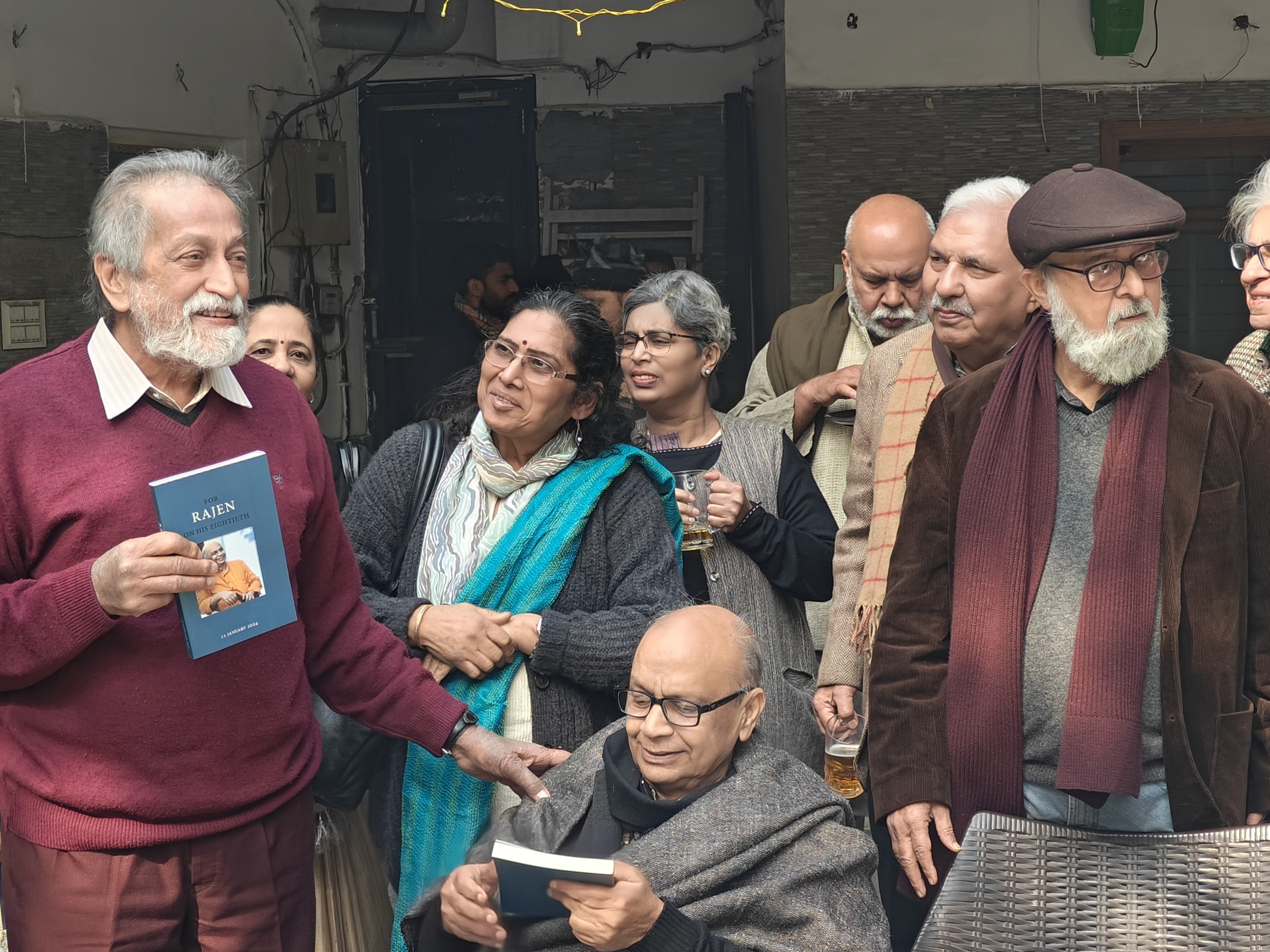
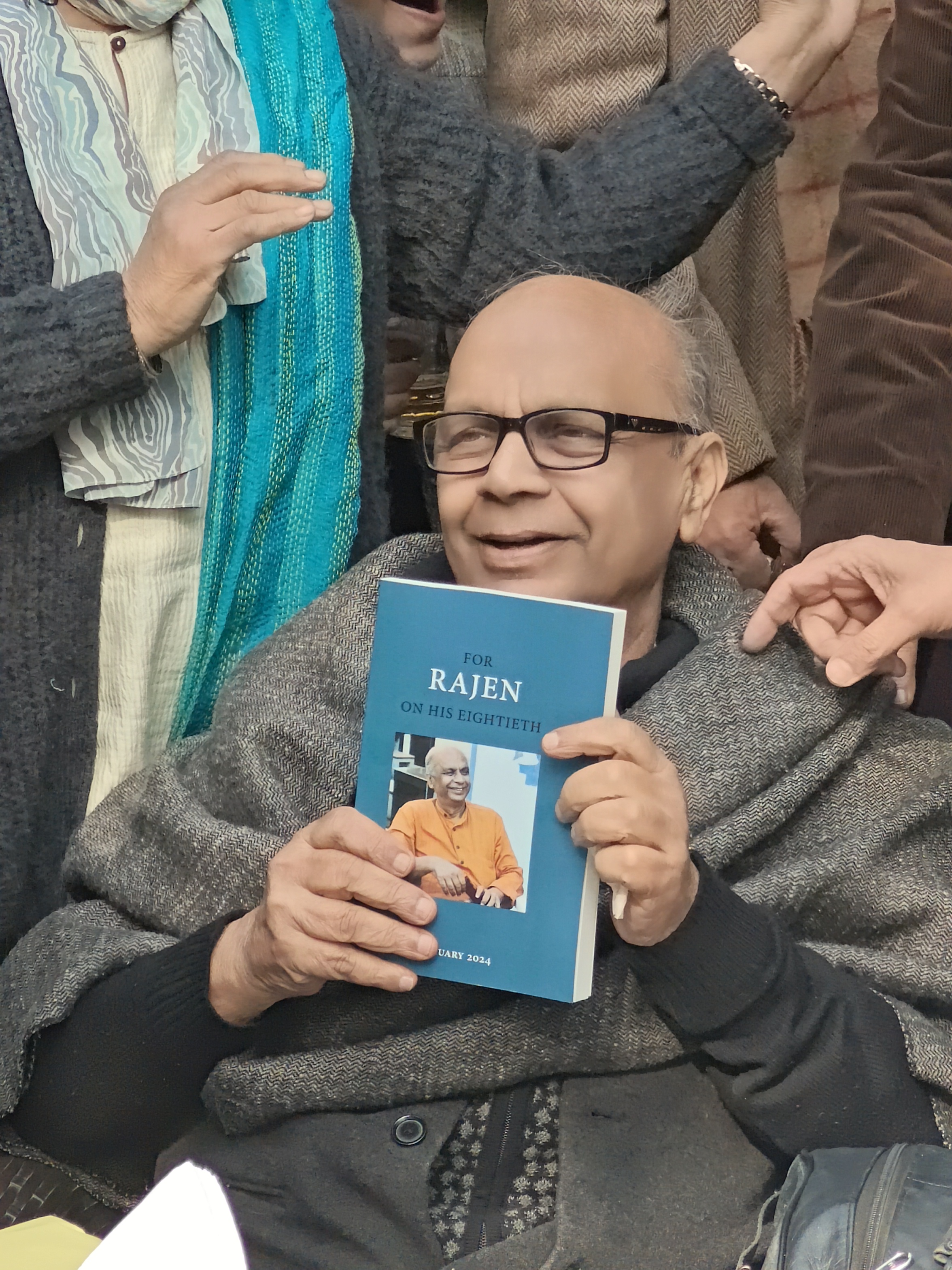
‘Tumhari politics kya hai bhai?’ was Rajen’s affront to the man who was upset over LK Advani’s arrest. We all knew the man’s leanings and were warning him of the consequences of such communal acts. It was a couple of days after Lalu Prasad Yadav had stopped Advani’s Rath Yatra and had him arrested in Samastipur, Bihar in 1990. On a cold October morning chairs had been pulled out of the tiny Sahmat office at VP House and a few of us were sitting in pale sunlight sipping lemon tea. Lalu Yadav knew where this yatra or the saffron brigade was heading and so did Rajendra Prasad or Commissar Rajen as all of us called him. I was introduced to Rajen only a few months before this incident and we were discussing a document that had to be designed for Sahmat.
In a way I had known of Rajen even before I met him or was really introduced to him formally. I happened to know, and was friends with, some of his friends from purani Delhi. An acquaintance of his was my neighbour. A common friend, a senior journalist, was known to me for nearly a decade before I met Rajen.
Thirty-four years of association, of walking together, of protests, of working for causes close to the hearts of all at Sahmat, of art and activism, of standing up together each time the people of this ‘socialist, secular, democratic republic’ have been threatened by vicious communal and divisive forces. Thirty-four years is a long time to know someone and I can claim that Rajen is a dear friend who has been an inspiration in ways more than many.
Something that foxes me is that all these thirty-four years Rajen has never taken ‘leave of absence, a break, a vacation, a sabbatical or a casual chhutti. So much so that I don’t remember if he was ever unwell which would have given him at least an excuse to skip visiting Sahmat office. He was and is always there – even when half the town is shut, even when there is nothing, political or cultural, demanding intervention. Not a day passes without him at Sahmat, where scores of people visit to meet him and seek his counsel, to network, to share good and bad news from across the country. For many a journalist talking to Rajen is a lead to ‘serious stories’.
In our collective fight for communal harmony, secularism, freedom of speech, shrinking space for dissent, attacks on minorities and other similar issues Sahmat, over the last three decades, has been more vocal and far ahead of even political parties in debating the issues and organising people. In all these contested spaces Rajen has largely shaped Sahmat’s course over the years.
Selfless guide and comrade Rajen almost always not only led the way democratically but also kept the flock together in every project and never ever sought a mention or an acknowledgement for himself. Despite all the arguments, difference of opinions and even hot exchange of words one would find Rajen smiling the next morning and ready to take on the next challenge.
A committed Marxist, an analytical mind, an avid reader, a foodie, Rajen loves romantic shayri (though I have never heard him recite). A repository of ‘everything Delhi’ – Rajen is my go to man when in doubt over anything ‘politically correct’. I wish he remains my guiding polestar and enjoys good health and a joyous life.








You must be logged in to post a comment.