What is it
if not lonely,
this tree
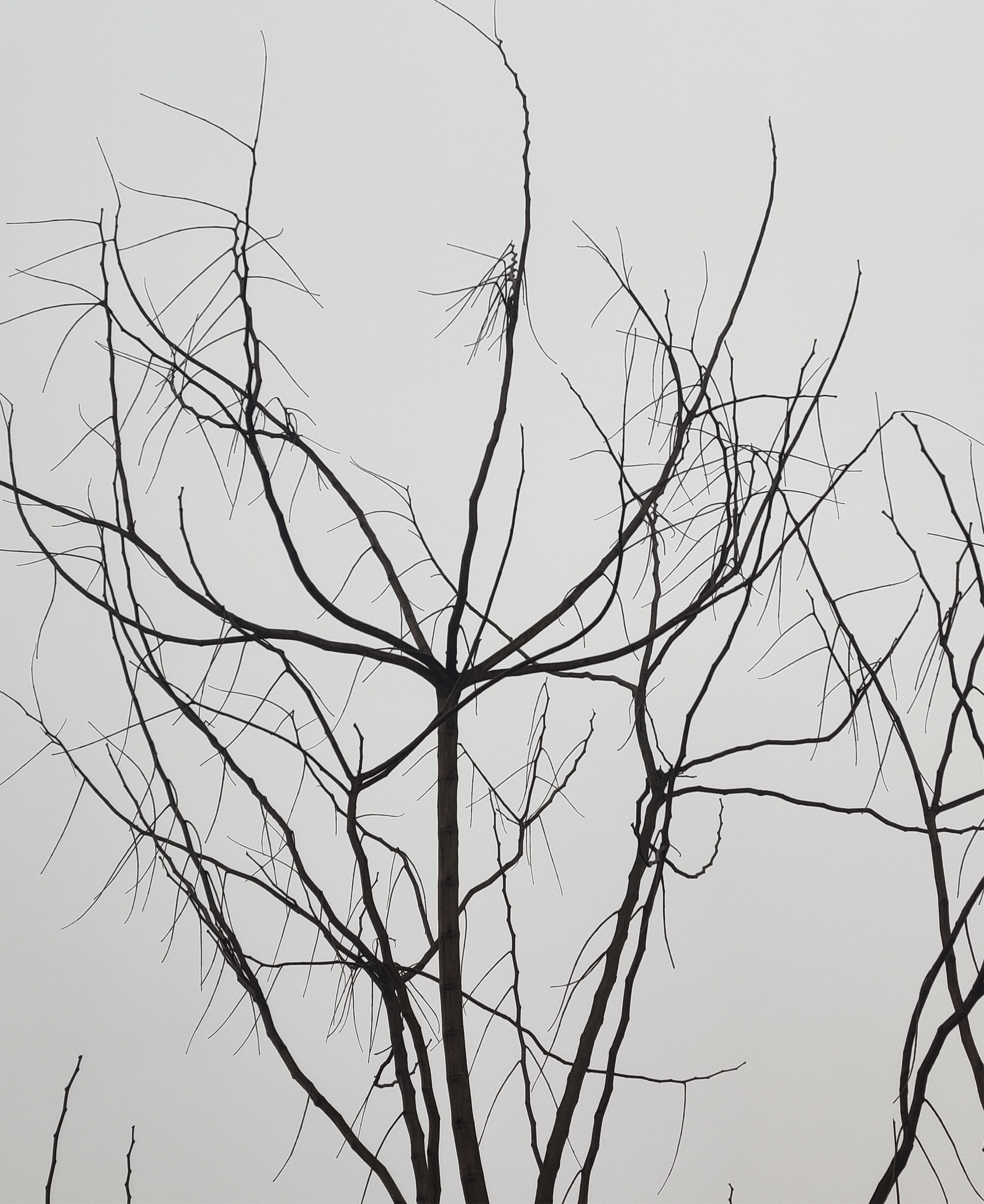
What is it
if not lonely,
this tree
?
This, that, and all between.

What is it
if not lonely,
this tree
What is it
if not lonely,
this tree
?

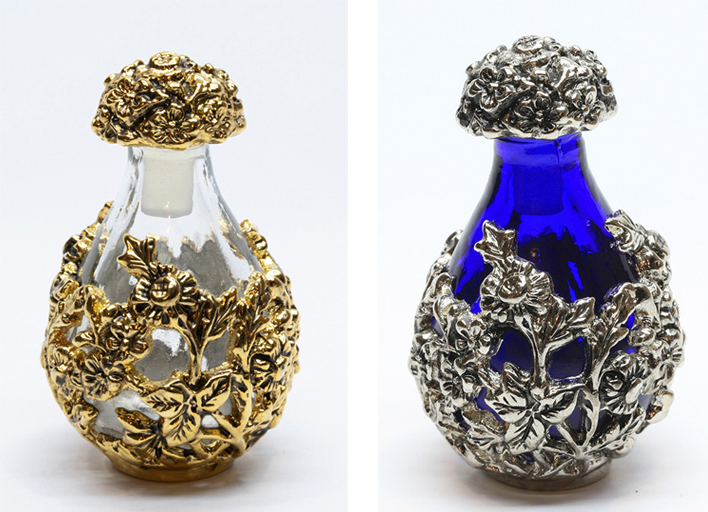
This is a Tear Bottle. Believe me, it is to collect what poets from generations have romanticised as Anmol Ashq. You are supposed to fill this bottle with your tears and leave it at the grave or the cremation site, as a parting gift to your dear one. Trust me, you can really fill it with tears, your own only, to express grief and sorrow.
The ‘tear bottle’ tradition has endured for more than 3,000 years. These were common in many ancient societies. They are still produced in the Middle East, Andalusia, parts of Europe and African regions even today. Tear bottles were prevalent in ancient Rome too, when mourners filled small glass vials or cups with their tears and left them in burial tombs as symbols of love and respect to the departed being.
Sometimes women were even paid to cry into “cups”, as they walked along the mourning procession. The legend goes those crying the loudest and producing the most tears received the most compensation, just like our own the Rudalli’s from Rajasthan. The more anguish and tears produced, the more important and valued the deceased person was perceived to be.
Records tell us that the Tear Bottles reappeared during the Victorian period of the 19th century. Mourning ladies collected their tears in bottles with special stoppers that allowed the tears to evaporate. The mourning period would end when the tears had evaporated. Similarly, during the American Civil War women collected their tears during the period of separation from their husbands. The collected ‘saline’ was proof of their love for the husband.
These petit decorative glass bottles have been romanticised to share tears of love, joy, sympathy, and remembrance. The captivating bottles are also called a ’lachrymatory’ which, at the time of burial, were placed in a large vase and buried with loved one to express honour and devotion.
In ancient Greece and Rome, a small glass or earthen vessel filled with the tears of those who weep and left in the graves as a present for the dead.
I know where one can order these bottles but I won’t tell you or wish you that. Mourners can even get a copy of an extensive catalogue delivered to their mailbox before they order. I wonder what we are supposed to do with ‘Tears of Joy’, save them or let them run.
Indian mothers, specially mothers from Hindi films of the 60s and the 70s, would mock the size of these bottles. Famous mother characters like Nirupa Roy, Durga Khote, Lalita Pawar and Dina Pathak could fill buckets in three hours.
ख़ुशी में भी आँखें भिगोते हैं आसूँ , इन्हें जान सकता नहीं ये ज़माना , मैं खुश हूँ मेरे आसुंओं पे न जाना

At the end of this fascinating book there is an announcement for an Essay Competition with a prize money of Rs 100, Rs 50, and Rs 25 each for the students of classes 8, 9, and 10. There is also a coupon in the book which is to be filled by the student and signed by the school Principal confirming that the 150 words essay is written by the student himself and no one else. The last date for submission of essays is 15 November 1933 and the announcement of winners of the competition is scheduled for 1st January 1934 in Madras.
Don’t you think way back then the schools, students, teachers, and the publishers were so much better! To keep the interest of students in poetry, or for that matter reading itself, was so important to them that a princely sum of Rs. 100 was given as the First Prize simply to understand and interpret poetry. Mind you this is in the 1930s when the salary of an English teacher in a school was all of Rs. 22 per month. This is the period when schools or education was managed and funded at community level only. As per Census figures of 1931 we had 22,86,411 Secondary Schools in India with an overall literacy rate of 9.5% only.
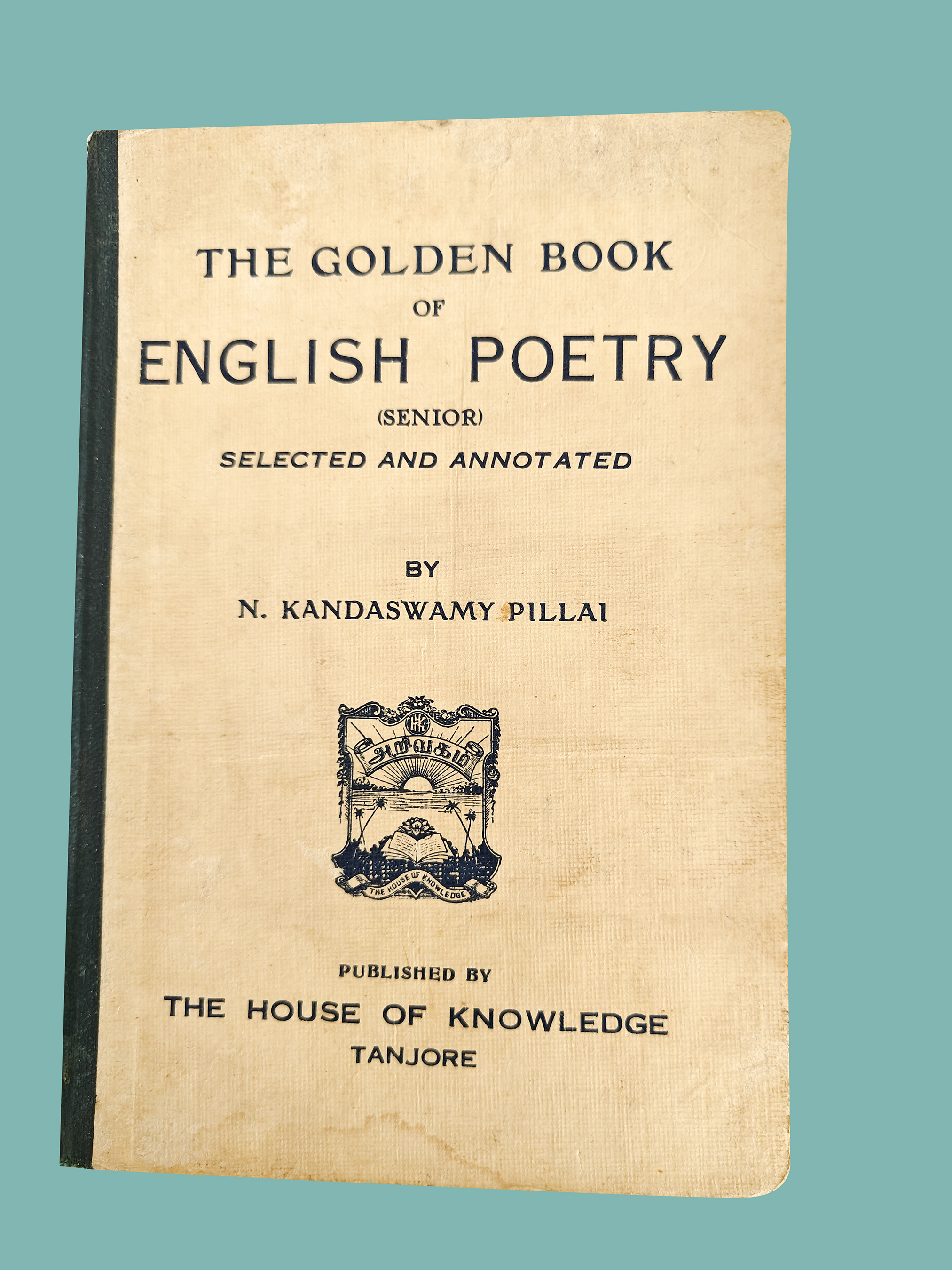
Published in 1933, The Golden Book of English Poetry, Selected and Annotated by N. Kandaswamy Pillai, the anthology was a part of curriculum for students of schools in Madras Presidency. The anthology has poems from 58 poets as diverse as Lord Macaulay to John Keats. At the head of each poem is a brief note on the author and a line or two of comments. At the end of the poems there are Notes, ‘to words, phrases and terms unfamiliar to students’. The book also has 11 ballads. The Editor in his preface says, “Tennyson and Victorians have been excluded…” in a hope to bring out a companion volume to this. Published by The House of Knowledge, Tanjore the book doesn’t mention its price or, maybe a page is missing from this antiquarian volume (I love their colophon). This well preserved copy, that I recently bought from a dealer, was originally owned by one J. S. Sowmianarayanan possibly a student or even a teacher.
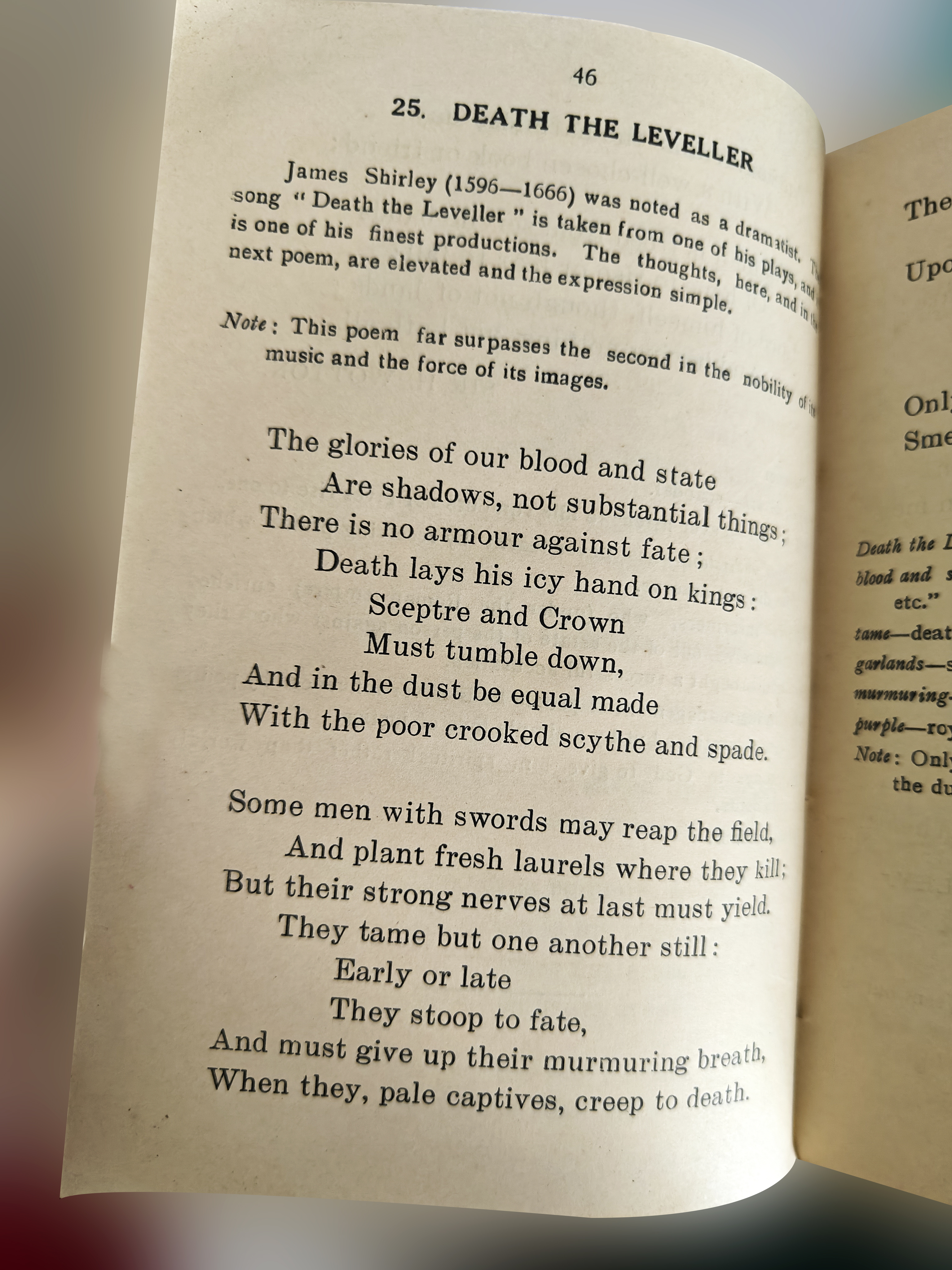
For the times that we are living in, I find the lines of this song by James Shirley most appropriate:
Some men with swords may reap the field,
James Shirley
And plant fresh laurels where they kill;
But their strong nerves at last must yield.
They tame but one another still :
Early or late
They stoop to fate,
And must give up their murmuring breath,
When they, pale captives, creep to death.


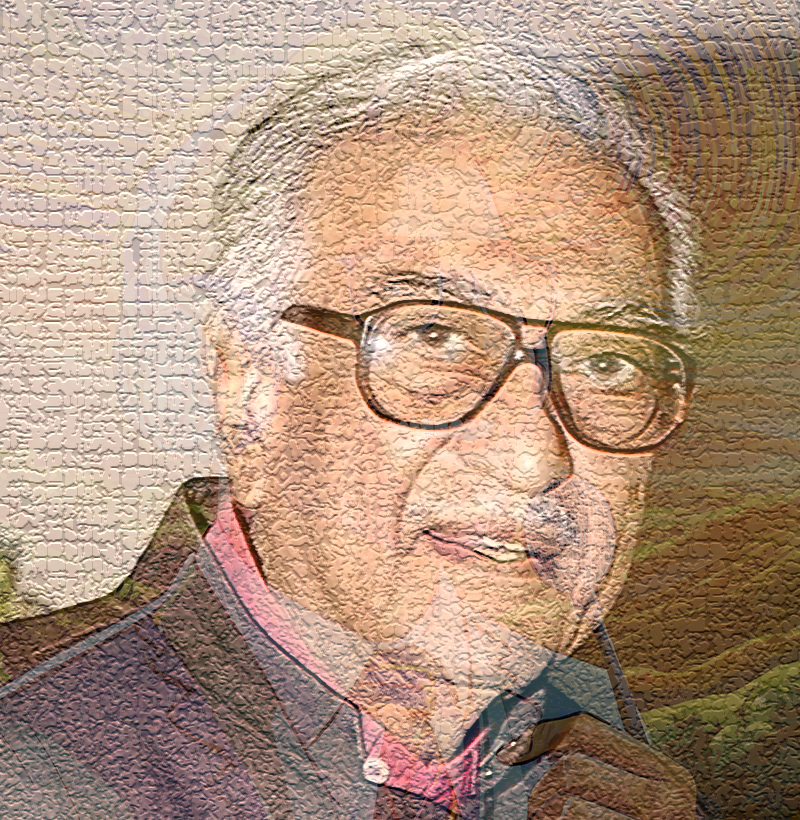
He was sweating profusely, repeatedly wiping his forehead with a handkerchief in his left hand. With the right hand he would take off and put back his thick, square-frame glasses after rubbing the sweat dripping off his face with the sleeve of his check shirt. He was standing on the kerb. Time and again he would bend forward slightly, looking towards his right. Obviously he was waiting for someone. He was the same age as my dad.
I had recognised him; many others standing around me would have also known the popular broadcaster Ameen Sayani. Instead of the proverbial “face that launched a thousand ships”, his was the baritone that launched a million songs. I was all of 20, an outsider in the dream-city called Bombay, alone and unsure; trying to find my bearings in my first job selling high-end scientific calculating machines to naval dockyard and some scientific institutions in the city. It was the month of June. Monsoon had not hit the city yet. The abnormally high humidity levels were driving the folks to the edge. His shirt was soaked-wet. Unhappy with the weather he looked up, fanning himself with the kerchief.
I looked at him and smiled. I don’t know why I smiled but I know for sure that he smiled back. Hesitantly I walked the six or seven steps to him and bent down as if to touch his feet. He held me from my shoulders and pushed his sweat-soaked-hand in my hand. We shook hands squeezing and wringing his wet kerchief. A bus pulled up and we drew back our hands. We boarded the bus from Santacruz. We only had seven minutes of conversation before he got off at Bandra. His was a familiar voice that went on air every wednesday with Binaca Geetmala and also charmed us with dozens of radio commercials each day. He was ‘going to meet a record company official’, he said. We shook hands again before he got off.
The news of his passing away was an aide-memoire of meeting the man-with-a-golden-voice that humid day. In a sense he too was one of my heroes but I never expected to meet my hero on a bus stop. Thanks Mr Sayani for filling our lives with moments of music and joy, may you now find Lord Himself in your audience.
Mr Ameen Sayani passed away on 21 February 2024 in Mumbai, India.

Lifting myself from under the sheets; or pulling out of a Jaipuri, a duvet, a razai, or a clutch of soft-warm arms is a curse for the first 120 seconds of the day. I only want to be interacting with that something special which had enveloped me for the night. For the next ten minutes I don’t want to be seen by anyone nor do I want to see anyone while I offer thanks and prayers to Ra-Horakhty, the combo of Egyptian gods of light and heat.
A glass of water later and a walk out to the terrace having said my greetings to the seven horses that pull the royal chariot of Surya, the only thing I want to smell and see is a cup of hot coffee.
Minutes later, I am still blurred and spaced out – the hair as if an eleven thousand volt current cut through my body from north to south – the eyes still puffed up; the cheeks still red in part and off-colour in other areas slowly sucking the colours back from last night’s half a bottle of rum. The next thing I want to see in my hands is the book that was delicately placed on the headboard last night.
The feet, by then, have found the rhythm, the eyes can now focus, the saliva lined with poison now craves for another cuppa. Sensations having returned to all faculties in turn tingle the ear which feels an instrument, a pencil, entangled in the hair scratching the neck. A scab hurts. Ghosts of undecipherable notes swim in the crinkled scraps that I fish from under the sheets. Riding the morning breeze, lyrics of romantic score float in — tootle-too of a flute reminds me of ‘Noisy Poems‘ by James Reeves.
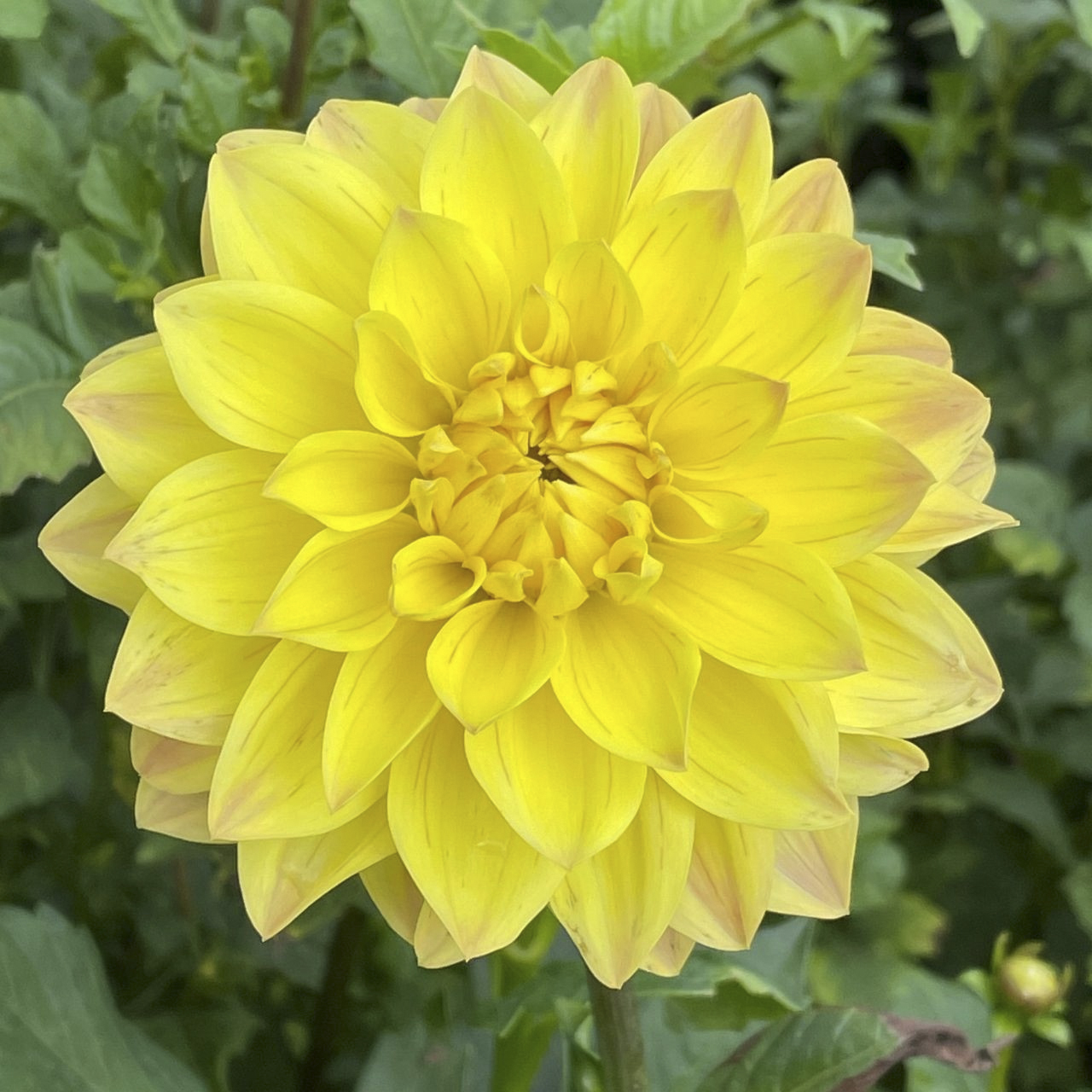
The notebook comes alive. Looking at the yellow dahlia blooming in the pot I remind myself, ‘there is a lot to live for and celebrate’. I don’t pluck the pretty flower, instead I offer the pot and say, ‘So what if Valentine’s Day is gone – the spring is here, send me a kiss’.
16 February 2024
 Ankahi. Unsaid.
You must be logged in to post a comment.