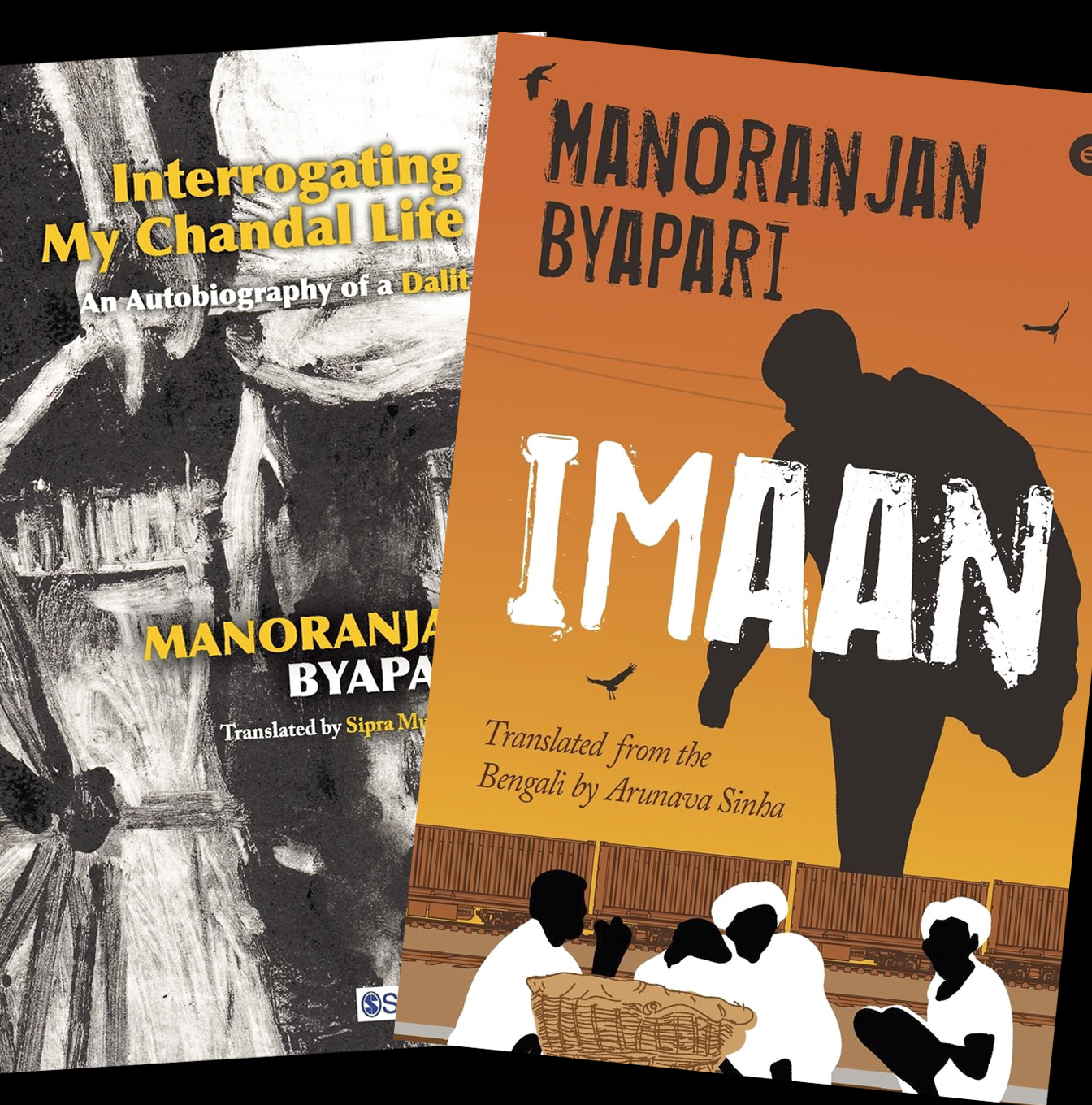
A decade back I had decided not to read a Byapari work again. Last time my eyes were sore and had run dry. I felt guilty for things I had not done. For a few months I was on roller coast viewing everything from a perspective unknown to me before. His hard-hitting writing gave another meaning to struggle, deprivation, hunger, exploitation and the limits of human endurance. With Imaan, his next work in my hand, Byapari has dug deeper leaving no scope for plain tears. He wields a dagger that pierces the heart of the society showing us its rot and filthy blood. However uncomfortable, if there’s one writer you must read, it is Manoranjan Byapari. Read all his works. There are days when you repent not knowing Bangla, today is that.
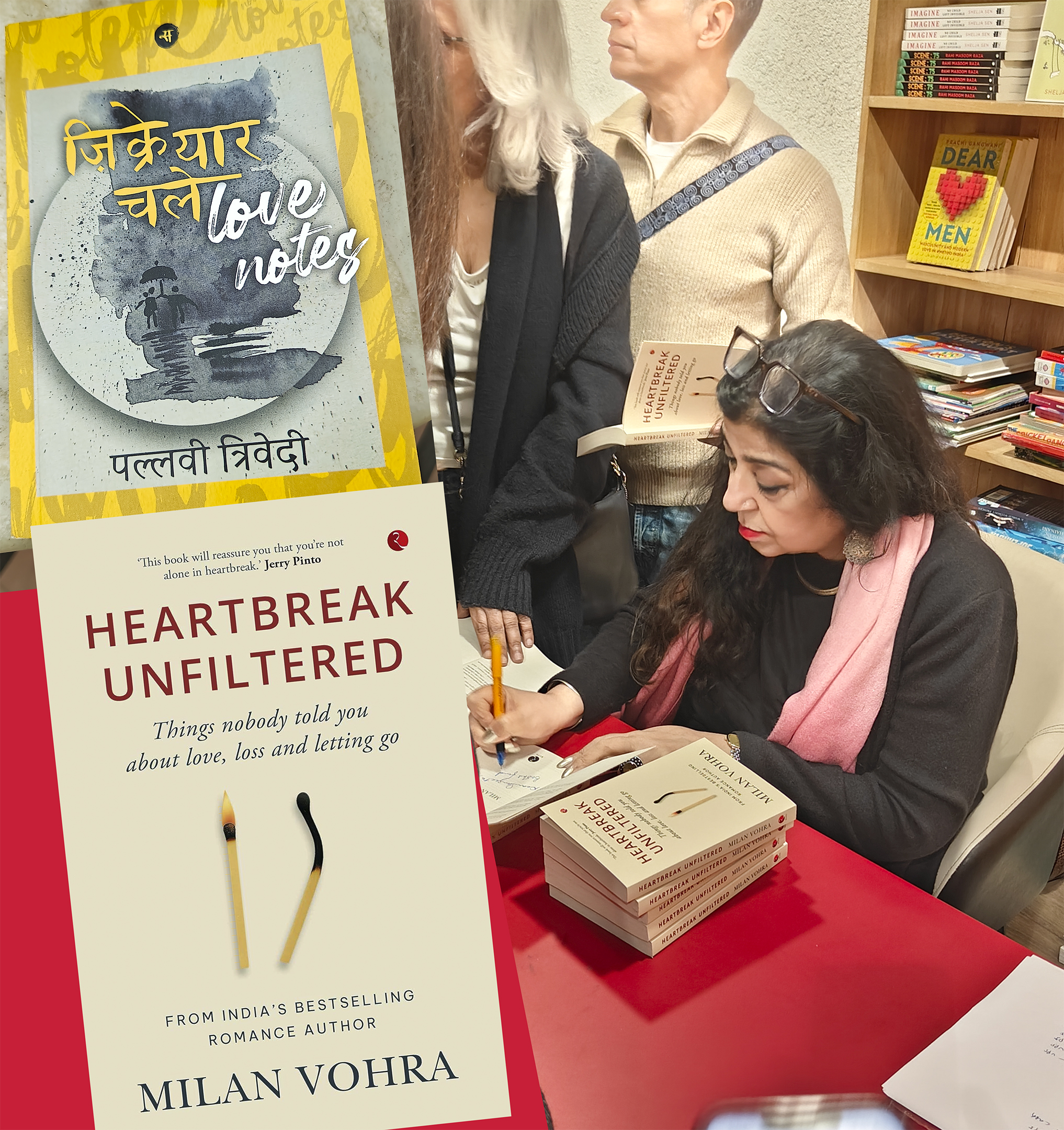
A mere coincidence that I finished reading these two books in the supposed ‘Love Week’, the Valentine’s week. Happily both are written by Women and both are above Love. The best part is that one is in English the other one is Hindi. While one is about pleasant heart-aches the other is about heart breaks, Ah!!!. The one about romantic love, “Zikr-e-Yaar Chale: Love Notes” in Hindi, is by Pallavi Trivedi which picks the low hanging fruits of short fiction that we are living ‘now’, in the second quarter of 21st Century. The English one is “Heartbreak Unfiltered: Things nobody told you about love, loss and letting go” by Milan Vohra. As the title suggests these are the stories of heartbreaks from people interviewed by Milan over a decade. Heartbreak (not necessarily romantic) touches us all, regardless of age, gender or geography. Both books are about emotional bonds characterized by deep intimacy, mutual respect, and commitment as also but the pain and longing of the one lost. I enjoy the parallel play of words going on in my head when I am reading English and Hindi together. Strange, how metaphors, words, situations and even individual reactions differ in these two worlds which at times seem alien to each other. Loved reading both. Pallavi Trivedi, you have a hand on the nerve and have put together a world of contemporary fickle love. And Milan Vohra, thanks for the invite to the book launch, i wonder if you noticed many moist eyes in the audience. It is another thing that she didn’t sign my copy of the book. Amid these two my mind was buzzing with a number from the 80s – Tina Turner belting out ‘What’s Love got to do with it … that second hand emotion… who needs a heart when a heart can be broken…. what’s love….’ Cheer up gals and guys you never know when a Cherub attacks.
(Pix: Milan Vohra signing copies of her book at Kunzum bookstore in Delhi)
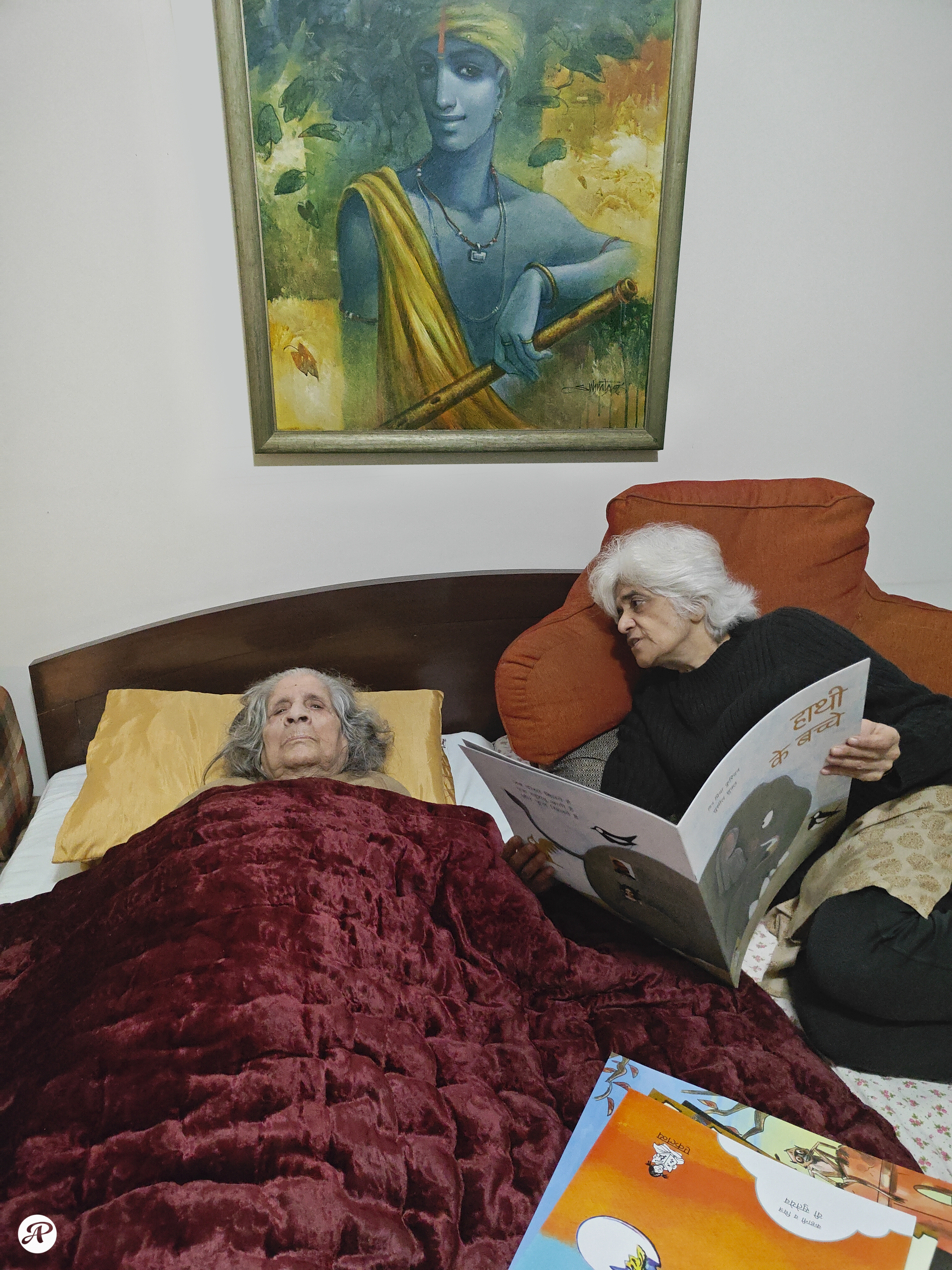
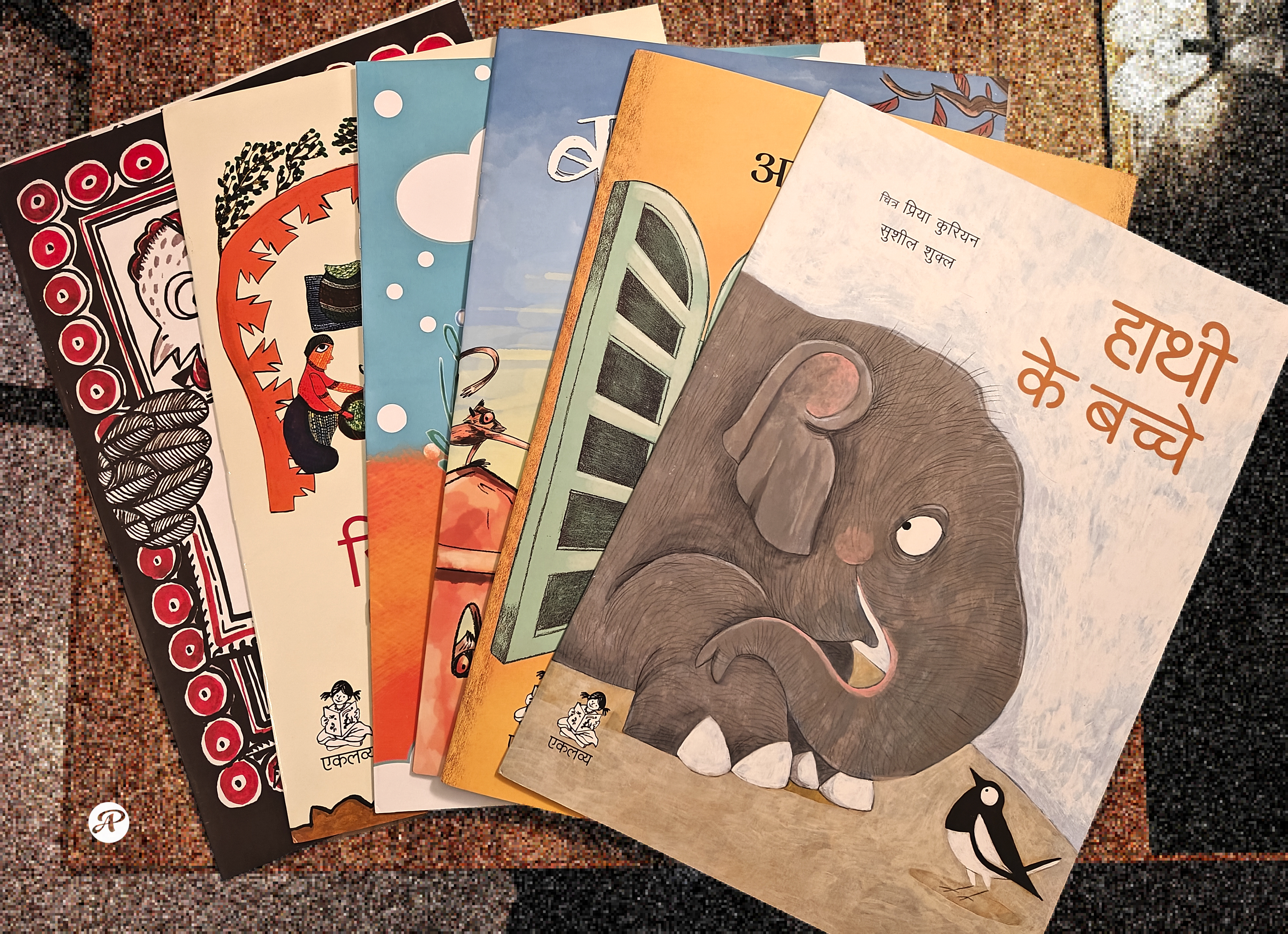
मास्टरानी आजकल रज़ाई में लेटे लेटे ही क्लास लेती हैं। पढ़ने और समझने में ये बड़ी बड़ी किताबें तो ब्लैक्बोर्ड से भी बढ़िया काम करती हैं, क्योंकि इन्हें माँ बिना चश्मे के पढ़ लेती हैं और इनमें बनी तस्वीरों में वो गहराई होती हैं, जो किसी आम कहानी में नहीं मिलती। अंतर्ध्यान हो और आँखें बंद रख कर ही पूरा पाठ का व्याख्यान कर दिया जाता है, जैसे माँ किसी अनकही दुनिया में चली गई हों। और अगर उनकी पसंदीदा एक्लेवय की किताबें हों तो कविताएं और जंगल से जुड़ी लोक कथाएं भी साथ में सुनने को मिल जाती हैं। उनके अपने बचपन से जुड़े कुछ किस्से इतने मजेदार होते हैं कि सब आँखें बंद कर खुद उस कहानी का हिस्सा बन जाते हैं। मुश्किल तो बस क्लास में आए मेरे या रजनी जैसे नए बच्चों की है जिन्हें बिना गलती किए भी एक ही पाठ को बार बार दोहराना पड़ता है और माँ इस सब का मज़ा लेती हैं। इस बार आई किताबों में ‘हाथी के बच्चे’ को माँ ने ‘गोल्डन बुक अवॉर्ड’ से नवाज़ा है। माँ पुरानी मास्टरानी रही हैं, जो अच्छी किताबों और शरारती शागिर्दों को दूर से पहचान लेती हैं । ये तस्वीर कल रात की ‘एक्स्ट्रा क्लास’ की है, लगता है आज, 26 जनवरी को, जब सब की छुट्टी होगी हमारी क्लास तो ज़रूर लगेगी । @Eklavya
जैसा हाल देस का, वैसा घर का हाल. आजकल घर में एस.आई.आर. चल रहा है. जी हाँ, स्पेशल इन्सेंटिव रिवीज़न—कोने-कोने में झांक कर तफ़्तीश हो रही है. आप कहेंगे, ये क्या मज़ाक है, घर में कुल चार जन हैं, वहाँ कौन देसी, कौन बिदेसी. घर में कहाँ घुस आएंगे कोई. अरे, एक तो आप समझते नहीं हैं. ये कोई अपने वाले, दूसरे वाले, बंगाली, रोहिंग्या, नेपाली, धर्म, जात या हाज़िर, नाज़िर का इंसानों वाला एस.आई.आर. नहीं है, ये है किताबों का एस.आई.आर.—एक-एक किताब गिनी जा रही है, कौन हिन्दी, अँग्रेज़ी, उर्दू, अवधी, पंजाबी, बांग्ला, तमिल आदि-आदि. कौन कहाँ से आई, किस शेल्फ़ में है, क्या विषय है, वगैरह-वगैरह. कहानियाँ और नॉवेल एक तरफ़, कविता दूसरी तरफ़, इतिहास और यात्राएं अलग, गीता, बाइबल, क़ुरआन शरीफ़, गुरु ग्रंथ साहब, ज़ेंड अवेस्ता सब इकट्ठी हैं या नहीं. एक प्यारे से लड़के ने घर की हर किताब को कटलॉग और इंडेक्स करने का ज़िम्मा उठाया है सो सब का नाम, लेखक का नाम, विषय, प्रकाशक, छपने का साल, आईएसबीएन और बाकी सब एक ऐप में दर्ज किया जा रहा.
इस सब के चलते एक बड़ी समस्या आन खड़ी हुई, बिल्कुल एस.आई.आर. जैसी. घुसपैठिया तो नहीं कहूँगा पर एक ऐसी किताब मिली है, जिसका कोई नाम-पता नहीं है, यक़ीन मानिए, किताब का कोई नाम नहीं, लेखक का नाम नहीं, दाम नहीं, छपने का साल, प्रकाशक आदि कोई कुछ पता ही नहीँ है. इस बेचारी किताब को अब क्वारंटाइन कर दिया गया है.
आप मेरी व्यथा नहीं समझ रहे, बहुत दुखदाई है किसी किताब के बारे में ये न समझ आना कि वो है कौन.
जैसे ही हम किसी नई किताब को हाथ में लेते हैं तो जल्द ही हमें उसके बारे में कुछ न कुछ मालूम हो ही जाता है. उस किताब का नाम, उसे लिखने वाले का नाम और अगर आगे-पीछे छपे ब्लर्ब पढ़ लिए हों तो उसकी कहानी या विषय के बारे में कुछ अंदाज़ हो ही जाता है. पर अब आप अपनी या मेरी उस स्थिति के बारे में सोचें जब हम किसी किताब से फाड़ा गया, जुदा हुआ, वो पन्ना पढ़ रहे हों जिसके बने लिफ़ाफ़े से हमने अभी-अभी चना ज़ोर गरम या भुनी मूंगफली खाई है. छोटा-सा लिफ़ाफ़ा जिसको खोल कर सीधा करते हुए उसका पेज नंबर और ऊपर या नीचे लिखा किताब का नाम फट गया है – कहानी का वो मोड़, जो उस पन्ने पर छपा है, बहुत रोचक है और आप ये जानने को बेताब हैं कि कहानी के किरदार, उन दो आशिक़ो का इश्क़ परवान चढ़ा कि नहीं— बस अब आप सिर के बाल नोच रहे हैं कि वो ही किताब कैसे ढूँढी जाए, कैसे ख़रीदी जाए और जल्द से जल्द कैसे पढ़ी जाए.
और अब ये दूसरा आलम भी सोचिए, सड़क के पार खड़ा एक पागल इंसान एक-एक कर के किसी किताब के पन्ने फाड़ कर उन पन्नों को तेज़ हवा में ऐसे रसीद कर रहा है जैसे वो हवा का रुख़ देख रहा हो. जब तक ट्रैफ़िक थमे और आप या मैं सड़क पार कर दूसरी तरफ पहुँचें, वो पागल बची हुई किताब को हवा में उछाल कर भाग लेता है. वैसे चाहे आप किताब देख भर कर ही नाक सिकोड़ लेते हों पर उस बिना जिल्द या आगा-पीछा लिए किताब को अब आप दो गुना ज्यादा कशिश से पढ़ना चाहेंगे. उस जर्जर, उधड़ी, बे-जिल्द किताब को आप घर ले जा कर अपने शेल्फ़ पर ख़ास जगह देंगे, अगले पंद्रह दिन तक दोस्तों को किताब बचा लेने के अपने वीरता भरे कारनामे के बारे में बताएंगे, उस वाक़ये के बारे में फ़ेसबुक पर उसकी कहानी लिखेंगे. ये भी हो सकता है कि वो फटेहाल किताब आप को अपनी दसवीं जमात की ट्रिगनोमेट्री की किताब और गणित के उस खड़ूस मास्साब की भी याद दिला दे और अब उस फटी किताब की दर्दनाक हालत को देखकर आपके दिल को बहुत सुकून मिले, ‘ये ले ट्रिगनोमेट्री, मेरा बदला पूरा हुआ’.
नीचे बयान किया क़िस्सा ऐसी ही बिना जिल्द की किताब का क़िस्सा है. वो बिना जिल्द की किताब जो मुझे मेरे ही घर में मिली.
लेख, निबंध और दूसरी हिन्दी रचनाओं की इस किताब की जिल्द नहीं है, या यूं कहिए कि खो गई है. वैसे तो खोई जैकिट कोई ज़्यादा बड़ा मसला नहीं बनती पर यहाँ पेच कुछ गहरा है. ताज्जुब की बात ये है कि इस किताब के नाम वाला अन्दरूनी पेज भी ग़ायब है. इस किताब का पहला सफ़ा 21 नम्बर से शुरू होता है वो भी अधूरे वाक्य “प्रभाव पड़ने लगा था” से. पहले 20 पेज किताब में हैं ही नहीं. न कोई टाइटल पेज है, न कोई विषय सूची. किताब की जिल्द तो ठीक-ठाक ही है जिसे देख ये तो नहीं लगता कि किसी ने पहले 20 पन्ने फाड़ लिए हैं या वो खुल कर गिर गए हैं. इस बेचारी किताब के साथ क्या हुआ होगा ये कहना मुश्किल है पर ले-दे कर मामला अजीब-ओ-ग़रीब है.
अमूमन किताब के अंदर वाले पन्नों पर, नीचे या ऊपर की तरफ, पेज नंबर के साथ भी किताब का नाम होता है, इस किताब मे वो भी नहीं है. अलबत्ता हर चैप्टर का नाम ज़रूर दिया गया है पर उस से भी मैं ये नहीँ पता चला पाया कि इस किताब का नाम या इसके लेखक का नाम क्या है. इसमें कोई कॉपीराइट पेज भी नहीं है जो इसके प्रकाशक का नाम, छपने का साल आदि के बारे में बता सके. कुछ लेख पढ़ने के बाद भी ऐसा कुछ नहीं मिलता जिसकी मदद से चचा गूगल से ही पता लगाया जा सके. बहुत सी किताबों की तरह इसके आख़िरी पन्ने पर “लेखक के बारे में” या “इस लेखक की दूसरी किताबें” भी नहीं बताई गईं. चूंकि किताब पुरानी है सो न कोई आईएसबीएन है, न कोई बार कोड.
किरोसीन में मिली स्याही की बची-खुची महक, कागज के पीलेपन से और उस पर चढ़े कपड़े की रंगाई से किताब करीब 50 साल पुरानी लगती है. छपाई लेटर प्रेस की घिसे हुए कांसे के टाइप की है. बाइन्डिंग ख़ासी पक्की है, सिलाई का धागा मोटा है, पुरानी चढ़ी लेई के सूख चुके दाने भी मोटे हैं. इसके अलावा किताब की उम्र बताने वाला और कुछ नहीं है. मेरा अंदाज़ है कि ये सत्तर की दहाई की है.
ताज्जुब की बात ये भी है कि यह किताब मेरे पास आई कैसे. मुझे तो याद नहीं कि मैंने इसे ख़रीदा हो या किसी ने मुझे ये भेंट दी हो. और फिर मैंने इसे आज तक खोल कर देखा क्यूँ नहीं, पढ़ा क्यूँ नहीं. क्यूँ ये छिपती रही और अलमारी में जगह घेर कर बैठी रही. कुछ तो राज़ है. पिछले पचास बरस में ख़रीदी तक़रीबन हर किताब का हिसाब है मेरे पास, ये कैसे छूट गई. ऐसा तो नहीं कि कोई इसके ज़रिए मुझे कोई खुफ़िया संदेश भेजा जा रहा है या फिर इसके पन्नों में हिंद महासागर के किसी टापू पर गड़े खजाने का कोई नक्शा छिपा है.
बड़ी दुविधा है, कैसे पता लगाया जाए, कोई तरीका सुझाएं? कोशिश करने पर भी इस किताब का नाम अगर न पता चला तो क्या इस किताब को मैं कोई और नाम दे सकता हूँ? अब सोचिए, कितनी देर आदमी एक ही मसले से उलझ सकता है.
इंसानी जिल्द यानि आदमी की चमड़ी पर गुदे टैटू और किताब की जिल्द पर छपा टाइटल दोनों को गुमनाम होने से बचा लेते हैं. आमिर ख़ान की फ़िल्म ‘गज़नी’ याद है जिसमें वो अपनी याददाश्त खो देते हैं और कुछ भी याद रखने के लिए उसे अपने शरीर पर चीजें लिखते हैं. .
मैं ये सोच रहा था कि क्या ये मुमकिन है कि किताब की तरह अगर आदमी की जिल्द, यानि शख़्सियत, कभी खो जाए तो उसका वजूद क्या रहेगा ? यहाँ जिल्द से ताल्लुक आदम-चमड़ी का नहीं उसके किरदार से है, स्वभाव से है, उसका रुतबा, हस्ती, मिज़ाज और रूह से है. जैसे किताब जिल्द से पहचानी जाती जी, वैसे ही आदमी भी तो अपने मिज़ाज से ही जाना जाता है.
वैसे सोचा जाए तो एक बात जो अक्सर देखी जाती है वो ये है कि किसी आदमी और किताब—दोनों को उनकी बाहरी दिखावट के बजाय उनके अपने स्वभाव के ज़रिए गहराई से आंका और समझा जा सकता है. इसके अलावा भी इंसान और किताब में और भी बहुत कुछ एक जैसा है.
किताब और ज़िंदगी दोनों एक कहानी ही तो हैं. हर इंसान की ज़िंदगी की अपनी एक कहानी होती है, जो उसके तजुर्बों, उम्मीदों और बीती जद्दोजहद से बनती है. इसी तरह हर किताब में एक अफ़साना, लेख या कहानी होती है, जिसे हर पढ़ने वाला अपने अनूठे नज़रिये से समझता है.
जिस तरह हमारे द्वारा चुनी गई किताबें हमारे स्वभाव, किरदार और शख़्सियत का आईना होती हैं, उसी तरह किसी किताब का मज़मून या विषय और प्रसंग उसके लेखक के स्वभाव और लिखने के इरादे को ज़ाहिर करते हैं.
दोस्तों की तरह का मामला है ये. एक अच्छी किताब और एक अच्छा दोस्त दोनों ही उम्र भर साथ निभा सकते हैं. दोनों ही दोस्ती और साथ का हासिल हो सकते हैं. एक तरफ़ आदमी के दोस्त होते हैं तो दूसरी तरफ़ एक अच्छी किताब को अच्छे और ख़ुश मिज़ाज साथी की तरह जाना जाता है जो मुश्किल में भी अपने पाठक का साथ नहीं छोड़ती.
इंसान और किताब दोनों ही तरक़्क़ी और इल्म और सूझ बूझ के बाइस हैं. इंसान अपने निजी अनुभवों से समाज और विरसे को आगे बढ़ता है, जबकि एक किताब हमें इल्म और ज्ञान देती है, अलग-अलग विषयों पर हमारी जानकारी बढ़ा कर हमारी सोच और कल्पनाशीलता को बढ़ाती है.
अक्सर लोग किसी इंसान की शख़्सियत को जानने से पहले उसके चेहरे, हाव-भाव और बाहरी रंग-रूप को देखकर उसके किरदार का अंदाज़ लगाते हैं, जो कि बहुत बार सही नहीं उतरता. ऐसे ही बहुत से लोग किसी किताब के कवर पर लिखे कुछ शब्दों या उसके लेखक के नाम से ही उसके बारे में अपनी राय बना लेते हैं, वह भी ग़लत है. “किसी किताब को उसकी जिल्द से मत आँकिए”, यह कहावत भी इंसान की फ़ितरत बताती है.
पर ‘मेरे दुख की दवा करे कोई’, इस बिना जिल्द की किताब का नाम कैसे पता लगेगा.
एक प्यारे दोस्त जिन से मैंने इस व्यथा के बारे में बताया वो बोले, ‘अरे भाई उसे मुझे दे दो, मैं उसके आगे और पीछे की कहानी को पूरा कर उस पर अपने नाम की जिल्द चढ़ा लूँगा. वो मेरी रानी है है न, जिस से अपना टांका फिट है, उसकी बड़ी चाहत है कि मैं कोई किताब लिखूँ. अपनी तो बात बन जाएगी यार, “बस, ये किताब मुझे दे दे ठाकुर.”’
I am relatively new to using Metro rail. All these years I have been driving a car to Connaught Place from Gurgaon, but by last December I was tired and sick of daily traffic snarls. My commute that used to be less than 40 minutes a decade back had extended to one and half hour one way everyday, on some crazy ones it could be a painful two hours to cover a distance of mere 27 km on the so-called Expressway.
Finally one Monday morning I took the plunge with a book in my hand and never looked back at the car.
The initial issues of crowd, claustrophobia and not getting a seat dissipated as I quickly learnt to balance myself on my feet without holding the bars or the uncomfortable hangers above. All I needed was a corner, a little roomy one, a light above and some distance from anyone listening to loud music on a mobile phone. The book would open the moment I boarded. Nothing else mattered. Fifty-five minutes of pure bliss, READING, while chauffeured in metro coach with no worries of traffic or weather, no stress, no traffic lights, no honking, no fumes, no struggling with gears, clutch or brake, no guilt of adding to the pollution. And the best part was No Smoking for an hour. What more, all of it in some 40 rupees.
Friend number one happened on a cold January morning. It was one of those slightly crowded days barely a month and a half into my new found pleasure when I was reading a rather bulky volume of Baburnama, standing in a corner. About ten steps away from me was a lady standing and flipping through dozens of sheets of paper, occasionally writing or marking something on them. I caught a glance of her when she lost her balance and unintentionally pushed the lady in front of her who said something rather nasty. I indicated to her to come and stand opposite me where she could rest herself against a side panel. She did and in the process possibly saw the title of the book. Having finished what she was doing, ten minutes later she moved closer and with a smile asked if I was a ‘historian’. Bemused, I said No.
Why would somebody be ‘publicly’ reading Baburnamathese days, she asked. This question is more of a reflection on our times rather than my choice of the title. A few minutes later I got to know that she was a lecturer of Medieval History at Janaki Devi College. And it so turned out that her guide, while she was doing her PhD was a senior historian from Aligarh with whom I had worked on a certain project. Her station announced… contacts quickly exchanged… she got off and I found what I call my first ‘Metro-Bookend’.
The second one was a few days later when I was reading Arundhati Roy’s The Ministry of Utmost Happiness. A young girl standing along with her friend wanted to know how was the book. We got chatting, the girl obviously had not read anything of ARs, not even an odd essay or her writings in the press. She was enamoured by the name Arundhati Roy. As long as your destination hasn’t come these chats sometimes can extend to subjects other than books… like politics or the current dispensation. She later emailed to say that she had finally managed to read the book, which to her, was rather boring and didn’t have a ‘story’.
On many occasions, all sorts of people made small conversation just because you had a book in hand and you were reading. I suspect there appears an aura around your head when you are reading. Reading in public spaces conveys a ‘studious or possibly intelligent’ demeanour. Even if someone is pretending at least it is different from those fiddling with a mobile phone.
I read both English and Hindi. Hindi mostly for its vast literary wealth that one has missed over the years of colluding with angrezi. English, for many reasons besides the fact I don’t know any other language. Wish one had learnt Urdu, Iranian, French, Italian, Russian or Turkish. English helps you bridge this gap through works available in translation, though I have always felt that I am missing something when I am reading an author like Orhan Pamuk or Chinua Achebe.
There was something interesting that I noticed in the first three months of Metro reading. Not many people would strike a conversation if I was reading a Hindi book, whatever it may be – from the greats of Premchand to Rajendra Yadav, from Nirala to Manglesh Dabhral. Hindi reading was second or sub-class in an otherwise secular space of a Metro train
I wonder what would be the response if one was reading Urdu or say Gurmukhi book.
I couldn’t dare to do it with these two languages (for fear of further disappointment), but I did try to fake it with a French novel once. Having read its English translation and even with my pathetic diction and little understanding of French, I knew I could get away in a tight situation. For three days I held the book in my hand, intermittently opening and closing it to show off the cover, moving from one corner to the other, walking through the compartment as if looking for a seat, dropping the book, desperately trying to attract attention… not one person even came forward to talk. It indeed is sad that neither the vernacular nor another language finds any space in a Metro – the Metro that connects millions of people of all possible tongues.
But, then one never knows what all can happen.
Friend number 3 from an MNC: One late evening, past 9.30 there was this 27/28 year old guy sitting next to me – leaning or rather bending over my left shoulder peeping into the book I was reading (My Mum’s Daughter – Natasha Badhwar). After a while, I held the book up to him – offering it so he could read. He was utterly taken aback by my gesture. At first, he turned his face trying to look the other way saving him the embarrassment. But I spoke to him politely and told him he could read it if he wanted. He hesitated, cautiously smiled and said, he got interested in the book as he had read the chapter head about ‘daughters’.
He too had a seven month old daughter. I asked him what did he do, ‘a salesman at a big brand watch showroom in Select City Mall, Saket’. ‘But Sir, I have not read a book since my school’, he said in lyrical Hindustani very unlike the hash of Hindi zubaan that the city takes pride in. Having asked him if he read magazines or newspaper, he said ‘Yes’. I asked which one… he was a little perplexed for he went into some kind of deep digging inside his head, a process I couldn’t fathom.. all he had to mention was one filmy magazine or a local daily… But he couldn’t name one. Then he fumbled and added ‘it is a Urdu newspaper that I read’… which one I persisted.. Milap, Pratap, Sahara? No answer. Finally, his head hanging down, eyes still on the book in my hand he said he couldn’t remember the name of newspaper… ‘my father is a shopkeeper, he gets it, he reads it… I only get to glance at it once in a while’. Terrible…, I said. You must be getting the newspaper for many a years, ‘Yes, but I don’t know the name. I get to read the news, that’s all. Why?’ I explained to him that the author of the book is a newspaper columnist and these are the compilation of her weekly pieces in Mint. He had never read an English newspaper, though he claimed ‘I can read English, not fluently’. Had my copy not been author-signed, I would have probably given it to him. Another friend made.
Friend number 4. I meet an AUTHOR.
I am reading this yet unreleased book. There comes a young boy probably 23 /24 and stood right above where I am sitting and reading. From my sitting posture I can’t see his face unless I lift my head to look at him, but before that I notice the steel bangle (kara) in his right hand firmly holding a book, with the left he was holding the hanger bar above. Finally I glanced up… as our eyes meet he says ‘Hi’ with a broad smile. Without wasting any further time he asks ‘What are you reading Sir?’ I turn around the book and show him the cover and ask ‘Have you read it?’ ‘No.’ ‘Do you know the author, the person whose picture is there on the cover?’ ‘No, Sir.’ ‘Never mind that, you weren’t even born when he was making great cinema like ‘Albert Pinto Ko Gussa Kyon Aata Hai?’ ‘Mohan Joshi Hazir Ho’, ‘Salim Langde Pe Mat Ro’ or for that matter his magnum opus ‘Naseem’.’
‘What do you do Sir?’ He has still not returned my book, nor is he even attempting to at least turn it around, read the back cover or even the flap matter. I give him a very brief background and ask ‘What is that book in your hand?’ Hastily he turns it around and hands me the copy, ‘The Dreaming Reality‘. The cover image has a boat with a young couple in it against the backdrop of setting sun, their hands meeting at the point of oars as if rowing the boat together, the faces and bodies just a shadow – very amateurish cover design I think… right on top are the names of two authors in very small type. Noor Anand – Karan Kapoor. I turn the book and read the back cover which has a few snippets of the story. Home, Nostalgia, Love, Lust, Betrayal. Utopia, are the highlights. It is the story of 16 year old boy in relationship with his part-time tutor.
I hand the book back to him. ‘What do you think of it?’, he asks. ‘Of what?’ ‘The book…’ he stops mid-sentence looks at the blinking red dot on station indicator plate of the coach. His destination is nearing I think. ‘How can I say anything till I read the book.’ Oh yes… pointing to the name on the cover he adds, this is me… I have written this ‘novel’ together with my friend Karan. He opens the inner back cover of book and points to the picture of his co-author. I shake his hand, congratulate him. Meanwhile, the person sitting next to me has left… Noor quickly grabs the seat and the first question he asks me is ‘Where do you get off?’ At Dronacharya station, ‘and you?’ At Green Park, he says and quickly starts telling me the story… I stop him in between and look for the name of publisher… none on the covers, not even inside. ‘Have you self-published it?’ ‘Yes’, came the reply with a big grin. I am very happy for you. Thanks, Sir… I printed one thousand copies as first edition’ he adds. That’s great I said. I have sold all in various DU colleges.
I am very impressed… you sold one thousand copies… in how many months…. One month sir, both of us visited most of the colleges, he names a few ‘and sold it to students at fifty percent discount,. I turn the book around once more and look at the price, Rs. 349. ‘Do you have an extra copy’, I ask. Noor lunges to the floor where his knapsack was and pulls out a copy in a flash. Handing me that he says this is for you. I pull out 250 from my pocket and give it to him. He resists but accepts with thanks. I ask him to write something for me. Noor borrows my pen and quickly scribbles “Wars changed the world in 20th Century, in this Century, Words will”. Adding his mail ID to it he wrote, With Love.. His signatures seemed like a large speech bubble spread across the page. ‘Next station is Green Park’, the metro speakers blared.. Noor got up, shook my hand and said… ‘please do write to me and tell me how did you like the book’. ‘I will, I said. He got off waving… our co-passengers foxed at the young lad signing the book, having just realized he was a celebrity of some kind.
While the authors are celebrities – in Metro rail – book readers are no less.





 Ankahi. Unsaid.
You must be logged in to post a comment.