
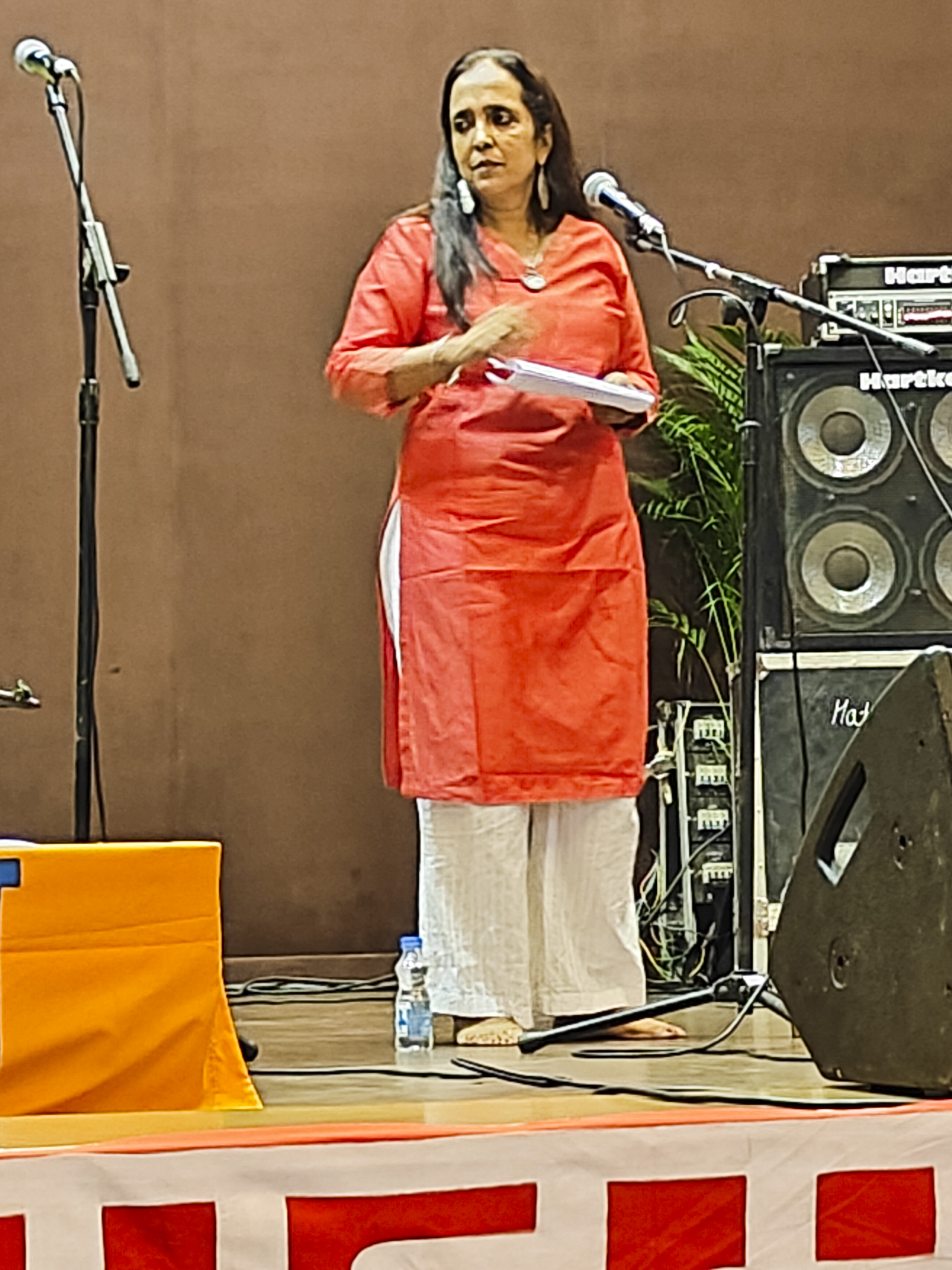
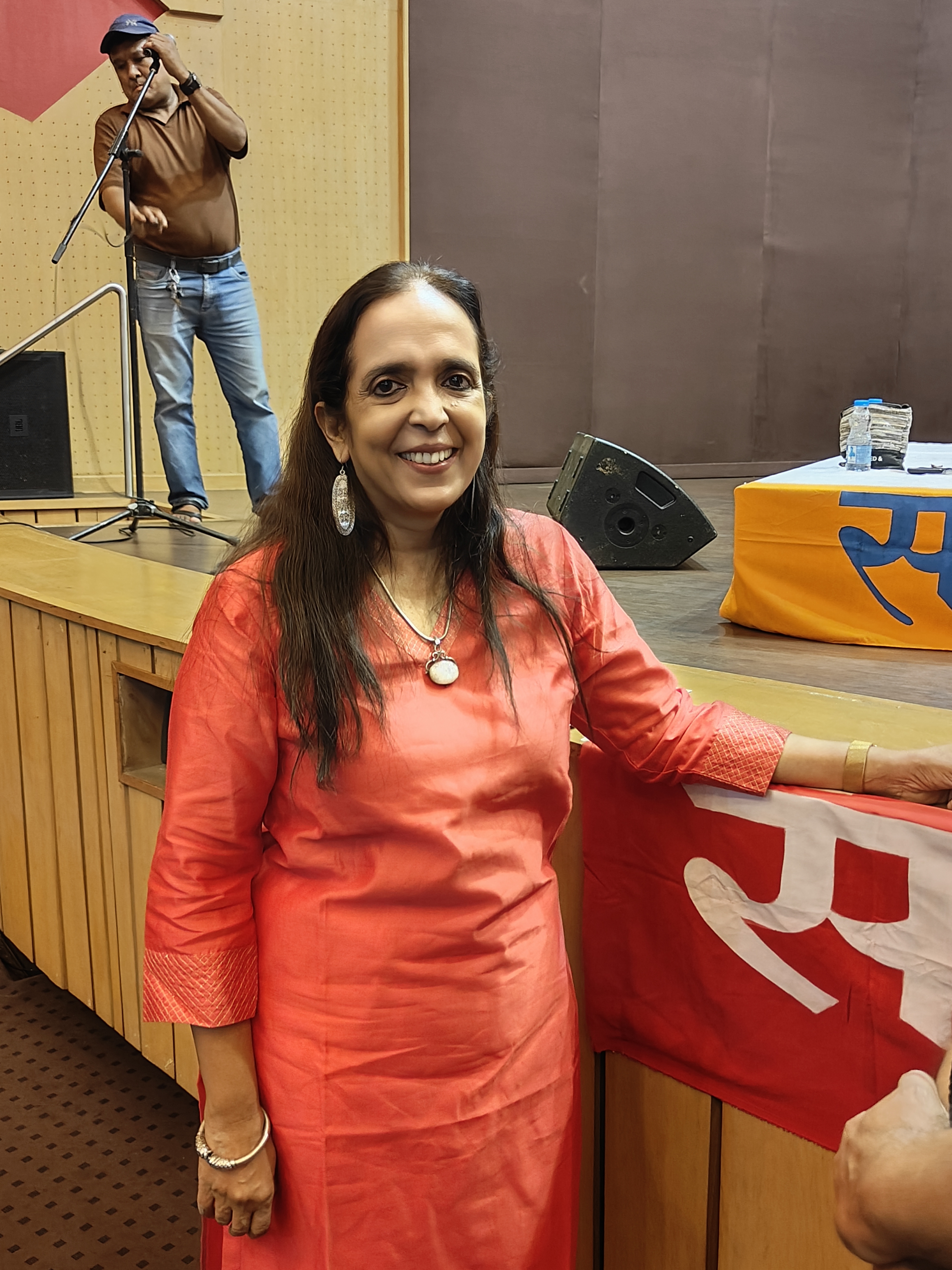
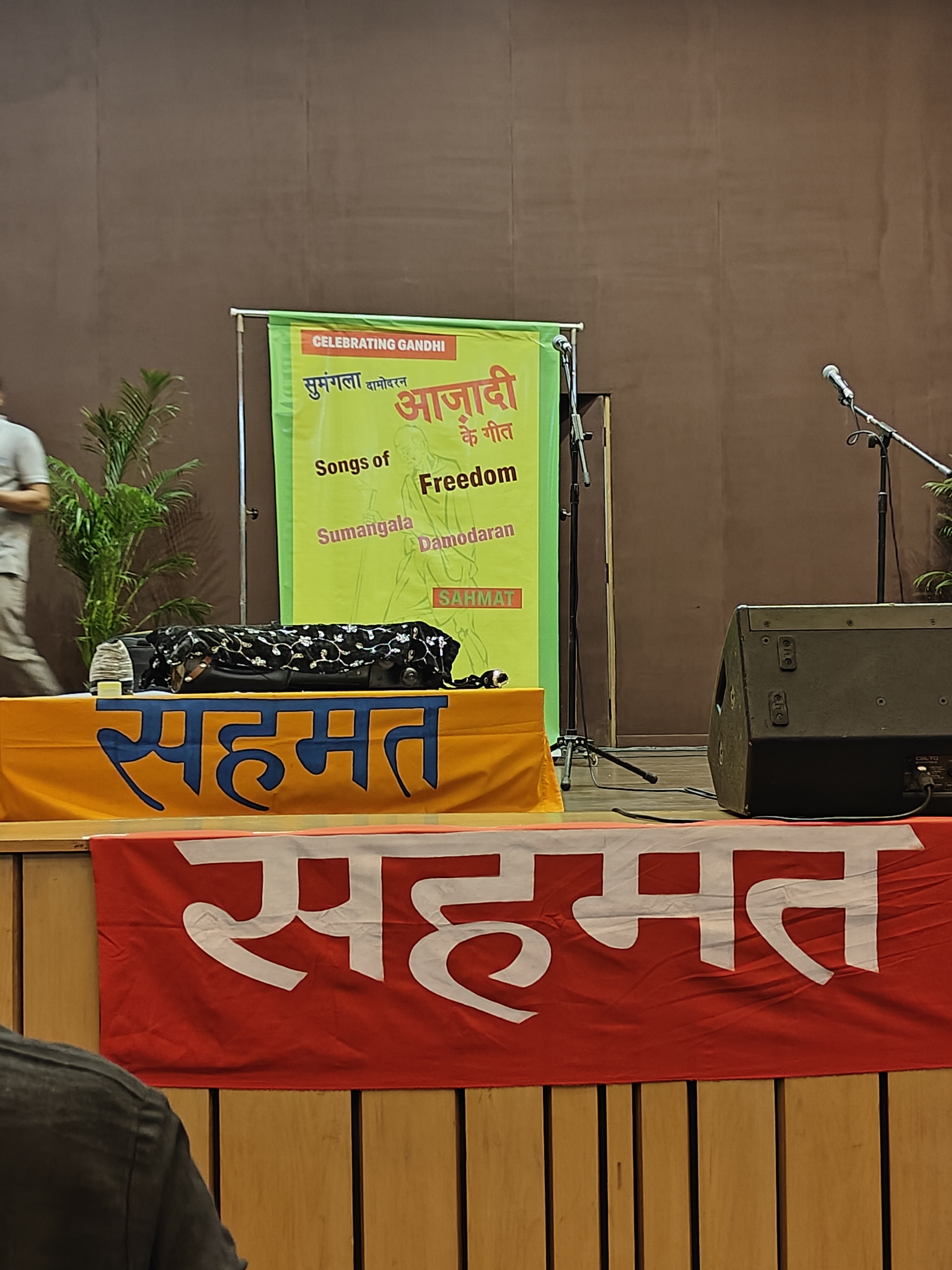
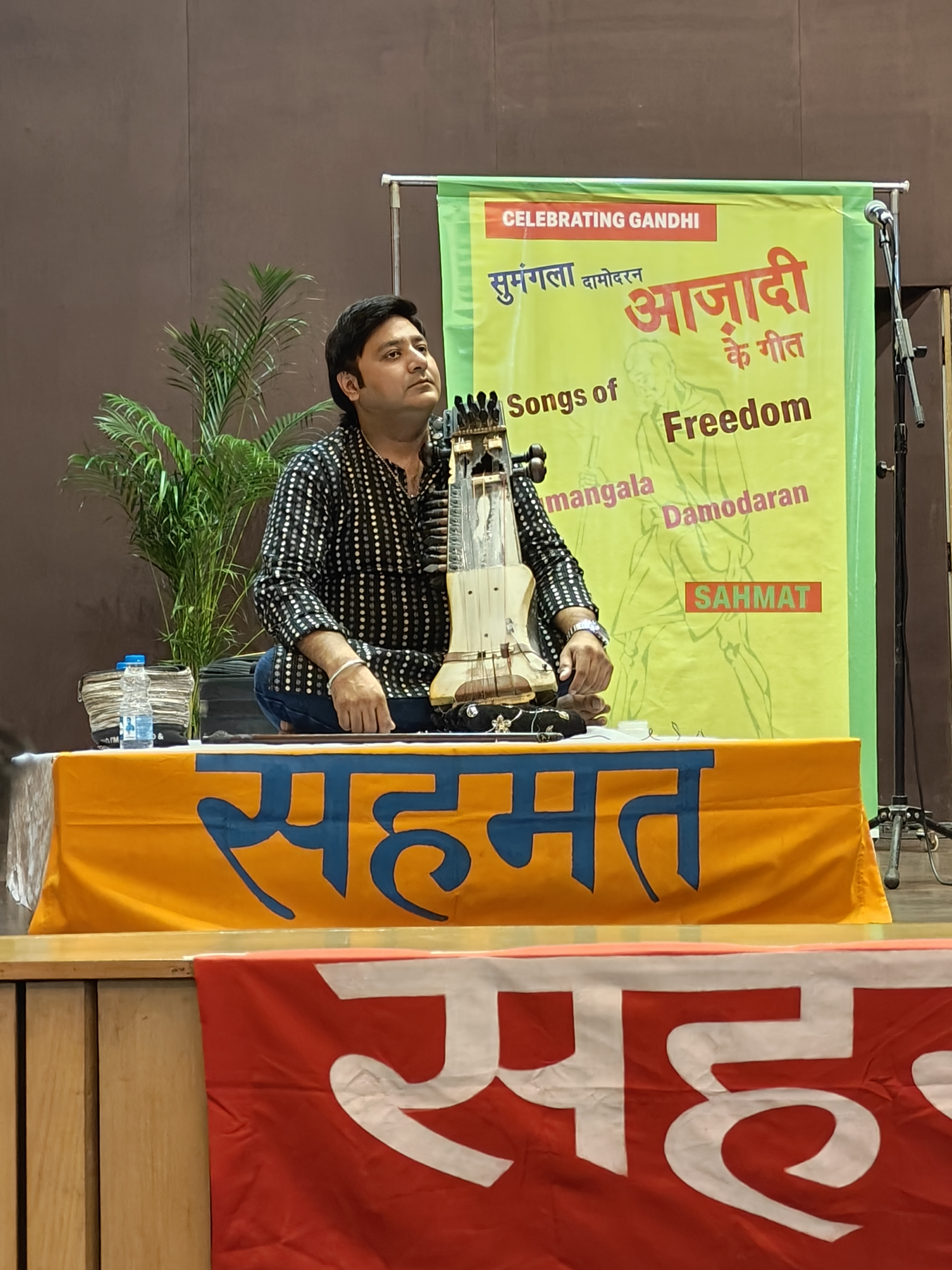
At the ‘Songs of Freedom – Aazadi ke Geet’ concert in Delhi, Sumangala Damodaran sang her heart out on 4th October. Sad, if you missed it. The event was probably the most striking repertoire of songs of resistance, revolution, struggles and Indian Independence Struggle covering the period from 1857 to the present day. Her range was wide between singing of the Jallianwallah Bagh, touching upon Tagore, Gandhi’s fast unto death, the Bengal Famine, the Partition, Delhi riots of 1984, and it was also in solidarity with Gaza.
Sumangala started with “Din khoon ke” (Hindustani) written by an anonymous poet after the Jallianwala Bagh massacre; it was originally sung by Priti Sarkar in the IPTA Bombay Central Squad in the early 1940s. From the Jallianwala massacre of 1919, she moved to 20th Sept 1933 when Mahatma Gandhi was on ‘Fast unto Death’ in Pune. Rabindranath Tagore visited the Mahatma and requested him to break his fast. In turn, Gandhi asked Tagore to sing one of his songs – the song was “Jibon jokhon” (Bangla), which Sumangala sang with a gentle Bangla lilt.
Next in line was a song titled “Vazhga nee emmaan” (Malayalam) which was originally a poem by Subramania Bharati who read it to Mahatma Gandhi when the two met at C. Rajagopalachari’s home in Madras. The next song by Sumangala took the audience by surprise as she sang a love song of a peasant girl to a green parakeet. This song, “Pacchappanamtatte” (Malayalam) used to be performed during the Trade Union Movement in Kerala of the 1940s. This song was originally sung by PK Medini, who is now in her late 90s and is still politically active.
Another surprise awaited the audience when Sumangala sang a “Heer” (Punjabi) written by Sheila Bhatia in Lahore during a rally organized by the Kisan Sabha to create awareness about the Bengal Famine of 1943. The pain and lament in Sumangla’s voice truly conveyed the human tragedy of famine and the story of tragic romance from Punjab.
The song “Jaane waale sipahi se poochho…” (Hindi), written by Makhdoom Mohiuddin during the Second World War was yet another moving piece which came next. The song was penned when the poet saw poor peasants being mobilized for the war to join the British army. The song was revived by the group Parcham in 1984 after the anti-Sikh carnage in the country. Sumangala continued with another popular Bhojpuri song “Ajadiya“, which was written by Gorakh Pande, a radical poet from JNU, who tragically ended his own life around 1988-89. Yet another moving piece of poetry by Dushyant Kumar was sung by Sumangala with such verve that the audience joined her in reciting the same. “Ho gayi hai peer parvat si..”, this can stir any audience on any occasion.
How can Faiz Ahmad Faiz be missing when one is singing of struggles, revolution, resistance and aazadi. Next on the fare, the second last of the evening, was the ever-green Faiz “Ab tum hi kaho kya karna hai, ab kaise paar utarna hai…” which the poet had written in Beirut and dedicated to Yasser Arafat in his last book of poems.
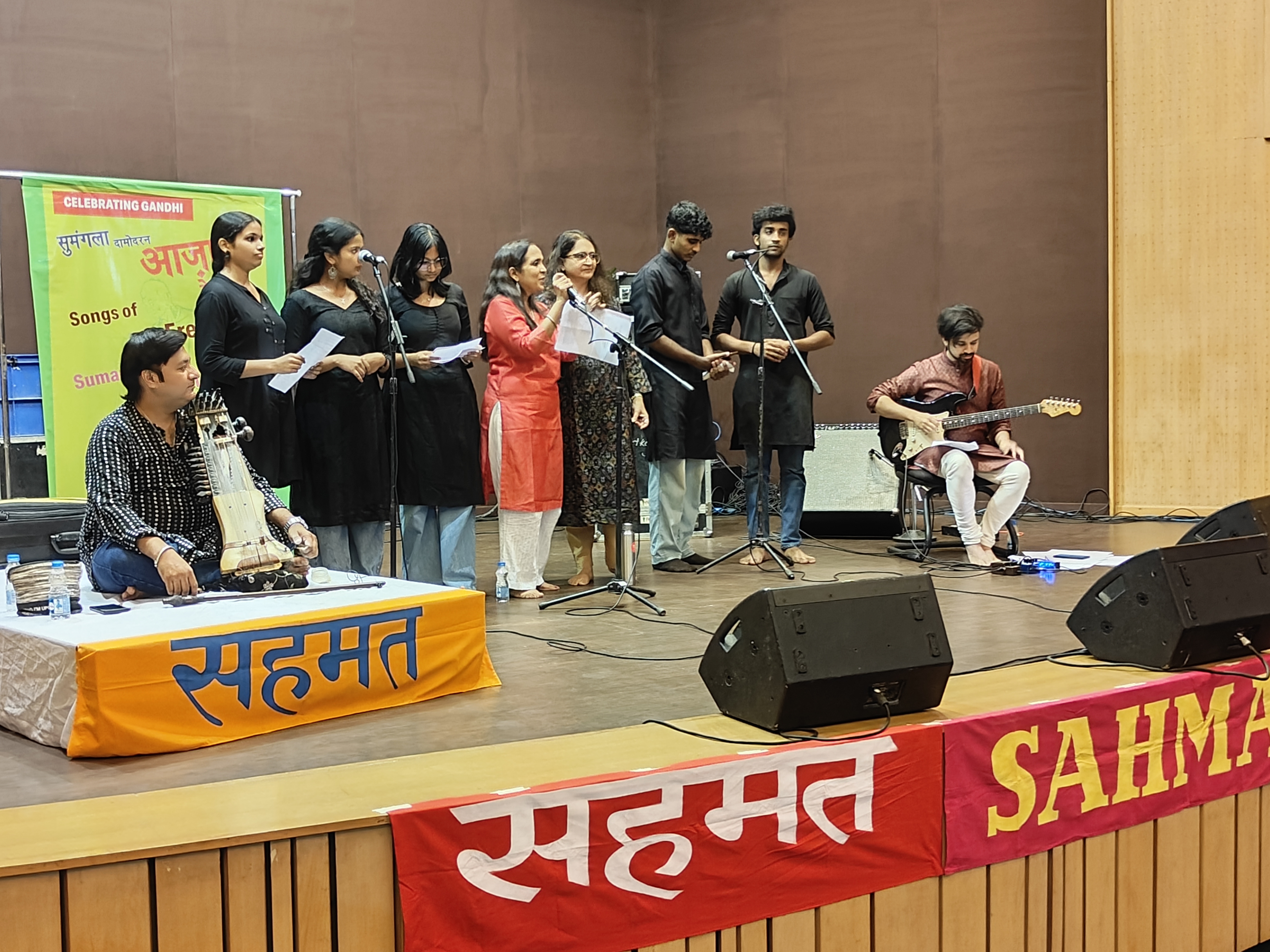
The concluding number of the “Songs of Freedom” evening organised by Sahmat was “Balikudeerangale“, (Malayalam) the song was originally produced by Kerala People’s Arts Club in 1957, soon after the first Communist ministry took over the government. It was sung as a tribute to the martyrs of the Freedom Struggle of 1857. In this song Sumangala was joined by a few members of the Club.
Sumangala was accompanied by Mark Aranha on guitar and Ehsan Ali on sarangi. She sang in Hindustani, Bhojpuri, Bangla, Tamil, Punjabi and Malayalam.
Sumangala Damodaran is an economist and a scholar of popular music studies. She is also a musician and composer who has archived and written about Indian resistance music traditions. As a development economist, her research and publications fall broadly within the rubric of industrial and labor studies, and more specifically on industrial organization, global value chains, the informal sector, labor, and migration. Apart from her academic involvements, she is also a singer and composer.
– Rajinder Arora, Sahmat, October 2025

 Ankahi. Unsaid.
You must be logged in to post a comment.