
Welcome to the Cimitirul Vesel—the Merry Cemetery.
The Village Where Death is a Punchline: A Journey to Romania’s Merry Cemetery
In most parts of the world, cemeteries are hushed, grey places defined by whispers and heavy hearts. But if you drive far into the northern reaches of Romania, almost to the Ukrainian border, you’ll find a village called Săpânța that sees things differently. Here, the graves don’t just sit in silence; they tell jokes, confess secrets, and burst with color.
A Forest of Blue
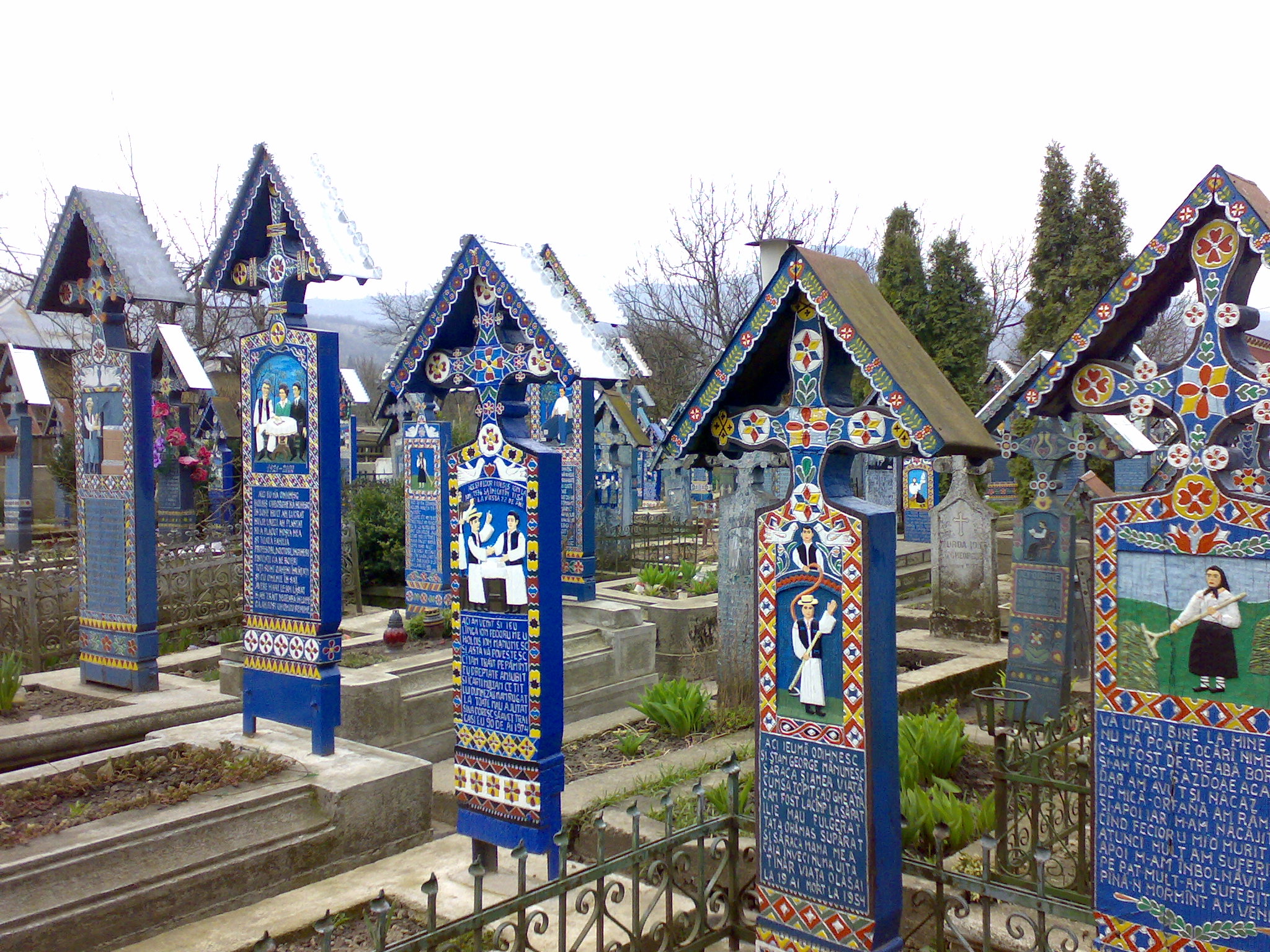
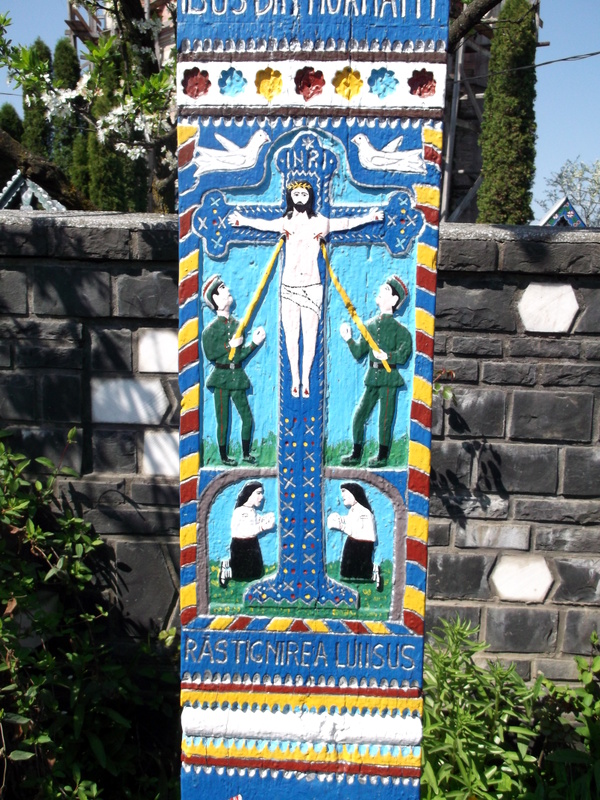
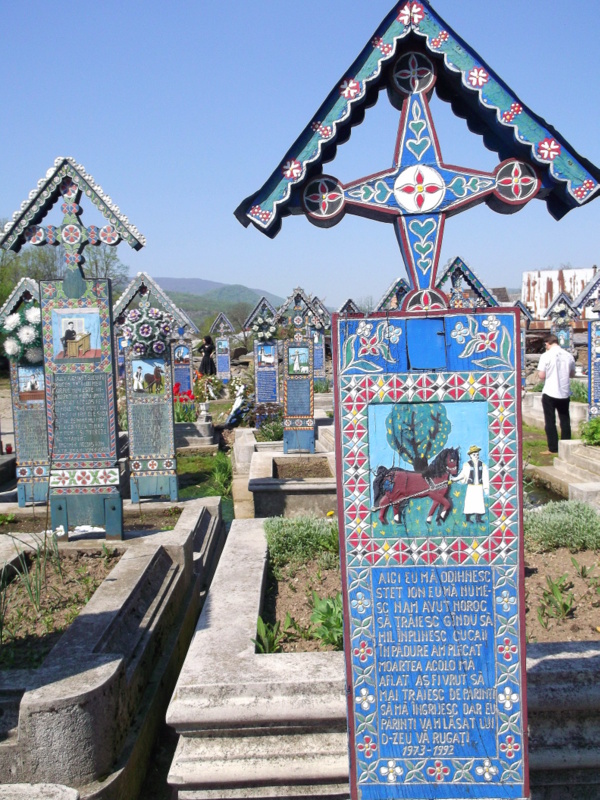
Walking into the churchyard of the Assumption, you aren’t met with cold marble or somber angels. Instead, you are greeted by a sea of vibrant, radiant blue. This specific shade, now known across the country as “Săpânța Blue,” represents the sky, hope, and the freedom of the soul.
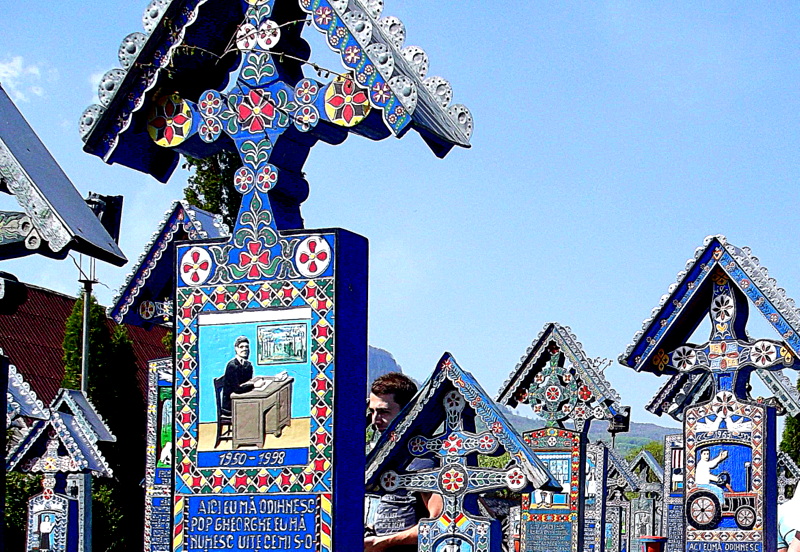
Each grave is marked by an intricately carved oak cross, topped with a little “roof” to protect it from the Maramureș snow. But it’s what is painted on the wood that stops you in your tracks. In a charming, “naive” art style, the scenes depict exactly how the person lived—or how they died. You’ll see farmers tilling fields, weavers at their looms, and more than a few scenes involving a car accident or a bottle of plum brandy.
The Man Who Started the Conversation
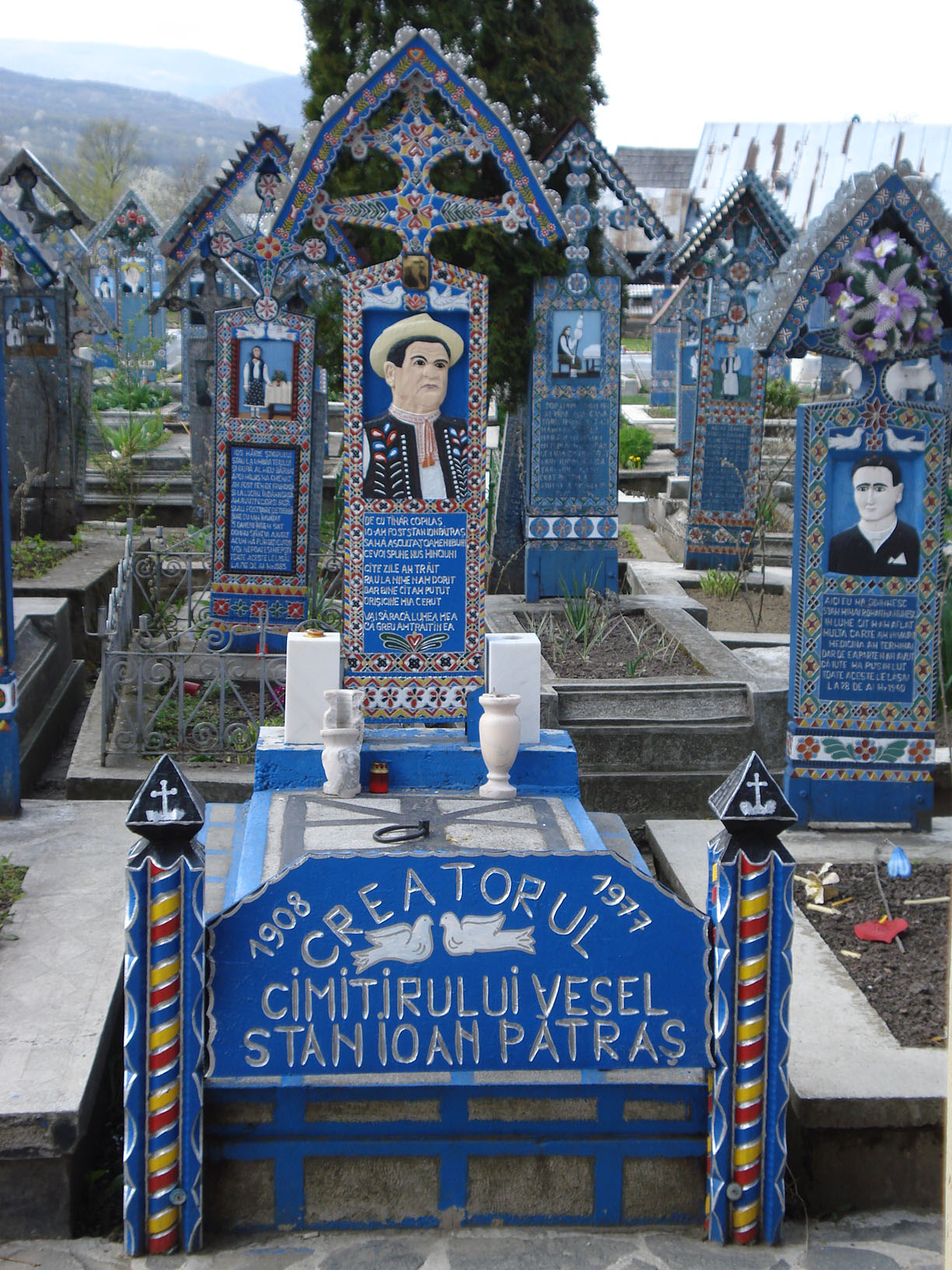
This tradition wasn’t the work of a committee; it was the vision of one man named Stan Ion Pătraș. Starting in 1935, Pătraș decided that a person’s life shouldn’t be reduced to two dates and a “rest in peace.” He believed in the truth, even the uncomfortable parts.
Between 1935 and his death in 1977, Pătraș carved over 800 crosses, including his own. Today, his apprentice Dumitru Pop carries on the legacy. Pop doesn’t just carve wood; he acts as the village historian and judge. When someone dies, the family asks him for a cross, but Pop alone decides what the painting will show and what the poem will say. Because it’s a small town, there is no hiding. If someone was a bit of a grouch or loved the local tavern too much, it goes on the cross.
Poetry from the Beyond
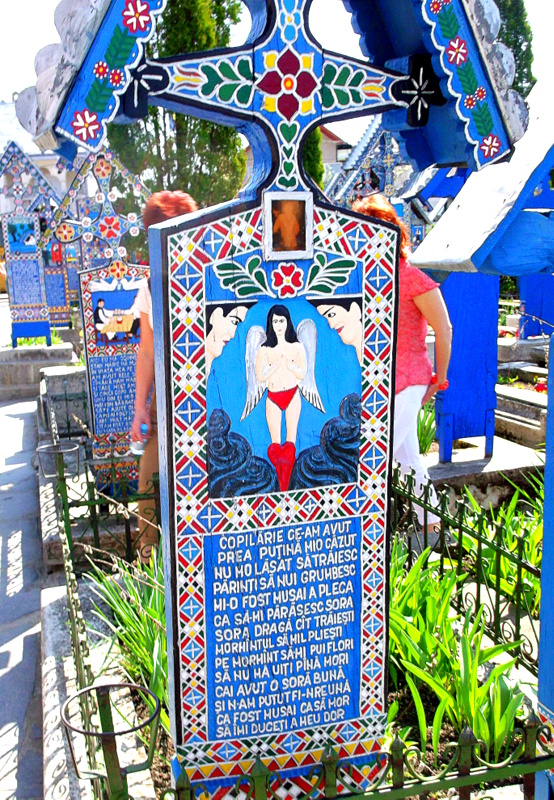
The real soul of the cemetery lies in the epitaphs. Written in the first person, they feel like the deceased is leaning out from the grave to share one last story with you.
Some are delightfully cheeky. One man’s grave famously features a poem about his mother-in-law, warning passersby not to wake her up:
“Try not to wake her up, because if she comes back home, she’ll scold me even more. But I will surely behave so she stays in her grave!”
Others are brutally honest about their vices, like Stefan, who admits:
“As long as I lived, I liked to drink… I drank because I was sad, then I drank to be happy. I’m still thirsty, so if you visit, leave a little wine here.”
Why the Humor?
It might seem irreverent to Western eyes, but this “merriness” is rooted in deep history. The ancient Dacians, who once inhabited these lands, believed that the soul was immortal and that death was simply a passage to a better, more joyful life. For them, dying was a moment of exaltation.
While there is still room for sadness—such as the heartbreaking cross of a three-year-old girl lost to a tragic accident—the prevailing feeling is one of celebration. It is a reminder that while death is inevitable, a life well-lived (with all its flaws and foibles) is something worth talking about.
Planning Your Visit
The Merry Cemetery has rightfully earned its spot as one of the “Seven Wonders of Romania.” It’s an open-air museum that captures the heartbeat of a village that refuses to be silenced by the grave.
All images courtesy Wikipedia
Resources:
Virtual Tour: FindAGrave – Săpânța Archive
Photo Archive: Visual Gallery
 Ankahi. Unsaid.