Suratgarh sojourn

Sisters share more than just the mother – they share memories, morsels and mirth. As sisters age together they share bodily pains and aches, develop identical creases on their faces and near-similar throbbing blue veins under wrinkled skins in which the biological code of generations is embedded. Well past their nineties, sisters start looking like identical twins with similar, puzzling faces. Their toothless smiles and groggy grunts sound so much alike that their own children can confuse one for the other. When they huddle together with faces covered, their own sons falter in picking the Mother from the Massi. 

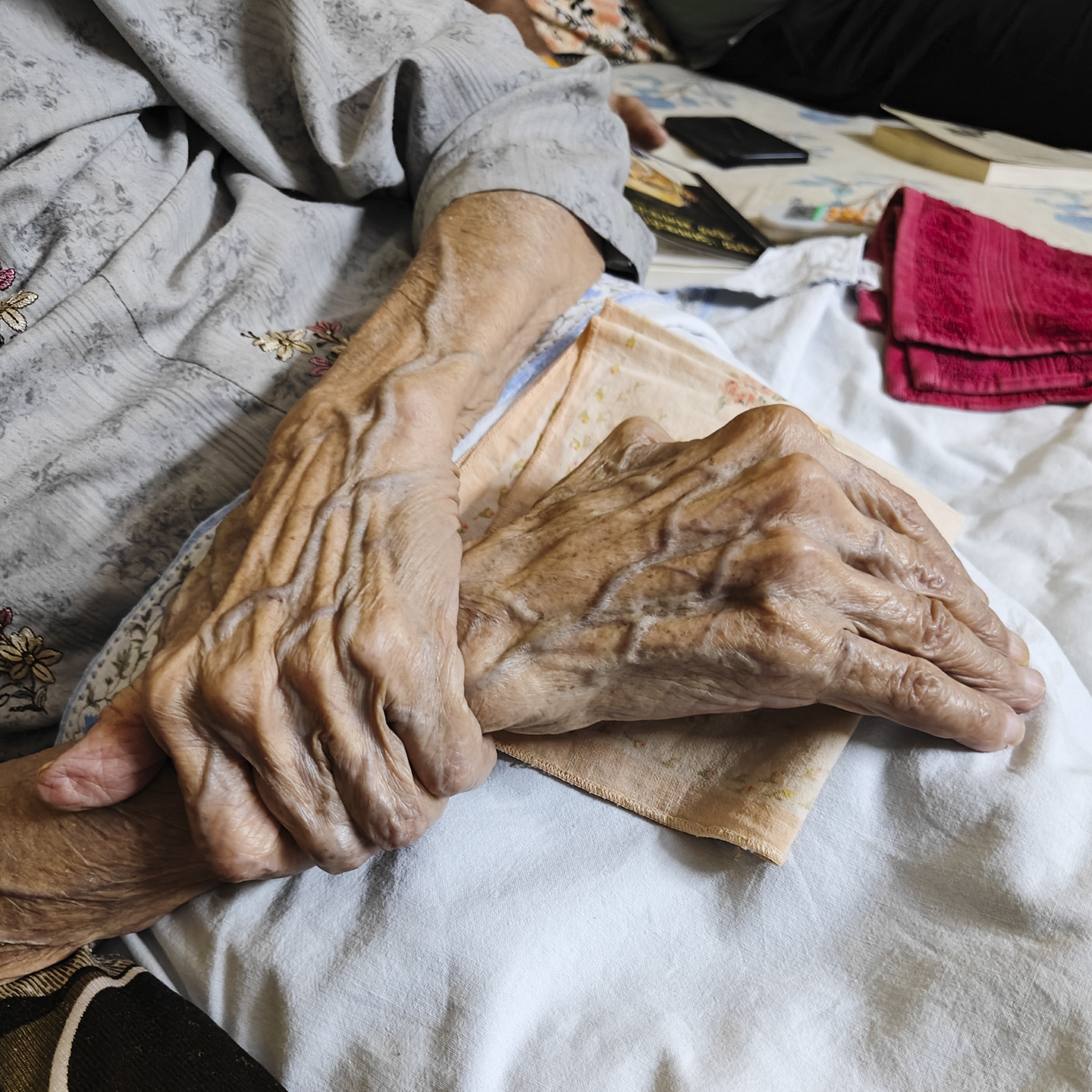
Only when I looked closely did I find that my massi had slightly broader nails on her long dainty fingers. Ma’s fingernails were naturally manicured into perfect rounded shapes, she rarely filed them, rounded the tips or even applied nail enamel. Earlier in life Ma would chew nails when anxious.

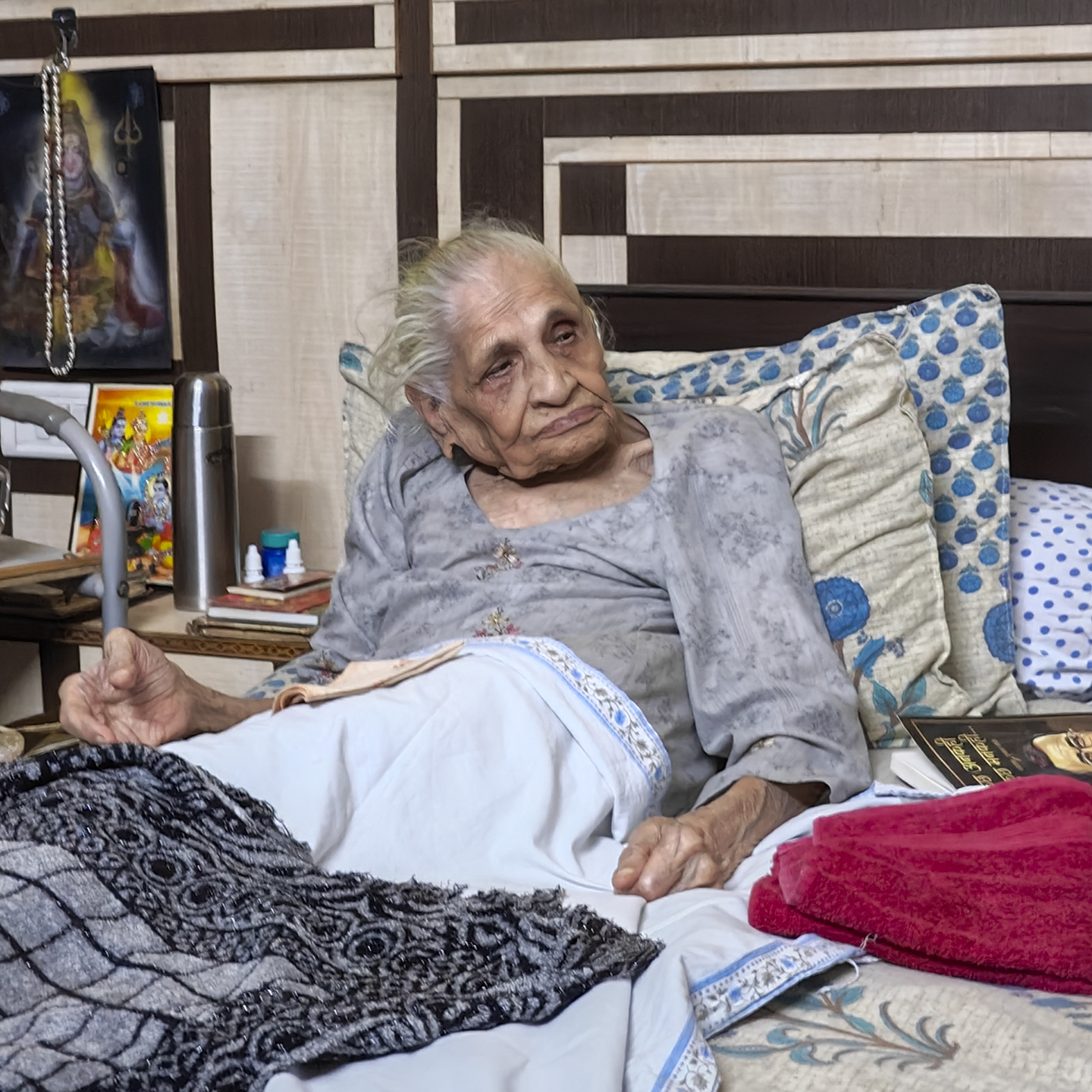
Having lost my mother six weeks ago, I am here in Suratgarh to see my Massi who is Ma’s immediate older sibling. Having been privy to their phone calls, thrice a day for ​o​ver two ​d​ecades, I can vouch that the attachment between two sisters who lived past ninety is a rare, beautiful masterpiece shaped by nearly a century of shared existence. Their connection transcends words, relying on a silent, comforting telepathy built over nine decades. They are living mirrors for one another, anchoring each other to reality and providing a unique comfort that nobody else can duplicate. Massi threw up her hands and cried for an hour upon seeing me. It was very difficult to control her and I wanted her to pour out the grief.

Ma and Massi shared a private universe of memories (from Jhang, Lahore​,​ Rohtak​ and Patna), remembering the same childhood home, their parents, and the trials of the Partition era that we have only read about in history books. For years their bond provided an unmatched sense of emotional security, offering each other a safe harbour where they could be themselves: ‘Sisters Without Pretense’.

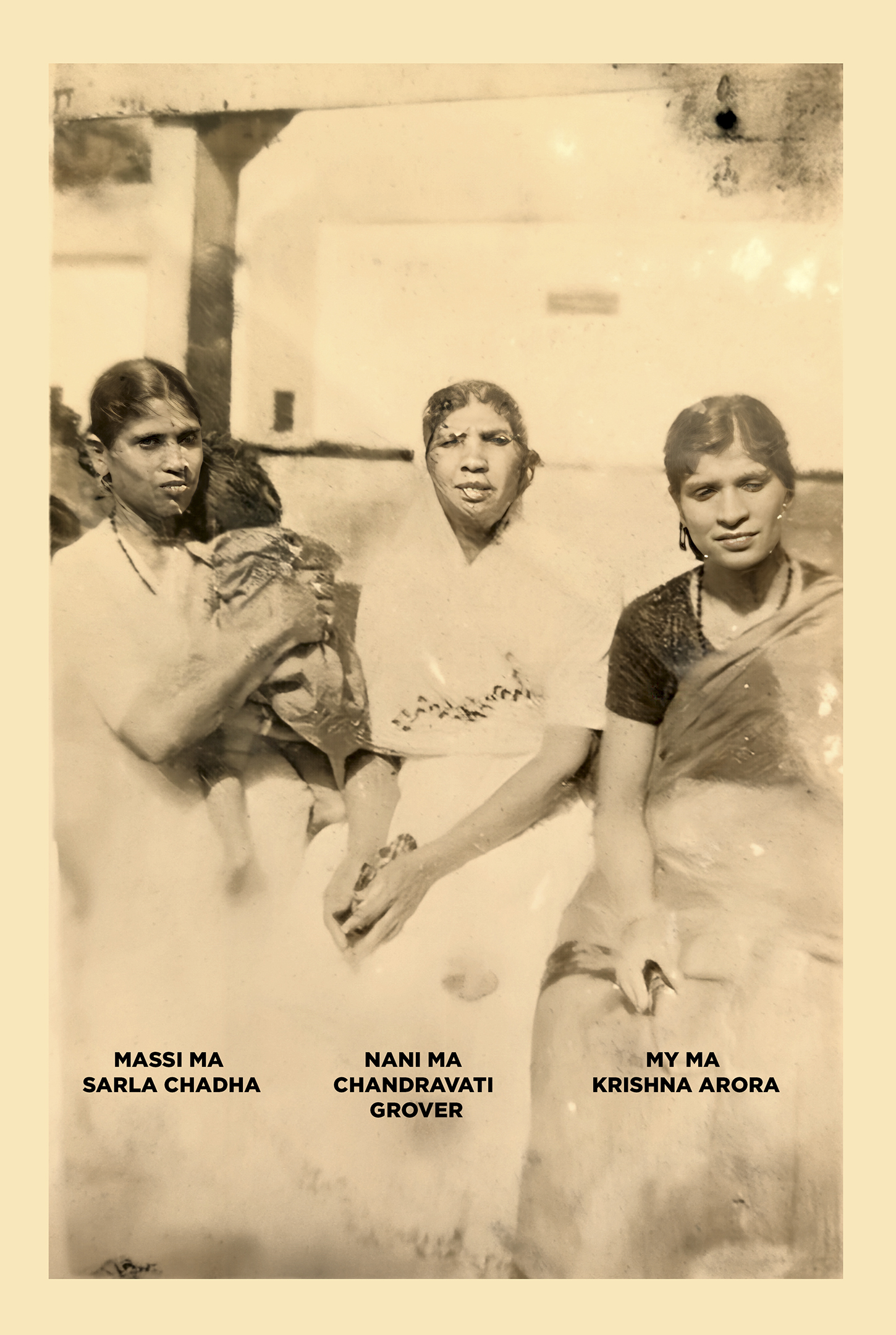
Meeting Sarla Massi was something I owed my mother and myself—a plan that couldn’t materialize because of Ma’s detriorating health. Meeting her favourite nephew​ (me), massi is at peace and I too feel at peace when I stand in front of Ma’s photo. ‘Ma, we met her, Sarla auntie is fine.’ In this poignant picture from the 50s, the sisters share a special moment with their Mom, my Nani, Chandravati. And the other picture is of Sarla auntie​ and her hands from a few days ago. This is the last piece of our Suratgarh sojourn.​

The World’s Happiest Graveyard: Inside Romania’s Merry Cemetery

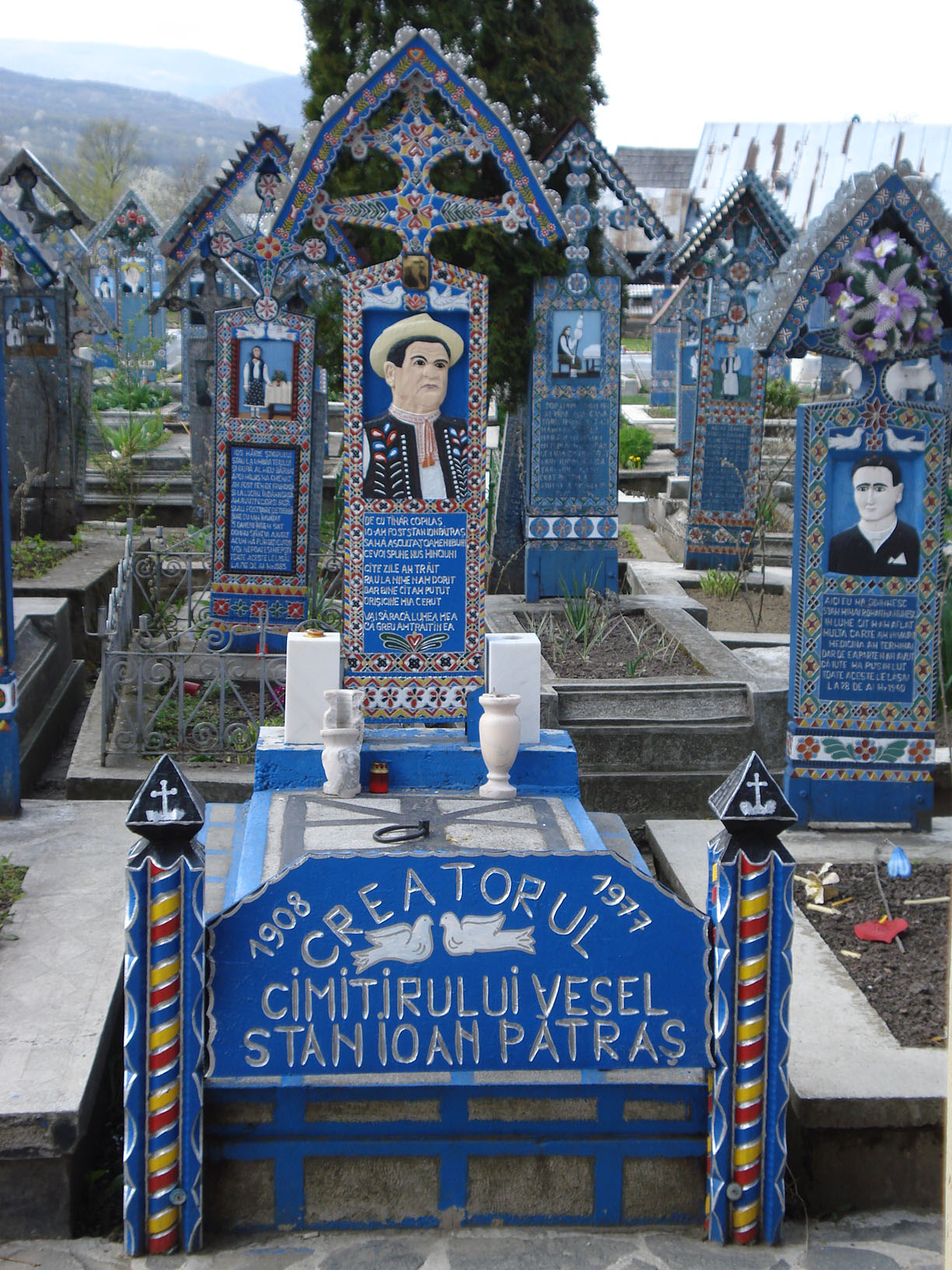
Welcome to the Cimitirul Vesel—the Merry Cemetery.

The Village Where Death is a Punchline: A Journey to Romania’s Merry Cemetery
In most parts of the world, cemeteries are hushed, grey places defined by whispers and heavy hearts. But if you drive far into the northern reaches of Romania, almost to the Ukrainian border, you’ll find a village called Săpânța that sees things differently. Here, the graves don’t just sit in silence; they tell jokes, confess secrets, and burst with color.

A Forest of Blue
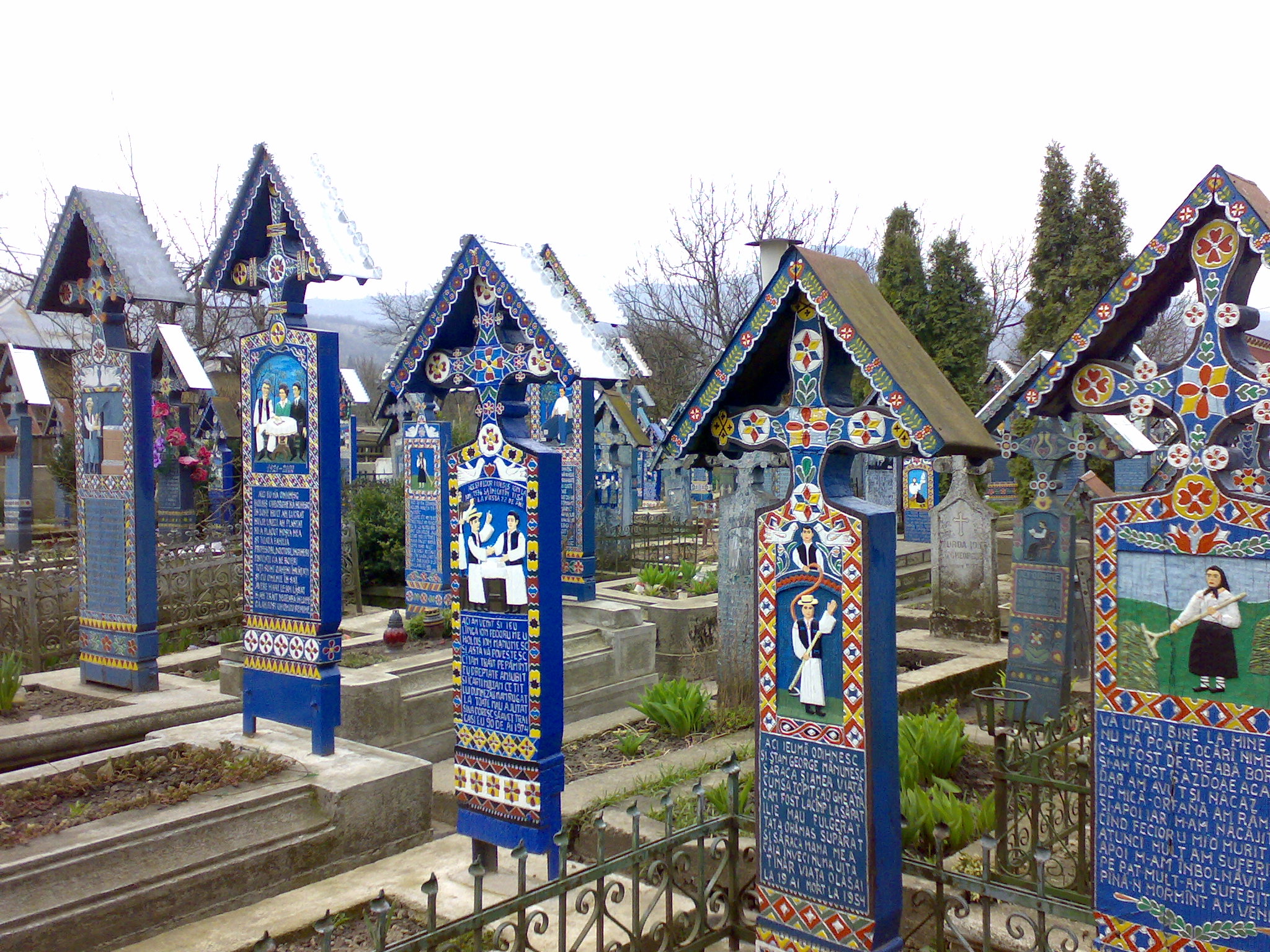
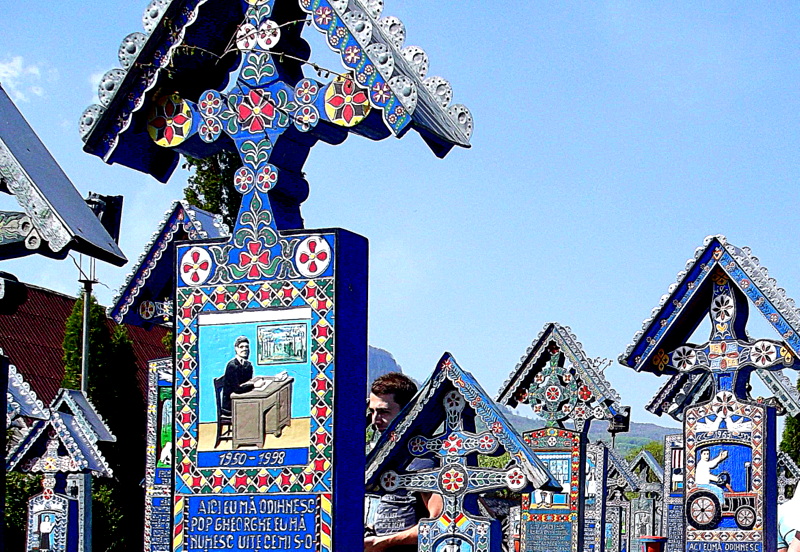
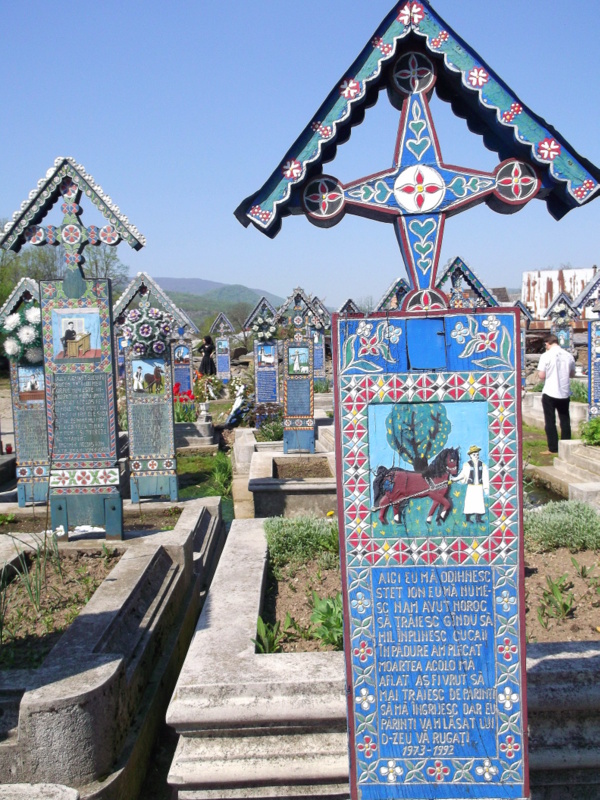
Walking into the churchyard of the Assumption, you aren’t met with cold marble or somber angels. Instead, you are greeted by a sea of vibrant, radiant blue. This specific shade, now known across the country as “Săpânța Blue,” represents the sky, hope, and the freedom of the soul.

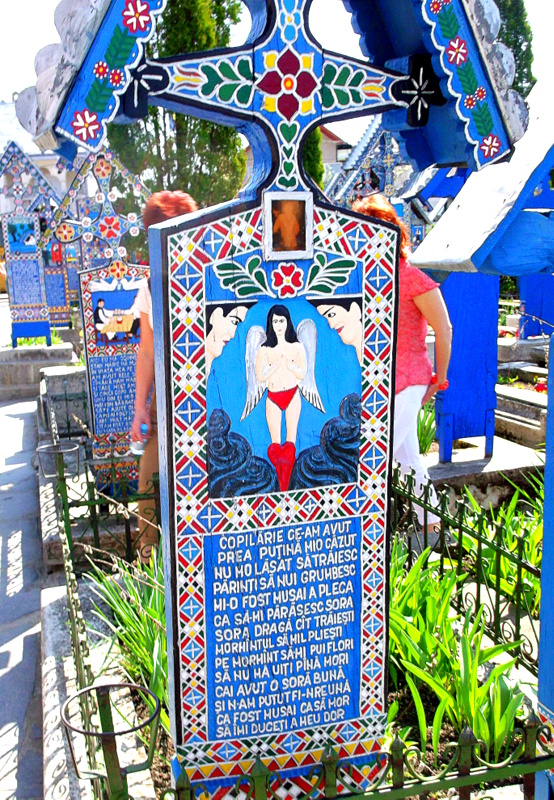
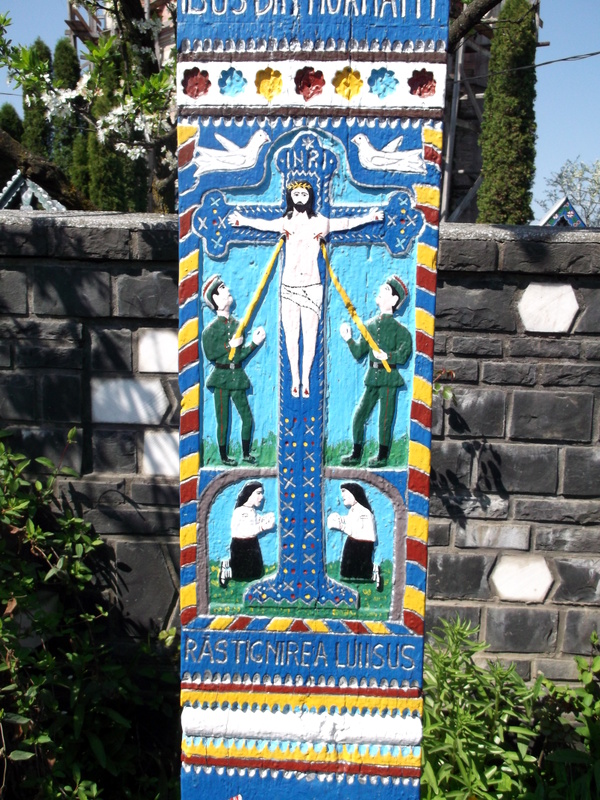
Each grave is marked by an intricately carved oak cross, topped with a little “roof” to protect it from the Maramureș snow. But it’s what is painted on the wood that stops you in your tracks. In a charming, “naive” art style, the scenes depict exactly how the person lived—or how they died. You’ll see farmers tilling fields, weavers at their looms, and more than a few scenes involving a car accident or a bottle of plum brandy.

The Man Who Started the Conversation
This tradition wasn’t the work of a committee; it was the vision of one man named Stan Ion Pătraș. Starting in 1935, Pătraș decided that a person’s life shouldn’t be reduced to two dates and a “rest in peace.” He believed in the truth, even the uncomfortable parts.

Between 1935 and his death in 1977, Pătraș carved over 800 crosses, including his own. Today, his apprentice Dumitru Pop carries on the legacy. Pop doesn’t just carve wood; he acts as the village historian and judge. When someone dies, the family asks him for a cross, but Pop alone decides what the painting will show and what the poem will say. Because it’s a small town, there is no hiding. If someone was a bit of a grouch or loved the local tavern too much, it goes on the cross.

Poetry from the Beyond
The real soul of the cemetery lies in the epitaphs. Written in the first person, they feel like the deceased is leaning out from the grave to share one last story with you.

Some are delightfully cheeky. One man’s grave famously features a poem about his mother-in-law, warning passersby not to wake her up:
“Try not to wake her up, because if she comes back home, she’ll scold me even more. But I will surely behave so she stays in her grave!”

Others are brutally honest about their vices, like Stefan, who admits:
“As long as I lived, I liked to drink… I drank because I was sad, then I drank to be happy. I’m still thirsty, so if you visit, leave a little wine here.”

Why the Humor?
It might seem irreverent to Western eyes, but this “merriness” is rooted in deep history. The ancient Dacians, who once inhabited these lands, believed that the soul was immortal and that death was simply a passage to a better, more joyful life. For them, dying was a moment of exaltation.

While there is still room for sadness—such as the heartbreaking cross of a three-year-old girl lost to a tragic accident—the prevailing feeling is one of celebration. It is a reminder that while death is inevitable, a life well-lived (with all its flaws and foibles) is something worth talking about.

Planning Your Visit
The Merry Cemetery has rightfully earned its spot as one of the “Seven Wonders of Romania.” It’s an open-air museum that captures the heartbeat of a village that refuses to be silenced by the grave.

All images courtesy Wikipedia

Resources:
Virtual Tour: FindAGrave – Săpânța Archive
Photo Archive: Visual Gallery

To a Mirror, posthumously

Father died at home, in his house
looking himself in the mirror; 
guiding the razor upside-down on his thin face,
pulling wrinkled skin over shrunken cheekbones,
making faces while shaving; grinning,
upsetting, teasing, and taunting the mirror,
Just then a heart-attack took him in minutes; 
And the Mirror captured his soul.

The Mirror was fixed on the wall
facing the kitchen, where mother worked.
She kept her distance from the mirror,
feeling sad and scared of looking in it –
finally, covering it with a towel that father used.

Father owned the house where he died.
‘Krishna Kutir’, the house was named
after my mother, who sold it ten years later
and passed the money to his heirs.

No Father, No House. No Mirror. All gone.
A lot more went with it, my innocence, my youth.
We all grew up in it – a sister, two brothers,
mother, father – and the house itself,
which had come by chance, really.
Father had no money to buy it.
He would say. ‘I was lucky’. Yes, he was.
Indeed, lucky for an orphan and a refugee
to own a house in the capital.

For sure, those days he was lucky, 
and happy too, having got a raise in salary.
He also won two lotteries in six months.
First, a ‘lucky draw’ where his name was picked
and a small flat allotted to him for small money.
Second, a ‘cash prize’ for writing a slogan
for a cigarette brand of the working class.
He used the money to part-pay the flat.
Would you believe, there was a time
when one was rewarded to smoke!
Very Lucky!

Like his income, the house too was
low income. LIG Flat they called it.
Dad was proud, ‘I made it like a bee,’
he once told me looking into the mirror.
He saved for it, every paisa he could
like a bee secreting to make a hive –
cutting on his smokes, eats, and bus fare;
cycling to work eight miles one way.

Mother sold the house as it had her name.
The mirror went with the house.
Outside the house, there was a name plate
faded, nailed to the wall, having survived
forty years of elements, envy, and evil-eye.

When Ma moved, father stayed behind
in his house. He didn’t move, he couldn’t.
His soul had been seized by the Mirror.

Not everything died with father, a lot survived.
His dreams, his books, his letters, his diaries
and the Mirror on the soiled verandah wall
from which his face followed us everywhere.

Ma brought all she could, tears & trauma in tow 
and the fading nameplate, ‘Krishna Kutir’.
I, for one, couldn’t unhook the Mirror
Father held it tight.

— R, March 27, 2024