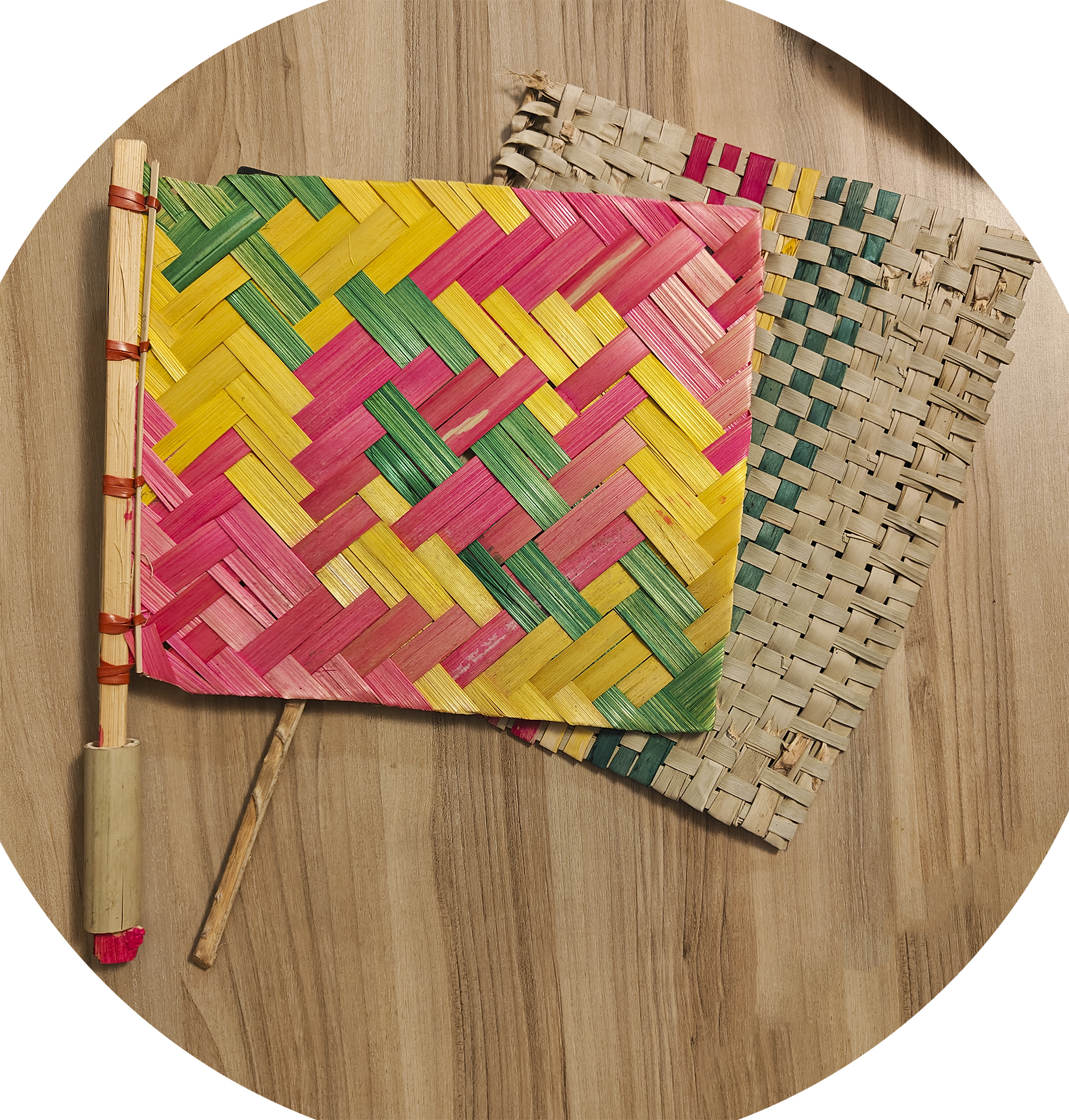
Ashadha heralds the monsoon, a time when sadhus or wandering minstrels traditionally paused their travels and sought shelter. Fanning them to offer relief from uncomfortable heat was considered a vital act of service. Thus it became a tradition to donate colourful pankhis during this month.This historically important Indian airing/cooling tool evolved from simple woven palm or bamboo leaves to ornate embroidered portable artifacts made from cloth. This fan too was a part of the giveaway during the month of Ashadh together with sweet water-milk and poori-chhole. The pankhi offers immediate relief from intense summer heat and monsoon humidity and it was believed that donating a pankha during Ashadha earns immense spiritual merit. Historically, it provided comfort to the travellers during the rainy season. This supposed pious act is believed to wash away sins and bring blessings of prosperity. This Pankhi or Pankha was the fan, cooler, and AC all-in-one for our parents’ generation until about the late 1950s.
A pankhi refers to a small, plumed, or intricately designed hand fan, while pankha is the broader Hindi term that generally describes all types of fans (both manual and electric).Handcrafted, lightweight bamboo woven fans require no electricity, making them ideal for power outages or while sitting on the porch. The decorative or embroidered pankhis often feature intricate zari, mirror work, or deity motifs, commonly used in prayer rooms or given as wedding favors. In those days these were powered by another USB called Universal Strong Bazzu.