At the end of this fascinating book there is an announcement for an Essay Competition with a prize money of Rs 100, Rs 50, and Rs 25 each for the students of classes 8, 9, and 10. There is also a coupon in the book which is to be filled by the student and signed by the school Principal confirming that the 150 words essay is written by the student himself and no one else. The last date for submission of essays is 15 November 1933 and the announcement of winners of the competition is scheduled for 1st January 1934 in Madras.
Don’t you think way back then the schools, students, teachers, and the publishers were so much better! To keep the interest of students in poetry, or for that matter reading itself, was so important to them that a princely sum of Rs. 100 was given as the First Prize simply to understand and interpret poetry. Mind you this is in the 1930s when the salary of an English teacher in a school was all of Rs. 22 per month. This is the period when schools or education was managed and funded at community level only. As per Census figures of 1931 we had 22,86,411 Secondary Schools in India with an overall literacy rate of 9.5% only.
Published in 1933, The Golden Book of English Poetry, Selected and Annotated by N. Kandaswamy Pillai, the anthology was a part of curriculum for students of schools in Madras Presidency. The anthology has poems from 58 poets as diverse as Lord Macaulay to John Keats. At the head of each poem is a brief note on the author and a line or two of comments. At the end of the poems there are Notes, ‘to words, phrases and terms unfamiliar to students’. The book also has 11 ballads. The Editor in his preface says, “Tennyson and Victorians have been excluded…” in a hope to bring out a companion volume to this. Published by The House of Knowledge, Tanjore the book doesn’t mention its price or, maybe a page is missing from this antiquarian volume (I love their colophon). This well preserved copy, that I recently bought from a dealer, was originally owned by one J. S. Sowmianarayanan possibly a student or even a teacher.
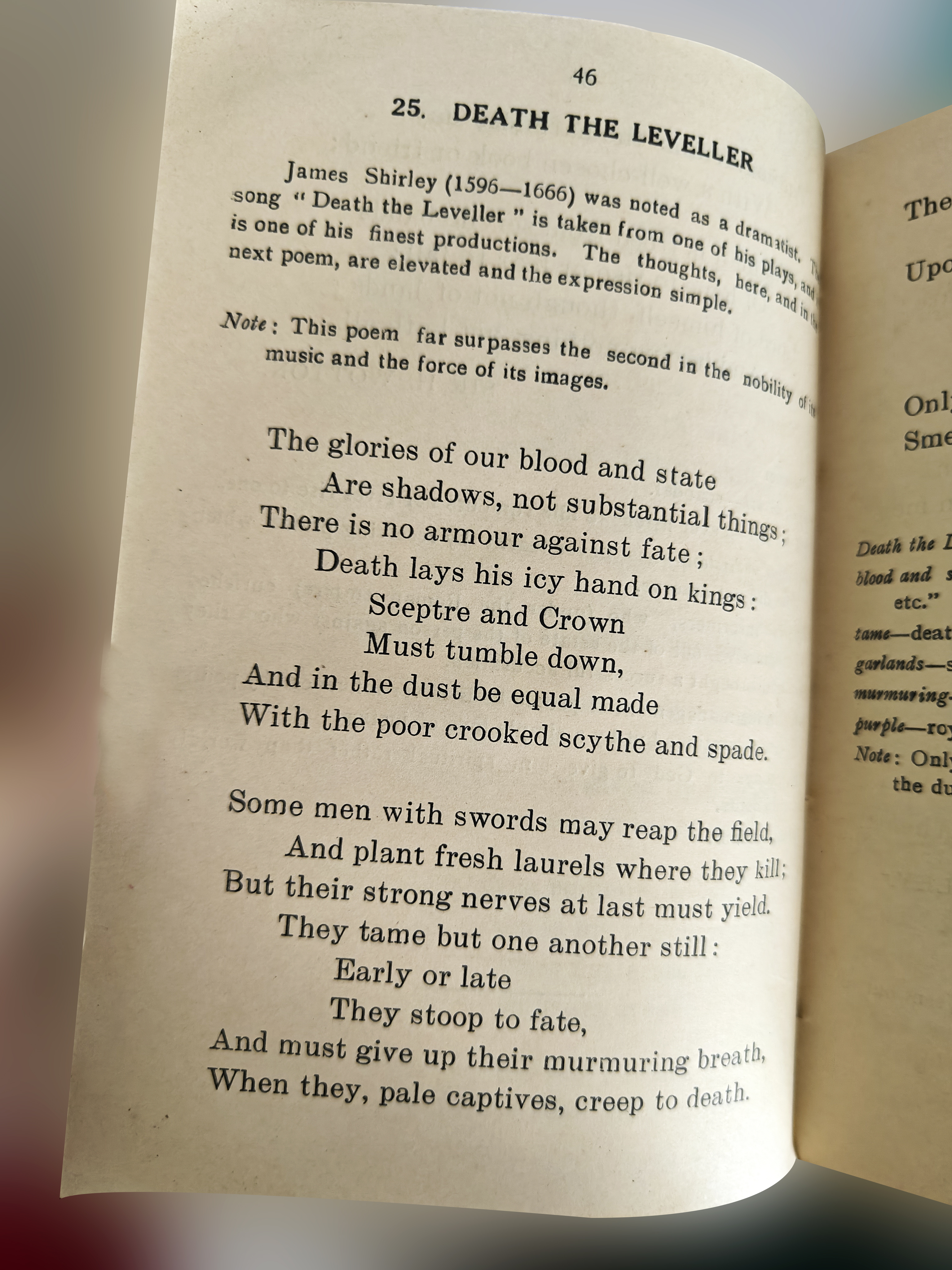
For the times that we are living in, I find the lines of this song by James Shirley most appropriate:
Some men with swords may reap the field, And plant fresh laurels where they kill; But their strong nerves at last must yield. They tame but one another still : Early or late They stoop to fate, And must give up their murmuring breath, When they, pale captives, creep to death.
He was sweating profusely, repeatedly wiping his forehead with a handkerchief in his left hand. With the right hand he would take off and put back his thick, square-frame glasses after rubbing the sweat dripping off his face with the sleeve of his check shirt. He was standing on the kerb. Time and again he would bend forward slightly, looking towards his right. Obviously he was waiting for someone. He was the same age as my dad.
I had recognised him; many others standing around me would have also known the popular broadcaster Ameen Sayani. Instead of the proverbial “face that launched a thousand ships”, his was the baritone that launched a million songs. I was all of 20, an outsider in the dream-city called Bombay, alone and unsure; trying to find my bearings in my first job selling high-end scientific calculating machines to naval dockyard and some scientific institutions in the city. It was the month of June. Monsoon had not hit the city yet. The abnormally high humidity levels were driving the folks to the edge. His shirt was soaked-wet. Unhappy with the weather he looked up, fanning himself with the kerchief.
I looked at him and smiled. I don’t know why I smiled but I know for sure that he smiled back. Hesitantly I walked the six or seven steps to him and bent down as if to touch his feet. He held me from my shoulders and pushed his sweat-soaked-hand in my hand. We shook hands squeezing and wringing his wet kerchief. A bus pulled up and we drew back our hands. We boarded the bus from Santacruz. We only had seven minutes of conversation before he got off at Bandra. His was a familiar voice that went on air every wednesday with Binaca Geetmala and also charmed us with dozens of radio commercials each day. He was ‘going to meet a record company official’, he said. We shook hands again before he got off.
The news of his passing away was an aide-memoire of meeting the man-with-a-golden-voice that humid day. In a sense he too was one of my heroes but I never expected to meet my hero on a bus stop. Thanks Mr Sayani for filling our lives with moments of music and joy, may you now find Lord Himself in your audience.
Mr Ameen Sayani passed away on 21 February 2024 in Mumbai, India.
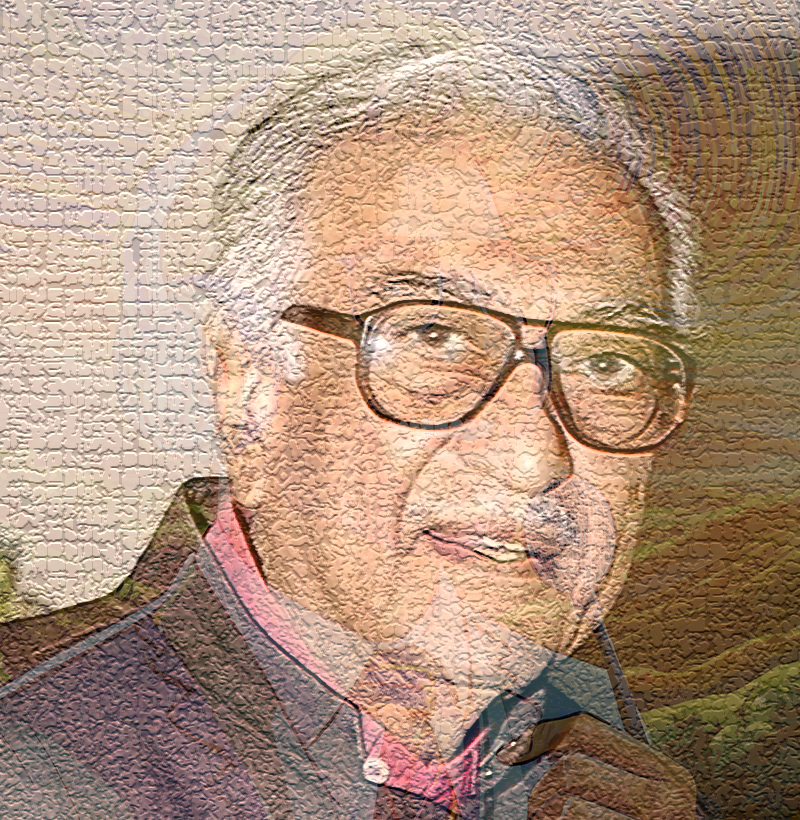
Ameen Sayani, composite artwork from an image taken from internet.
Lifting myself from under the sheets; or pulling out of a Jaipuri, a duvet, a razai, or a clutch of soft-warm arms is a curse for the first 120 seconds of the day. I only want to be interacting with that something special which had enveloped me for the night. For the next ten minutes I don’t want to be seen by anyone nor do I want to see anyone while I offer thanks and prayers to Ra-Horakhty, the combo of Egyptian gods of light and heat.
A glass of water later and a walk out to the terrace having said my greetings to the seven horses that pull the royal chariot of Surya, the only thing I want to smell and see is a cup of hot coffee.
Minutes later, I am still blurred and spaced out – the hair as if an eleven thousand volt current cut through my body from north to south – the eyes still puffed up; the cheeks still red in part and off-colour in other areas slowly sucking the colours back from last night’s half a bottle of rum. The next thing I want to see in my hands is the book that was delicately placed on the headboard last night.
The feet, by then, have found the rhythm, the eyes can now focus, the saliva lined with poison now craves for another cuppa. Sensations having returned to all faculties in turn tingle the ear which feels an instrument, a pencil, entangled in the hair scratching the neck. A scab hurts. Ghosts of undecipherable notes swim in the crinkled scraps that I fish from under the sheets. Riding the morning breeze, lyrics of romantic score float in — tootle-too of a flute reminds me of ‘Noisy Poems‘ by James Reeves.
The notebook comes alive. Looking at the yellow dahlia blooming in the pot I remind myself, ‘there is a lot to live for and celebrate’. I don’t pluck the pretty flower, instead I offer the pot and say, ‘So what if Valentine’s Day is gone – the spring is here, send me a kiss’.
Having picked up eight titles for Ma from a Hindi publishers’ stall I realised it would not be possible for me to carry them in my two hands or lug them on the shoulders as all three were overbooked. I had already bought 23 books. (This is one event and place where I splurge and don’t feel guilty.) As the latest lot of books had been paid for, I didn’t want to disappoint the publisher by returning them. The lady, the publisher that is, was standing right next to me and had figured out my dilemma. She had not only helped me select some titles but was gracious to introduce me to an author and ask her to sign a copy for Ma. Looking at me she said, ‘you could leave the books here for now and pick them up as you are leaving’.
Was Jesus talking about a visit to the book fair when he said, “To carry one’s own cross”!
The lady’s offer was some relief but not the solution to my problem. This was an unplanned and unscheduled visit to the Book Fair as I happened to be in Mandi House for some work. Our driver was absent yesterday who normally doubles up as an enthusiastic visitor to the Mela with me. This time around I had to find a way to offer a sacrifice for the obsession.
At subsequent stalls I enquired if they would dispatch the books to my address if I paid them upfront. The answer was an emphatic No with the head bent down unable to face the reader. At many other stalls too my request was turned down. Brozo and Ola services wanted the books to be brought outside to the gate. Desperate, I was cursing the Mela and the uncouth publishers; a few of them claiming to be anti e-commerce platforms.
I sighed, the good old times were great, publishers were eager to book orders and dispatch later; 30% discount and no postage was the done thing. During the 80s Jhalli Waalas and Collies roamed around the Fair with their cane baskets ready to transfer the booty to any available transport outside the Maidan. Tea and snacks stalls lined up next to Hansdhwani Theatre and the Lake were always helpful in storing the bulging bags of books. Alas, so much is lost with time including the humble cup of regular kadak chai. There is not a stall around the halls which sells strong desi chai.
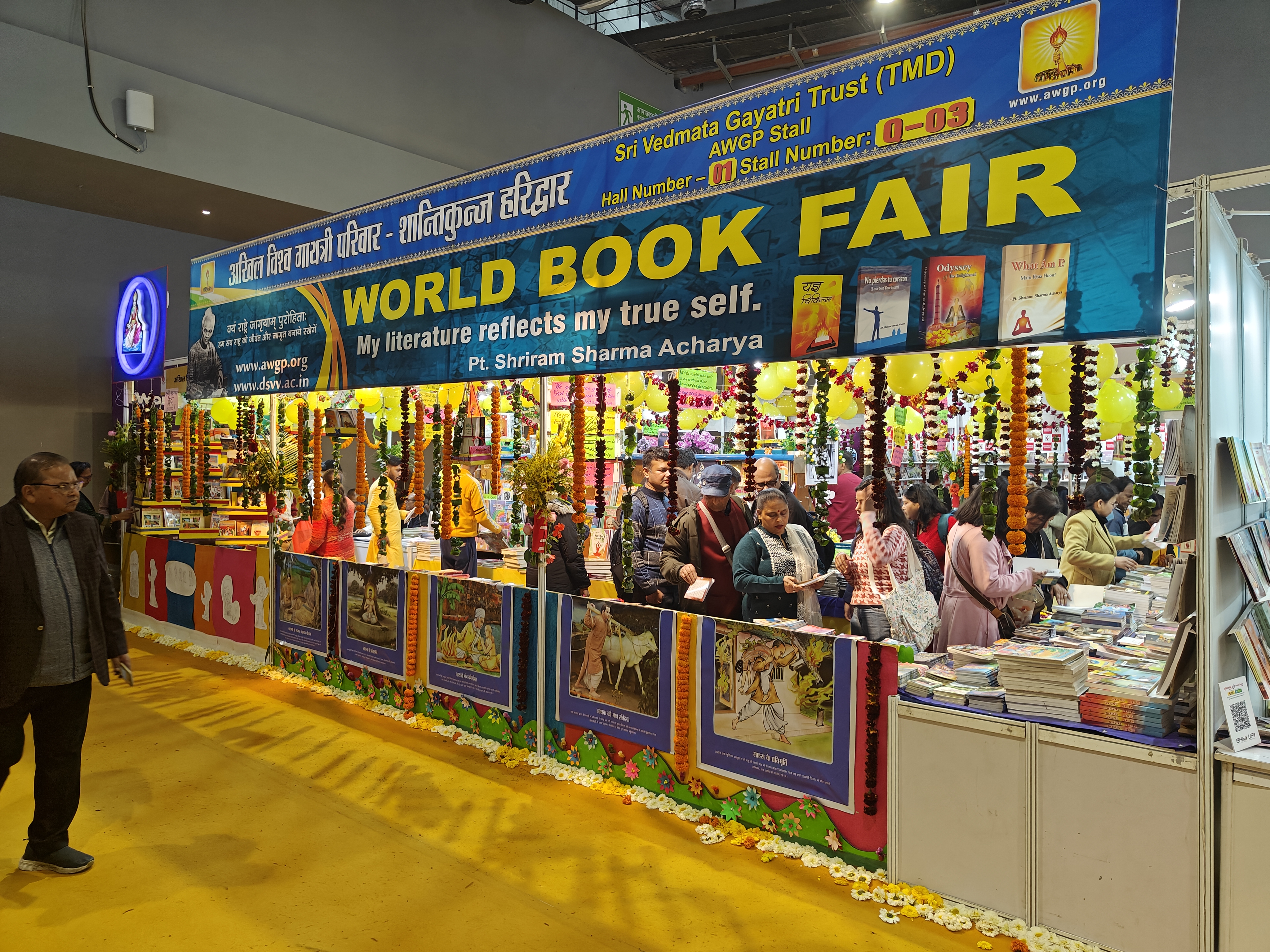
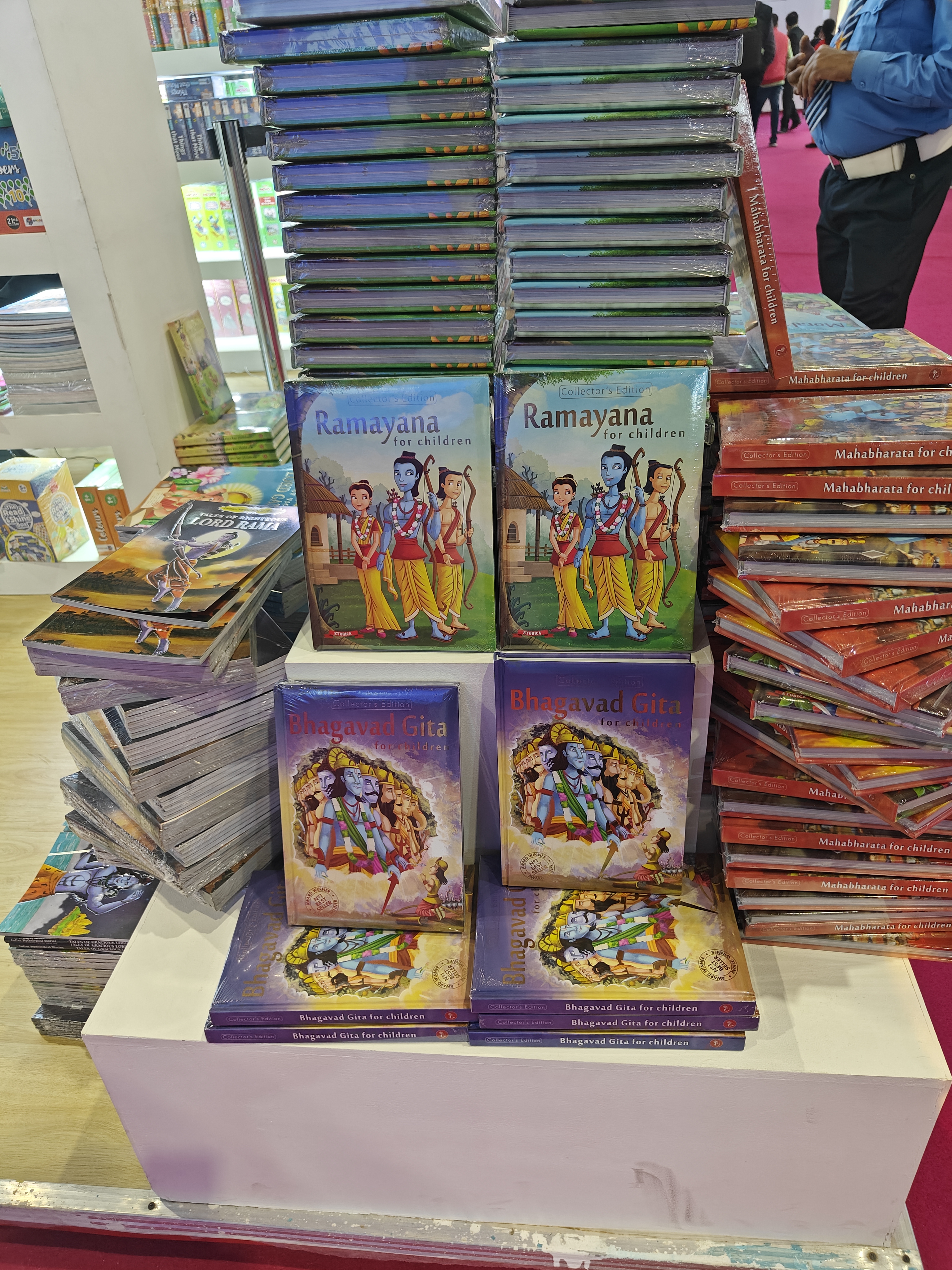
Wednesday was an easy day for the mela. Bereft of crowd publishers were sitting and yawning. The English paperback churners were, as usual, busy with wannabes to be seen with a certain author. Other than Hindi, other Indian languages were missing, however, what was selling was the magic of Lord Ram. Illustrated colourful volumes on every conceivable fraction of his life and times were stacked up at every tenth stall. There was one that was selling “Bolti Ramayan“, playing dohas from Charitmanas. Marigold garlands and jamun leaves adorned some stalls – incense was burning in front of a title in one of the stalls and a battalion of salesmen were out to lead you to the “spiritual path” with their books. Strangely, missionaries were conspicuous in their absence though what one found in abundance were authors, particularly of the genre called poetry.
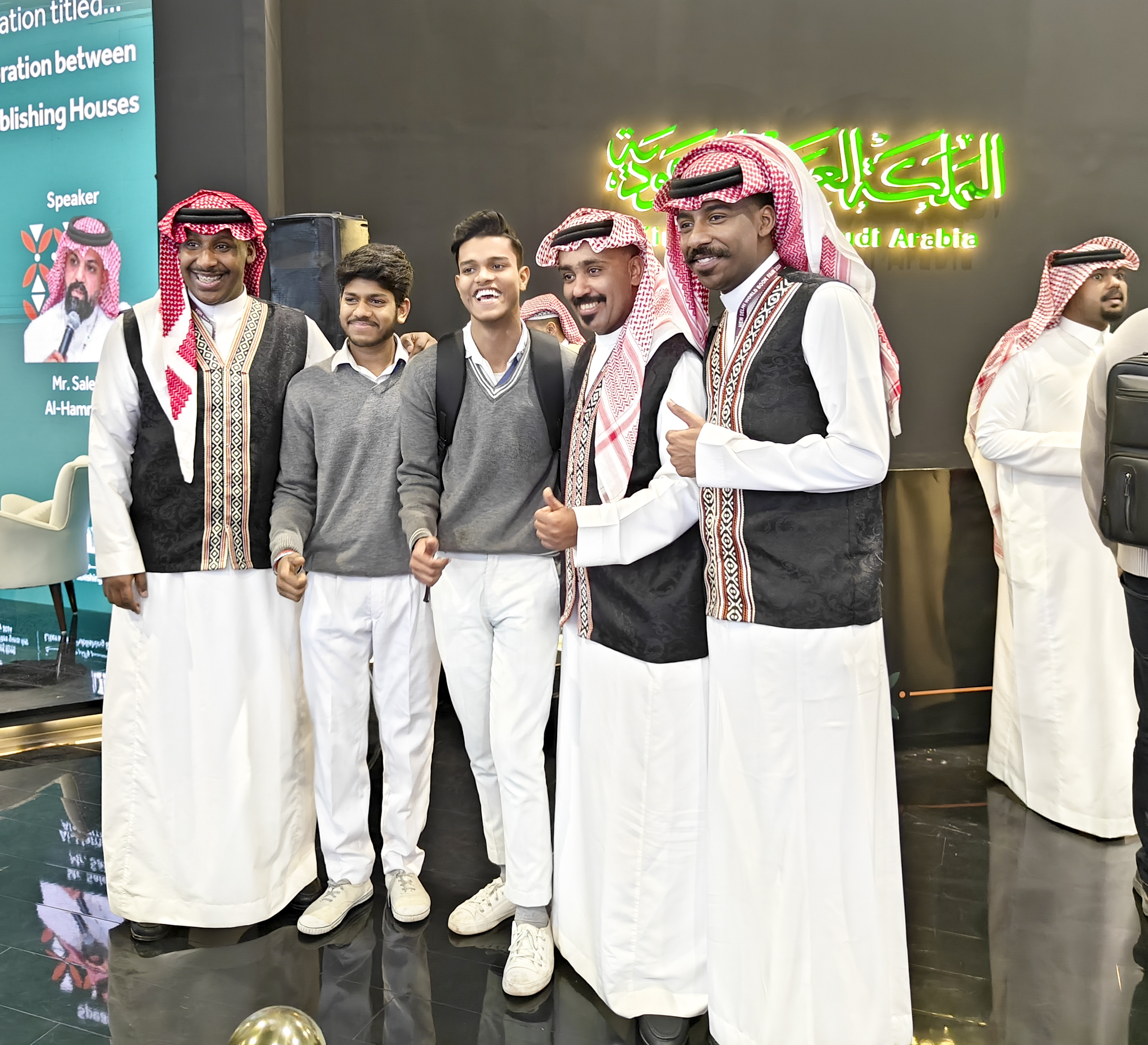
Many a reading sessions and ‘meet the author’ events were happening with little audience paying attention to them. Forget the book, a selfie with the author is more important. The best attraction for the selfie-loving-lot were the Arabs and the Sheikhs at Saudi Arabia pavilion. There was a long queue of young and old Indians lined up at the large SA pavilion waiting to take a selfie with the white abaya-wearing Arabs smiling in their chequered red keffiyeh. Give me one reason why someone should be taking a selfie with a group of unknown Arabs, especially knowing well that they don’t even support the Palestinian cause any more. On the other side of their stall I realised ‘Dates were the Baits’. BTW the Arab nation is the partner country in this year’s fair.
Indian Council of Historical Research (ICHR), the nodal body to document history in the country has put up a large pavilion with the theme ‘Jammu, Kashmir & Ladakh Through the Ages: A Visual Narratives of Communities and Linkages’, which, not surprisingly, has very little space for Islamic or Buddhist heritage of the region. Models of shikaras over a dry lake welcome the visitors. Agar firdaus bar ru-ye zamin ast – where is it I ask?
I wish the NBT had distributed free copies of the Constitution of India to the visitors instead of spending money planting hordes of selfie points with the mahamahim showing a copy of the Constitution. I hope and pray that the people of this great nation preserve and defend the sacrosanct text behind the black cover. There was no avoiding the Orwellian face which was everywhere together with the signs that said, आप निगरानी में हैं .
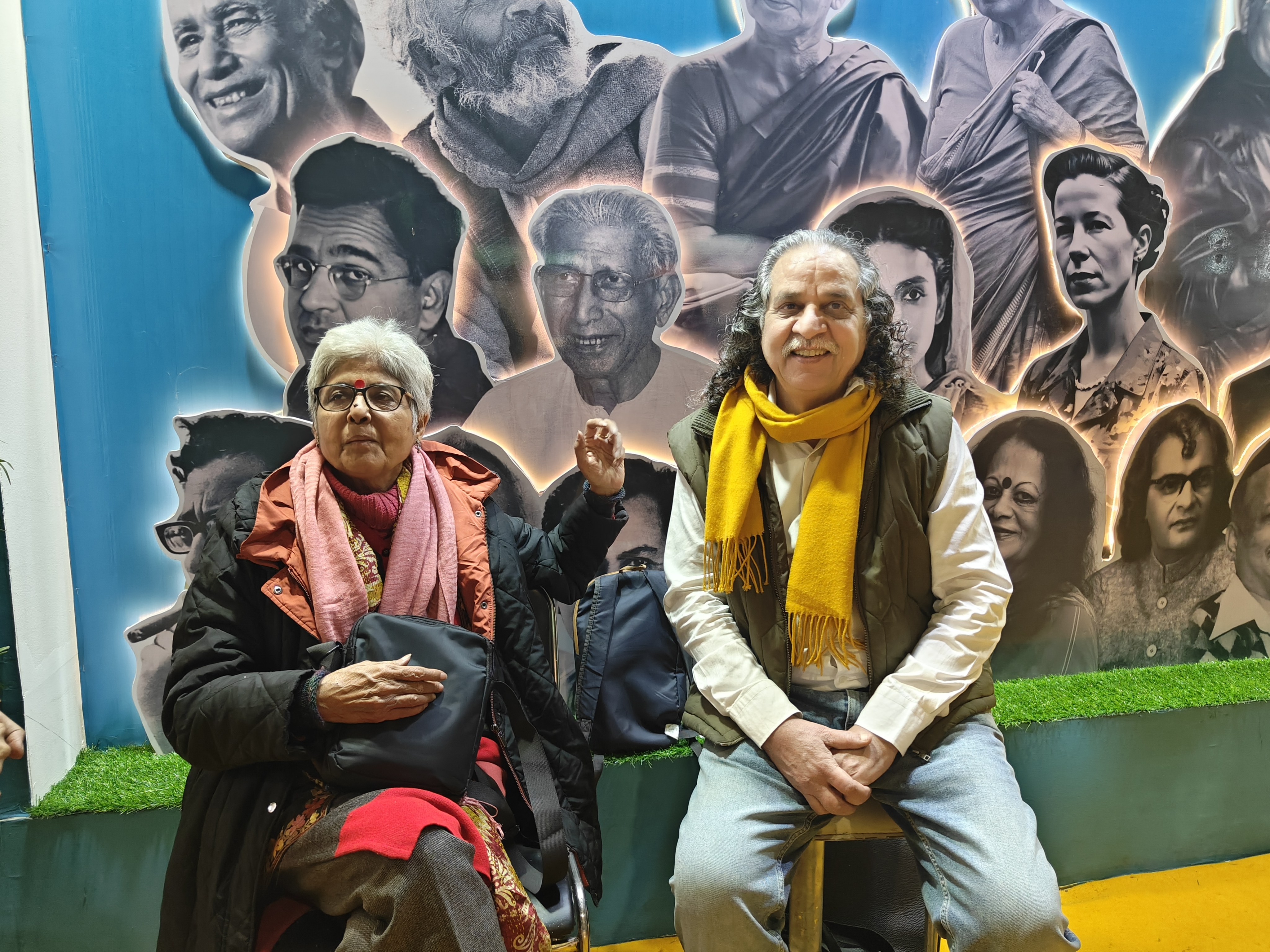
However tiring and frustrating, so what if book prices are going through the roof, and who cares if quality international publishers are missing; the mela is a mast place to spend a couple of days at the beginning of spring. One ends up bumping into old friends and getting nostalgic about that book fair where we had dreamt of Pushkin, Chekhov, and Nabokov, where we had recited Sylvia Plath, Ezra Pound, Harper Lee and Dostoevsky; where we sang of peace and “Imagine all the people” was our anthem. Ah!
For me, the find of this mela was Promenade Books, an independent publisher of classic literature who have chosen to bring back books that are scarce or out of print. A young Abhay Panwar at its helm is an all-in-one machine doing everything for his nascent publishing house, all by himself. Impressed not only by his choice of titles but also by the cover designs and the production quality I spoke to the charming lad at length. A dropout from St. Stephen’s Delhi, Abhay is almost serving a notice to publishers big and small with his quality and pricing. The enthusiastic and well-read young man explains in detail about each title/author he has produced. Wishing you all the luck Abhay. Best wishes till we meet in the next Fair.
घड़ी के हिसाब से भी दिन कभी का निकल चुका है सुबह हो चुकी है पर पिछ्ले 25 दिन की तरह सूर्य देवता आज भी नादारद हैं। दिन कब निकला था ये बताने वाले मुर्गे अब दूर-दूर तक बांग नहीं देते। अलार्म लगाना मना है। घर के आस पास कोई मसीत या गुरुद्वारा भी नहीं है, एक साईं मंदिर है जहाँ कोई घंटाल नहीं बजाता और ना भजन ही गाता है। नगर कीर्तन तो या सम्राट अशोक के समय में होता था या लाहौर में। इतना गहरा कोहरा है कि मैं गली के दूसरे छोर को भी नहीं देख सकता। गली और मौसम दोनों उदास हैं। ऐसे उदास मौसम में अख़्तरी बाई और उनकी गाई ठुमरियां बहुत सताती हैं। ‘ऐ सर्द हवाओ उन्हें ले आओ’
घर के गेट के बाहर खड़ा मैं सोच रहा हूँ किधर को निकलूं। तभी एक मरियल सी काले-सफ़ेद चक्कतों वाली गाय का सर सफ़ेद धुंए को सूतता दीखता है। उसकी तो मजबूरी ठहरी पर वो गाय मुझे देख के हैरान होगी कि इस ठंड और कोहरे में मैं बाहर क्या कर रहा हूँ। सूखी नाली के साथ साथ चलते वो खाने की तलाश में इधर उधर सूंघ रही है। गली के तीन आवारा कुत्ते मेहरा साहेब के गेट से सट्टे जाड़े से अपने आप को बचा रहे हैं। पुराना सा स्कूटर चलाते एक बुज़ुर्ग गली से धीरे धीरे निकल जाते हैं। मंकी कैप (बन्दर टोपी) के ऊपर पहनी हेलमेट की वजह से मैं पहचान नहीं पाता कि वो कौन हैं। मुझे क्या पड़ी कोई आये या जाये बस सूरज निकल आये तो बात बने। सर्दी में तो कीड़े मकौड़े भी नहीं दिखते। स्थाई के बाद ठुमरी का पहला अंतरा ही याद नहीं आ रहा।
सन 2024 की फ़रवरी आ गयी है पर धुंध कहो या कोहरा कम होने का नाम ही नहीं ले रहा। दो दिन हलकी बरसात भी हो चुकी फिर भी ये सफेदी बरकरार है। अब तक तो बसंत का पीला दिखना चाहिए था। असल में ये कोहरा भी मिलावटी है, इसमें बादल कम प्रदूषण ज़्यादा है। कहते हैं राम राज्य आ गया है शायद कोहरे के चलते दिख नहीं रहा।
भीगे पंखों में दुबके कबूतर बिजली की तारों पे बुत बने बैठे हैं न गर्दन हिल्ला रहे हैं ना आँखें, कहीं सर्दी में जम तो नहीं गए। देसी तीतरों का छोटा झुण्ड रोता और कराहता हुआ ऊपर से कहीं निकल जाता है जिसे मैं गर्दन टेढ़ी कर के भी देख नहीं पाता। सामने वालों के घर के बाहर लगे चीड़ के पेड़ की नुकीली सूईयों में कोहरे के टुकड़े अटक कर फंस गए हैं, ऊपर का पेड़ सफ़ेद और नीचे का हरा दिख रहा है। घरों की चारदीवारियों पे लगे पथरों से बूँद बूँद ओस टपक रही है जिसकी कोई आवाज़ नहीं आती। मामू होते तो कहते बिलकुल फैज़ाबाद जैसा लग रहा है। फिर फ़ैज़ाबादी !
किसी के घर में काम करने वाली एक बाई सामने की तरफ से तेज़ी-तेज़ी चल कर जा रही है। उसने अपने चेहरे को शॉल से ढक रखा है और अंदर कहीं चिपके मोबाइल से वो ज़ोर ज़ोर से किसी से बांग्ला में बाते कर रही है। वो मुझे देखती भी नहीं और कुत्तों से बचती हुई तेज़ी से आगे बढ़ जाती है क्या पता नींद में ही चल रही हो, पापी पेट के लिए। इंसानी जिस्म के कई हिस्से पापी ही होते हैं या पाप करने के लिए ही बनाये गए थे। ‘कैसे कटें दिन रतियाँ ’।
मैं अभी भी खड़ा सोच ही रहा हूँ। हाथ जैकेट की जेब से बाहर निकाल में मुठियाँ घुमा कर कसरत का ढ़ोंग कर रहा हूँ। सामने सिर्फ गली के तीन-चार माकन दिख रहे हैं आलस में पस्त। पड़ोसियों के पेड़ पे दो गिलहरियाँ पकड़म-पकड़ाई खेल रही हैं और उनकी कुतिया, जिसका नाम बिजली है, उन्हें झपटने की नाकाम कोशिश करती ज़ोर ज़ोर से भौंक रही है। बिजली के मुँह से भाप नुमा बादल निकल रहे हैं। गिलहरियों के मज़े हैं मैं सोचता हूँ, इनकी खाल ही ऐसी है कि इन्हे कोट पहनने की ज़रुरत ही नहीं पड़ती। ‘ऐ सर्द हवाओ’ – बेग़म अख़्तर बुला रहीं हैं।
दो और काम करने वाली औरतें आती दिख रहीं है। हमारे पड़ोस के सभी घरों में सब लोग सो रहे होंगे मैं सोचता हूँ , किसी घर में भी तो बत्ती नहीं जल रही, ये औरतें शायद दूसरी लाइन में जा रहीं हैं। आख़िर मैं बाएँ हाथ को मुड़ कर चल देता हूँ। कोहरे में अपने कुत्ते को सैर कराते सामने से बंसल साहेब नमूदार होते हैं। कीचड़ और गली में रुके हुए पानी के जोहड़ों से बचता हुआ बंसल जी को दुआ-सलाम कर में आगे बढ़ जाता हूँ। पता नहीं क्यूँ ज़्यादा दूर जाने का और चलने का मन नहीं हो रहा पर करूँ भी क्या अभी आठ भी नहीं बजे, चाय बनने और पीने में तो अभी आधा घंटा है। ऊपर देखता हूँ , बादल घिरे हुए हैं शायद फिर बरसेगा। पर अभी बरसने के कोई आसार नहीं हैं। ‘तबियत इन दिनों बेगाना-ऐ-गम होती जाती है’
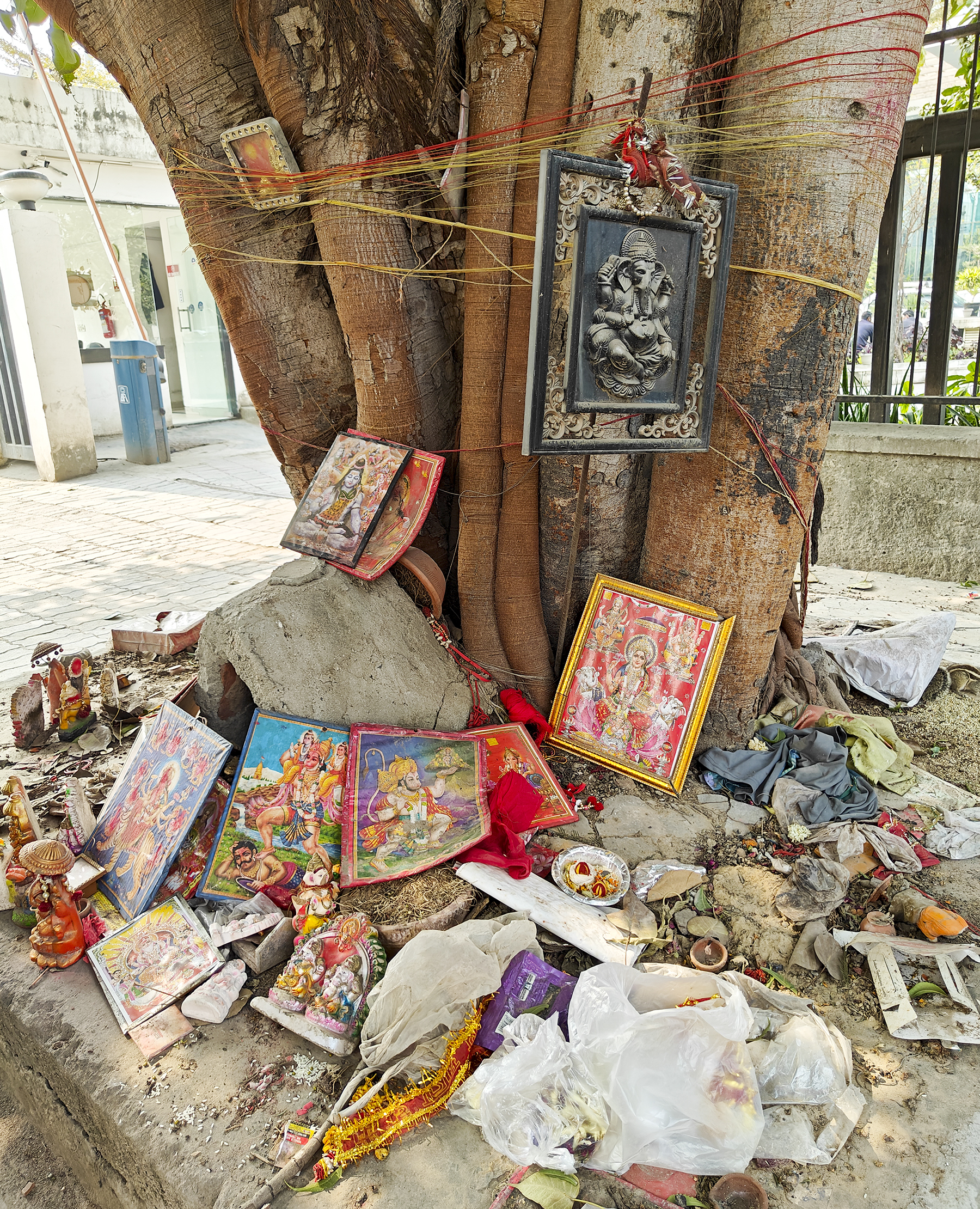
पार्क तक पहुँच गया हूँ – अंदर कोई नहीं है। सैर करने और चलने वाले ट्रैक पर जगह-जगह पानी जमा है, मैं बाहर ही सड़क पर टहलता आगे निकल जाता हूँ। दूर पार्क के कोने पे कोई है। धुंध में अंदाज़ नहीं हो रहा के कौन है। मैं अपनी चाल धीमी कर देता हूँ। वो पीपल का घना पेड़ है जो V 9 गली के मोड़ पे है उसकी कुछ शाखाएं नीचे को झुक आयीं हैं। उसी पेड़ के पीछे ही है कोई। पास में ही किसी ने दो साल पहले एक चौकर चबूतरा बनवा दिया था उस पर लोग पंछियों के लिए दाना छोड़ जाते हैं। अच्छी बात है पर कबूतर बहुत गंद फैलते हैं। इस सब चक्कर में बेगम से ध्यान हट रहा है।
एक महिला अचानक पीपल के चौड़े तने के पीछे से प्रकट होती हैं उनके हाथ में एक थैला है। उस थैले में से वो मिट्टी की रंग-बिरंगी मूर्तियां एक-एक कर के निकलती हैं और चबूतरे पे प्यार से सजा देती हैं। एक मूर्ति लुढ़क जाती है जिसे वो उठा कर तने के सहारे खड़ा कर देतीं हैं। मैं देख नहीं पा रहा हूँ कि मूर्तियां किन की हैं। फिर वो प्लास्टिक की थैली से दाना निकाल चबूतरे पे फ़ैला देती है। उनसे आँखे बचाता मैं सड़क के दूसरी तरफ टहल लेता हूँ। बड़ी कोशिश करता हूँ उधर न देखूं और कहीं मेरी आँख महिला से न मिल जाये। नहीं नहीं ये बेग़म अख़्तर कैसे हो सकतीं हैं।
मैं सर झटकता हूँ वो महिला फिर थैले मैं हाथ डालती है और इस बार लाल रंग की एक चुन्नी निकलती है। मैं जानता हूँ सुनहरी गोटे के बॉर्डर वाली ये चुनरी देवी को पहनाई जाती है। महिला पेड़ की छल का मुआयना करती है और एक मुनासिब जगह देख चुन्नी को उस पर लटका देती है। फिर उसे हाथ लगा उसका आशीर्वाद लेती है। इतनी देर नीचे झुकने से उसकी पीठ दर्द हो रही होगी वो अपनी पीठ को दोनों हाथों से पकड़ अब चुन्नी को निहार रही है। सामने पड़ी सब मूर्तियां अब मैं साफ़ साफ़ देख सकता हूँ। मैं आँखें नीची कर पेड़ को पार कर लेता हूँ पर जनता हूँ कि महिला मुझे देख रही है। मन ही मन मूर्तियों की गिनती कर मैं उन सब देवताओं के नाम दोहरा रहा हूँ। शिव, पार्वती, गणेश, लक्ष्मी, सरस्वती, राम, लक्ष्मण, सीता और हनुमान। कौन नहीं जानता इन सब को। मन ही मन नमस्कार भी करता हूँ और अचानक मायूस महसूस करता हूँ। कुछ दिन पहले तक इनकी पूजा अर्चना होती होगी। अब शायद नई मूर्तियां आ गयीं होंगी या फिलहाल कोई त्यौहार नहीं होगा जब इन्हे पूजा जाना हो। हर काम वक़्त-ज़रुरत से ही तो होता है फिर वो चाहे भगवान का ही क्यों न हों।
वो महिला उन सब को चबूतरे पे छोड़ कोहरे में कहीं गुम हो चुकी हैं। मैं पलट कर वापिस घर का रास्ता लेता हूँ इस बार हर मूर्ती को गौर से देखता हूँ । चटकीले रंगों में बनी और सलमा सितारों से सजी ये मूर्तियां बच्चों के खिलौनों जैसे ही लगती हैं। अनायास गुनगुनाता हूँ ‘वो जो हम में तुम में करार था’। उफ़्फ़, ठंडी सांस लेने से कुछ न होगा न ही इस बारे में सोचने से।
दाना खाने कोई पक्षी आया नहीं है। पेड़ की जड़ पे किसी ने सिन्दूर भी लगाया है। चूहे या गिलहरी का कुतरा बर्फी का एक टुकड़ा पत्ते के नीचे से झांक रहा है। आखिर हर मूर्ती, हर देव, हर भगवान् को इसी बैठक मैं आना होता है, यहीं पीपल के नीचे इन सब का जमघट्टा होता है। यहीं मिल जाता है भोजन और जल। यहीं भक्त भी आ कर मिल जाते हैं और फिर यहीं बन जाता हैं एक नया शिवालय। घर के पास, ‘अब दूर वाले मंदिर जाना नहीं पड़ेगा’
आखिर सब यहाँ पहुँच जाते हैं या पहुंचा दिए जाते हैं। वो ईश्वर जो की सब कुछ देख रहा है उसी के डर से इंसान, जो इन मूर्तियाँ को फेंक भी नहीं सकता, इन्हे यहाँ ले आता है या ले जाता है किसी नदी और तालाब में बहाने को । पीपल, नदियां, समंदर शायद सब भगवानों का कलेक्टिव घर हैं। यकीन मानिये – न पीपल को न ही यहाँ विराजमान किसी प्रतिमा और भगवान को कोई आपत्ति होगी अगर आप बुद्ध, तीर्थांकर या बाबा नानक की तस्वीर, सलीब पे चढ़े इसु, अल्लाह का कोई फरिश्ता या यहूदी बाबा को यहां छोड़ जाते हैं । ये सब, बिना एक दूसरे को परेशान किये, यही इकठ्ठे रहेंगे बिना किसी नफरत या झगड़े के, दोस्तों जैसे। ‘हमरी अटरिया पे आजा ओ साँवरिया’, हम सब की तरफ से बेग़म इन्हे फ़रियाद कर रही हैं।
बाज़ रोज़ कोहरा या धुंध बहुत कुछ छुपा लेता है हमेशा के लिए और सर्दी तो बहुत ज़ालिमाना तरीके से बदला लेती है ख़ासकर दिल के मरीजों से । घर पहुँचते ही बुरी ख़बर मिलती है। एक और दोस्त चल बसा। कोहली साहेब नहीं रहे। 1 फरवरी सुबह 4 बजे दिल के दौरे से गुज़र गए। ‘मेरे हमनफ़स मेरे हमनवा मुझे दोस्त बन के दग़ा न दे’, अख़्तरी बाई को ख़बर पहले ही पहुँच चुकी थी कि उनका चाहने वाला रुख़सत हो चुका है।
अगर हम लोग अपने दोस्तों की यादों को, उनकी तस्वीरों को अपने दिल से लगा के रख सकते हैं तो ये लोग अपने इष्ट को क्यों पीपल के नीचे क्यूँ छोड़ आते हैं ?












You must be logged in to post a comment.