The other end of rainbow

I have moved to the otherside of the linguistic rainbow, hence, my absence from a few platforms where I used to contribute. Thin clouds are hovering under the rainbow but I can see them clearing. The light here – on this side – is soothing, the tones are muted, it is calm, not hurried. The colours are the same but the view from here is different, it is closer home, nearer the childhood, to the beginning, the earliest blabber (or is it babble!) of the first few sounds I mimicked. The first chatter I registered and the sounds that stayed; the words I picked up and the lips I aped are gushing in. Someone familiar is walking closer to where I stand. It is difficult to focus, it is not clear, there is fog – it must be Ma. She is trying hard to regain health after a downhill journey of the past nine months. Nine months! Is she birthing? At Ninety-one? Who? I am jealous. I have been listening to her with both my ears. Listening, storing, sorting, collating and writing. Mostly using the words she uses; broken, incomplete sentences where times, spaces, incidents, objects and people all churn and create a world with newer perceptions and realities unknown to any. 

We have been talking. Yes, a lot. We talk in Hindi. From her fading memory words take time to form and flow. The recall, depending on how far she wants to go, is time taking and difficult. She thinks and many-a-times dismisses me not wanting to exert much. The fragile cervical spine doesn’t let the neck stay still, for long. No longer interested in reading or watching television, Ma spends most of the time lying down with eyes shut. We talk of her time in Lahore and Jhang; of her school; of Partition; of her college in Rohtak and Patna; of her teaching jobs; her marriage, motherhood; time with her husband; her life – the hits and the misses of life. Most of the time she smiles while answering/ talking and brushes off those queries that she doesn’t want to take.We think, converse and write in Hindi. I am glad that I can explore the other side of the rainbow with her.  

Like a child I still watch her lips to make sense of the sounds and the words. It is ‘yesterday once more’ for me – it is the same as she was, as I was, decades back. The stage is the same, it is the same play, same script and same characters though time and age has added few props between us before the curtains come down. Without her dentures her jaw, the cheekbones and the face has shrunk.The pleats on her skin are mingled folds of silk which shines when light falls on her face at a particular angle. The hue and tint of her skin is pinkish-white other than the folds which seem darker (trust me they are not) that’s where light doesn’t shine. The blue veins now show more, especially on days when her heart pumps blood faster and the machine scares us with 210/130. Her toothless smile reminds me of my Nani – who was different – thinner, paler, whiter but cuter version – but Nani won’t smile as frequently as Ma does. Ma doesnt need a conversation or a joke or a tickle to smile – she looks at her granddaughter or grandson and fills the room with her smile. Sometimes she smiles looking at the Ranjha painting which she thinks is her beloved Krishna – both cattle herders – both flute players – both possessive lovers. Krishna or Ranjha – neither she, nor I can decide; but like her even I can see the rustle of kadamb trees even in the painting. She has been the source of my writing forever, but now she is the only source, the snout of the river which feeds me mineral-rich ambrosia. 

For the times that we are living in

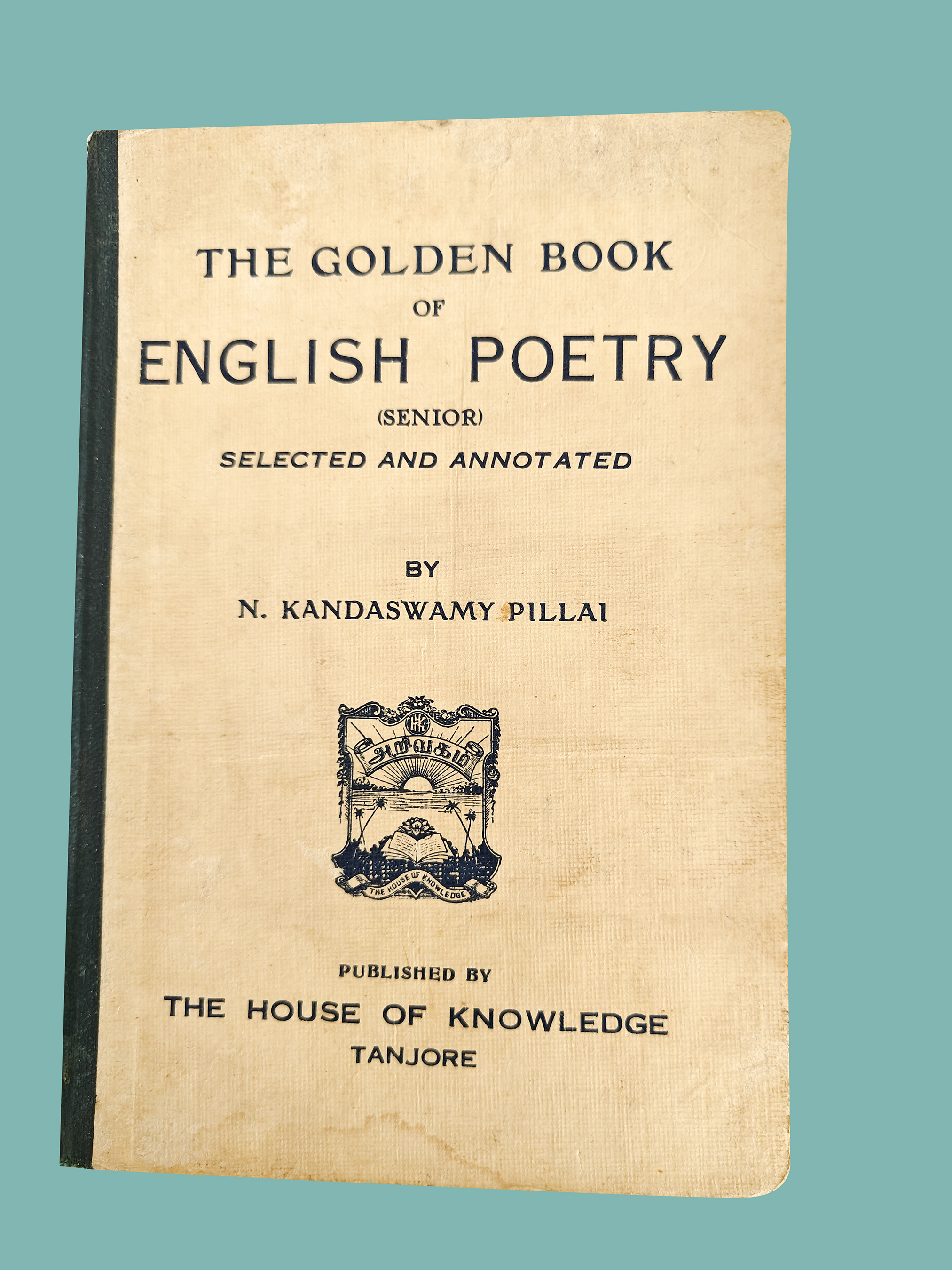
At the end of this fascinating book there is an announcement for an Essay Competition with a prize money of Rs 100, Rs 50, and Rs 25 each for the students of classes 8, 9, and 10. There is also a coupon in the book which is to be filled by the student and signed by the school Principal confirming that the 150 words essay is written by the student himself and no one else. The last date for submission of  essays is 15 November 1933 and the announcement of winners of the competition is scheduled for 1st January 1934 in Madras.

Don’t you think way back then the schools, students, teachers, and the publishers were so much better! To keep the interest of students in poetry, or for that matter reading itself, was so important to them that a princely sum of Rs. 100 was given as the First Prize simply to understand and interpret poetry. Mind you this is in the 1930s when the salary of an English teacher in a school was all of Rs. 22 per month. ​This is the period when schools or education was managed and funded at community level only. As per Census figures of 1931 we had 22,86,411 Secondary Schools in India with an overall literacy rate of 9.5% only.

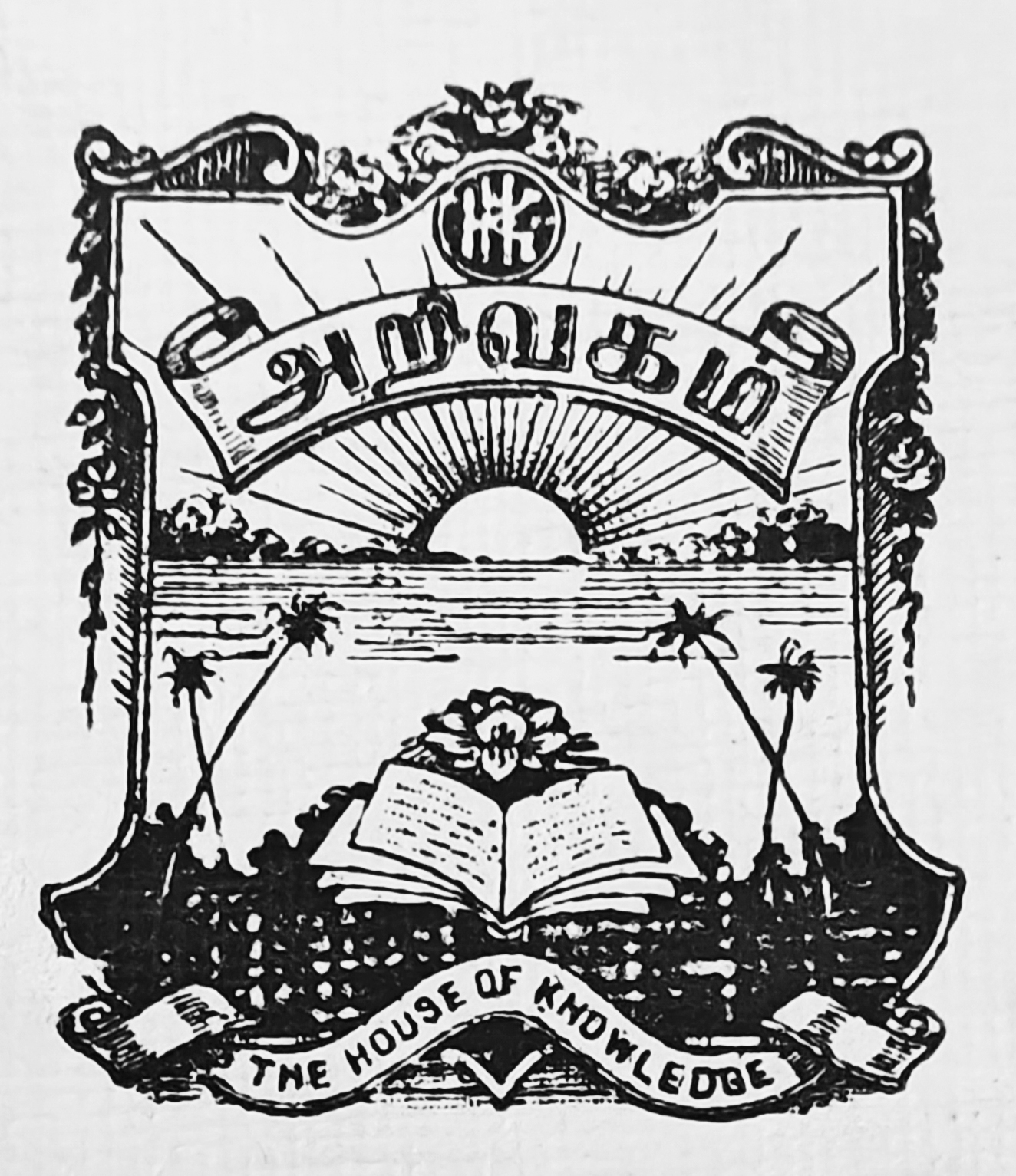
Published in 1933, The Golden Book of English Poetry, Selected and Annotated by N. Kandaswamy Pillai, the anthology was a part of curriculum for students of schools in Madras Presidency. The anthology has poems from 58 poets as diverse as Lord Macaulay to John Keats. At the head of each poem is a brief note on the author and a line or two of comments. At the end of the poems there are Notes, ‘to words, phrases and terms unfamiliar to students’. The book also has 11 ballads. The Editor in his preface says, “Tennyson and Victorians have been excluded…” in a hope to bring out a companion volume to this. Published by The House of Knowledge, Tanjore the book doesn’t mention its price or, maybe a page is missing from this antiquarian volume (I love their colophon). This well preserved copy, that I recently bought from a dealer, was originally owned by one J. S. Sowmianarayanan possibly a student or even a teacher. 

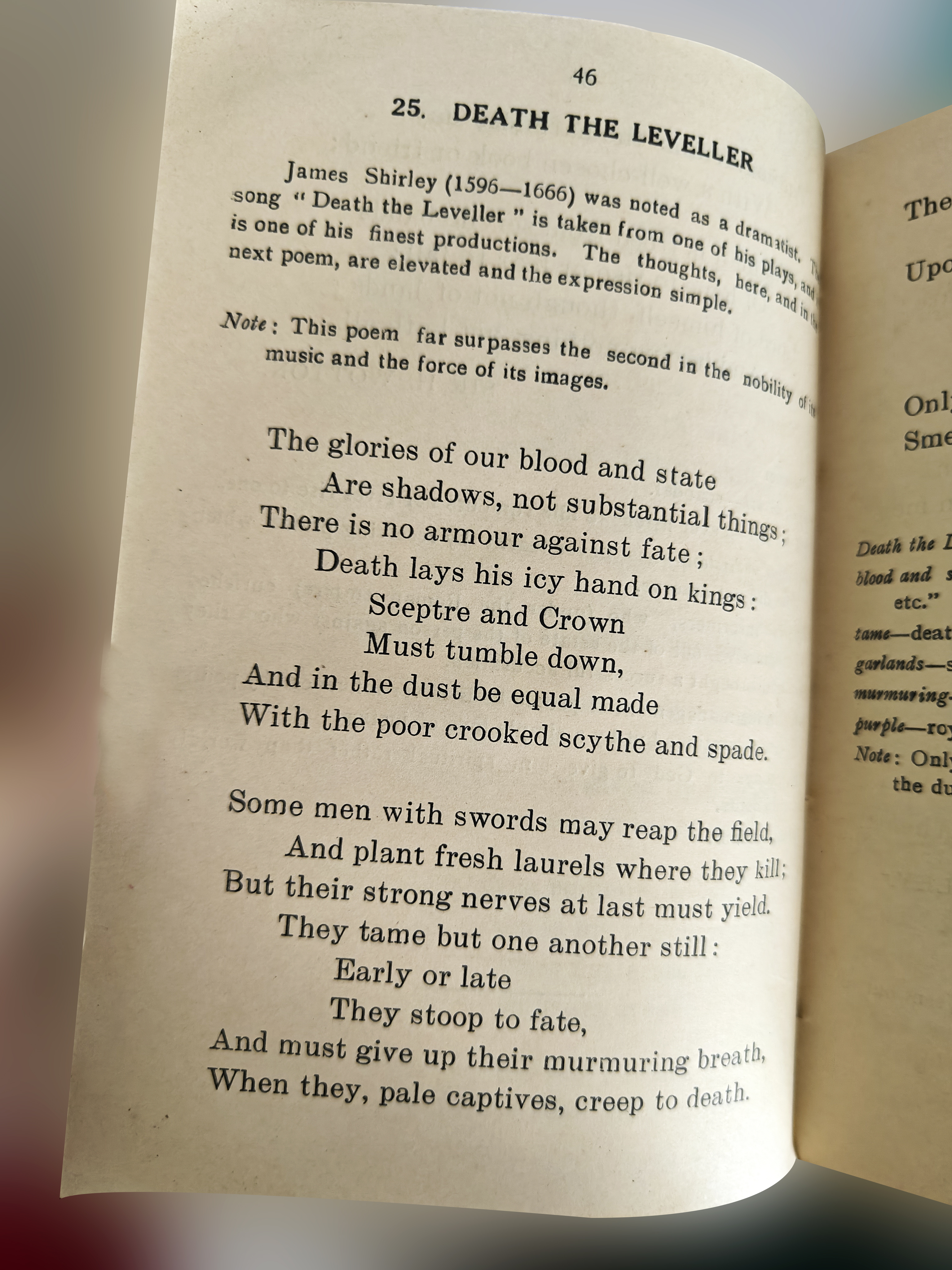
For the times that we are living in, I find the lines of this song by James Shirley most appropriate:

Some men with swords may reap the field, 
       And plant fresh laurels where they kill;
       But their strong nerves at last must yield.
They tame but one another still :
Early or late
They stoop to fate,
And must give up their murmuring breath,
When they, pale captives, creep to death.

James Shirley

“To carry one’s own cross”

Having picked up eight titles for Ma from a Hindi publishers’ stall I realised it would not be possible for me to carry them in my two hands or lug them on the shoulders as all three were overbooked. I had already bought 23 books. (This is one event and place where I splurge and don’t feel guilty.) As the latest lot of books had been paid for, I didn’t want to disappoint the publisher by returning them. The lady, the publisher that is, was standing right next to me and had figured out my dilemma. She had not only helped me select some titles but was gracious to introduce me to an author and ask her to sign a copy for Ma. Looking at me she said, ‘you could leave the books here for now and pick them up as you are leaving’. 

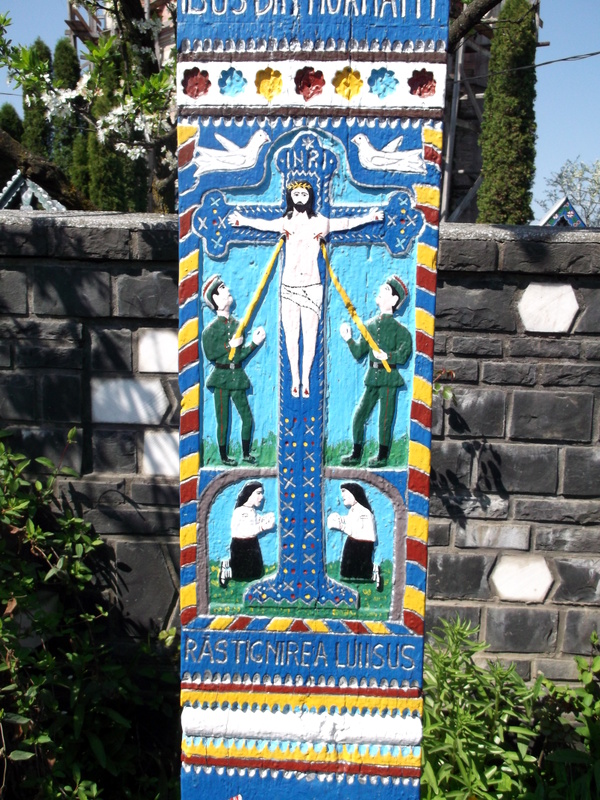
Was Jesus talking about a visit to the book fair when he said, “To carry one’s own cross”!

The lady’s offer was some relief but not the solution to my problem. This was an unplanned and unscheduled visit to the Book Fair as I happened to be in Mandi House for some work. Our driver was absent yesterday who normally doubles up as an enthusiastic visitor to the Mela with me. This time around I had to find a way to offer a sacrifice for the obsession. 

At subsequent stalls I enquired if they would dispatch the books to my address if I paid them upfront. The answer was an emphatic No with the head bent down unable to face the reader. At many other stalls too my request was turned down. Brozo and Ola services wanted the books to be brought outside to the gate. Desperate, I was cursing the Mela and the uncouth publishers; a few of them claiming to be anti e-commerce platforms. 

I sighed, the good old times were great, publishers were eager to book orders and dispatch later; 30% discount and no postage was the done thing. During the 80s Jhalli Waalas and Collies roamed around the Fair with their cane baskets ready to transfer the booty to any available transport outside the Maidan. Tea and snacks stalls lined up next to Hansdhwani Theatre and the Lake were always helpful in storing the bulging bags of books. Alas, so much is lost with time including the humble cup of regular kadak chai. There is not a stall around the halls which sells strong desi chai. 

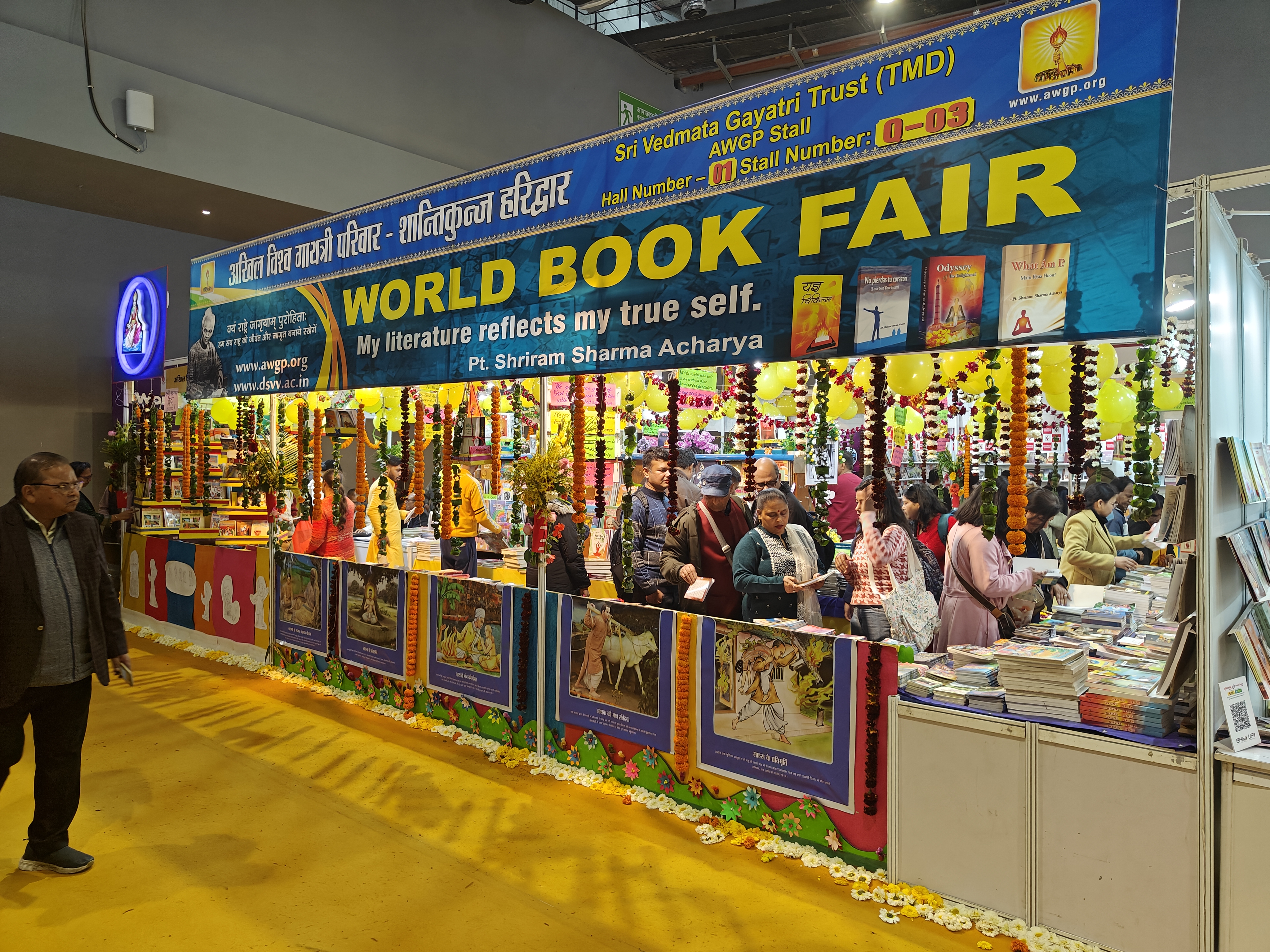
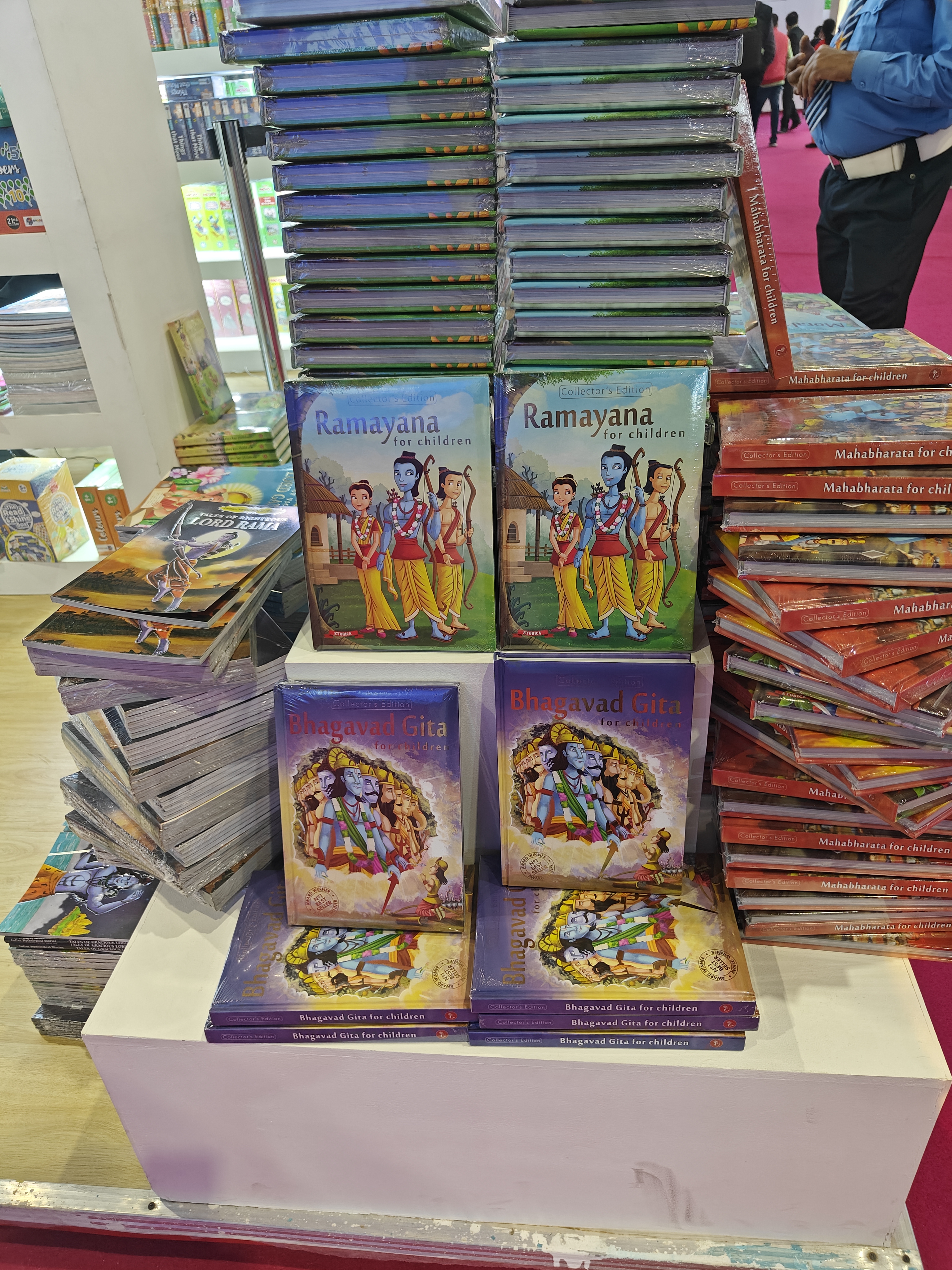
Wednesday was an easy day for the mela. Bereft of crowd publishers were sitting and yawning. The English paperback churners were, as usual, busy with wannabes to be seen with a certain author. Other than Hindi, other Indian languages were missing, however, what was selling was the magic of Lord Ram. Illustrated colourful volumes on every conceivable fraction of his life and times were stacked up at every tenth stall. There was one that was selling “Bolti Ramayan“, playing dohas from Charitmanas. Marigold garlands and jamun leaves adorned some stalls – incense was burning in front of a title in one of the stalls and a battalion of salesmen were out to lead you to the “spiritual path” with their books. Strangely, missionaries were conspicuous in their absence though what one found in abundance were authors, particularly of the genre called poetry. 

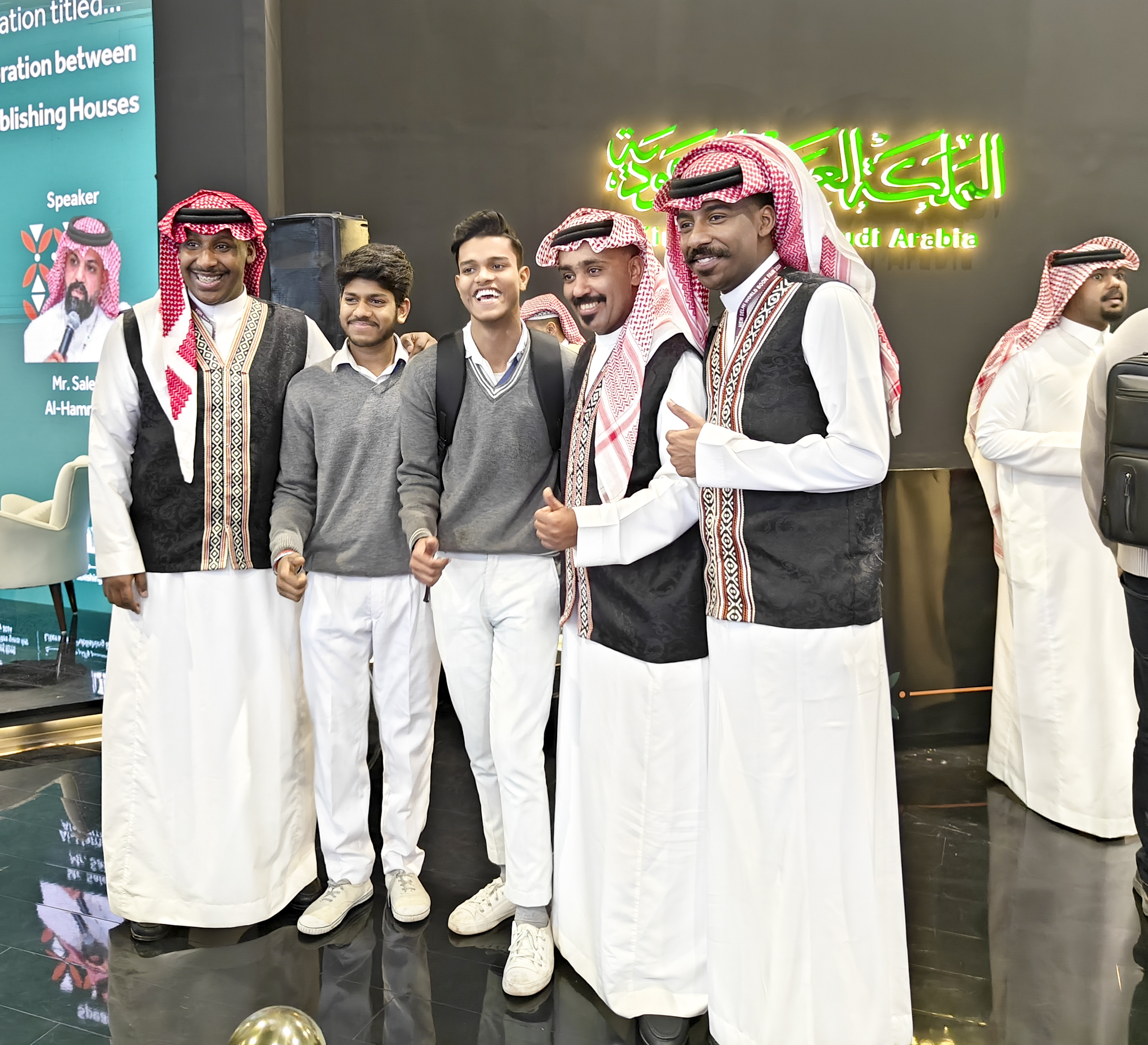
Many a reading sessions and ‘meet the author’ events were happening with little audience paying attention to them. Forget the book, a selfie with the author is more important. The best attraction for the selfie-loving-lot were the Arabs and the Sheikhs at Saudi Arabia pavilion. There was a long queue of young and old Indians lined up at the large SA pavilion waiting to take a selfie with the white abaya-wearing Arabs smiling in their chequered red keffiyeh. Give me one reason why someone should be taking a selfie with a group of unknown Arabs, especially knowing well that they don’t even support the Palestinian cause any more. On the other side of their stall I realised ‘Dates were the Baits’. BTW the Arab nation is the partner country in this year’s fair. 

Indian Council of Historical Research (ICHR), the nodal body to document history in the country has put up a large pavilion with the theme ‘Jammu, Kashmir & Ladakh Through the Ages: A Visual Narratives of Communities and Linkages’, which, not surprisingly, has very little space for Islamic or Buddhist heritage of the region. Models of shikaras over a dry lake welcome the visitors. Agar firdaus bar ru-ye zamin ast – where is it I ask?

I wish the NBT had distributed free copies of the Constitution of India to the visitors instead of spending money planting hordes of selfie points with the mahamahim showing a copy of the Constitution. I hope and pray that the people of this great nation preserve and defend the sacrosanct text behind the black cover. There was no avoiding the Orwellian face which was everywhere together with the signs that said, आप निगरानी में हैं .

However tiring and frustrating, so what if book prices are going through the roof, and who cares if quality international publishers are missing; the mela is a mast place to spend a couple of days at the beginning of spring. One ends up bumping into old friends and getting nostalgic about that book fair where we had dreamt of Pushkin, Chekhov, and Nabokov, where we had recited Sylvia Plath, Ezra Pound, Harper Lee and Dostoevsky; where we sang of peace and “Imagine all the people” was our anthem. Ah!

For me, the find of this mela was Promenade Books, an independent publisher of classic literature who have chosen to bring back books that are scarce or out of print. A young Abhay Panwar at its helm is an all-in-one machine doing everything for his nascent publishing house, all by himself. Impressed not only by his choice of titles but also by the cover designs and the production quality I spoke to the charming lad at length. A dropout from St. Stephen’s Delhi, Abhay is almost serving a notice to publishers big and small with his quality and pricing. The enthusiastic and well-read young man explains in detail about each title/author he has produced. Wishing you all the luck Abhay. Best wishes till we meet in the next Fair.

Anas – a role model for humanity

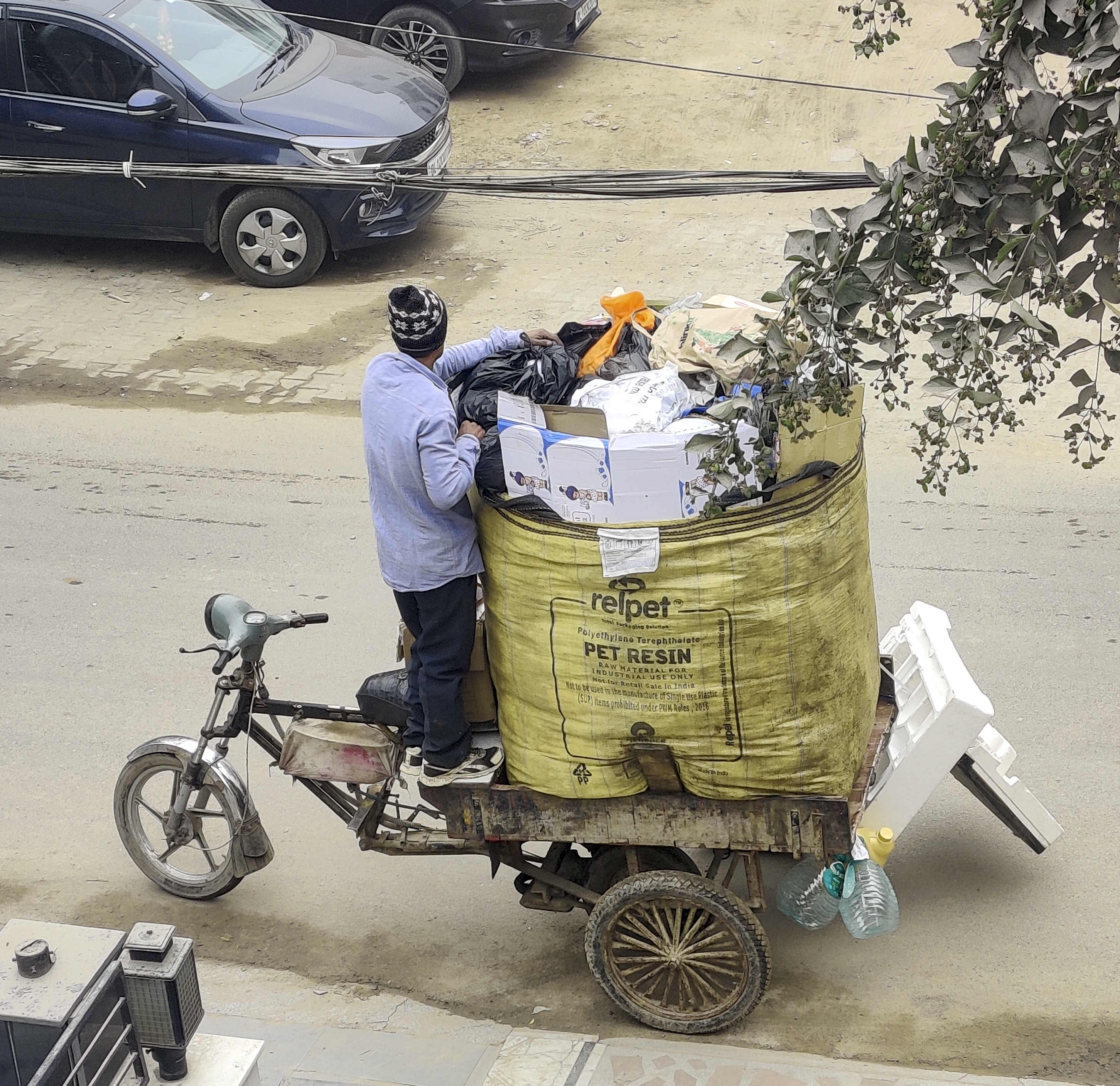
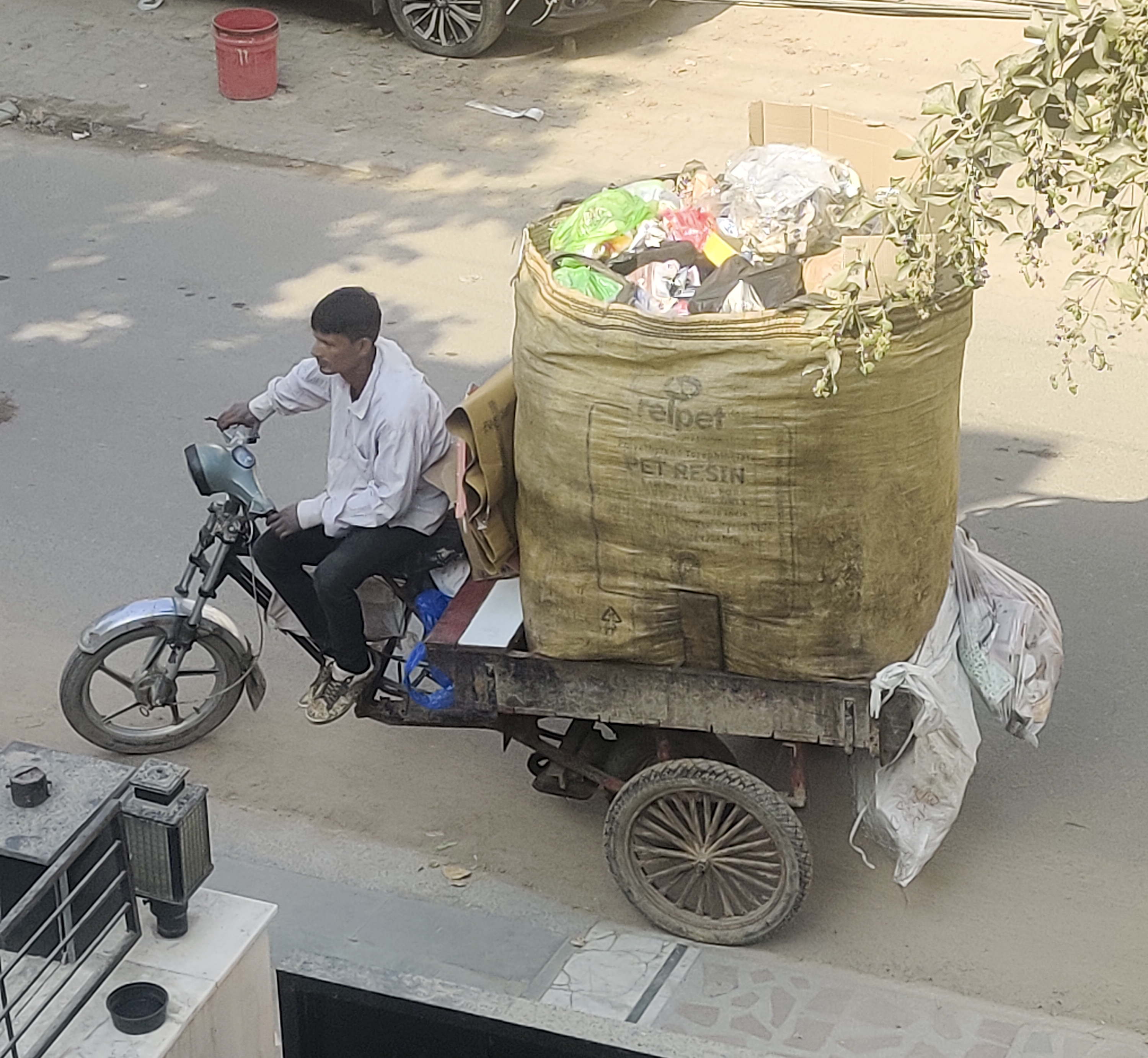
Anas is his name. ‘Anas’ means loving, affectionate, friendly. Look at the size of his collection bag, I call it ‘a cauldron of love‘. It is not his love for cleaning other people’s waste but the love for his family of six who he has to feed. Anyone would be jealous of a warehouse of those proportions. It is only 8 in the morning, for him ‘the day has just begun’ and ours is only the third lane in his ‘ first round’. Anas Mahmood is the garbage collector of our neighbourhood. A permanent smile stays pasted on his face.

Anas has cuts on fingers of his right hand. He says, “people are careless, they leave broken glass and other sharp objects in the bags I empty.” He has a separate place under the cart for ”kabad, gatta, bottles and plastic”, those and “discarded packaging helps me make about 80/100 rupees extra per day.” Since Covid people order a lot of stuff online and as a result I get to collect a lot of discarded packaging.

‘Winter is over’, he says, ‘Bosant is coming and this is the time of the year when I am hit by jukham‘, he sneezes and coughs as I step away. I will be fine by Holi, just a month away.’ A dead beedi is dangling between the two middle fingers of his left hand. Taking it to his lips he lights it. Coughing and laughing in turn he moves in and out of the driveways of the houses where garbage bags are lined up. Aren’t you scared of catching an infection? I ask him. ‘Tell me what else to do?’, he questions. No one pays him for garbage collection – neither the residents nor the developer of Millennium City or the municipal authorities.  

“बीमार हो जाओगे – वही हाथ से कूड़ा उठाते हो वो ही मुँह पे लगते हो – छिः” A woman reprimands him from the first floor balcony of her house. Shaking his head and brushing aside the warning, Anas pushes the cart ahead to the next house. Anas, I recall was also the name of a companion of Prophet Muhammad (PBUH). ‘Anas ibn Malik’ was known for his loyalty and service to the Prophet and is considered a role model for humanity.