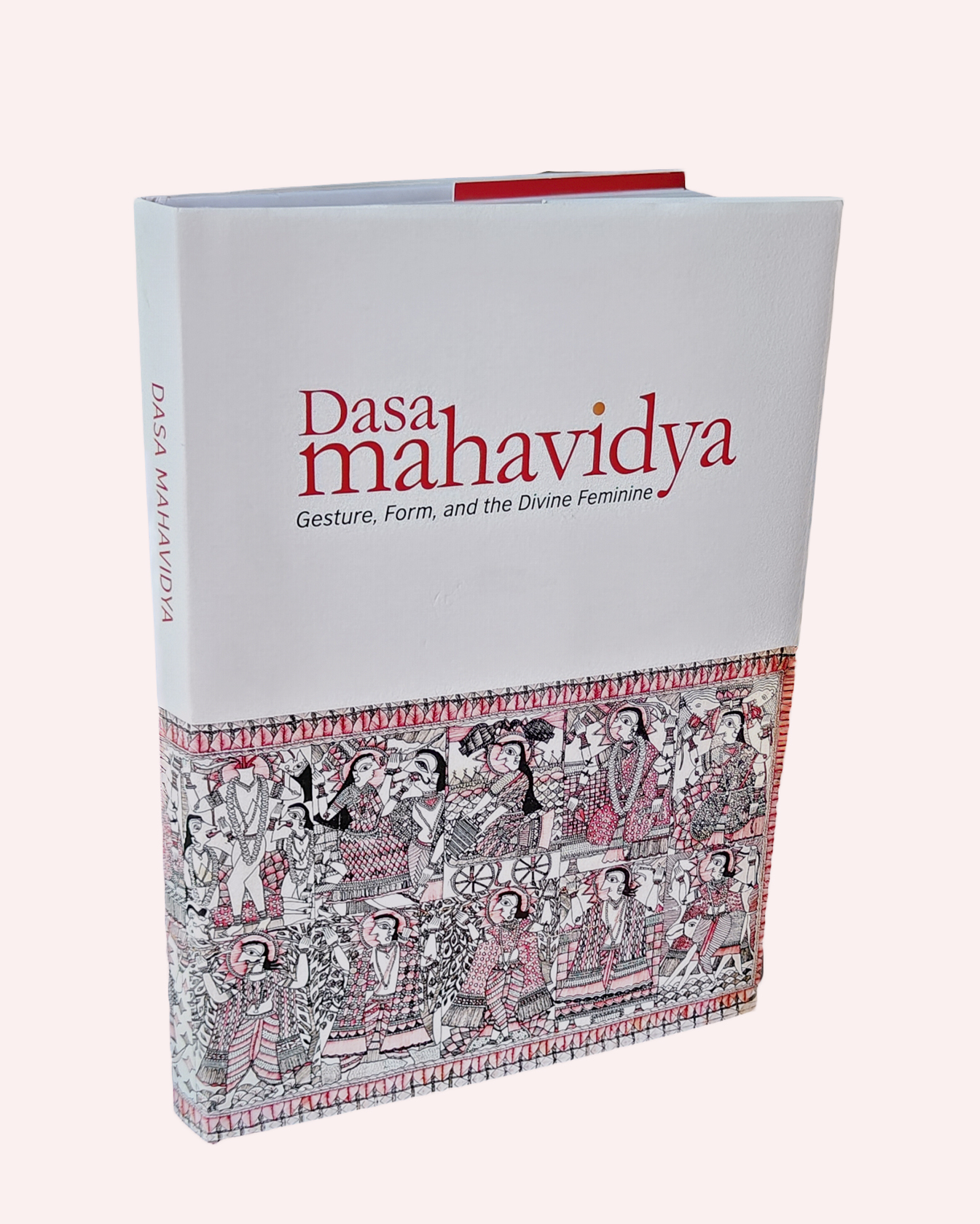
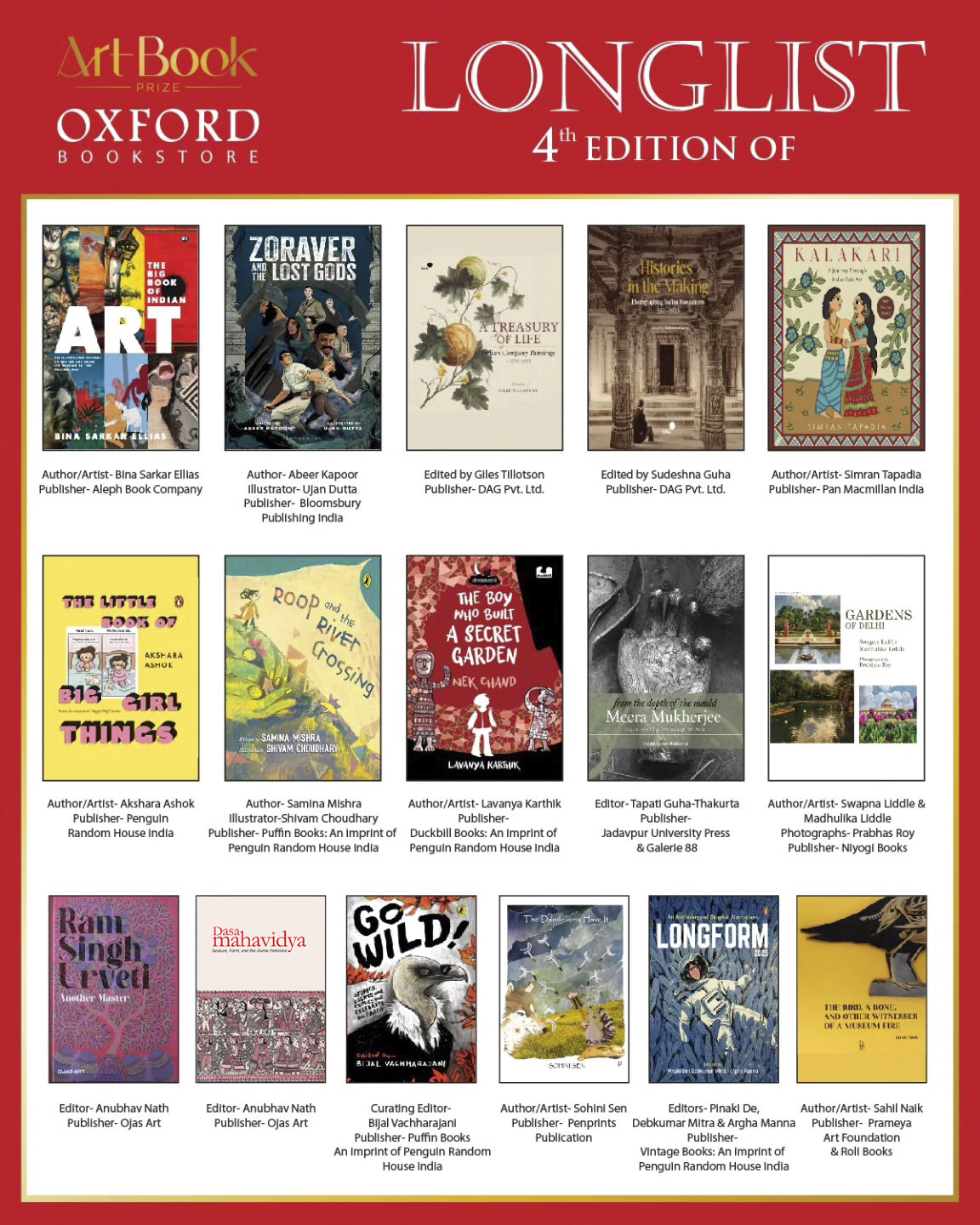
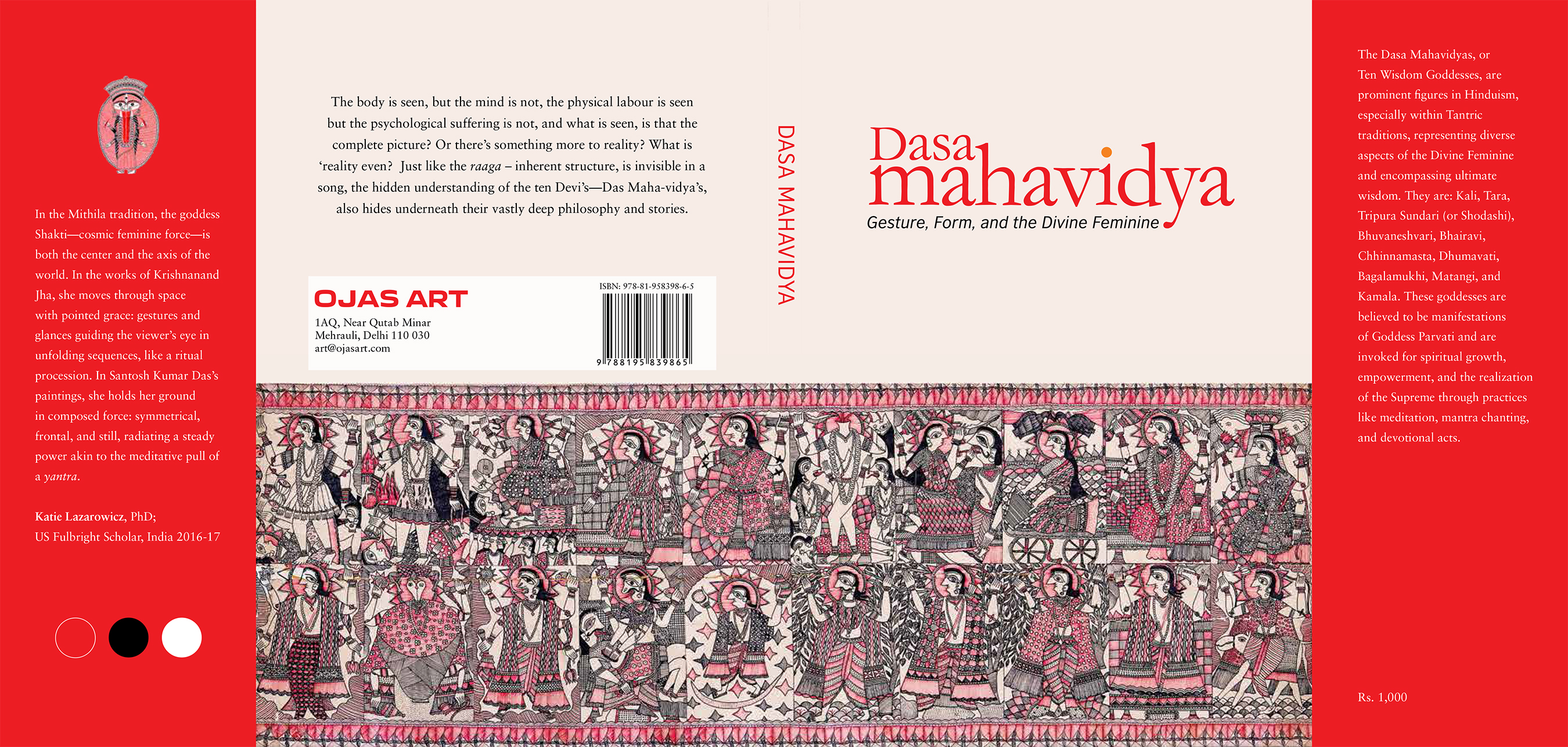
Delighted to share that Dasa Mahavidya: Gesture, Form, and the Divine Feminine, designed by Rajinder Arora/Ishtihaar and published by Ojas Art, has been Longlisted for the 4th Oxford Bookstore Art Book Prize among the other fifteen.
Dasa Mahavidya reflects on the visual, philosophical and symbolic dimensions of the Ten Wisdom Goddesses through the lens of contemporary artistic practice. The Dasa Mahavidyas, or Ten Wisdom Goddesses, are prominent figures in Hinduism, especially within Tantric traditions, representing diverse aspects of the Divine Feminine and encompassing ultimate wisdom. They are: Kali, Tara, Tripura Sundari (or Shodashi), Bhuvaneshvari, Bhairavi, Chhinnamasta, Dhumavati, Bagalamukhi, Matangi, and Kamala. These goddesses are believed to be manifestations of Goddess Parvati and are invoked for spiritual growth, empowerment, and the realization of the Supreme through practices like meditation, mantra chanting, and devotional acts.
The Oxford Bookstore Art Book Prize is India’s only award dedicated to recognising excellence across art publications and their contribution to the larger discourse on art and culture. At Ishtihaar we are honoured to see our work recognised among this year’s selected titles.
Best wishes to Anubhav Nath and Ojas Art, who have another art book “Ram Singh Urveti: Another Master”in the Longlist. The final winners will be announced later this year.
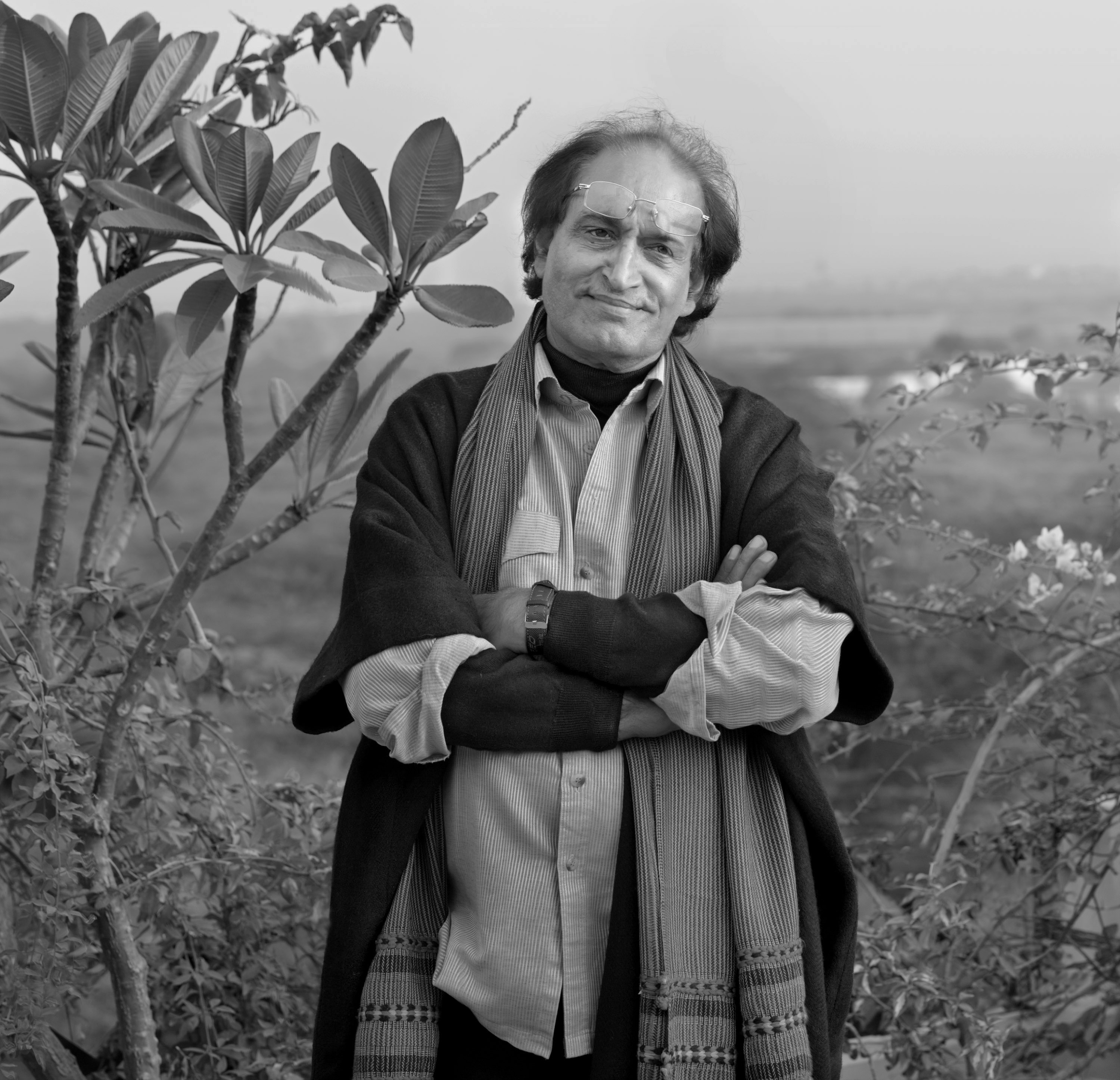
In the last 24 hours I have seen more portraits and pictures of Raghu Rai (on digital platforms) than I had ever imagined they even existed. It is sad that Raghu Rai is no more. He had been suffering for a few months. It is nice to see friends and acquaintances pouring out their love for him, and in turn, projecting their proximity to Raghu Rai. It is a veritable RR show online, an exhibition of his pictures some of which he wouldn’t even have known people cherished so much – friends, peers, fan, and acquaintances.
While a photographer is in the process of making a picture or when he is busy composing them, he doesn’t realise that he too becomes a subject of curiosity, an image himself. People knew him, people loved him as an icon, a star photographer and people adored him wherever he went. He would talk, he would explain politely and share the nuances of an art of which he was undoubtedly a master. Amateurs and youngsters in photography community addressed him as Guru and Ustaad and wanted to record their meeting with him. Undoubtedly his was a photogenic face too, handsome and his smile too could launch a few ships.
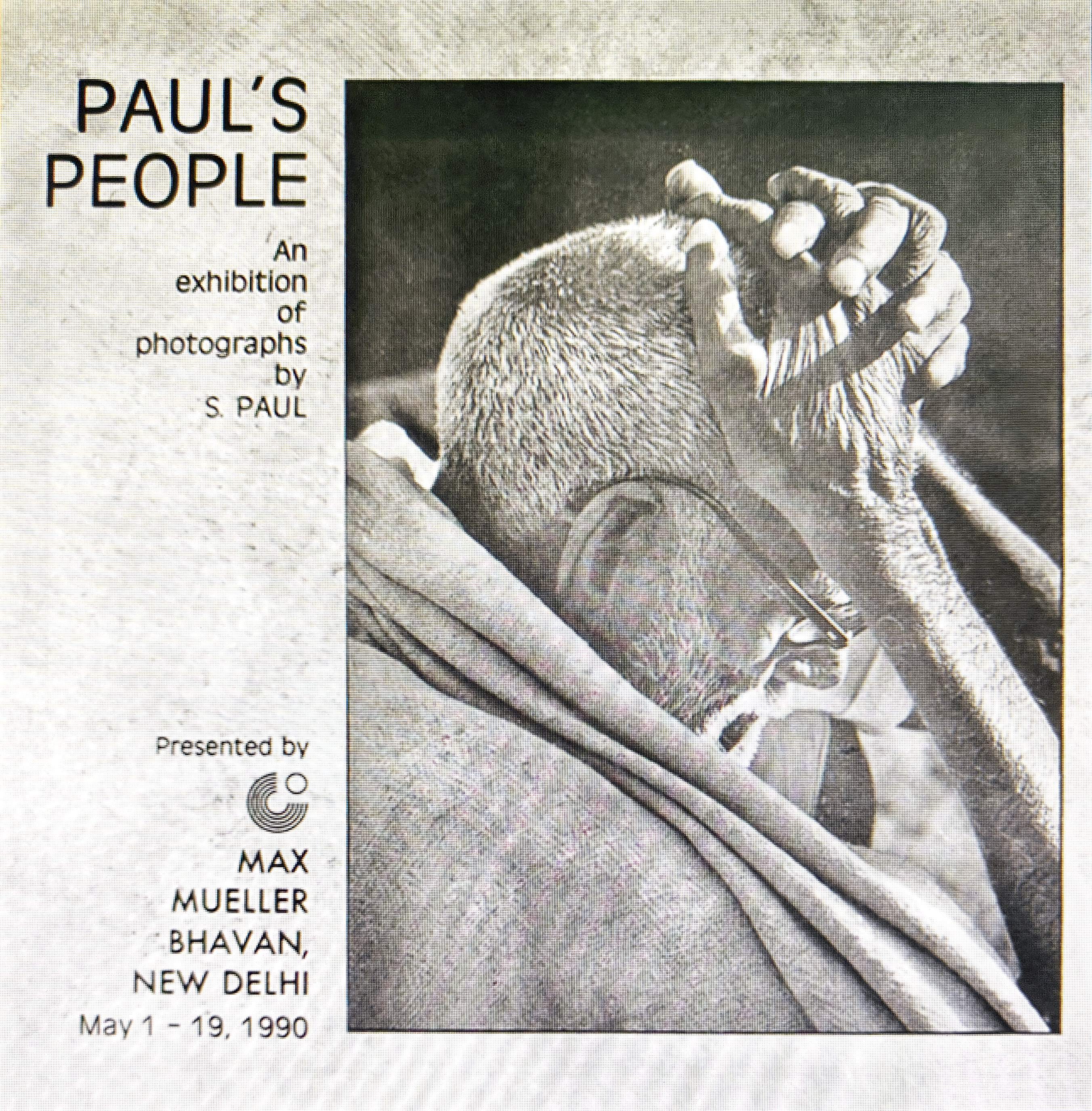
I can’t claim that he was my friend, yet our association and connection was such that we did treat each other as a friend. The first time I met him was in 1989 at his house in Rabindra Nagar next to Khan Market, Delhi. A UK based client of ours insisted on using one of Raghu’s Taj Mahal picture on the cover of his travel catalogue. Those were the days when film was used in cameras, pre-digital days. I had to pickup a 35mm colour slide from him and hand over a big amount for ‘one’ picture. He was a celebrity then and he is a celebrity now, thirty-seven years later. Even before I met Raghu Rai or had any association with him I had known his older brother S. Paul for whom we had designed and published a catalogue of his pictures. A show of S Paul’s pictures was organised by Max Mueller Bhavan, Delhi. I must say his pictures were very impressive.
As an advertising agency we are dealing with big names in photography all the time, whether for arranged shoots (industrial, architectural, food, fashion, product) or to buy stock pictures. That one meeting brought us closer and we kept meeting at art shows, galleries, social dos or at events organised by Kodak or Fuji. Ever since our meeting at SAHMAT events we got even closer.
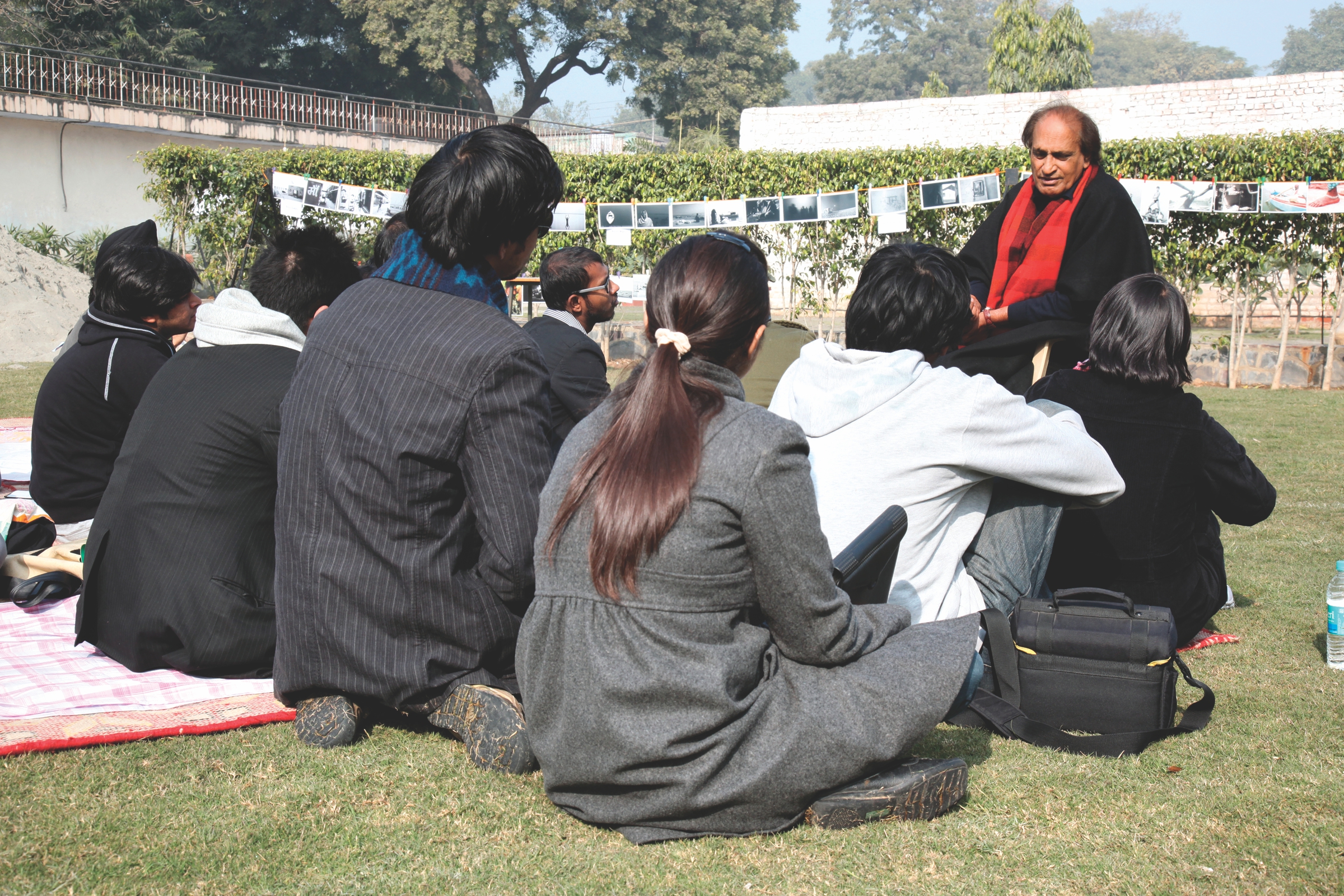
For some strange, and unknown reason I addressed him Prabhu (lord of photography??) and he would shoot back ‘Lal Pari’. About this moniker he once explained, “I have seen you many times wearing different red kurtas. Long back I saw you with your long hair bouncing off the shoulders, thus the name.” I nodded; you couldn’t argue with Raghu. I attended one of his photography workshops which he conducted open-air at the gorgeous location of Ojas Art gallery in Mehraulli. A large manicured green lawn, anchored around a banyan tree with its entangled roots hanging from its strong branches and its large leaves reaching for the earth. A tree that itself is associated with many renowned folklores was an aptly location for the master storyteller whose ‘pictured tales’.
I had never imagined that there was even a remote chance to see so many of Raghu Rai’s pictures in one go, one day without having to move from house or visiting a gallery. A very large number of Raghu’s pictures are being shared online today; pictures that are artistically superb, iconic and are a story by themselves. These pictures are being shared because they are liked by masses and are a part of public memory. Thats a way condolences are shared.
One can’t disagree with people posting his marvellous pictures but then RR was known for his keen eye, the game he played with his subjects, the locale, the foreground and background, the light and shade and the very story that moment had. RR was known for capturing a story in his pictures – sometimes those were poetry or a song; an ongoing movement that brought forth a particular moment that he captured – the one that had both, the before and after in it. And then he hung that picture for all of us to see and feel the fierceness of a sand storm, a village rising from the dust and embracing air travel,
Just like my mother, his family also came to India from Jhang where he was born. He shared it with with me after I had visited Lahore with my parents on a trip looking for their parental houses before the Partition. Raghu was eight years younger to my mother and they had shared the same mohalla. His keen eyes must have observed the ever changing subcontinent and the trauma of the uprooted families. He mentioned that he had been to Lahore long-long back in 1978 to locate their house and that for him too it was hugely emotional moment. Yet, he made full use of the opportunity and mingled with the crowd as he went about taking hundreds of pictures of the people and localities. There is very touching picture of him riding a donkey on a street, crowded with people surrounding him while he enjoyed all the attention – which all Indians get across the border.
His pictures were defining visual voices of modern India. Impressed by an exhibit of his work in Paris in 1971, Henri Cartier-Bresson, possibly the world’s greatest photographer in his day, nominated Raghu Rai to join Magnum Photos in 1977.
Today, photographers across the country are grieving a loss, but are also celebrating the life of a giant that rose above others to make his images immortal or outlive time.
Raghu Rai was not only a photographer with a keen observant eye but an artist who brought forth the aesthetics of a moment in his pictures. One can find RR pictures of almost all important events of the country from the 1970s onward. In mid-seventies, he was at the Maharishi Mahesh Yogi Ashram in Rishikesh photographing the phenomena in pop-music called the “Beatles”. His eyes found art where his contemporaries only found news. Like someone said, “Raghu’s evolution was meteoric. He raised news pics into world art. This was independent of his exceptional eye on the Taj Mahal, Mother Teresa, Dalai Lama, all the contemporary musicians. No war photographer had mixed valour, victory with a deep sense of tragedy as in his coverage of the Bangladesh war.” For those of us who shared a space in social and cultural activism, Raghu would be found standing with all for any cause. His haunting picture of a half-buried child after the Bhopal Gas Tragedy or the labour movement or even the plight of the migrants during Covid are silent sentinels of our times.
He was there, almost everywhere. Raghu Rai was in Ayodhya at the pivotal moment in Indian history when the Babri masjid was demolished. Not just that he documented the tragedy for posterity, he was at the receiving end from the Kar Sevaks who assaulted him and other photographers and his camera equipment was also damaged.
Not that I ever went with him on a photo-sortie, but I know by his sheer demeanour in all else that he did—that Raghu was never in a rush. He almost mathematically calculated every aspect of composing a shot and taking a picture I saw him taking pictures of the display of his own show in such thoughtful ways that one wonders what formule or theorems went on in his mind while making a frame.
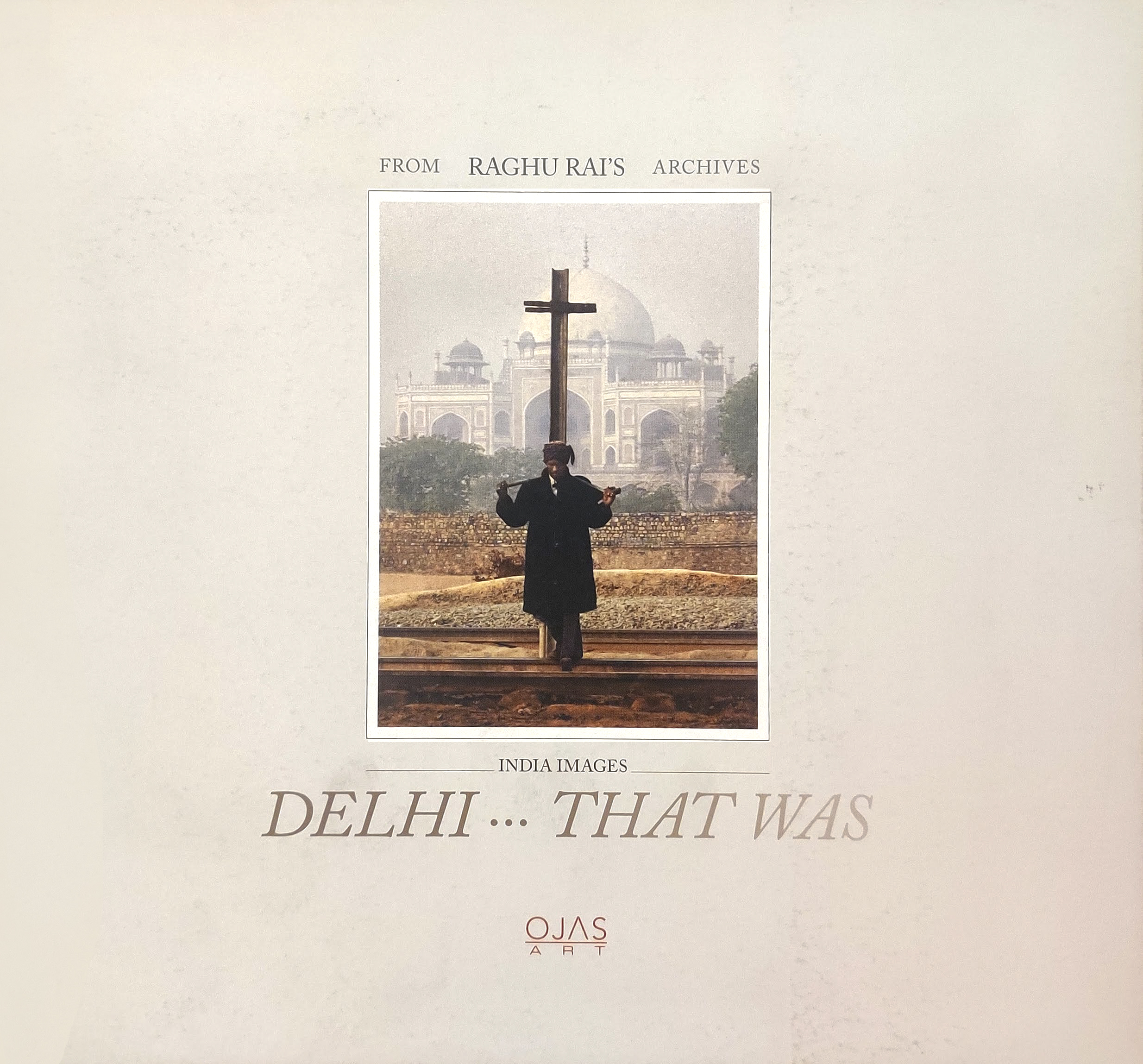
As a design agency we had the privilege of designing and printing catalogues of Raghu Rai’s shows that were assigned to us by art galleries. These catalogues gave me a chance to interact with RR on personal level for many reasons – be it technical or simply emotional. The last catalogue I did for him was for a show that exhibited photographs of three senior photographers of Delhi; namely Habib Rahman, Madan Mahata and Raghu Rai. The show was titled “Delhi… That Was”. Some of the finest pictures of these three greats were on display. On the day of the opening, Raghu went around the entire gallery interpreting each image for us who were keen to listen to him. Late Habib Rahman and Madan Mahatta would have been very happy that day listening to their pictures being deconstructed.
In Raghu Rai we have lost a visual historian, an artist, a photographer and a extraordinary human being.
P.S.: Social media platforms are a treat today to see some of Raghu Rai’s pictures that one had not seen before. It is also a rare day when we got a break from the seeing the sullen pictures of a rotten politico and his brigade.
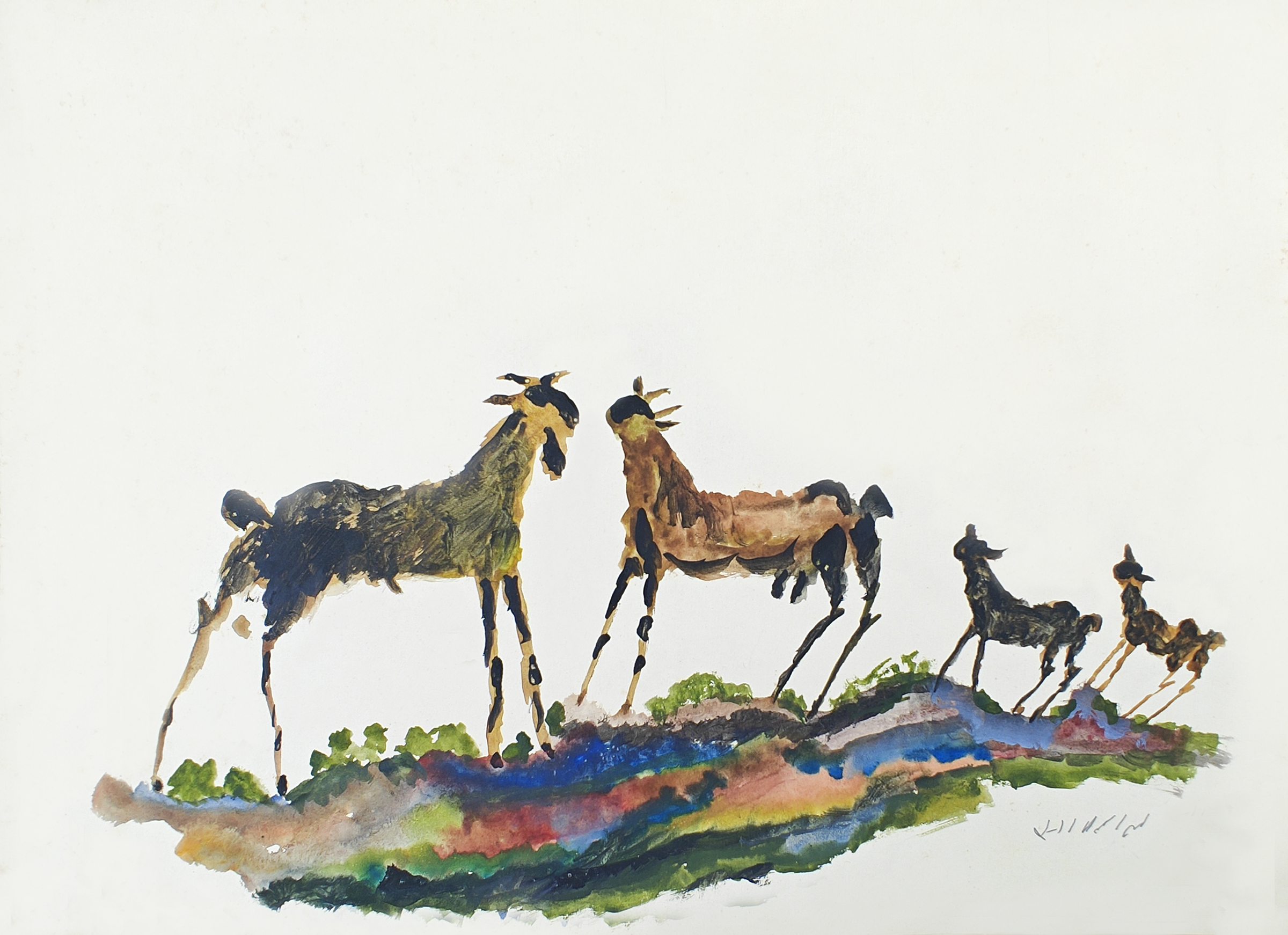
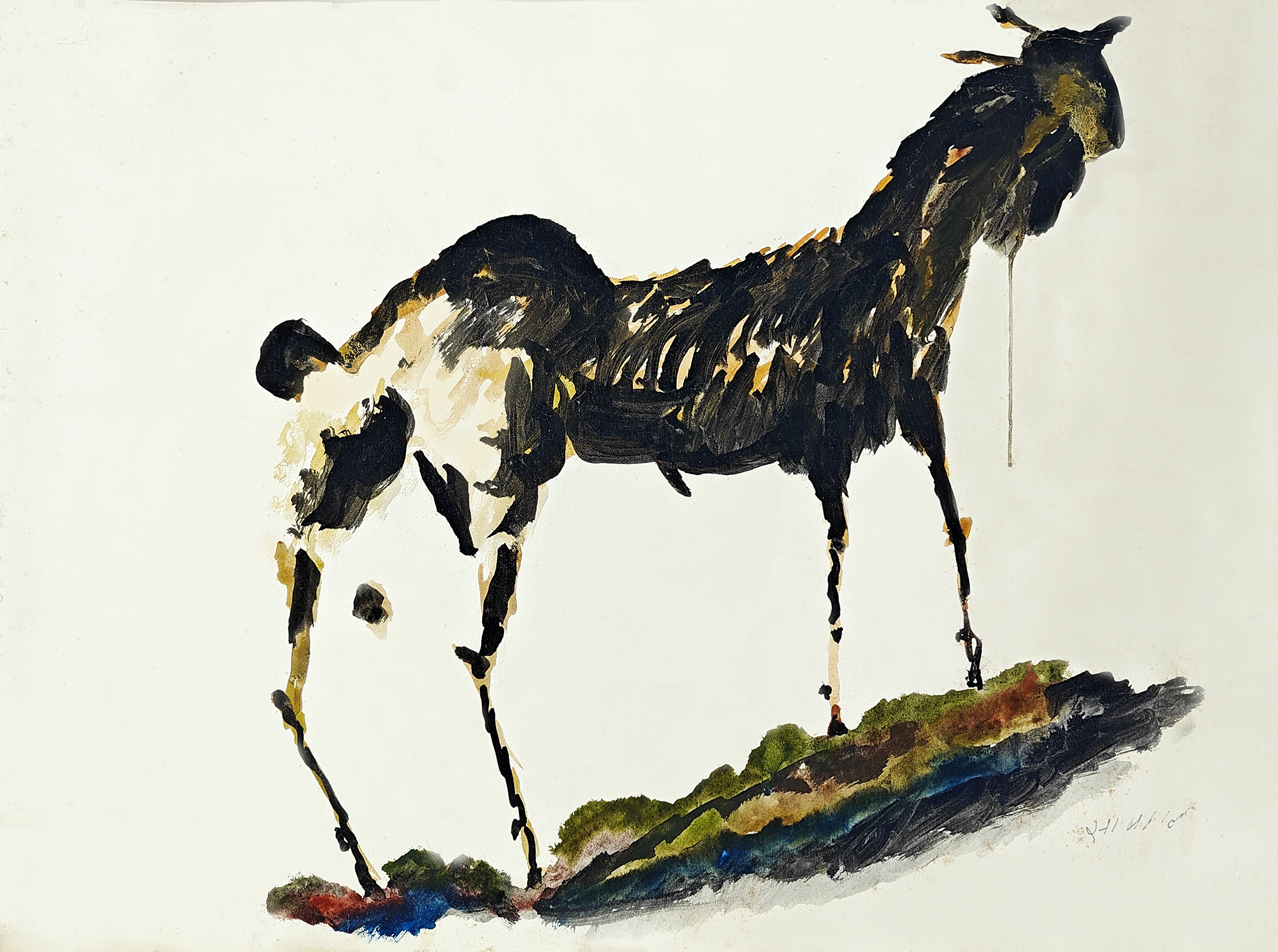
On a burning-hot April afternoon (like today), sometime in 1994 or 95 Suneet Chopra entered the Ishtihaar office, his face red and profusely sweating. A safa, the kind worn by a peasant-mazdoor leader was dripping on his head. Without saying a word he pulled up a chair and sat down. Cleaning his glasses with the gamachha, he ran his fingers through his beard and drank two glasses of water. A cup of tea later he asked me to get up and come with him. “Where to?” I asked. At the Delhi College of Art, there is a show of final year students’ works on display and for sale.” When Suneet spoke with that kind of authority you couldn’t say no. We drove to the college where the artworks of final-year BFA students were on display for assessment and for sale. Walking up and down the corridor and the hall, we looked at the artworks but weren’t ready to pay the prices students had labelled them for. We were about to leave when we met Saam Lal (that’s how he pronounced his name). Saam (Shyam), a peon-like assistant at the college, held a few rolled sheets in his hand. He had displayed two others on a cord along the outer wall. Those were HIS paintings. Shyam Lal, who had never attended school, learnt to draw and paint at DCA only. A few works that he managed to sell in a year supplemented his meagre salary. Looking at his works Suneet retraced his steps, and so did I. Suneet kept looking at the “Goats” – a gorgeous single one, and a clean-coated family of four. Suneet asked Shyam Lal to open the roll in his hand, which had two more artworks; Goats again. He looked at me and nodded, signaling that we should take these. Between the two of us we bought all four works. Shyam Lal asked for 2,500 each. Mind you, these are 3×2 feet fabulous works, watercolour on acid-free chart paper. The two in picture are with me, I wonder what Suneet did with his. Over thirty years now… every time I look at these works I remember both Suneet and Saam. Suneet is gone, I wonder what ever happened to tall, emaciated, smoker Saam who could hold both a brush and a bidi in his left hand while painting. Syam signed these works for us with a pencil tucked in his left ear. I cherish these.
For those who don’t know: late Suneet Chopra was an art critic, writer, and poet. He was a trade unionist; Secretary of the All India Agricultural Workers Union and a Central Committee member of CPI(M). Born in Lahore, Suneet was an alumnus of Modern School and St. Xavier’s College, Calcutta. He taught regional development at Jawaharlal Nehru University Delhi. More than everything else, the ever-smiling Suneet was a fine human being.
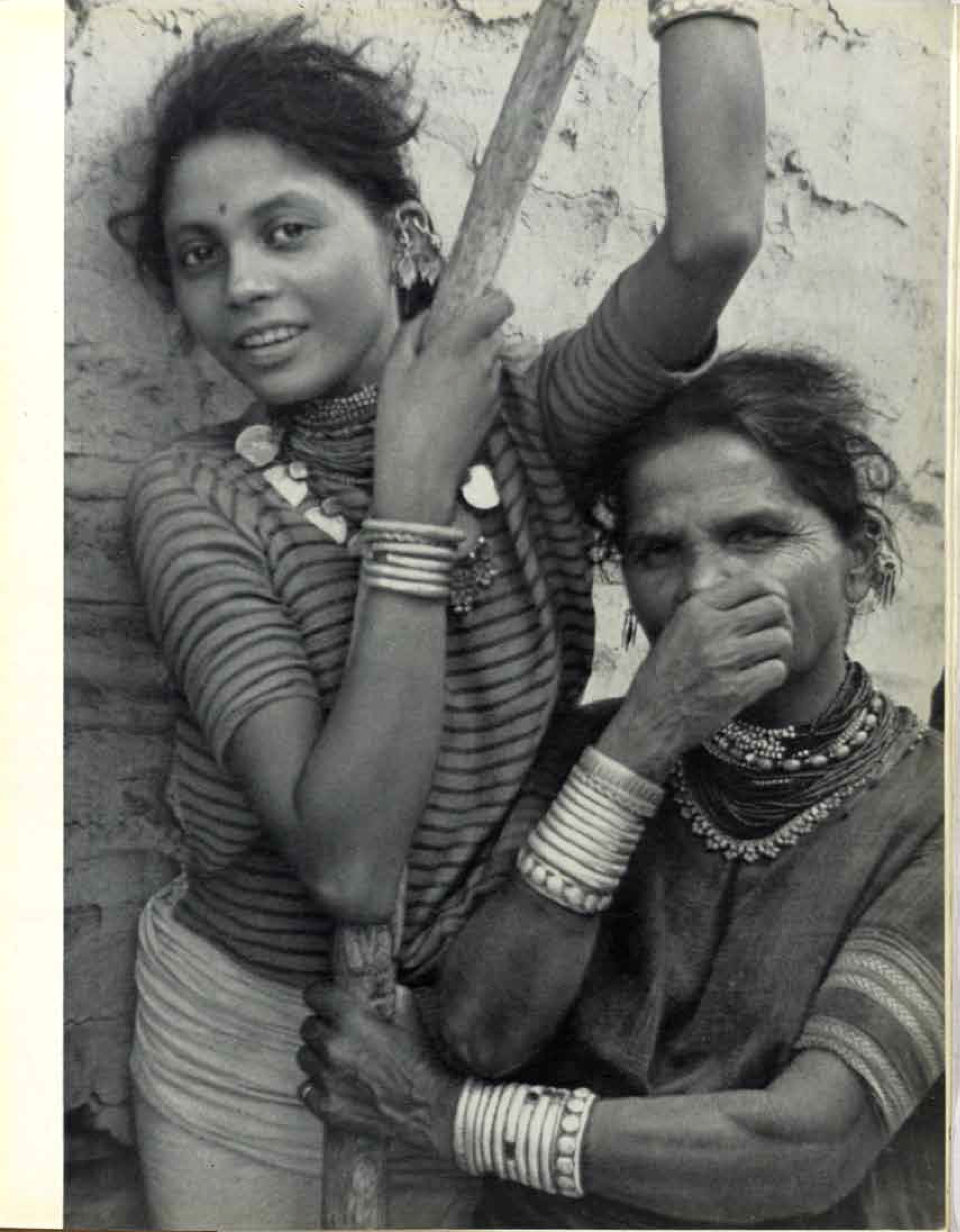
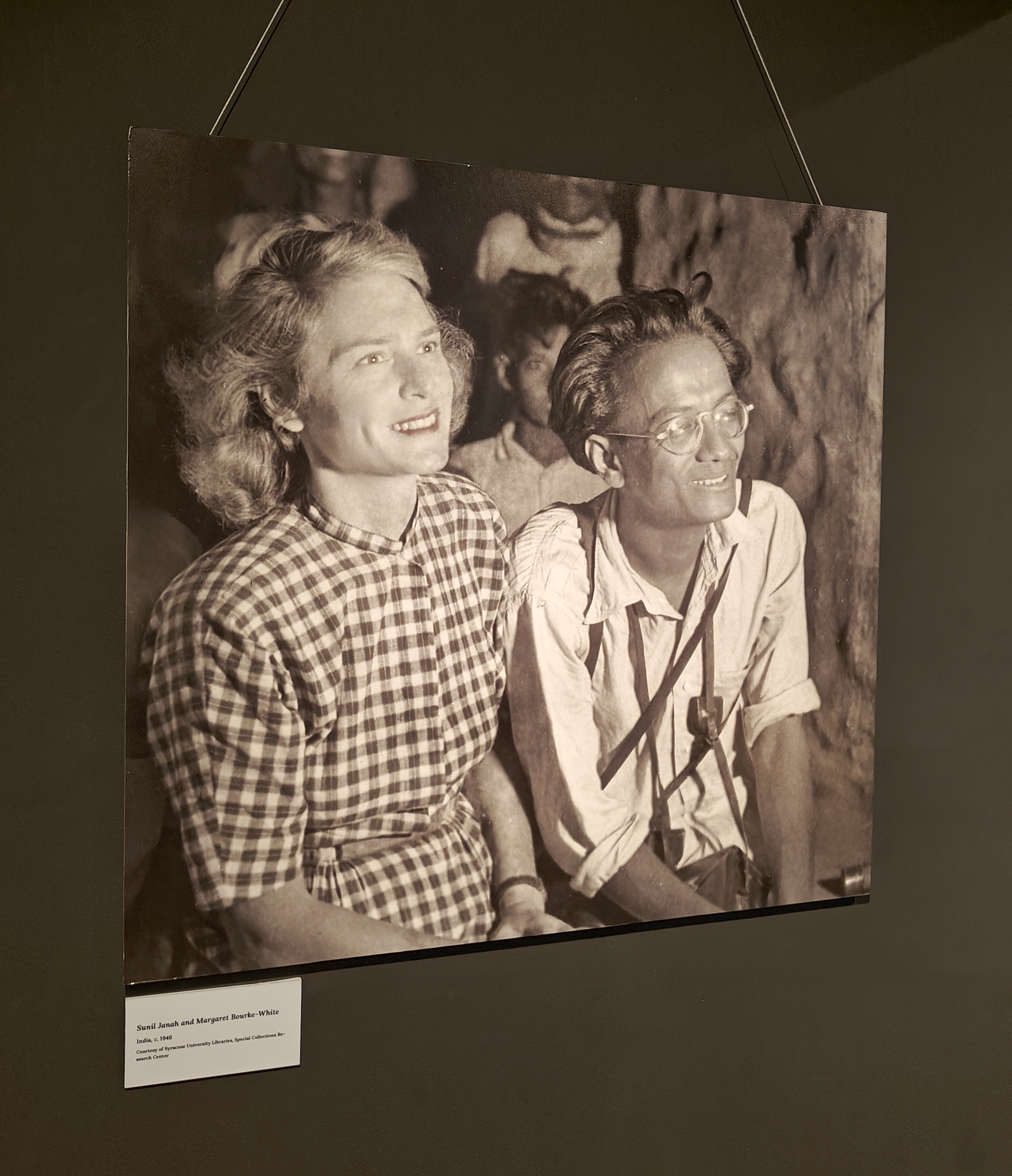
Sunil Janah would have been 108 today (17 April). His powerful photographs documented India’s independence movement, its peasant and labour movements, famines and riots, rural and tribal life, as well as the years of rapid urbanization and industrialization. The pictures he took were “a powerful mobilising tool, bearing witness to a brutal famine that the British were actively trying to deny.” About this picture of two tribal women, he said, “I took a number of photographs unknown to them; they were watching Margaret Bourke-White at work. The young girl was particularly striking.” Janah is quoted about his picture in the book, ‘The Second Creature‘, published by Signet Press in 1943. In the next picture (from a show at Museuo Camera, Gurgaon) are Sunil Janah and Margaret Bourke-White, c.1946, who collaborated on many projects. Sunil Janah was an Indian-American photojournalist and documentary photographer who worked in India in the 1940s.
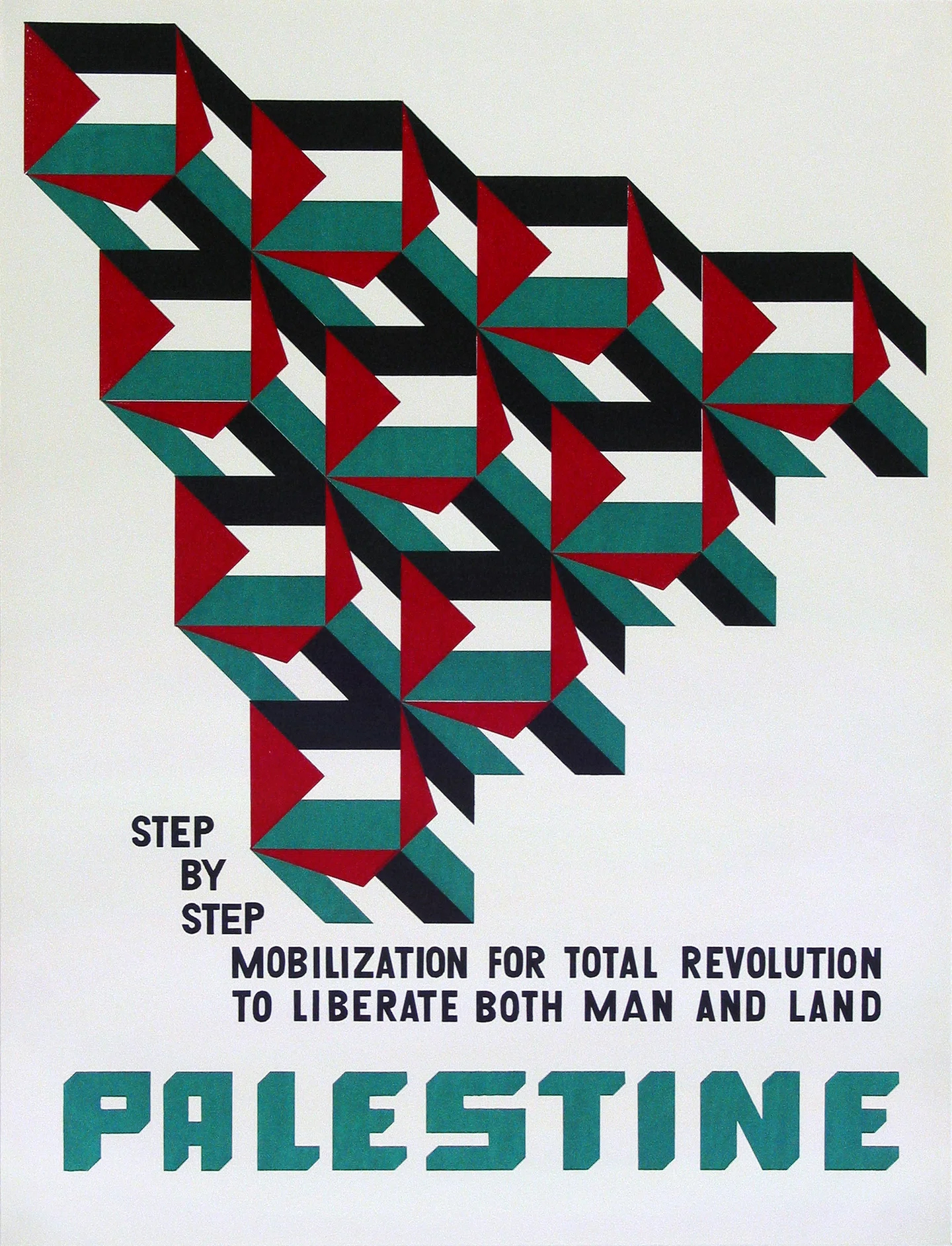
Love is Resistance sews together 77 posters for a free Palestine from creatives around the globe To hang, to share or to tear out and take to protests, this living archive calls for solidarity in action.
Love is Resistance is a collection of 77 commissioned posters by artists, musicians, writers, designers, filmmakers, actors, digital creators and voices from across the world standing in solidarity with Palestine. Each poster tells its own story – recalling iconic figures, pivotal moments, poems and personal acts of remembrance – and bears witness to grief while insisting on life, justice and liberation.
Love is Resistance is a book “born from the ache of witnessing”, curator and editor Aya Mousawi shares with It’s Nice That: “To witness is to refuse disappearance: an attempt, in a small way, to archive this time and capture the spirit of our efforts to stand with Palestine. To honour their resistance and survival, and to trace the threads of solidarity that connect us across the world.”
A publication brought together in just six weeks, in the wake of the humanitarian crisis in Gaza, the artist book gathers a staggering number of visual poems, stories, memories and messages of resistance in the form of poster designs from the past two years of the genocide – marking “77 years of occupation and ethnic cleansing, and 77 years of resistance,” Aya adds.







You must be logged in to post a comment.