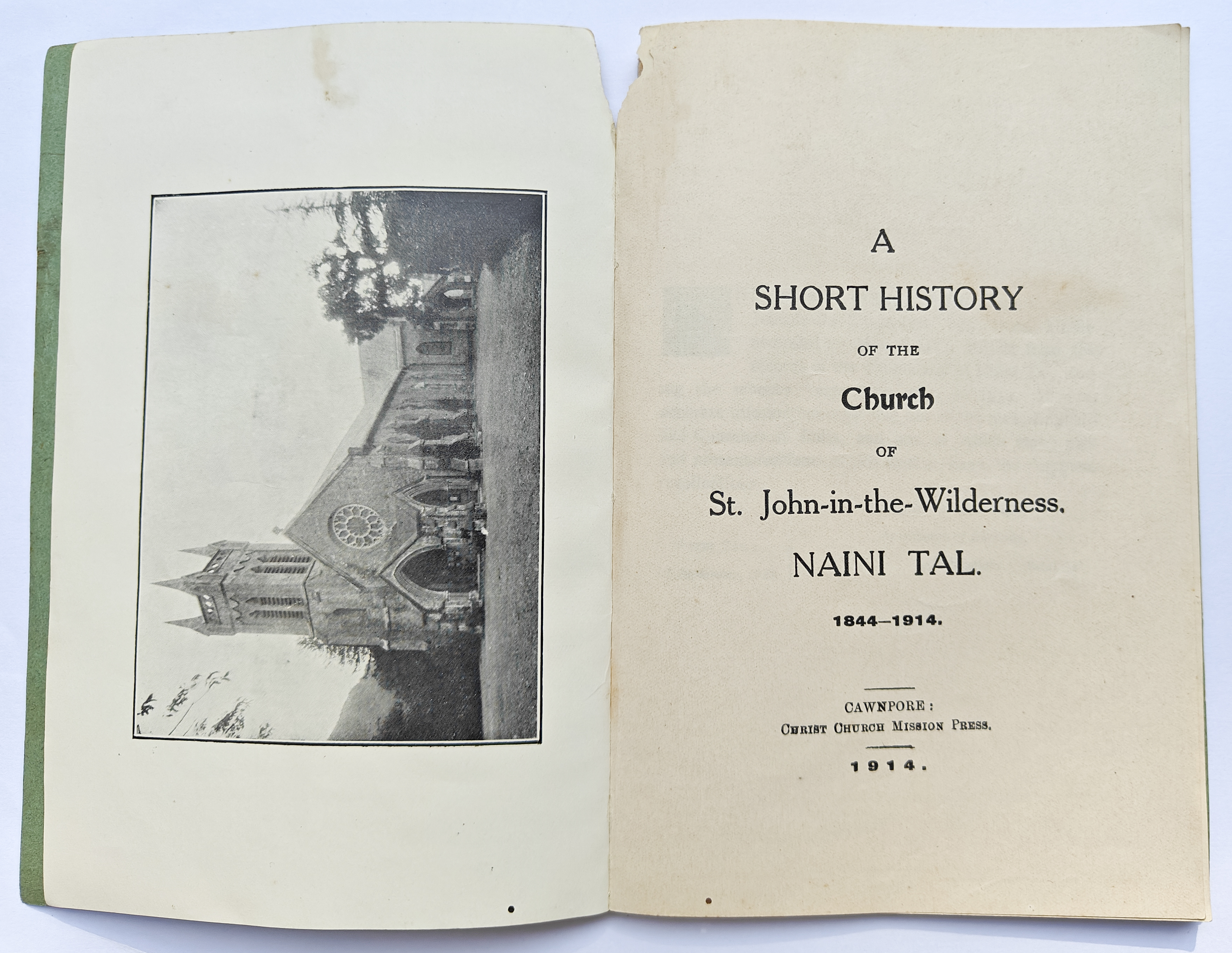
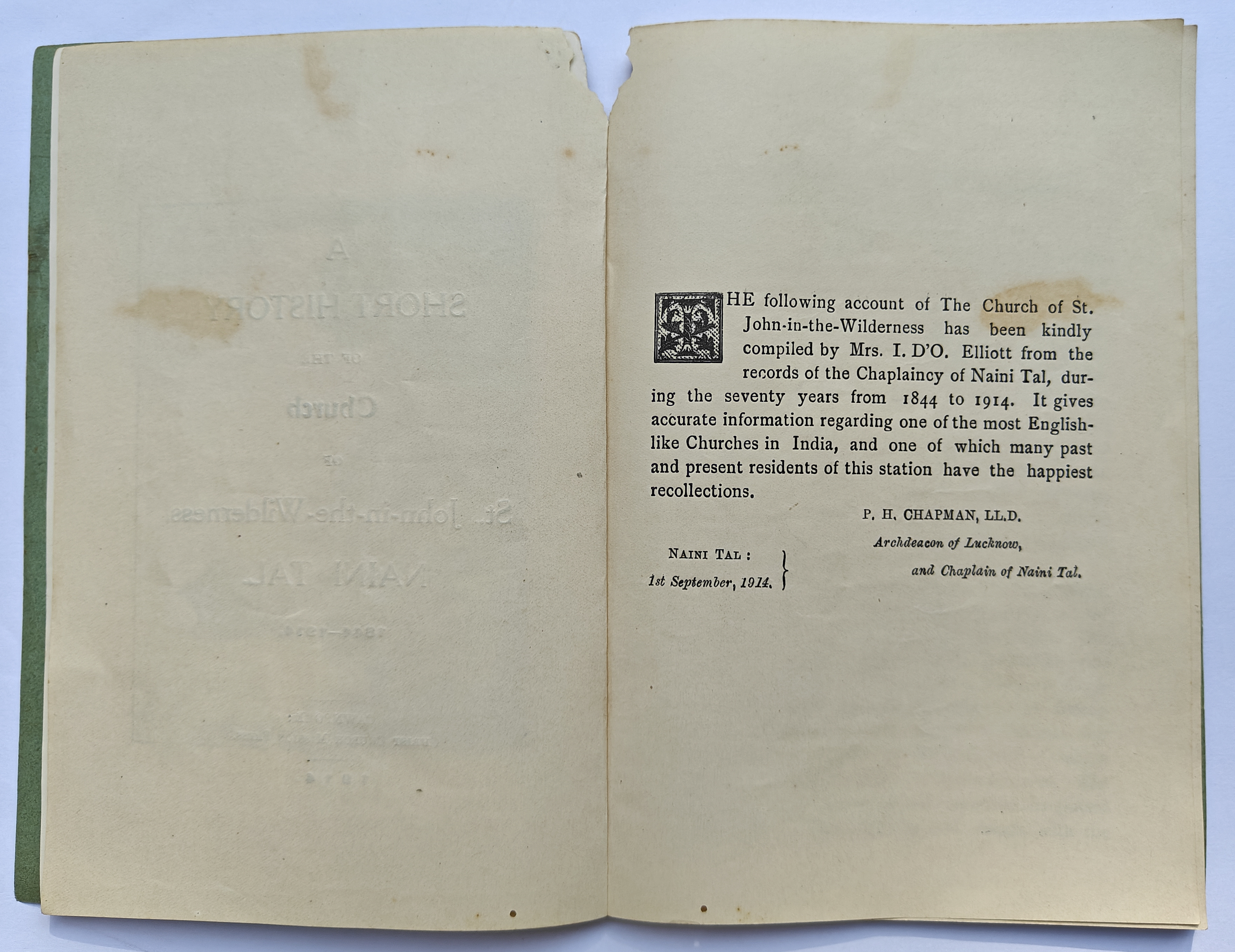
I bought this booklet from a street vendor walking The Mall outside the Naini Tal Club sometime in the winter of 1978 or 79 (I prefer the usage Naini Tal instead of Nainital). This booklet, together with a set of four colour slides, cost eight rupees. Printed in 1914 (111 years back), in Cawnpore (Kanpur), this 28 page booklet about St. John-in-the-Wilderness Church in Naini Tal continues to be a treat, probably one of the first collectibles I acquired unknowingly. Accidently pulling it out of the shelf today, triggered a chain of thoughts about my one-time-favourite pahad or what people call as hill-station (which sounds so impersonal and bechara).
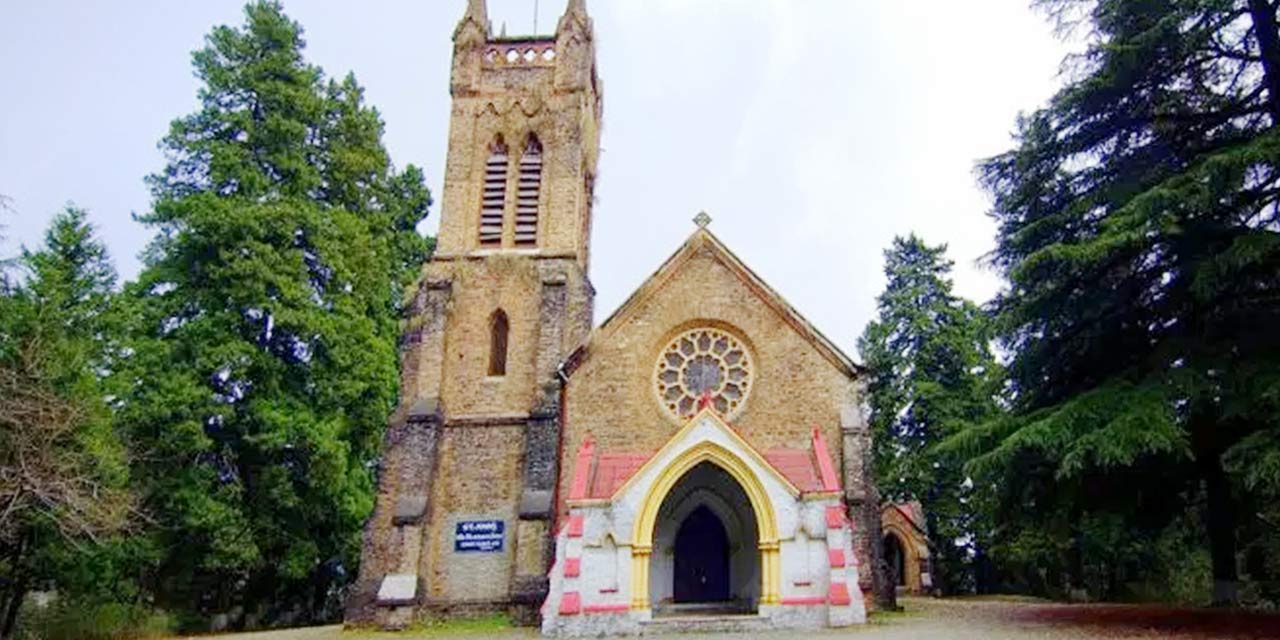
I don’t have any pictures from that trip. This picture of the church is not my picture. Our family’s Kodak Box 120 format camera was an expensive hobby those days, thus picture postcards were all one could afford over and above one roll of film, its processing and prints. I acquired a 35mm film format camera much later.
Those days the way up to the elegant stone structure church was from behind the Talli Tal (तल्ली ताल) over a kuccha or a mule trail through thick Banj (Oak), Deodar and Cheed (Pine) trees. Even at peak noon very little sunlight filtered down to the path. It would feel colder under the foliage. The hills behind the church were an untended jungle, completely covered with trees and very few locals had their houses up there. The trail up to Kilbari and snow view ridge was infamous for bear attacks. One would go up only on clear sunny days, more to look at the shimmering, blue, kidney-bean-shaped Naini Lake from the top and not so much for the Himalayas which lay perpetually hidden by the clouds. Only a few people came to Naini Tal in winters. There was no direct bus from Delhi, one had to board the Naini Tal bound bus either at Haldwani or Kathgodam. Some of these buses reached Nainital via Bhimtal. Sighting mule-trains, bringing essentials from the plains, was common sight enroute.
The soothing bells of Naina Devi temple enticed even atheists and lazy city boys like us to line up for prasad on a freezing winter morning when even the Sun took leave off work. The Mall was a peaceful place. I miss that bansuri wala who played painful yet magical notes leaning on the stone wall. Sitting on a bench by the placid lake had a calming effect unlike any ‘substance’. Locals used to smile more often and were helpful to visitors. Tourists respected the hills and hill folks (pahad and pahadis). Mules had the right of way over Marutis or Marshalls. No one ogled at hand-holding lovers strolling on serene Thandi Sadak which was pedestrian only. The soothing scent of flaming red Buransh (rhododendron) and the pine needles is what we missed when back home.
The skating rink and the football ground reverberated with the laughter and excitement of children and the young ones. The elderly sun-bathed or sulked depending which team they were backing. Thankfully Nanak restaurant had still not debuted with its golgappas and chicken tikka. Those days we drank endless glasses of hot and sweet tea without ever thinking of Old Monk. A late evening show at Capitol cinema was all that one needed to get a high and entertain oneself. During sunny afternoons we watched shining Cadillacs parked outside the most expensive hotel in Naini Tal, The Metropole. Some of the Chauffeurs of those guzzlers looked as handsome as Bollywood actors. A decade later I had the opportunity to stay in that hotel when I almost spoiled their three-tiered German Pipe Organ with a pedalboard. Despite that they offered us excellent tea in the well-provided tea lounge.
Naini Tal was all that I had dreamed of when in Delhi and Naini Tal was where I wanted to own a small cottage with my own small library ‘all for myself’ – just like the White House Cottage my friend Bipin Pande owned on higher slopes. His father owned a shop next to the Ghoda stand. Bipin was the one who took me to (NTMC) Nainital Mountaineering Club and stoked my passion for mountaineering. I wonder where Bipin is now !!! The last time I met him was in Jipti camp during the Kailash-Manasarovar Yatra. Pahad nostalgia will kill me sooner than later. And now Mary Hopkins is killing me with her husky voice singing ‘those were the days my friend we thought they’ll never end…’, the song, btw, was produced by another great – Paul McCartney. Mary Hopkins too belonged to mountains.
Coming back to the booklet and the St. John-in-the-Wilderness church. In the booklet put together by Mrs I. D’O Elliott – she tells us that it is an Anglican church and one of the oldest buildings in Naini Tal. The site for the church was earmarked in 1844 by Bishop Daniel Wilson. Its cornerstone was laid in October 1846. Captain Young, an executive engineer with the Company, made its design plans and had it constructed at the cost of Rs 15,000 raised from private subscriptions. Built in a Gothic style, it was inaugurated on 2 April 1848. A memorial in the church commemorates those killed in the 1880 landslip. There have been many landslips (landslides) since then when parts of the church building have been damaged. The once famous Sookha Tal (Dry Lake), which was behind the church, has since been lost. Similarly, no records are available to dig out more information about Mrs I. D’O Elliott. Rest in Peace Ma’am, your booklet is precious and useful.
The last time I visited the church was sometime in 1993 or 1994 with Rajni, my wife. Till then its exterior, the prayer benches inside, and its large sized beautiful stained-glass windows were all intact. I have those colour negatives tucked safely somewhere (meaning untraceable now). The church keeper and an attendant had opened the main church door for us with a metal key that was nearly 12 inch in length. I wonder if they still hold Sunday Service in the church. I must visit it soon. I miss you Naini Tal.
There is another church by the same name ‘St. John-in-the-Wilderness’, which is a Protestant church dedicated to John the Baptist. It was built in 1852 and is located near Dharamshala, on the way to McLeod Ganj, at Forsyth Gunj. True to its name that church is still in the wilderness with few visiting it.
कहानियां या फिल्में मुझे आसानी से भावुक नहीं कर सकती पर हाँ दर्द भरी कोई कविता, दिल हिला देने वाली कोई ग़ज़ल, ठुमरी, टप्पा या गीत, और रूह को चीर देने वाले संगीत को सुन कर मैं ज़ार ज़ार रो सकता हूँ, रोया भी हूँ, कई बार। सिनेमा में भी और नशिस्तों या बैठकों में भी। मेरा मानना है कि संगीत में किसी को भी अपनी गिरफ़्त में ले कर पागल कर देने वाला जादू है। और फिर संगीत के साथ अच्छे बोल जुड़ जाएँ तो माशाल्लाह क्या कहने। जैसे ख़याम साहेब के दिए संगीत के साथ मिर्ज़ा शौक़ साहेब के लिखे और जगजीत कौर के गाये ये बोल –
कोई आता नहीं है फिर मर के, देख लो।
1982 में बनी फिल्म बाज़ार की इस ग़ज़ल के बोल सिर्फ़ रुलाते ही नहीं अंतर आत्मा को झिंझोड़ देते हैं इतना बींध देते हैं कि सुनने वाला अपना सब कुछ हारने को, समर्पण करने मज़बूर हो जाता है। इसके लिए आपको फ़ारूक़ शेख़ और सुप्रिया पाठक की बेहतरीन अदाकारी पे फिल्माया ये जानलेवा गीत देखने की ज़रुरत नहीं है । रौनक़ और हलचल से भरे किसी बाज़ार में ये गीत आपके पैरों में बेड़ियाँ पहना कर रोक लेता है, वहीँ बैठ कर आँसू बहाने पे मजबूर कर देता है। पर यकीन मानिये ये कशिश, ये दिल्लगी, मकनातीस की तरह अपनी तरफ खींचने की वही ताकत क़ुदरत के नज़ारों में भी है।
आज हम को जी भर के देख लो
सचमुच, कौन वापिस आ सकता है मर खपने के बाद, कौन वापिस आया है, कहाँ आ पाया है। ये गीत, ये बोल, ये मायूसी, ये बेबसी मुझे कई और कारणों से भी महसूस होती है, परेशान करती है ख़ासकर जब मैं क़ुदरत के किसी नज़ारे से बिछुड़ रहा होता हूँ, उसके किसी नायाब मंज़र को जब मैं पीछे छोड़ घर को, शहर को वापिस लौट रहा होता हूँ तो टीस और बढ़ जाती है।
नंदादेवी, नीलकंठ, त्रिशूल, एवेरेस्ट, गंगोत्री, स्वर्गारोहिणी, भागीरथी और कैलाश पर्वतों से वापिस आने से पहले जब मैंने इन चोटियों को आख़िरी बार देखा था तो यही ग़ज़ल गुनगुना कर मैं रोया था। मानसरोवर झील या सहस्त्रताल से बिछड़ने से पहले भी इसी ग़ज़ल को गा कर उतना ही दर्द सहा था। साल दर साल पिघलते, सिकुड़ते, ग़ायब होते जा रहे हिमनदों (ग्लेशियर) को देख दुखी होता मन ज़ोर ज़ोर से इनके सामने खड़ा रोया था।
खूबसूरत वादियों, बर्फ़ीले पहाड़ों, हरे बुगियालों, भोज, चीड़, बांज और सनोबर के अधकटे जंगलों से बाहर आ कर भी मैंने ये विछोड़ा ही महसूस किया। जितनी बार वापिस लौटा जंगल को कम ही पाया। पहाड़ को गिरता, टूटता, धंसता, और जर-जर होते ही पाया। नालों और नदियों में पानी कम होता या सूखता ही देखा या फ़िर बरसातों में इनका विकराल रूप तबाही लाते ही देखा।
इन बेजान पत्थरों, नदी-नालों और नज़ारों से जुदाई का दर्द मेरा पागलपन तो कहा जा सकता है पर ये सोचिये क़ुदरत की इन हसीन नेमतों में से बहुत कुछ अब लुप्त हो रहा, काफ़ी कुछ तो पहले से ही ख़त्म हो चुका है । जल्द ये सब तस्वीरों की तरह यादें ही रह जाएँगी। या फिर अब आपको कभी न दिख पाने और मिल पाने वाले आपके प्यारे दादा-दादी, नाना-नानी या बुज़ुर्गों की ही तरह।
आज के अखबार में ही ये खबर है की मुल्क की आला कोर्ट ने उत्तराखंड राज्य के शिवालिक पहाड़ियों में 3000 पेड़ काटने पर रोक लगा दिया है। शुक्र है, कभी कभी कोई पेड़ पहाड़ों पे भी दया करता है।
पर हम सब जानते हैं जंगल बेतहाशा काटे जा रहे हैं, पहाड़ों को काट कर सड़कों और सुरंगों के जाल बिछाए जा रहे है, रेल पटरियां बिछाई जा रहीं हैं । मौसमी बदलाव से बर्फ हर साल कम पड़ती है। तेज़ गर्मी की वजह से ग्लेशियर पिघल रहे है । नदियां या तो सूख रही हैं या तबाही का सबब बन रहीं है । ये सब हमारी, यानि इंसानी ग़फ़लत की वजह से हुआ है और हो रहा है। कुदरत के जिन हसीन नजारों को हमने देखा था, जिनकी हजारों तस्वीरों और फिल्मों को हमने दोस्तों और जानकारों से साझा किया था, जिनके बारे में लिखा था उनमे से बहुत कुछ होले होले ख़त्म हो रही हैं। ये ही नहीं उनके साथ वहां बसने वाले जानवरों, पक्षियों और पौधों की उन हजारों प्रजातियों के बारे में सोचें जिन्हें हमने सदियों से खो दिया है, उन सैकड़ों भाषाओं और बोलियों के बारे में सोचें जिन्हें हमने भूल बैठे हैं।
सोचिये डोडो पक्षी है ही नहीं। शेरों, बाघों और जाने कितने जानवरों को हमने सैकड़ों या कुछ हज़ारों की गिनती में समेट दिया है। जिस मुल्क में राजा महराजा और रईस लोग चीते को पालतू जानवर सा रखते थे उस मुल्क में चीते कभी के ख़त्म हो चुके और उसे 10-15 चीते नामीबिया से मांगने पड़े। जिस देश मैं गिद्ध जटायु की पूजा होती है वहां ऐसा माना जाता है की इनकी आबादी अब केवल 5000 ही है। तितलियाँ और मधुमखियाँ जिस तेज़ी से लुप्त हो रही हैं उस से लगता है कुछ सालों में ही बहुत से फूल और फल भी ख़त्म हो जायेंगे।
धीरे-धीरे जिन कुदरती नज़ारों को हम खो रहे हैं उन्हें आज का युवा या वर्तमान पीढ़ी हमेशा के लिए लुप्त होने से पहले एक झलक पाने और देखने के लिए दौड़ रही है। क्या आफ़त है, जिसे उन्हें बचाना चाहिए या हमे बचाना है – प्रकृति की उसी खूबसरत रचना को और ज़्यादा बर्बाद करने के लिए एक नई भीड़ तैयार है। वो भीड़ इन्हे आखिरी बार देखना चाहती है, बिलकुल वैसे ही जैसे सड़क एक्सीडेंट में घायल किसी शख्स की लोग रील तो बनाते हैं पर उसकी मदद को, उसे अस्पताल ले जाने को कोई आगे नहीं आता। धूं धूं कर के जब जंगल जलता है तो इंसान उसे छोड़ दूर भाग जाता है। जंगलों का जलना, पहाड़ों का दरकना, नदियों का सूखना, पशु-पक्षियों का ख़त्म होना इंसान के अपने अंत की कहानी है।
जी हाँ हिमालय के ये बाकि बचे ग्लेशियर, अंटार्कटिक और आर्कटिक महाद्वीप से टूटते बर्फ के हिम-पर्वत ऐमज़ॉन के जंगल, दुनिया भर की सूखती नदियाँ, पानी के तालाब और ताल, बर्फ से ढके सफ़ेद पहाड़, ऑस्ट्रेलिया की ग्रेट बैरियर रीफ़, डूबते जज़ीरे और जाने क्या क्या – इन बची खुची, रही सही नेमतों को बर्बाद करने के लिए लोगों पे एक नया जुनून चढ़ा है।
इस जुनून को बेचने और इस से पैसे कमाने के लिए इसे नए नए नाम दिए जा रहे हैं “लास्ट चांस टूरिज्म” – “फलां-फलां देखने का आखिरी मौका”। एक पुरानी फिल्म का रुआंसा कर देना वाला भावुक कर देना वाला गाना लगा कर ये माल बेचा जा रहा है। आंसू रुमाल में लपेट कर साथ दिए जा रहे हैं। ट्रेवल एजेंट हजारों लोगों को ऐसे स्थानों पर भेजकर मुनाफ़ा कमा रहे हैं जो पहले ही बर्बाद हैं, ख़त्म हो रहे हैं, ढह रहे हैं और जिन्हे तुरंत, बिना देरी के बचाने की सख्त ज़रुरत है, सँभालने की आवश्यकता है। जिस किसी ने भी 1960 या 1970 की सदी का पहलगाम, गुलमर्ग, खिलनमर्ग, सोनमर्ग या लद्दाख़ देखा है और अगर उस शख़्स को पहाड़ों से रत्ती भर भी प्यार है तो वो आज पुरानी यादों को समेटे वहां जा कर बस आंसू ही बहा सकता है। सब कुछ तो ख़त्म हो गया। तरक्की और तकनीकी सहूलियत के नाम पर आपको रोपवे का गंडोला तो मिल गया पर गुलमर्ग, मुंसियारी और औली में बर्फ की मखमली ढ़लाने बर्बाद हो गई हैं।
अगर आपको याद नहीं तो याद दिला दूँ करीब दो दशक पहले वैली ऑफ़ फ्लावर्स (फूलों की घाटी) इतनी बर्बाद हो चुकी थी की उसे बचाने के लिए सरकार को उसे बंद करना पड़ा। नंदा देवी सेंचुरी और वैली ऑफ़ फ्लावर्स 10 साल तक पर्यटकों के लिए बंद रहे । यकीन मानिये पूरे हिमालय का यही हाल है। हिमाचल के पहाड़ों में हर साल आने वाली बर्बादी का ये आलम है की वहां के रहने वाले लोग शहरियों से वहां न आने की अपील करते हैं। गर्मी के मौसम में नैनीताल पहुंचने वाली सड़क पर चुंगी लगाकर अंदर आने वाली गाड़ियॉं को रोक दिया जाता है। नैनीताल की झील तीस साल में आधी ही रह गई है। वही हाल श्रीनगर की डल, निगीन और वुलर झीलों का है। इन सभी जगहों पर छोड़ी गई गंदगी की तो कोई बात भी नहीं करता।
कश्मीर, उत्तराखंड और हिमाचल प्रदेश के गडरिये या चारागाही, जिन मे बकरवाल, गद्दी और गुज्जर कबीले शामिल हैं, वो साल दर साल गर्मी के मौसम में अपनी भेड़-बकरियां और डांगर चराने पहाड़ों पे ऊंचाई वाले हरे पहाड़ी मैदानों या बुग्यालों (8 से 12 हज़ार फ़ीट ऊँचे) में अपने पशुओं को ले जाते हैं। ये घुमक्कड़ लोग बताते हैं कि पिछले 15 साल में ही ऊपरी इलाकों में बर्फ़ गिरने में इतनी कमी आई है कि बहुत सी वादियां या दर्रे जहाँ वो जा ही नहीं पाते थे अब 12 महीनों खुले रहते हैं। बर्फ ना गिरने की वजह से और बारिश की कमी की वजह से पहाड़ के ऊपरी इलाकों में चरने लायक घास भी कम हो गयी है। सर्दी कम पड़ने की वजह से भेड़ों में बाल या ऊन भी काम आती है।
समुद्र तल से 19340 फुट की ऊंचाई पर किलिमंजारो अफ्रीका महाद्वीक की सबसे ऊँची चोटी तंज़ानिया और केन्या देशों की सीमा पर एक फ़रिश्ते सी तैनात है। असल में ये बुझ चुका ज्वालामुखी है। पिछले 50 साल में लाखों लोग इस देखने, इस चोटी पर चढ़ने और इसके आस पास के जंगल में विचरने के लिए यहाँ आये हैं। इस सब का हश्र ये है की इसके आस पास का जंगल 70 फी सदी काट कर साफ़ कर दिया गया है। इन जंगलों में रहने वाले दर्जनों पशु पक्षियों की प्रजातियां अब लुप्त हो गई हैं। पिछले दो साल से इसकी चोटी पर बर्फ भी नहीं पड़ती। तंज़ानिया सरकार इस बात पर अब विचार कर रही है कि इस पहाड़ पर चढ़ने पे अब रोक लगा देनी चाहिए।
दक्षिणी अमरीकी महाद्वीप के देश पेरू की एंडीज पर्वत श्रंखला में तो पूरा का पूरा ग्लेशियर पिघल कर ख़त्म हो गया है और दर्जनों ग्लेशियर पिघल कर छोटे होते जा रहे हैं और पीछे को सरक रहे हैं। इस से एक तरफ समंदर के पानी की ऊंचाई बढ़ती जा रही है तो दूसरी तरफ पीने के पानी की किल्लत बढ़ती जा रही है।
सब कुछ लुटा के होश में आये तो क्या किया
दिल्ली से निकलने वाले टाइम्स ऑफ़ इंडिया में 9 मार्च को भूगर्भ और भूकंप वैज्ञानिक श्रीमती कुसाला राजेंद्रन का एक इंटरव्यू छपा है जिसमे वो कहती हैं कि “हिमालय में हो रहे निर्माण कार्य को देख कर ऐसा लगता है कि सरकार हिमालय में भूकंप की सम्भावना को हल्के में ले रही है।” हिमालय में हो रही बर्बादी को जाती तौर पर मैं करीब 40 साल से देखता आया हूँ बर्बादी का ये सिलसिला साल दर साल तेज़ ही हो रहा है, थम नहीं रहा।
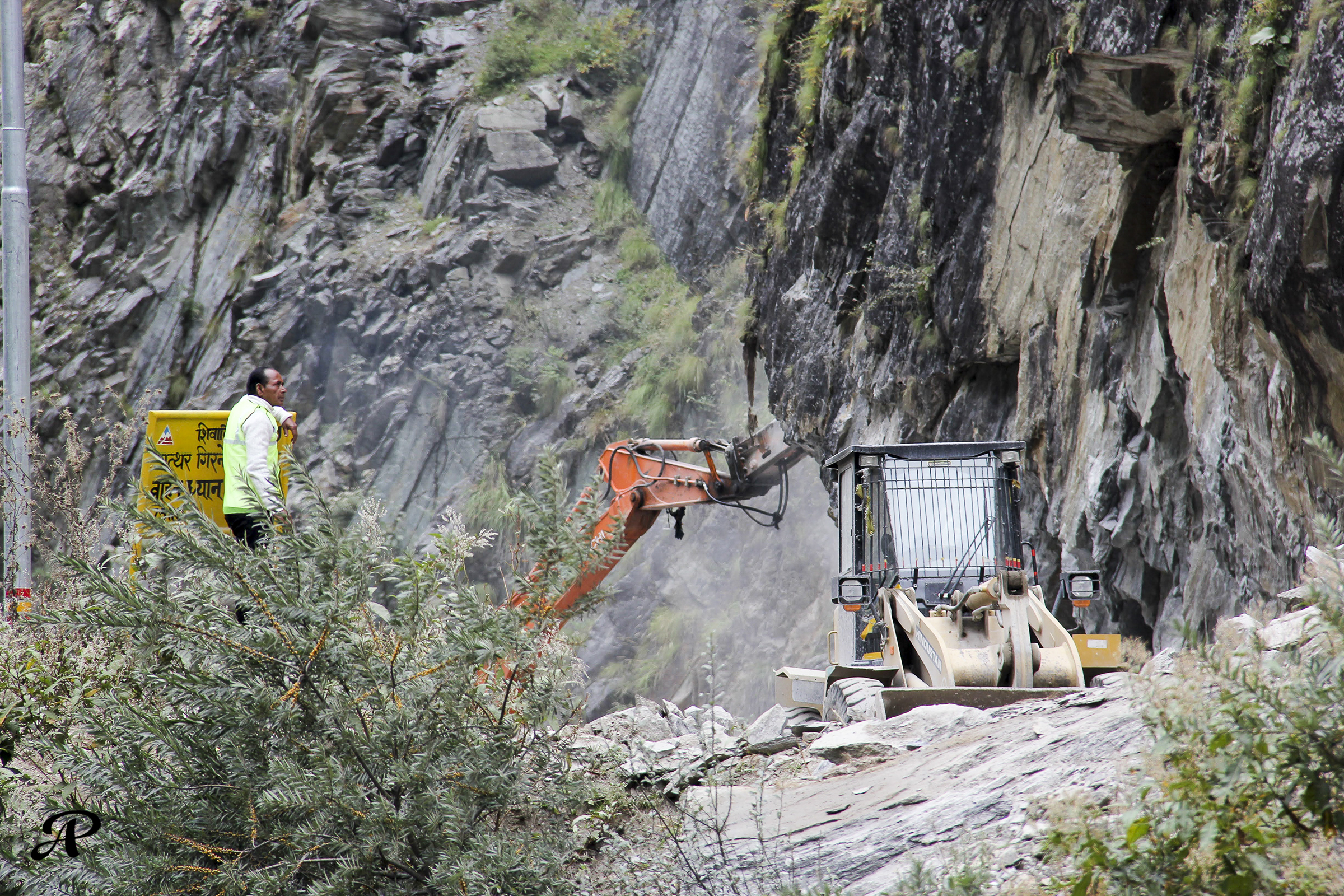
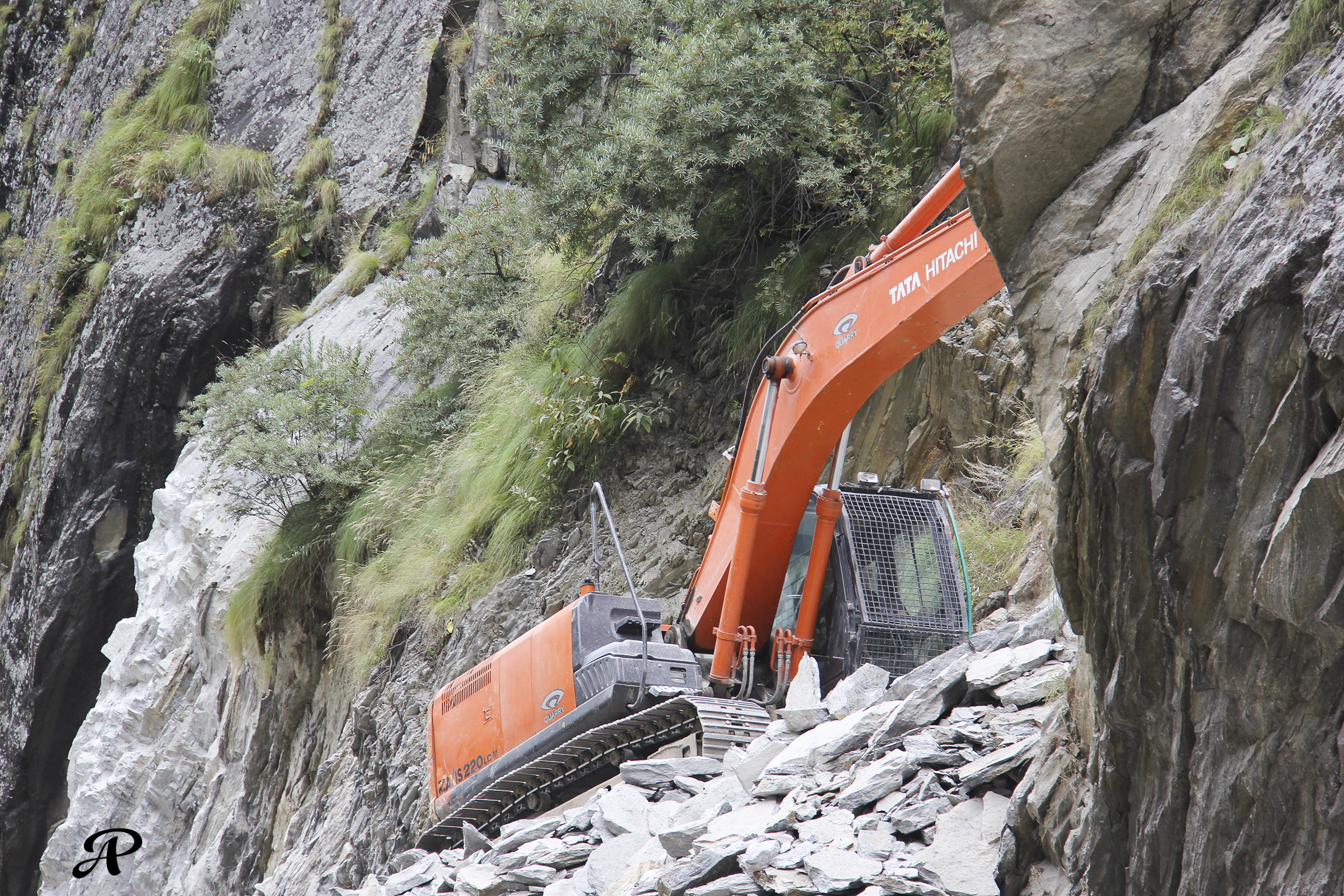
पिछले साल जब जोशीमठ शहर के धसने की ख़बरें और वहां रहने वालों की दहशत चरम सीमा पर थी तब भी जोशीमठ से बद्रीनाथ के कुल 40 किमी के रास्ते पर करीब 37 जे सी बी एक्सकैवेटर पहाड़ तो बेतहाशा काट ही रहे थे उन चटानों के साथ जा रहे थे पेड़, जंगली घास और झाड़ियां जो वहां की मिट्टी को जक्कड़ के रखती हैं। पहाड़ काटने का ये मलबा सीधे सीधे ढलान की तरफ नदी या नाले में बहा दिया जाता है जिस से या तो उसका बहाव बंद हो जाता है या फिर पानी नया रास्ता काट लेता है। क्या सरकार इस सब से बेखबर है ? नहीं, सब कुछ देखते समझते हुए भी हिमालय के नाज़ुक पर्यावरण के साथ ज़ुल्म हो रहा है। हिमालय देखने और घूमने के नाम पर आज का युवा मोटर साइकिल और कार वहां ले जा कर धुंए और शोर के प्रदूषण से बर्बादी को और तेज़ी से बढ़ा रहा है।
लास्ट चांस टूरिज्म – या किसी नज़ारे को देखने का आखिरी मौका – इस तिज़ारत के पीछे ये लालच है कि कुछ प्राकृतिक स्थल या तो जल्द लुप्त हो जायेंगे या सरकार उन्हें लम्बे अरसे के लिए बंद कर देगी या फिर विशेषज्ञों ने उसके अंत की आखिरी तारिख तय कर दी। या यूँ कि वे इतनी तेजी से बदल रहे हैं कि उन्हें देखने और महसूस करने का अनुभव अब पहले जैसा नहीं रहा, या ये इस बारे में डर है कि वे पूरी तरह से गायब हो जाएंगे। इस अंदेशे, इसी उत्सुकता ने कई हज़ारों यात्रियों को इन दूर-दराज के स्थानों की यात्राएं करने के लिए प्रेरित किया है, जबकि उन्हें ऐसा करने की कोई ज़रुरत नहीं है। “मैंने भी देखा है” की होड़ तबाही को हमारे और नज़दीक ला रही है।
कैलाश-मानसरोवर की यात्रा पूरी करने के बाद हिंदुस्तान वापिस आने के लिए हमे भारत-चीन सीमा पे हिमालय का लिपुलेख पास सुबह 6 बजे से पहले पार करना था। तिब्बत या चीन की तरफ़ से लिपू पास के नीचे की खड़ी चढ़ाई ख़ासी मुश्किल ही नहीं खतरनाक भी है । तेज़ बर्फ़ीली हवा, घना कोहरा, भयंकर सर्दी, ग्लेशियर दरकने का डर और उस पे फ़िसलते मिट्टी से सने जूते हर क़दम को इम्तेहान बना रहे थे। तक़रीबन 17,400 फुट की ऊंचाई पे फूली हुई साँसों से फेफड़े फटने की कगार पे थे। जैसे तैसे लिपु दर्रे को पार कर हमे नाभीडांग कैंप की तरफ उतरना था।
हिंदुस्तानी सीमा रेखा से 10m नीचे हमारा स्वागत करने ITBP के कमांडैंट हरप्रीत सिंह गोराया हमारा इंतज़ार कर रहे थे। गरमा गर्म चाय और गर्मजोशी से गले मिलते फ़ोर्स के जवान हमे साथ ले नीचे को चल पड़े। सुबह के आठ बजने को थे, हमारी तरफ का आसमान साफ़ हो चला था। सूरज महाराज की मद्धम किरणे आस पास की पहाड़ियों और चोटियों को धीरे धीरे चमका और गरमा रही थीं। कमांडैंट गोराया ने अचानक मेरा हाथ खींच मुझे रोक लिया। सामने ढलान पे इशारे करते हुए उन्होंने एक रंगीन मोनाल पक्षी से मेरा पहला परिचय कराया। इतने रंग कि इंद्रधनुष भी फीका लगे।
वो हाथ जैसे ही ऊपर आया तो सामने एक चोटी पे आ रुका “और वो है ओम पर्वत, दिख रहा है ना ओम !” मन्त्रमुग्ध मैं बहुत देर तक उस पहाड़ों को निहारता रहा। थोड़ी देर बाद कमांडैंट गोराया ने कहा “देख लो, आँखों और दिल में भर लो इस नज़ारे को ये दुबारा मिलने वाला नहीं है।”
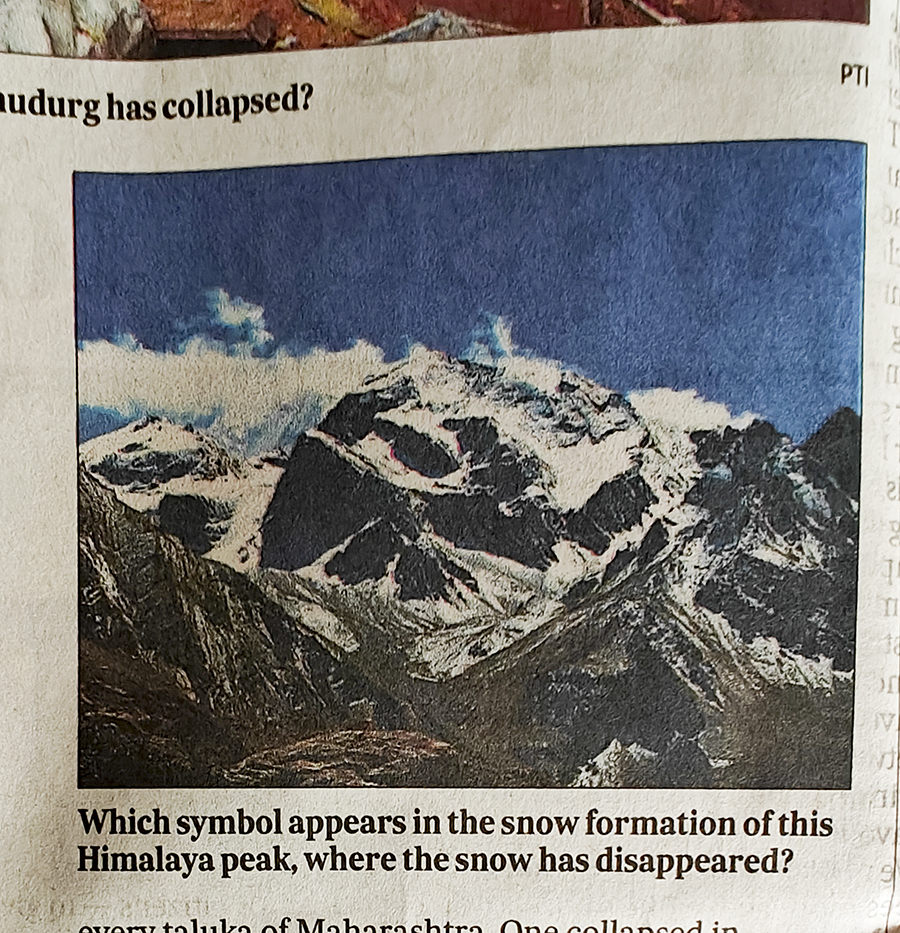
क्या सटीक भविष्यवाणी थी वो – आज उस ओम पर्वत पर ओम मंत्र बनाने वाली बर्फ़ न तो पूरी गिरती है न ही ठहरती है । हिमालय बर्फीला नहीं पथरीला होता जा रहा है। साल दर साल दुनिया की सबसे ऊंची चोटी एवेरेस्ट पर भी बर्फ़ का गिरना, रुकना और जमना कम होता जा रहा है। जिसकी वजह से चोटी की जड़ पे लगा खुम्बू ग्लेशियर भी चटक कर टुकड़ों में बहा जा रहा है।
आज ही एक और बुरी खबर पढ़ी। एक एम्परर पेंगुइन (पक्षी) अंटार्कटिक महाद्वीप से तैर कर 2000 मील दूर ऑस्ट्रेलिया के समुद्र तट पर पहुँच गया। वैज्ञानिक बताते हैं की वो पेंगुइन बर्फ़ के टूटे हुए एक बड़े से टुकड़े पर अकेली पड़ गयी होगी और खाने को खोजते खोजते इतनी दूर उस जगह पहुँच गई जहाँ उसकी अपनी कौम का कोई वजूद तक नहीं है। उस पेंगुइन को देखने हज़ारों की जनता पहुँच गई। इस से पहले की पेंगुइन को कोई नुक्सान पहुंचता वहां के तट रक्षकों ने उसे अपनी देख रेख में ले लिया। 20 दिन में पेंगुइन की अच्छी सेहत को देखते हुए उसे दक्षिणी समंदर में छोड़ दिया गया।
साल दर साल कुदरत के ऐसे कई नज़ारे, कई नेमतें हम लगातार खो रहे हैं। और प्रकृति के ये वो अमूल्य नज़ारें हैं जो दुबारा नहीं आने वाले। हमे इन्हे बर्बादी से बचाना है, संजोना है अपने लिए और आने वाली पीढ़ियों के लिए, सिर्फ इंसान के लिए ही नहीं बाकि प्रजातियों के लिए भी। इस ब्रह्माण्ड में अब तक कोई दूसरी धरती नहीं ढूंढ पाए हम और अगर मिल भी गई तो क्या इस खूबसूरत ग्रह को तबाह करना ज़रूरी है ? ना, इसे संभालिये, सरकार से सवाल कीजिये – पहाड़ों में बनाई जाने वाली सड़कें, रेल, सुरंगें और आराम के साधन क्या इंसान और हिमालय की ज़िंदगी से ज़्यादा ज़रूरी हैं ? मेरा मानना है बिलकुल नहीं।
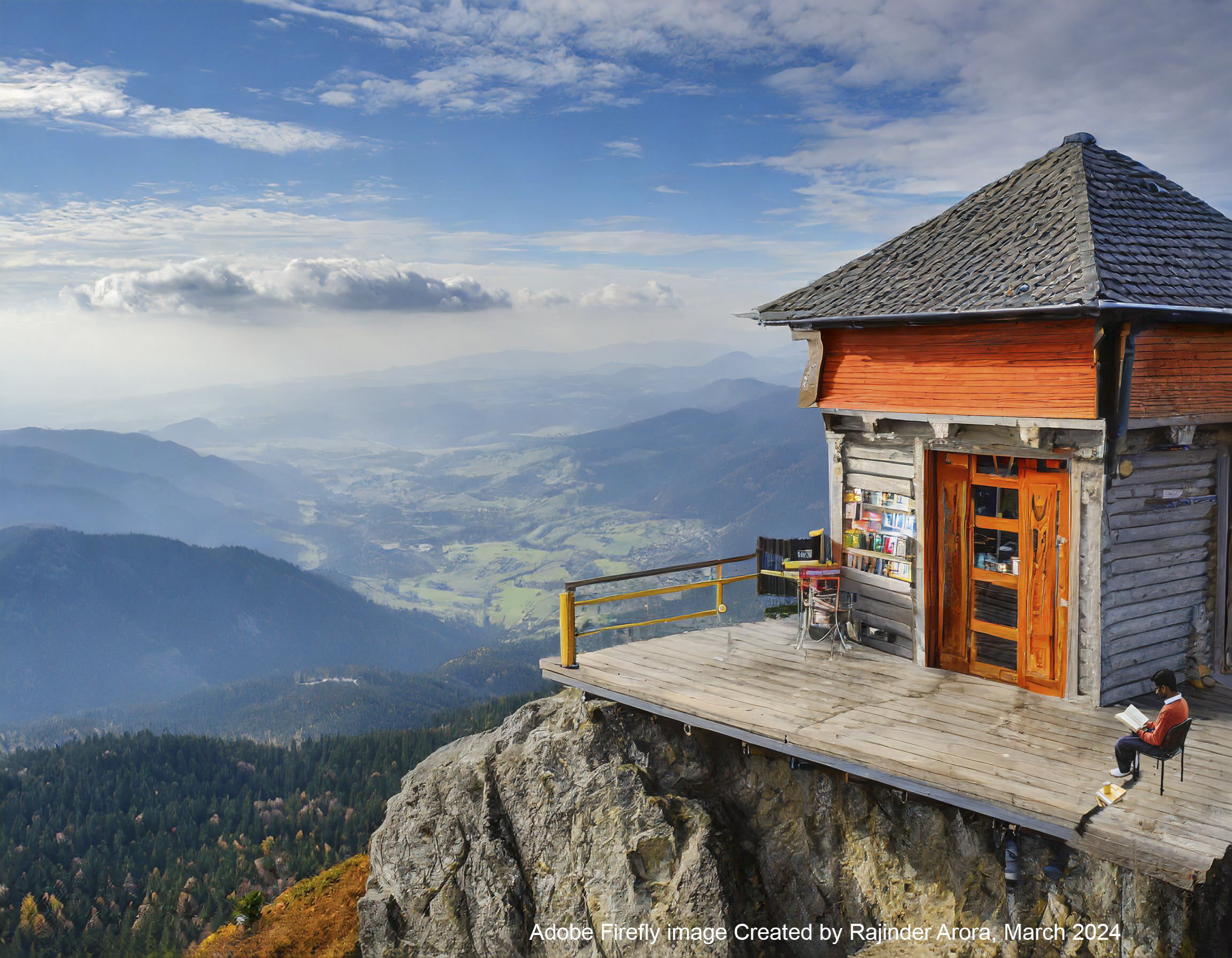
Chinese man builds bookstore on a mountaintop. Yes, he’s a poet.
A 57-year-old “self-styled poet” (aren’t they all?) has spent $116,000 of his own money to build a bookstore in a mountaintop village. Oh, and it’s shaped like the number 7 and contains 7,000 books. No, this is not a parable.
As Jiang Libo told the South China Morning Post:
Before my bookshop was built, the closest bookshop or library to this village was in a town about 30km away. I’ve found fewer and fewer people read books, and bookstores generally are struggling. My thought is: when villagers are idle, or kids are on holiday, they can come to read books. Isn’t that wonderful?
Yeah, I suppose it is pretty wonderful, if not a little nutty. The store, located in Zhejiang province, on the eastern coast, is appropriately named Milestone Bookstore, and news of its unusual location has gone viral on Chinese social media.
Poets worldover, the gauntlet has been thrown. Your move.
There are a few mountains that one has heard of and known from early childhood itself but never had the opportunity to see, travel to, or to tread and climb. Some of these mountains are also connected to or are a part of a myth – thus they do not find credence with you unless you are ru-baru (face-to-face) with the mountain and admire not just its beauty but also start relating to it in more ways than one. These myths, especially if they are served wrapped in stories from a religious epic, become part of one’s life.
Now imagine a myth that has been repeatedly enacted in front of your eyes every year, year-after-year. Such a myth or the story doesn’t remain pure myth any more – somewhere in your head and heart you start relating to them as if they are/were historical and did exist. Unfortunately, a story, a myth, a belief that is played on the idiot box inside your own house for years doesn’t take long to settle in your mind as a credible one.
The story or myth of pavanputra mahabali Hanuman, uprooting part of a mountain from Himalayas and carrying it all the way to Lanka on his right palm is that part of Ramayan that one can’t forget. But no one tells you where exactly this act played up in geography. Would you believe me if I told you that this episode is supposed to have happened at a place just about 520 km away from Delhi by road. However, currently the road to it is in a bad shape and the area is risky to approach.
The catastrophic and devastating floods in Rishiganga and Dhauliganga river valleys on 7 February 2021 which left hundreds dead and destroyed every single settlement in its way have also left some indelible and ugly marks on the Himalayan topography in this part of Uttarakhand. I, together with two friends, witnessed and passed through a very large section of this area in October 2022, a year after rampaging floods brought about terror to this land. I can say with some amount of certainty that this disaster was man-made and caused by our hunger for so called ‘development’, making roads, blowing up unstable hills with dynamite, reckless cutting of trees and bushes, making dams, blocking river passage with construction waste etc. in a fragile ecosystem called the Himalayas. This area is near the China border.
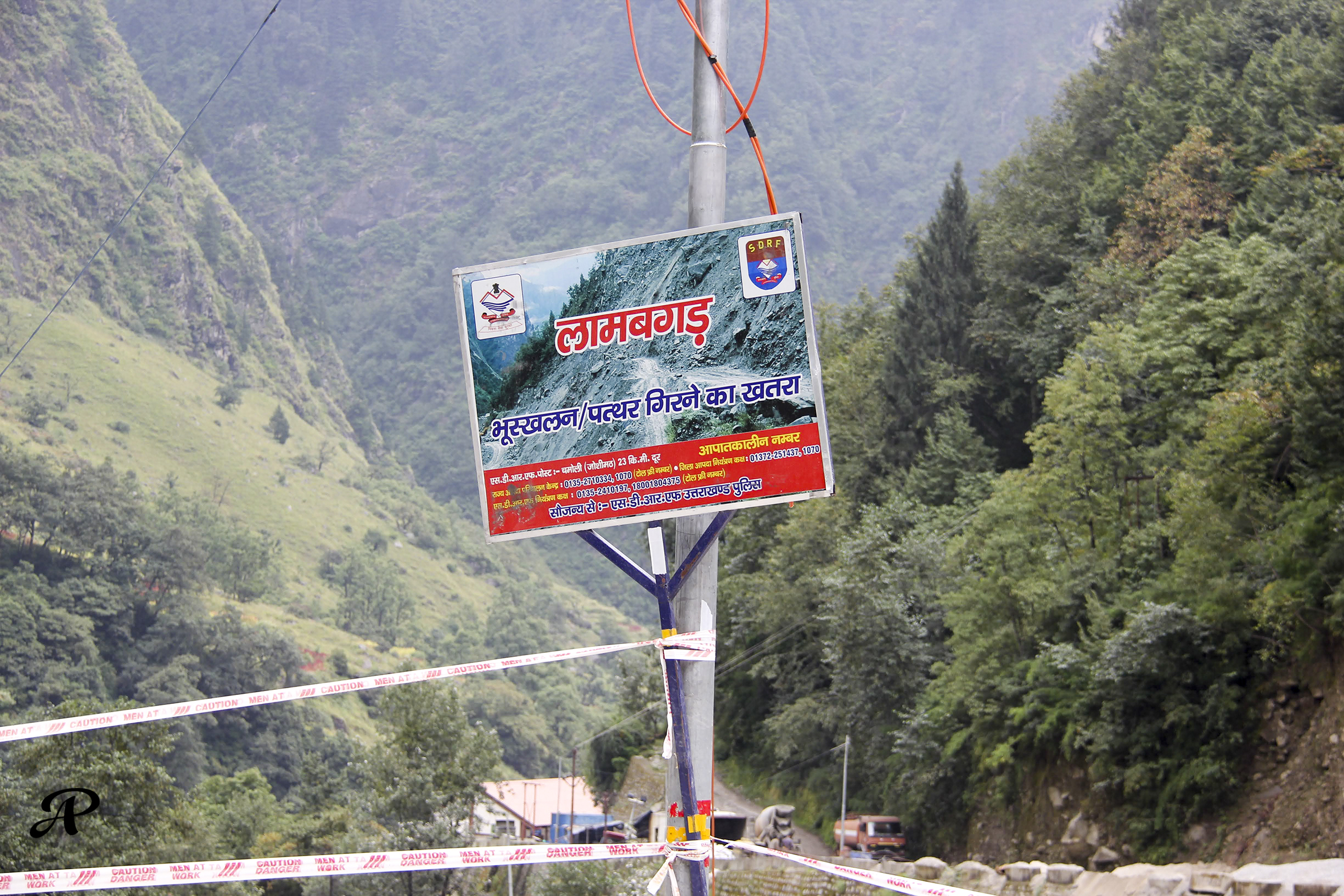
The narrow road from Tapovan (Joshimath) to Malari has barely been made motorable, it is still broken in patches, the hill sides are still rolling down and rockfall is common in many sections risking the lives of people passing through this area and those working to repair it. Dhauliganga river is still choked at many places by large rocks and boulders impeding its flow. Clearing these may take years. The large rocks partly blocking the river pose further threat that these spots may end up becoming large lakes that could devastate villages downhill when they break. If you don’t look at these and only look up, the mountains appear to be sitting in graceful silence.
‘Beauty in barrenness’ is exemplified in the rocky pinnacles of this difficult to access area. I am certain in the times of Lord Ram the area must have been a paradise and environmental issues would not have been so serious. Hanuman Ji, while flying over this area, must have peeped inside the Nanda Devi Sanctuary and would have felt happy flying over the sparkling white peaks of Himalayas. I wonder if he had also flown over Badrinath and the town of Joshimath blessed by Adi Shankaracharya as supreme seat Math. If Hanuman ji turned his head right or looked further north he would surely have bowed to Shiva’s abode Mount Kailash and the splendid lower arctic region beyond that from where the Aryans entered India. Originating from near Lake Manasarovar, the silvery streak of Sindhu river (Indus) must have been a guide to Hanuman in flying to Ravan’s Lanka.
In Kamba Ramayan Sushen Vaidya asks Hanuman to bring the Sanjeevni booti (herb) to save the life of Lakshman who was seriously wounded by a weapon hurled at him by Ravan’s son Indrajit. Having forgotten the name, unable to identify the herb and running short of time, Hanuman, it is said, carried a part of the mountain itself. While his effort was able to save the life of Lakshman, the villagers living in and around the mountain were upset with Hanuman’s act. For this they are angry with Lord Hanuman till date.
It was raining when we left Tapovan on a cold October morning. Looking at the dark and grey skies our driver was not happy with the prospects of having to drive on a dangerous route on a slippery road. For nearly 20 kilometres there was no vegetation on the hills. The river, deep below in the valley, was in torrents and noisy because of many large boulders blocking its flow. It had been raining for the past 15 days in this area so a lot of water had been flowing down the hills. There were no roadside chai shacks as very few locals were going up. The vehicular movement was restricted to army vehicles only.
It was cold and windy. My first glimpse of the beautiful peak came from between two ridges which were dropping down on the other side of the Dhauliganga river. It was for a flash of a second as the clouds parted revealing the peak. I shouted for the car to be stopped. A little ahead we spotted a roadside sign board put up by ITBP with an arrow indicating Dronagiri Village. The car windows were rolled down and we trudged back some 100 metres to view the peak from between two ridges. There was nothing but clouds. We were disappointed.
It is said that the villagers of Dronagiri do not hold Hanuman as sacred and don’t pray to him. There are no Hanuman temples in the small village. The area surrounding Mount Dronagiri or Dunagiri is blessed with dozens of such life-saving herbs. Closer to the Badrinath area, around the Valley of Flowers Mount Dronagiri and Dronagiri village can be reached on route to Malari (closer to China border) from Tapovan area in Joshimath.
This is one of the high peaks of the Himalayas in the Chamoli District and can be easily identified. Dunagiri (7,066 m) lies at the northwest corner of the Nanda Devi Sanctuary Wall, which is a ring of peaks surrounding Nanda Devi in Uttarakhand. Even on our way back we could not see the mountain. But luck was with us as we decided to trek up to Kartik Swami temple from Kanak Chauri in Rudraprayag.
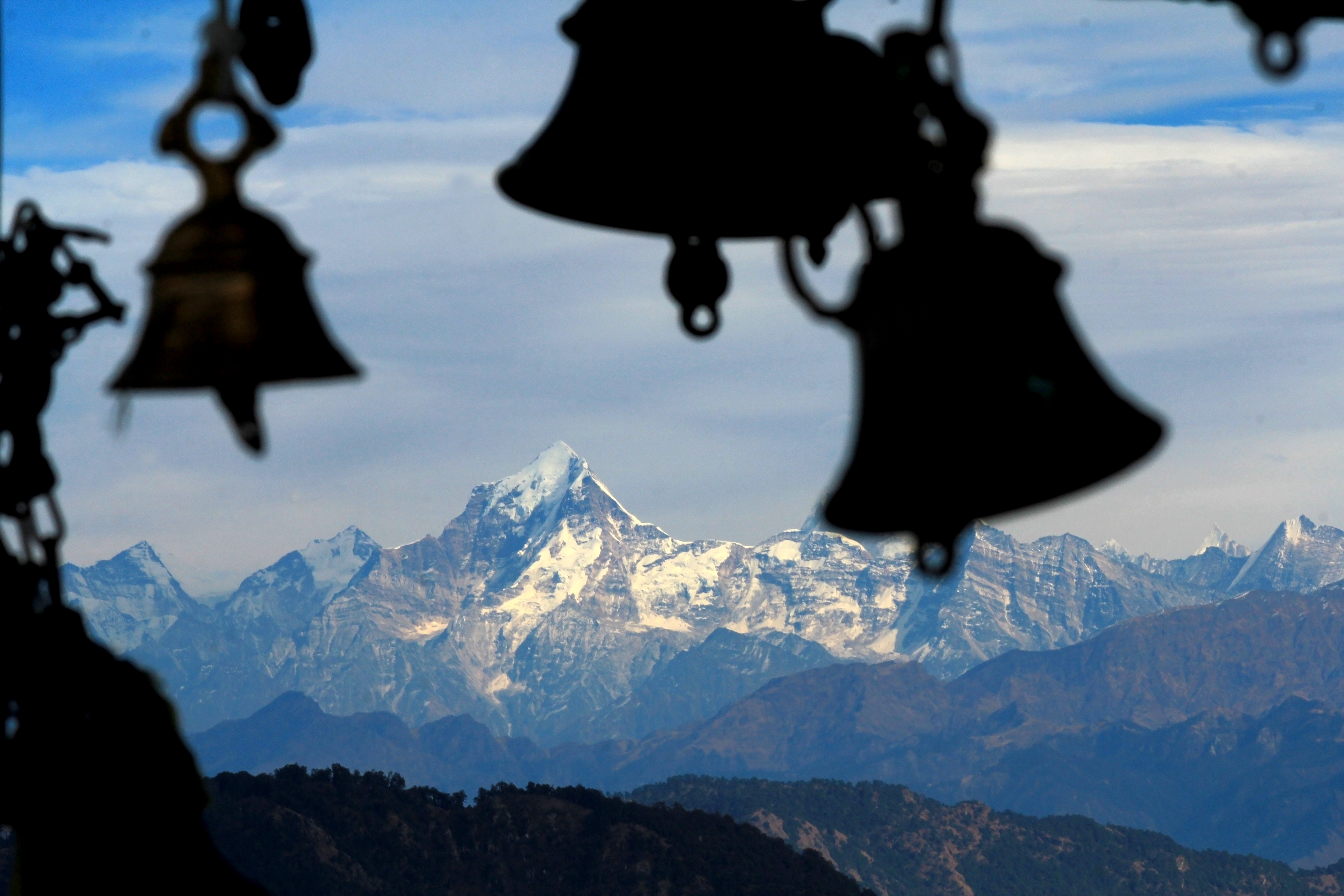
We left our camp Kanak Chauri at five in the morning. It was still dark, the sky was spotless, clear and glittering with millions of stars. We reached the uppermost chamber of the temple located atop of a ridge by 7.30. Sunlight had started peering from thin clouds and in a matter of minutes a humongous crescent of peaks showed up in front of us. It was mesmerising to see some of the most beautiful 7,000m+ high peaks dressed up in all their finery in front of us.
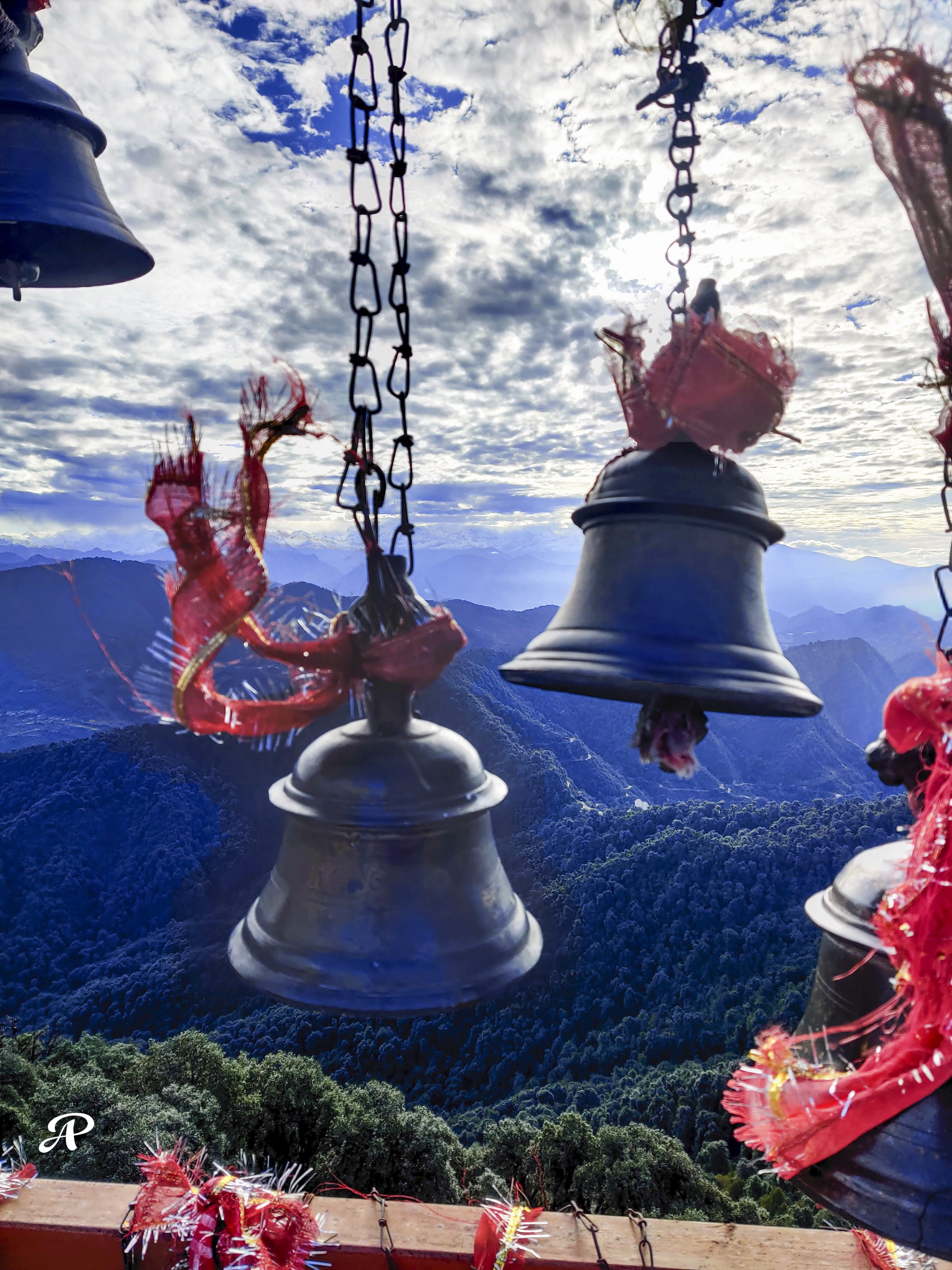
Through the copper bells, sacred threads and red chunnis tied to the railings of the temple courtyard, I could immediately spot the twin peaks of Nanda Devi and Dunagiri. With its conical peak and difficult routes over sharp ridges Dunagiri was first climbed on 5 July 1939 by the Swiss team and has since been climbed by many. (in picture Mount Dunagiri from Kanak Chauri)
As the sun shone a little more and we came out of the initial shock we could identify other important and enchanting peaks like Nanda Ghunti, Trisuli, Meru-Sumeru, Chaukhamba, Panchachuli, Kamet, Neelkanth, Bandarpoonch, Kedarnath Dome and Balakun. There were many others at a distance and some closer which we could not identify.
Barefoot on that freezing cold stone platform we were shivering but the shutters of our cameras went berserk. The fear that the cloud cover could envelope the view anytime made us stand there in awe and offer our thanks and gratitude to the Himalayas for giving us this opportunity to see this magical spectacle which few are lucky to watch.
Kanakchauri (कनकचौरी) is a tiny little charming village, in the lower Himalayas, about 40 kms west of Rudraprayag. Surrounded by thick pine and deodar forest, this village sits on the slopes of a ridge facing east. A 3.5km hike and a moderate climb, cutting through dense wet forest, lands one on top of the ridge (9500ft) from where you get the panoramic 360deg views of the Upper Himalayas and the Shivalik range. Short of the Edge on top is the small space to local forest deity ‘Okhali’ (वन देवी ओखली) and further up is the Kartik Swami temple. Walking in the moonlight on a slippery trail is scary but thrilling, the strong freezing breeze is a dampener considering that it had been raining non-stop for five days. The picture looks east awaiting the sunrise at 6.20 am. Rudraprayag – confluence of Alaknanda and Mandakini rivers- is the first of the prayag in Chamoli/Rudraprayag district. It was an awesome adventure driving/walking under near white-out and rainy skies from Mana Pass (via Ghastoli-Deotaal) to Niti Pass (via Malari) at India-China border.
Looking east from the terrace of Kartik Swami temple, Kanakchauri, Rudraprayag. 11 October 2022






 Ankahi. Unsaid.
You must be logged in to post a comment.