​The Guardians of Dabwali on the Road to Suratgarh

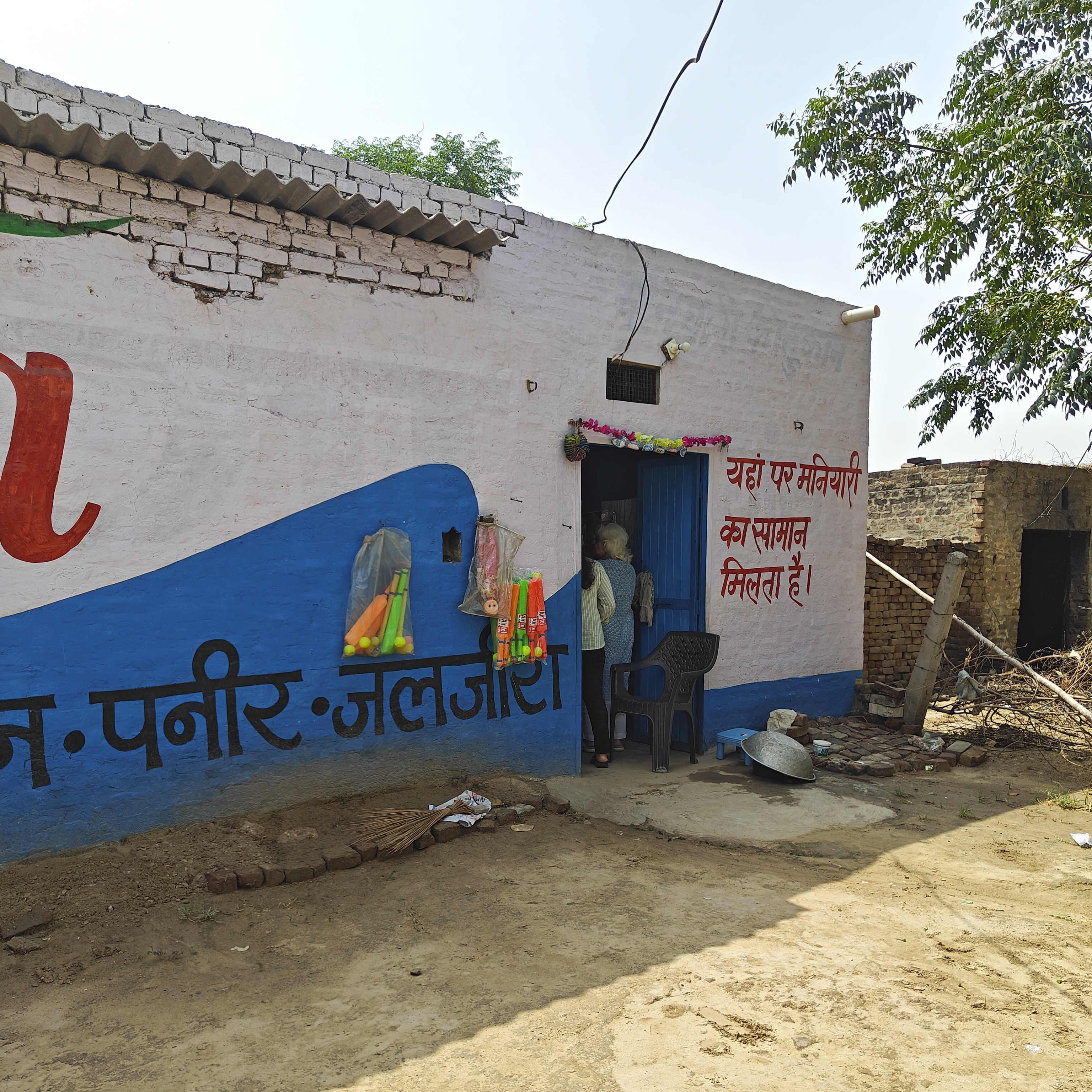
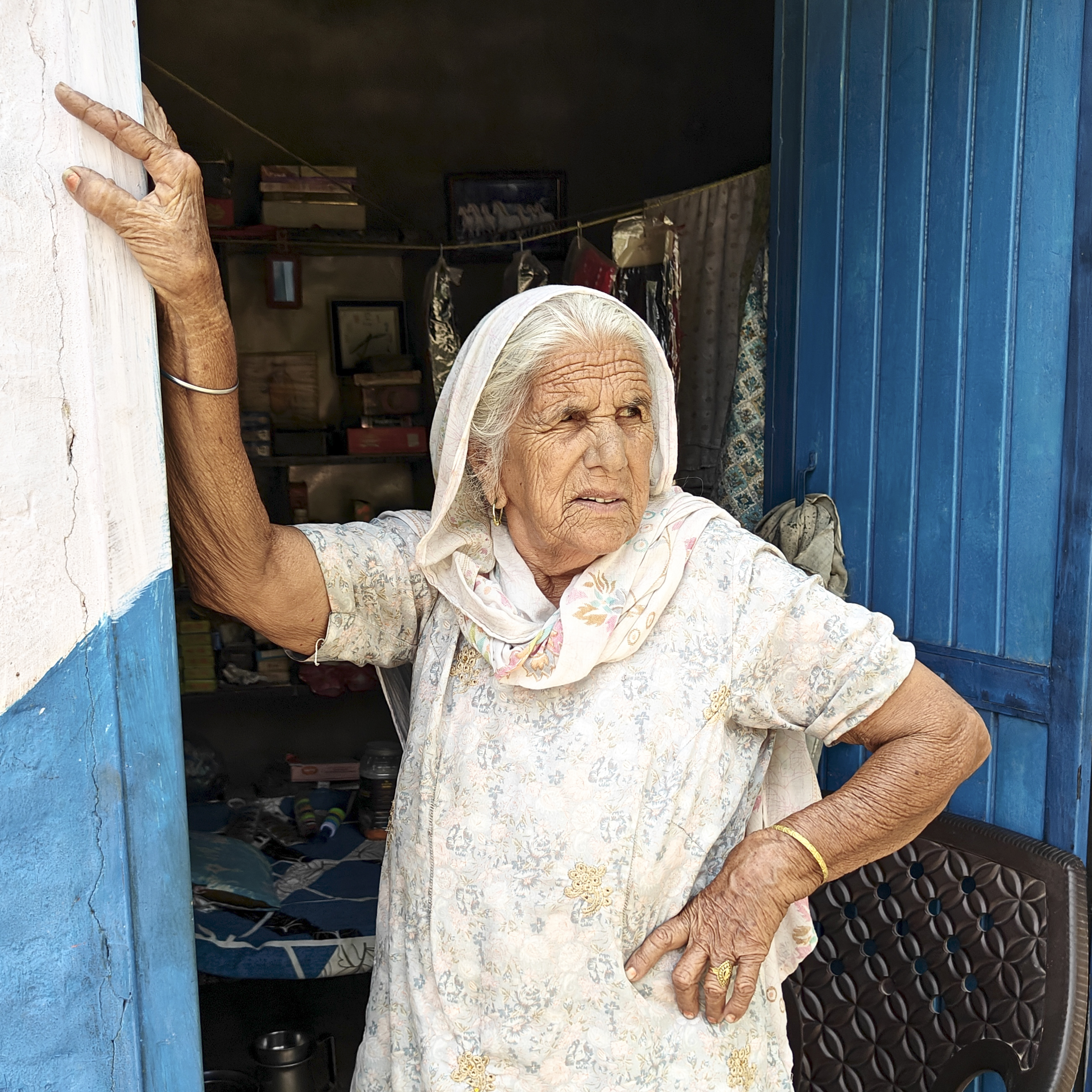
Her name is Raksha Kaur. She stands firm, guarding her precious corner at the tri-junction of Haryana, Punjab, and Rajasthan along NH 54 in Dabwali. In a corner of her house, Raksha runs a tiny store selling ‘Maniyari’ items; maniyari roughly translates to cosmetics and jewellery for women. Face cream, powder, lipstick, plastic pearl strings, rings with colourful stones, ear tops and cheap plastic toys sit on a sagging cot. Across her house two large banyan trees, older than Raksha, stand guard over her brick house and provide much-needed shade in this near-desert land. As a light drizzle and a cool breeze make for a pleasant drive, we witness a quieter battle unfolding at this bustling cross-roads.

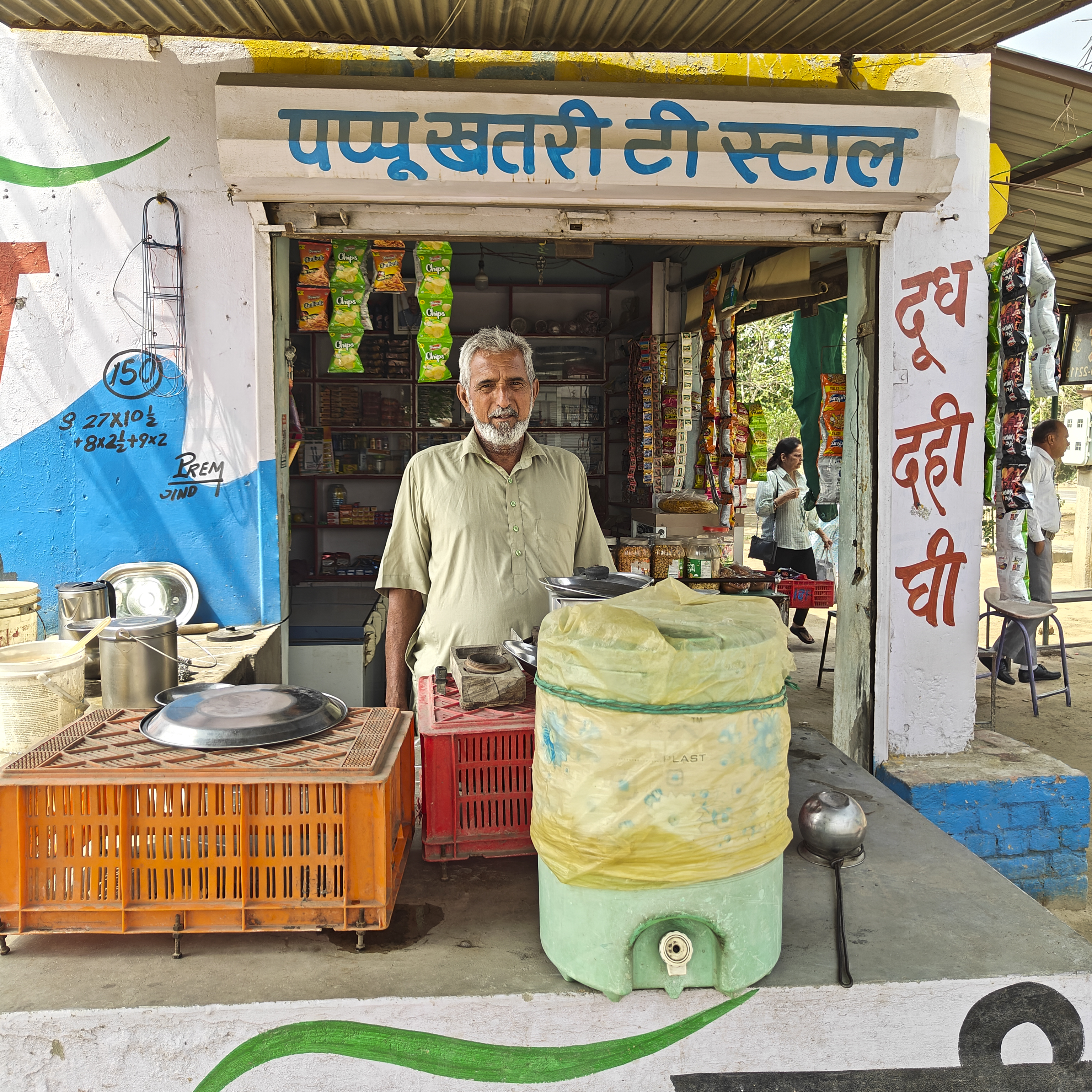
Here, Raksha’s son, Pappu Khatri, runs a rudimentary tea stall on a prime plot of land. It is a piece of history; Raksha’s husband bought these 500 yards back in 1955 for the then-princely sum of ninety rupees. Decades later, when the highway cut through their property, more than half of their house was acquired, leaving them with a meagre compensation of just 5,000 rupees. Now, the real-estate mafia eyes the remaining land – prime corner property on the highway. The mother and son are currently battling a court case built on fictitious claims designed to dislodge them. Armed only with meagre resources but boundless resilience, this feisty duo refuses to back down.

Leaving Dabwali behind, the countryside opens up into amazing vistas as the excellent highway stretches toward Hanumangarh and Suratgarh. We are heading to meet my ailing aunt, but our journey will also take us deep into the past at Kalibangan. This 4,000-year-old site was once a provincial capital of the Indus Valley Civilization, perched on the left bank of the now-dried-up Ghaggar River. Today, this seasonal, monsoon-fed river has changed its course, flowing 50 km further west along a firm bund that stretches from Himachal Pradesh before finally terminating in the sands of the Thar Desert.

Once summer gives way to the monsoon and a cooler breeze flows over this rugged land I will come back and spend a day or two with these people to learn more about their lives and write a story about them. Till then, take care, Raksha ji and Pappu Khatri. The tea was precisely to my taste, deliciou​s – for which Pappu Khatri refused to take money.
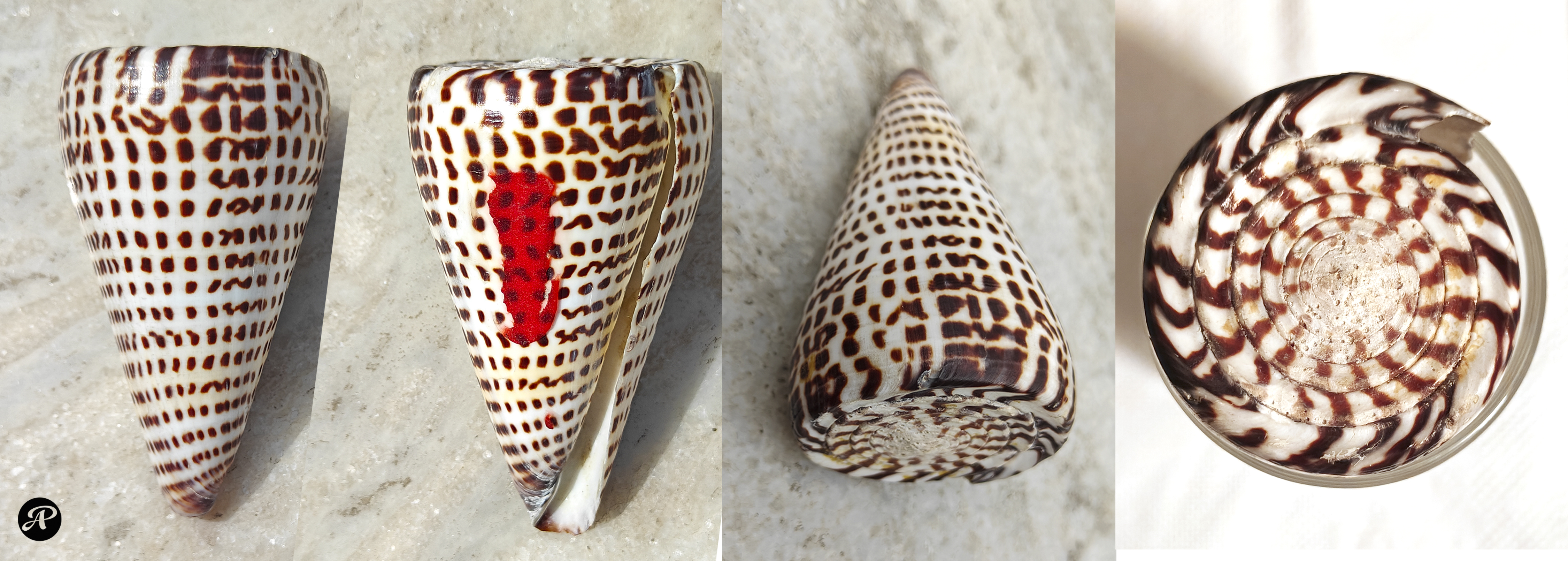
Lettered Cone – genetics of life on earth!

A kind aunt recently gifted this curio to Rajni together with its two cousins – the three being sea shell cones. The pattern and markings on this one fascinated me as I had not seen anything like this before so I searched a bit about it. Lo and behold, it is called “Lettered Cone” – it has found home finally – I told myself. 

Not surprising that even among the marine species of snails, gastropods, and mollusks there are ‘lettered’ and the ‘unlettered ones’. Just guessing, that among the lettered ones there must be poets and literary masters too – this one looks as if its pattern is rhyming with nature. In its top view it looks like the top of an ice cream cone filled with chocolate chunks in vanilla. Its sides look like a fancy snake skin. Holding it in hand is sheer delight, its inner curves still carrying the smell of saline waters of Indian Ocean where it is found in plenty. Don’t worry much about the red spot, it is some plastic stuck to it which I plan to remove carefully. 

A species of predatory sea cone snail or mollusk, Lettered Cone is also known as leopard cone. Like all species of conus these are venomous and capable of stinging humans. Fishermen don’t even touch it. It is the chocolate brown pattern on it which looks like a long forgotten ancient script that gives it its name and makes it look special. I learnt that “…the patterns on the Lettered Cone shells are also reminiscent of chromosomes. Possibly this is the undecipherable story the Lettered cone shell is trying to tell; a glimpse into the genetics of life on earth. For now, this deadly beauty will keep its secrets – possibly hidden in the letters of its shell.

I am told people have been obsessed with seashells since the Stone Age. These have been used as money, worn as jewelry, and used in trade. But if you’re beachcombing in the tropics, there’s one beautiful shell you can leave alone: the Cone Snail.

The Lettered Cone is the “femme fatale” of the ocean. It gets its name from the dark patterns on its shell that look like handwriting or secret codes. Every shell is unique, like a fingerprint, and some collectors even hunt for ones that look like they spell out actual words. Collectors say ‘no two messages’ are ever the same on these cones.

People have seen everything from early Arabic letters to lost codes in these patterns. Some collectors specifically hunt for “word shells”—specimens where the dots and dashes happen to line up to look like actual words.

In some cultures, these markings weren’t just seen as random; they were viewed as a way for the divine to speak to us.

From a scientific lens, these patterns are actually a real-world example of “Rule 30″—a complex mathematical rule used to study chaos and complexity in nature. It’s as if the snail is printing out a chaotic computer code as it grows.

I am not the only one obsessed with these. Over 2,000 years ago, people in Japan went on dangerous sea voyages just to find these shells turning these into bracelets for high-society women. Wearing one was not just the ultimate fashion statement it also marked the wealth of the owner enough to own something for which literally some lives could be risked.

The predator inside this pretty shell carries a harpoon of poison. Its needle-sharp tooth shoots out  toxic cocktail that can paralyze a prey in an instant. For humans, it’s incredibly dangerous—some species are nicknamed “cigarette snails” because the joke is you’d only have time for one last smoke after being stung.

But here’s the crazy part: that deadly venom of Lettered Cone is actually saving lives. A subject of neuroscientific research, scientists are turning its venom into medicine for neurological diseases like Alzheimer’s, Parkinson’s, depression and even epilepsy. They’ve even created a painkiller from it that’s 1,000 times stronger than morphine but isn’t addictive.

So, if you see one of these gorgeous patterned cones in the sand, just remember: it’s a tiny, beautiful masterpiece that packs a punch strong enough to change the world—or end your day very quickly.

Lettered Cone from the Indian Ocean

-Rajinder Arora, 15 March 2026