St. John-in-the-Wilderness Church, Naini Tal

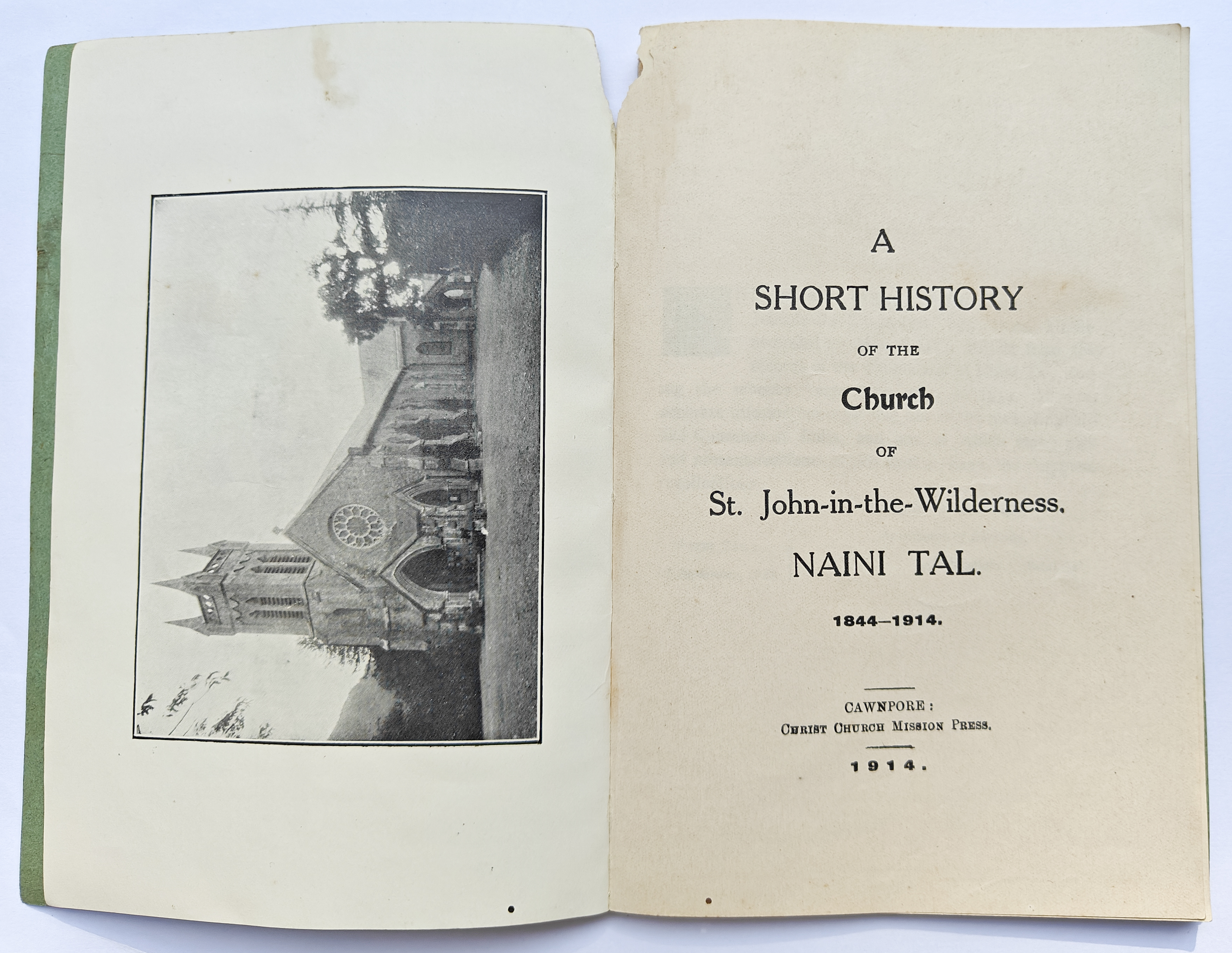
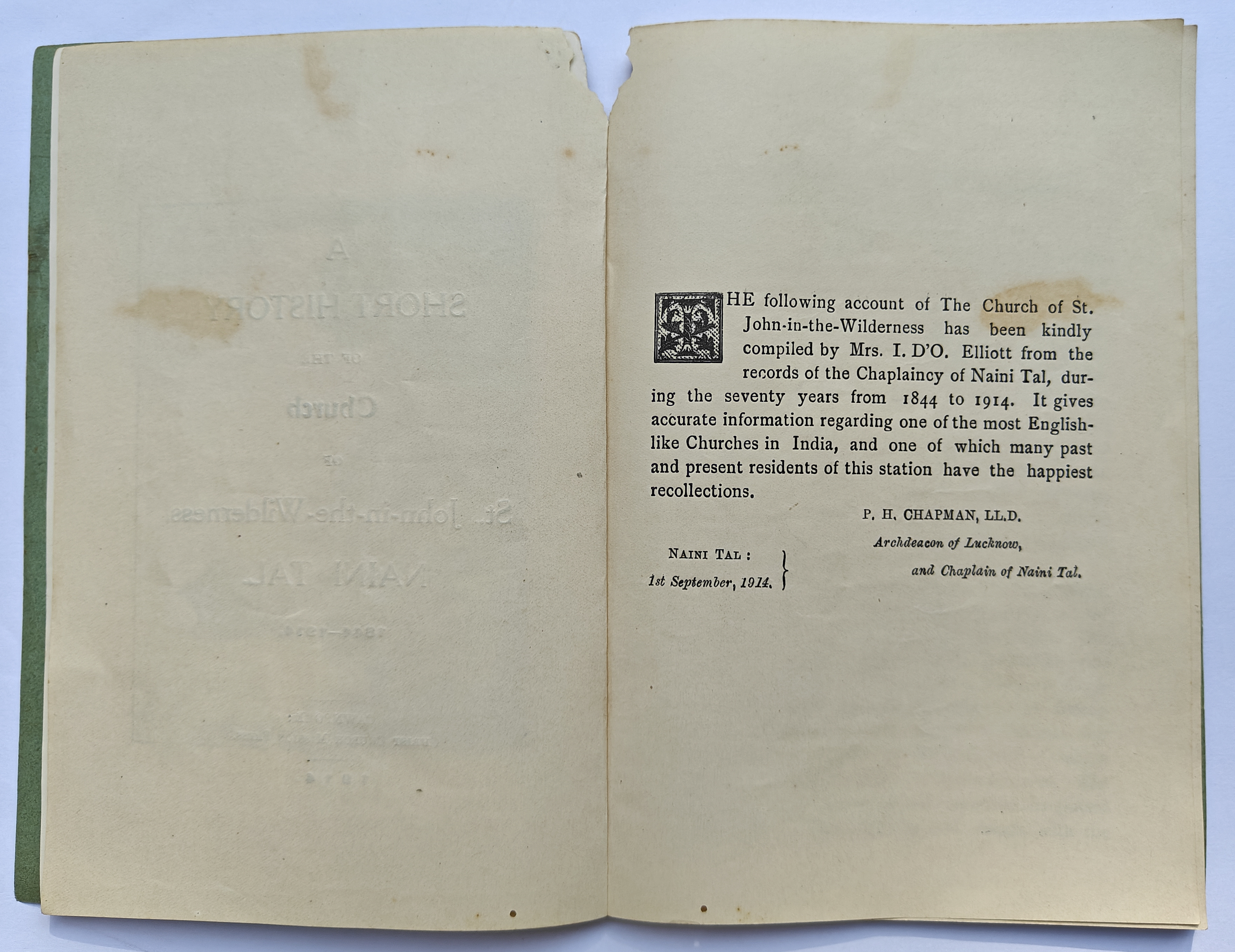
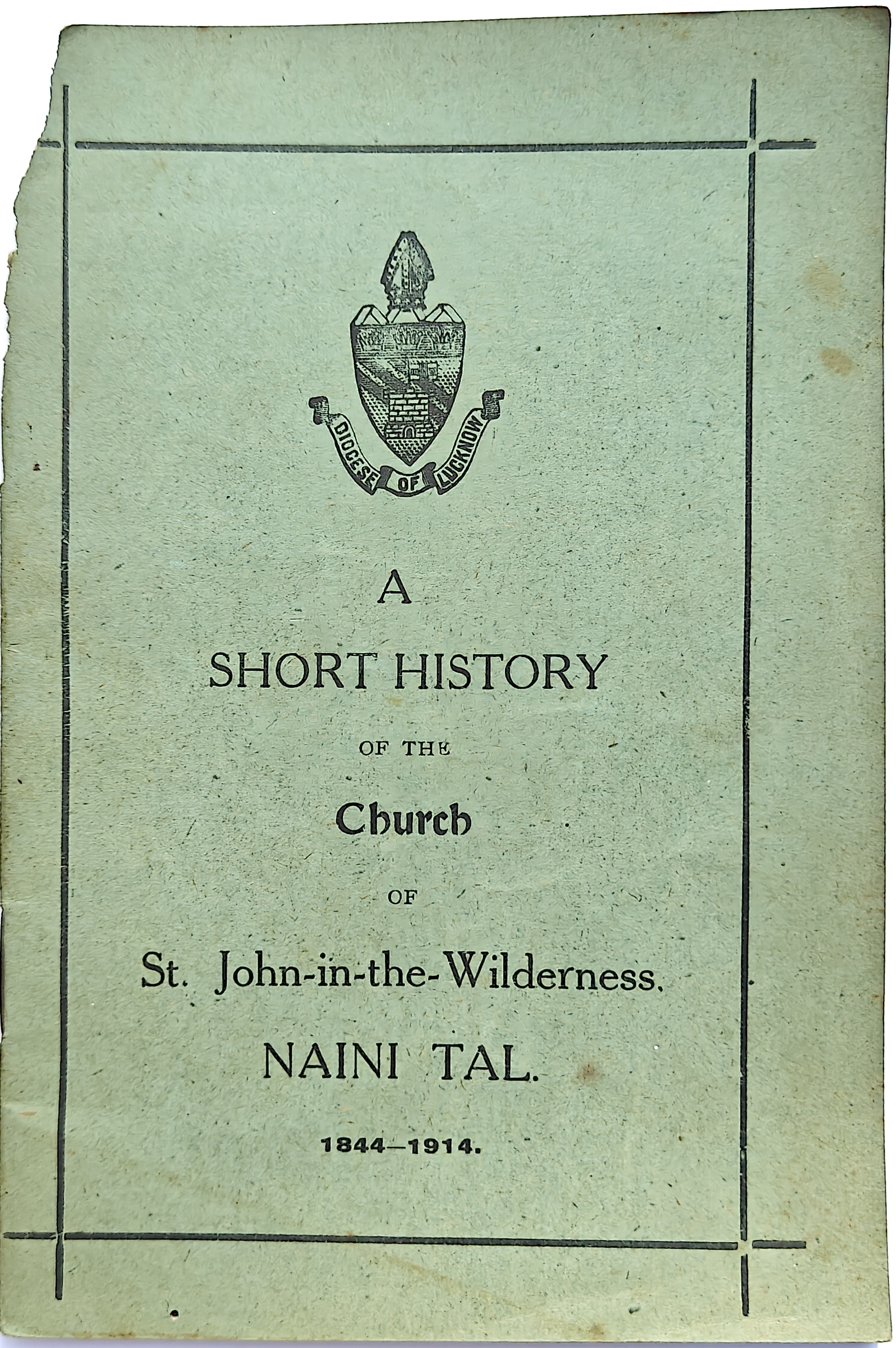
I bought this booklet from a street vendor walking The Mall outside the Naini Tal Club sometime in the winter of 1978 or 79  (I prefer the usage Naini Tal instead of Nainital). This booklet, together with a set of four colour slides, cost eight rupees.  Printed in 1914 (111 years back), in Cawnpore (Kanpur), this 28 page booklet about St. John-in-the-Wilderness Church in Naini Tal continues to be a treat, probably one of the first collectibles I acquired unknowingly. Accidently pulling it out of the shelf today, triggered a chain of thoughts about my one-time-favourite pahad or what people call as hill-station (which sounds so impersonal and bechara). 

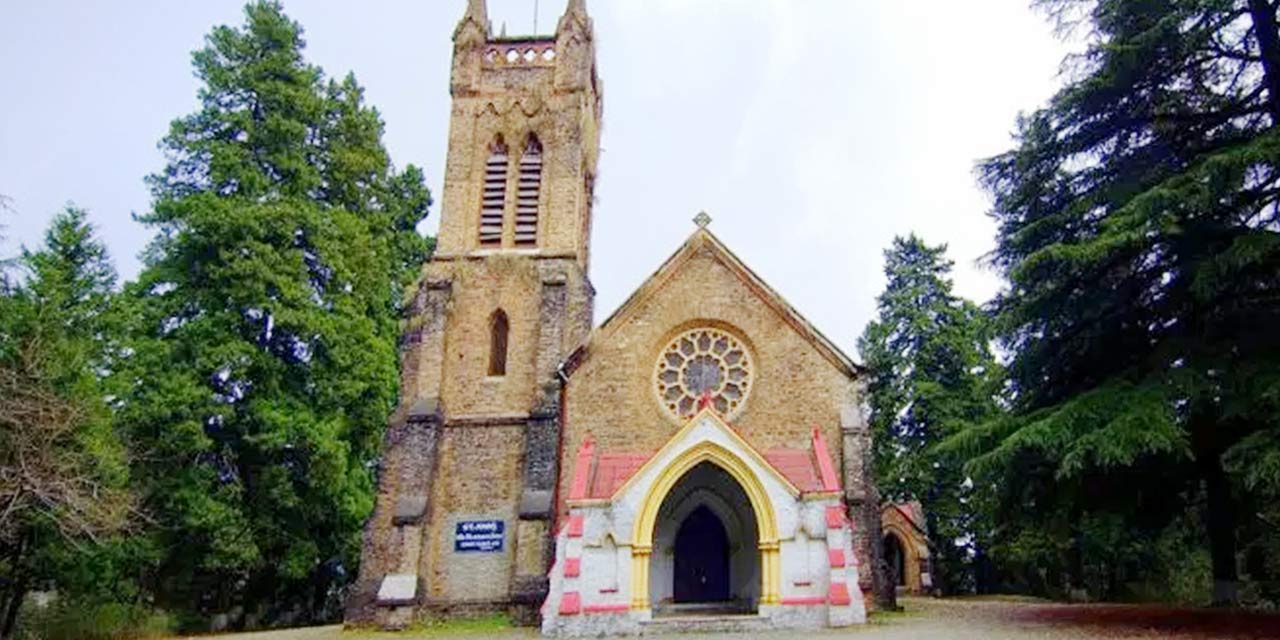
I don’t have any pictures from that trip. This picture of the church is not my picture. Our family’s Kodak Box 120 format camera was an expensive hobby those days, thus picture postcards were all one could afford over and above one roll of film, its processing and prints. I acquired a 35mm film format camera much later.

Those days the way up to the elegant stone structure church was from behind the Talli Tal (तल्ली ताल) over a kuccha or a mule trail through thick Banj (Oak), Deodar and Cheed (Pine) trees. Even at peak noon very little sunlight filtered down to the path. It would feel colder under the foliage. The hills behind the church were an untended jungle, completely covered with trees and very few locals had their houses up there. The trail up to Kilbari and snow view ridge was infamous for bear attacks. One would go up only on clear sunny days, more to look  at the shimmering, blue, kidney-bean-shaped Naini Lake from the top and not so much for the Himalayas which lay perpetually hidden by the clouds. Only a few people came to Naini Tal in winters. There was no direct bus from Delhi, one had to board the Naini Tal bound bus either at Haldwani or Kathgodam. Some of these buses reached Nainital via Bhimtal. Sighting mule-trains, bringing essentials from the plains, was common sight enroute. 

The soothing bells of Naina Devi temple enticed even atheists and lazy city boys like us to line up for prasad on a freezing winter morning when even the Sun took leave off work. The Mall was a peaceful place. I miss that bansuri wala who played painful yet magical notes leaning on the stone wall. Sitting on a bench by the placid lake had a calming effect unlike any ‘substance’. Locals used to smile more often and were helpful to visitors. Tourists respected the hills and hill folks (pahad and pahadis). Mules had the right of way over Marutis or Marshalls. No one ogled at hand-holding lovers strolling on serene Thandi Sadak which was pedestrian only. The soothing scent of flaming red Buransh (rhododendron) and the pine needles is what we missed when back home.

The skating rink and the football ground reverberated with the laughter and excitement of children and the young ones. The elderly sun-bathed or sulked depending which team they were backing. Thankfully Nanak restaurant had still not debuted with its golgappas and chicken tikka. Those days we drank endless glasses of hot and sweet tea without ever thinking of Old Monk.  A late evening show at Capitol cinema was all that one needed to get a high and entertain oneself. During sunny afternoons we watched shining Cadillacs parked outside the most expensive hotel in Naini Tal, The Metropole. Some of the Chauffeurs of those guzzlers looked as handsome as Bollywood actors. A decade later I had the opportunity to stay in that hotel when I almost spoiled their three-tiered German Pipe Organ with a pedalboard. Despite that they offered us excellent tea in the well-provided tea lounge. 

Naini Tal was all that I had dreamed of when in Delhi and Naini Tal was where I wanted to own a small cottage with my own small library ‘all for myself’ – just like the White House Cottage my friend Bipin Pande owned on higher slopes. His father owned a shop next to the Ghoda stand. Bipin was the one who took me to (NTMC) Nainital Mountaineering Club and stoked my passion for mountaineering. I wonder where Bipin is now !!! The last time I met him was in Jipti camp during the Kailash-Manasarovar Yatra. Pahad nostalgia will kill me sooner than later. And now Mary Hopkins is killing me with her husky voice singing ‘those were the days my friend we thought they’ll never end…’, the song, btw, was produced by another great – Paul McCartney. Mary Hopkins too belonged to mountains.

Coming back to the booklet and the St. John-in-the-Wilderness church. In the booklet put together by Mrs I. D’O Elliott – she tells us that it is an Anglican church and one of the oldest buildings in Naini Tal. The site for the church was earmarked in 1844 by Bishop Daniel Wilson. Its cornerstone was laid in October 1846. Captain Young, an executive engineer with the Company, made its design plans and had it constructed at the cost of Rs 15,000 raised from private subscriptions. Built in a Gothic style, it was inaugurated on 2 April 1848. A memorial in the church commemorates those killed in the 1880 landslip. There have been many landslips (landslides) since then when parts of the church building have been damaged. The once famous Sookha Tal (Dry Lake), which was behind the church, has since been lost. Similarly, no records are available to dig out more information about Mrs I. D’O Elliott. Rest in Peace Ma’am, your booklet is precious and useful.

The last time I visited the church was sometime in 1993 or 1994 with Rajni, my wife. Till then its exterior, the prayer benches inside, and its large sized beautiful stained-glass windows were all intact. I have those colour negatives tucked safely somewhere (meaning untraceable now). The church keeper and an attendant had opened the main church door for us with a metal key that was nearly 12 inch in length.  I wonder if they still hold Sunday Service in the church. I must visit it soon.  I miss you Naini Tal. 

There is another church by the same name ‘St. John-in-the-Wilderness’, which is a Protestant church dedicated to John the Baptist. It was built in 1852 and is located near Dharamshala, on the way to McLeod Ganj, at Forsyth Gunj. True to its name that church is still in the wilderness with few visiting it.

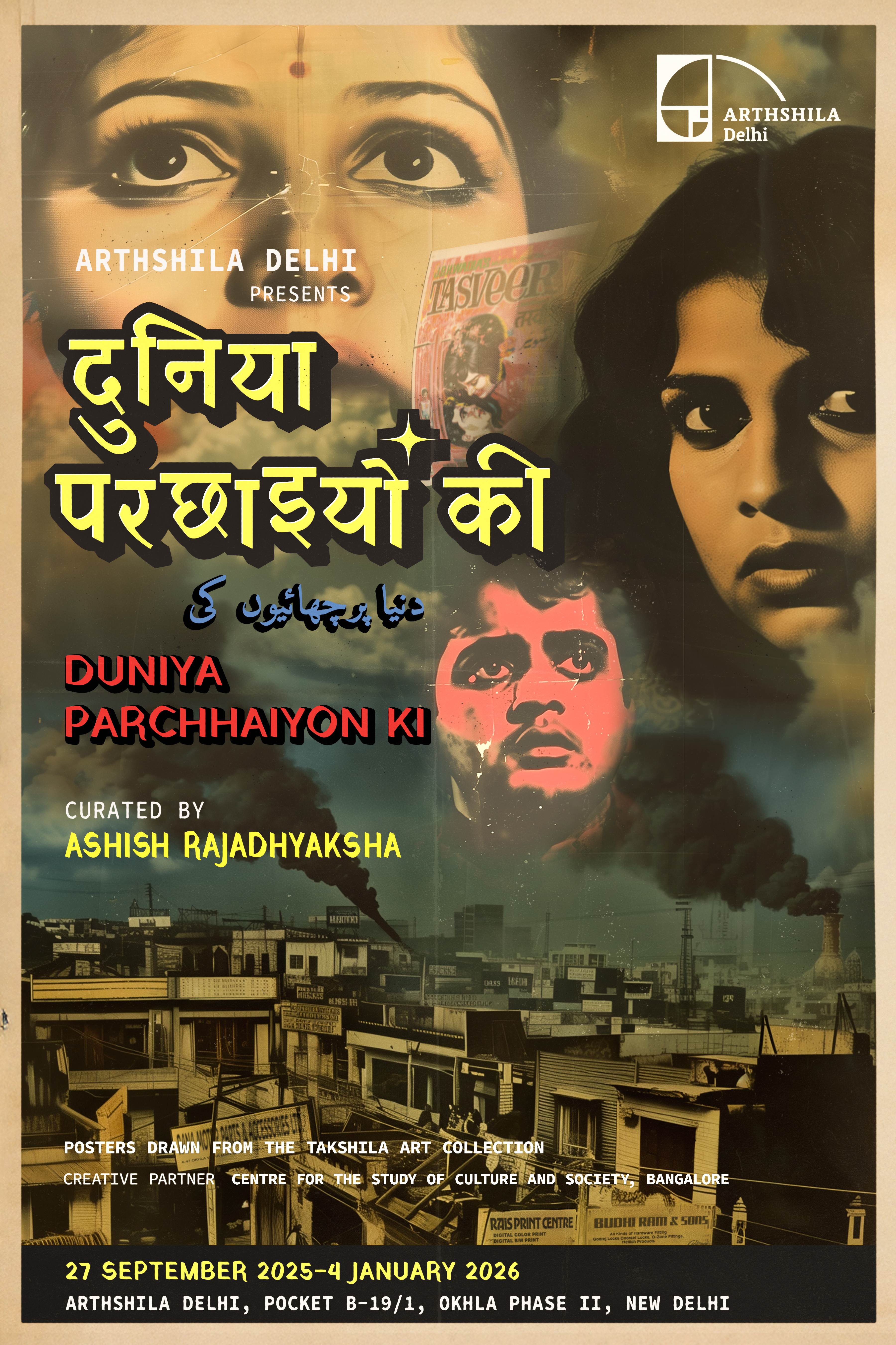
दुनिया परछाइयों की

THE WORLD OF HINDI CINEMA

और सब भूल गए हर्फ़-ए-सदाक़त लिखना
रह गया काम हमारा ही बग़ावत लिखना

  • हबीब जालिब

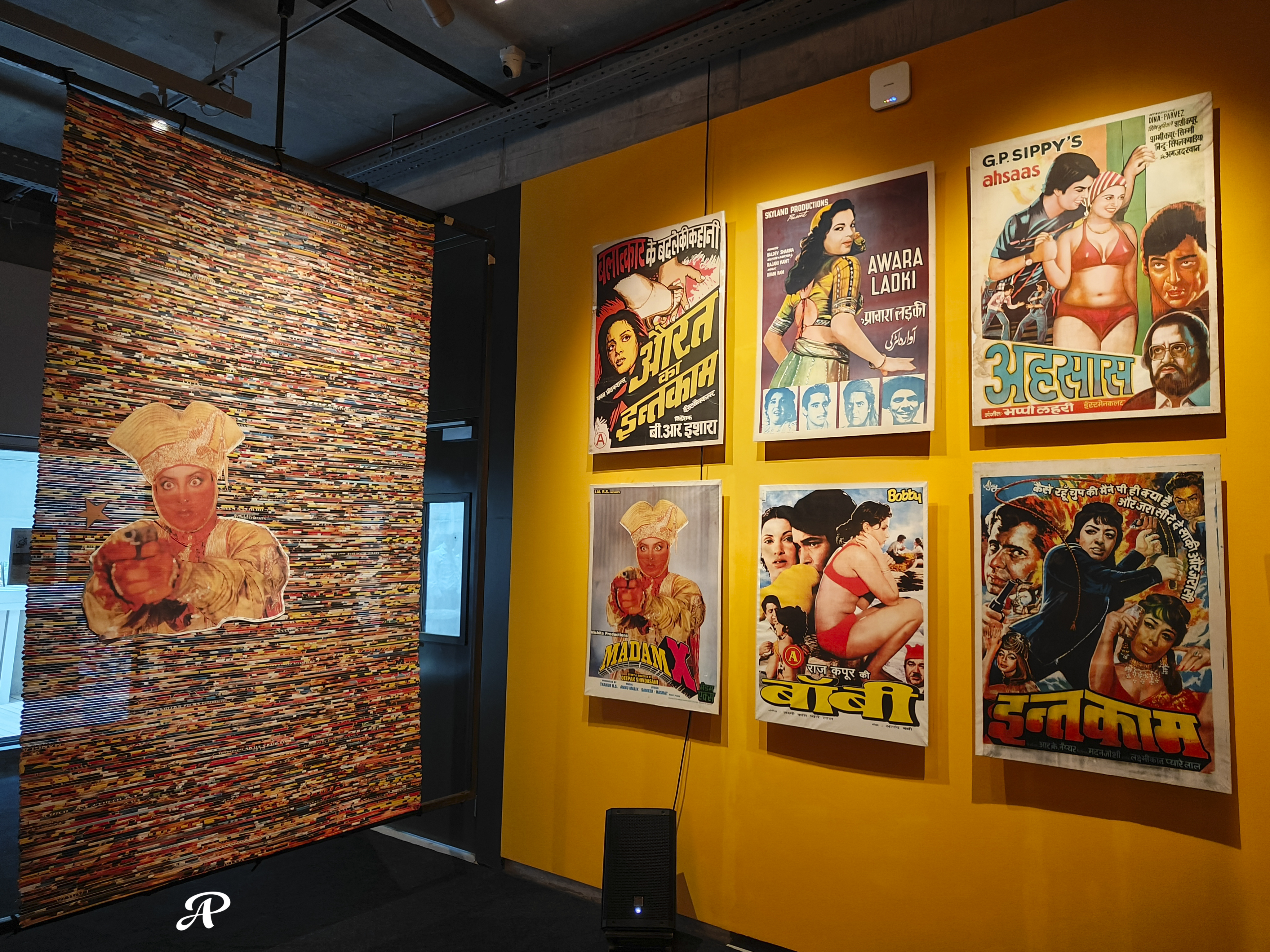
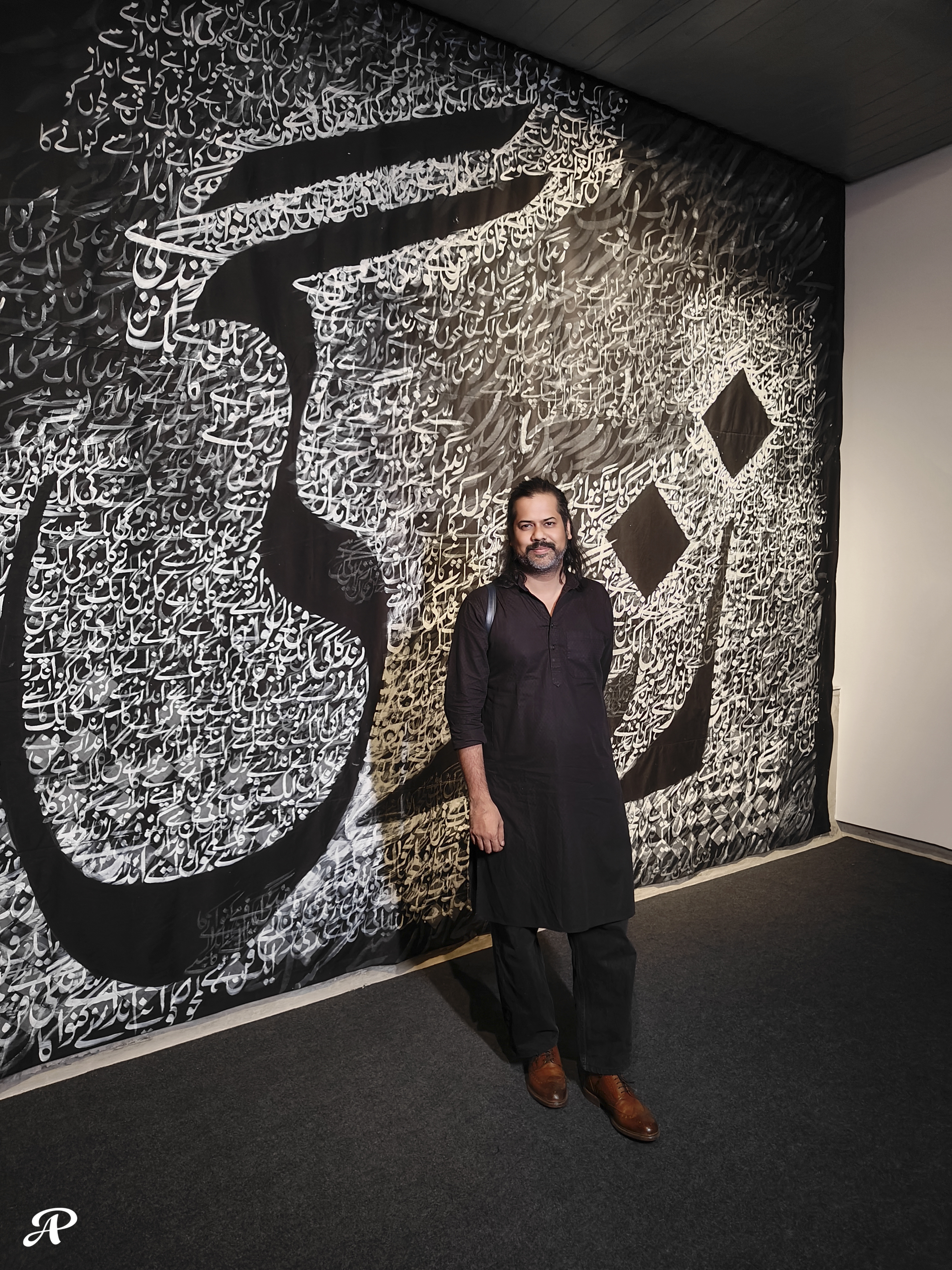
अगर आप शिराज़ हुसैन उस्मानी की कला, उनकी खताती (कैलिग्राफी), उनके स्टूडियो ‘ख्वाब तनहा’ और उनकी शख्सियत से वाकिफ नहीं हैं तो आप बहुत कुछ मिस कर रहे हैं। अपनी क्रीऐटिवटी और अपने हुनर से कल शाम शिराज़ साहब ने महफ़िल लूट ली। मौका और नुमाइश (‘दुनिया परछियों की’) तो हिन्दी सिनेमा के फिल्म पोस्टर, गीत पुस्तिकाएं, लॉबी कार्ड और बड़े छोटे परदे पर चलती तस्वीरों की थी पर शिराज़ हुसैन के बनाए परदों पे थिरकते हर्फों नें देखने वालों पर ना सिर्फ जादू कर दिया पर वो आज के माहौल पर एक तबसरा भी हैं ।

जाने माने फिल्म इतिहासकार और कला क्यूरेटर आशीष राजाध्यक्ष ने इस प्रदर्शनी को पुराने फिल्मी पोस्टरों, लॉबी कार्ड, थिएटर के अंदर का माहौल बना कर मल्टी-मीडिया के इस्तेमाल सिनेमा के प्रेमियों के लिए खास तरीके से पेश किया है। यह प्रदर्शनी रोजमर्रा की भारतीय जिंदगी में सिनेमा की अमूर्त उपस्थिति को उजागर करती है।

अर्थशिला दिल्ली में लगी “दुनिया परछाइयों की” प्रदर्शनी “भारतीय सिनेमा के सच्चे सिनेप्रेमियों के लिए है। हिन्दी सिनेमा 21वीं सदी के भारत में सबसे बड़े सांस्कृतिक प्रभावों में से एक रहा है। प्रदर्शित पोस्टर 70, 80 और 90 के दशक की सिनेमाई स्मृति को याद करते हैं।”

प्रदर्शनी 27 सितंबर 2025 से 4 जनवरी 2026 तक रहेगी। बेहतरीन, ज़रूर देखिए। बाकि जानकारी @arthshila_delhi

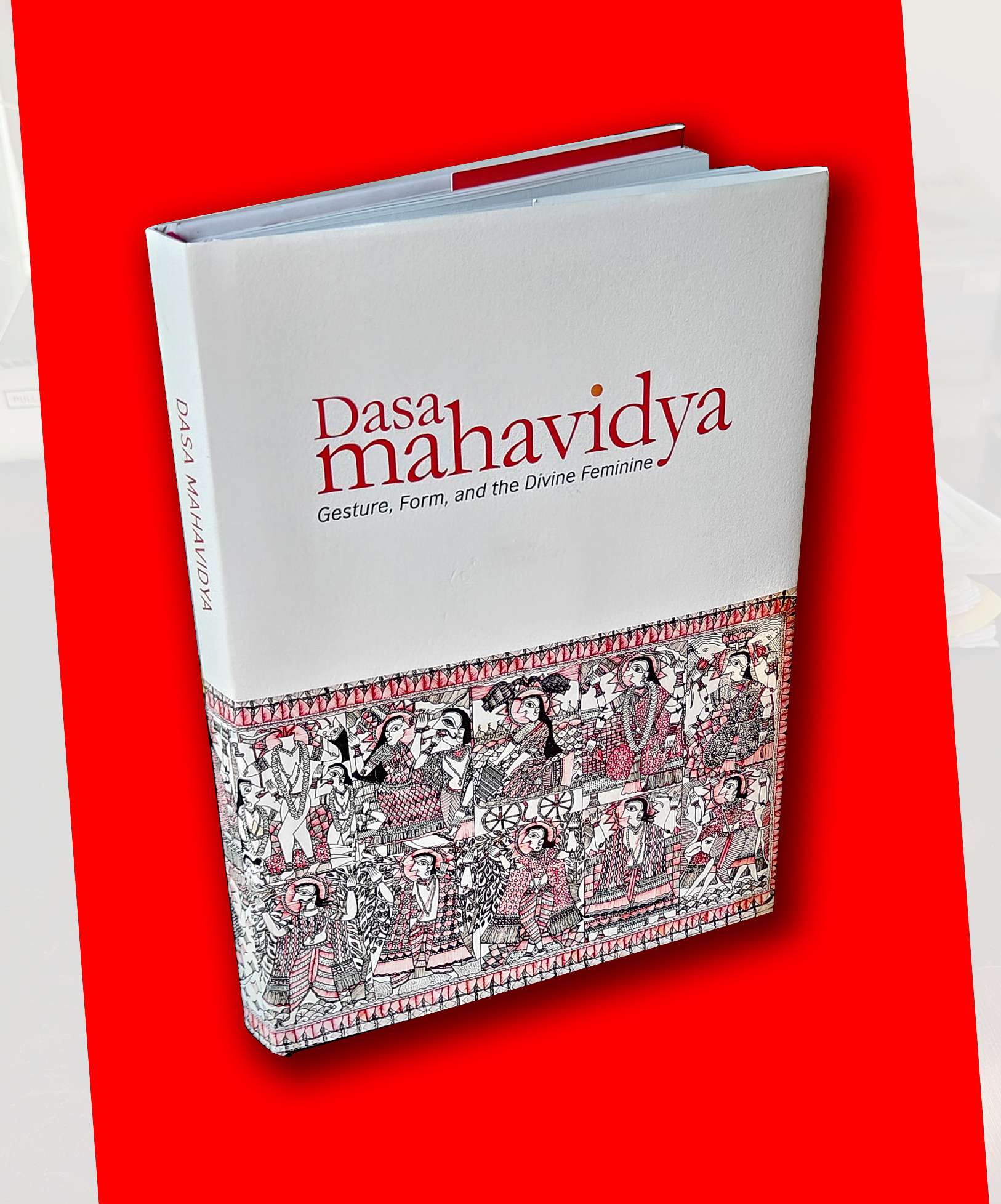
Dasa Mahavidya

Interestingly while the devout were / are prepring for the ​Navadurga or Navratri celebrations (the nine virgin manifestations and forms of Durga) worshipped during Durga Puja I was desinging a book on the concept of Dasa Mahavidya – the ‘ten wisdoms’ – seen, yet again, as ten divine mothers worshipped in the Tantric tradition. Extensively illustrated, this book carries some of the finest artworks and imageries, of ten fierce and benevolent deities, painted over years by renowned artist Santosh Kumar Das and late Krishnanand Jha. Titled ‘Gesture, Form, and the Divine Feminine’, this art-study of Mithila style, dives deep into the philosphy and stories of cosmic feminine force. The editor of the volume succinctly sums it with, “…the goddess Shakti—is both— the center and the axis of the world … she moves through space with pointed grace, gestures, and glances – guiding the viewer’s eye in unfolding sequences, like a ritual procession … she holds her ground radiating a steady power akin to the meditative pull of a yantra.” The book, Dasa Mahavidya, has been designed and produced by Ishtihaar for Ojas Art. <September 2025>

oplus_1048608

Pishauri and Lahori

पिशौरी ते लाहोरी

पिशौरियों और लाहौरीयों की मुहब्बत के कई किस्से मशहूर हैं; हाय हाय, ऐसे हैं के सुनाये नहीं बनते। ऐसी मुहब्बत के मौका मिले तो ये दोनों तो एक दूसरे को घर तक छोड़ कर आते हैं; काटने या कूटने से भी नहीं बख़्शते ये। मुक़ाबले भी ख़ूब करते हैं — महीन और सूफियानी चमड़ी वाले लाहौरीयों नें कसूर में ऊँटनी (डाची) की नर्म खाल से ज़नाना जुतियाँ बनाई तो पिशौरियों ने मोटी जिल्द वाले जनावरों और ट्रक टायर से मर्दाना सैंडल बना दिये। एक पुश्तैनी लाहोरी ने जब पिशौरी सैंडल पहनने की गुस्ताखी की तो शाम तक उसके पैरों का हाल आप देख सकते हैं। ‘ये जख्म थोड़े ही हैं ये तो प्यार के थपेड़े हैं’। लो भाई लो, ले लो वापिस, इतना प्यार नहीं चाहिए मुझे। कोहलापुरी ठीक है। वैसे ये कोई हल्दी रसम नहीं हो रही है और जब से मैंने फोटो खींची है पिशौरन तो मुँह फुलाए बैठी है।  

महाभारत के कौरवों वाले कुरु वंश की राजमाता गांधारी इसी इलाक़े से बताई जाती हैं। पिशौर के गांधार मैदानों में ही पली बढ़ी होंगी। खैबर दर्रे को जाने वाली वादी में बसा पेशावर शहर गांधार के महकते मैदानी इलाके के लिए जाना जाता है। तीन तरफ़ पहाड़ों से घिरे गांधार के मैदानों और पहाड़ियों में कभी हजारों बौद्ध भिक्षु गुफाओं और मठों में रहते थे। सिकंदर के फ़ौजियों की एक टुकड़ी रास्ता भटक यहीं आ गई थी जिन्होंने भिक्षुओं को बुद्ध की मूर्तियाँ तराशना सिखाया। उधर दूसरी तरफ उत्तर पूर्व वाले लाहौर से एक सड़क (मुग़ल रोड) मरी और रावलपिंडी होते हुए हिमालय की काराकोरम और पीर पंजाल शृंखला तक ले जाती है। मरी की पहड़ियाँ भी गांधार सी हसीन हैं जो अपने यहाँ बनी शराब से पेशावर को टल्ली कर देती हैं। एक तरफ भक्ति रस तो दूसरी तरफ सोमरस। 

feet with ulcers or boils induced by shoes
oplus_1048608

Happy Birthday Your Holiness

With his hand on my head we walked together three steps closer to the chair he was to occupy. I couldn’t lift my neck to watch that roohani face and dreamt of rubbing my nose against his. Reading my mind, he smiled. At the edge of the table he picked up a packet and unwrapped the book showing it to the audience in the packed IHC hall. My head was still bent when he came and handed me ‘that copy’ of the Tibet House book which had been designed by me – and printed at #ishtihaar His Holiness The Dalai Lama smiled while looking at me and patted my shoulder on the way back as we walked the aisle together – a dozen Rimpoche’s alongside. Thanks Your Holiness, may you live forever and see a peaceful world. Years earlier I was blessed to get a private audience with him at McLeodganj. He is charming and his face glows. More images on our website.

His Holiness the Dalai Lama releasing the book 'Tibet House' designed and printed by Rajinder Arora-Ishtihaar