
– ये आकाशवाणी है –
“All India Radio Suratgarh welcomes you to the Cotton City Channel on 918 kilohertz. You can listen to our programmes on Medium Wave and AM frequencies.”
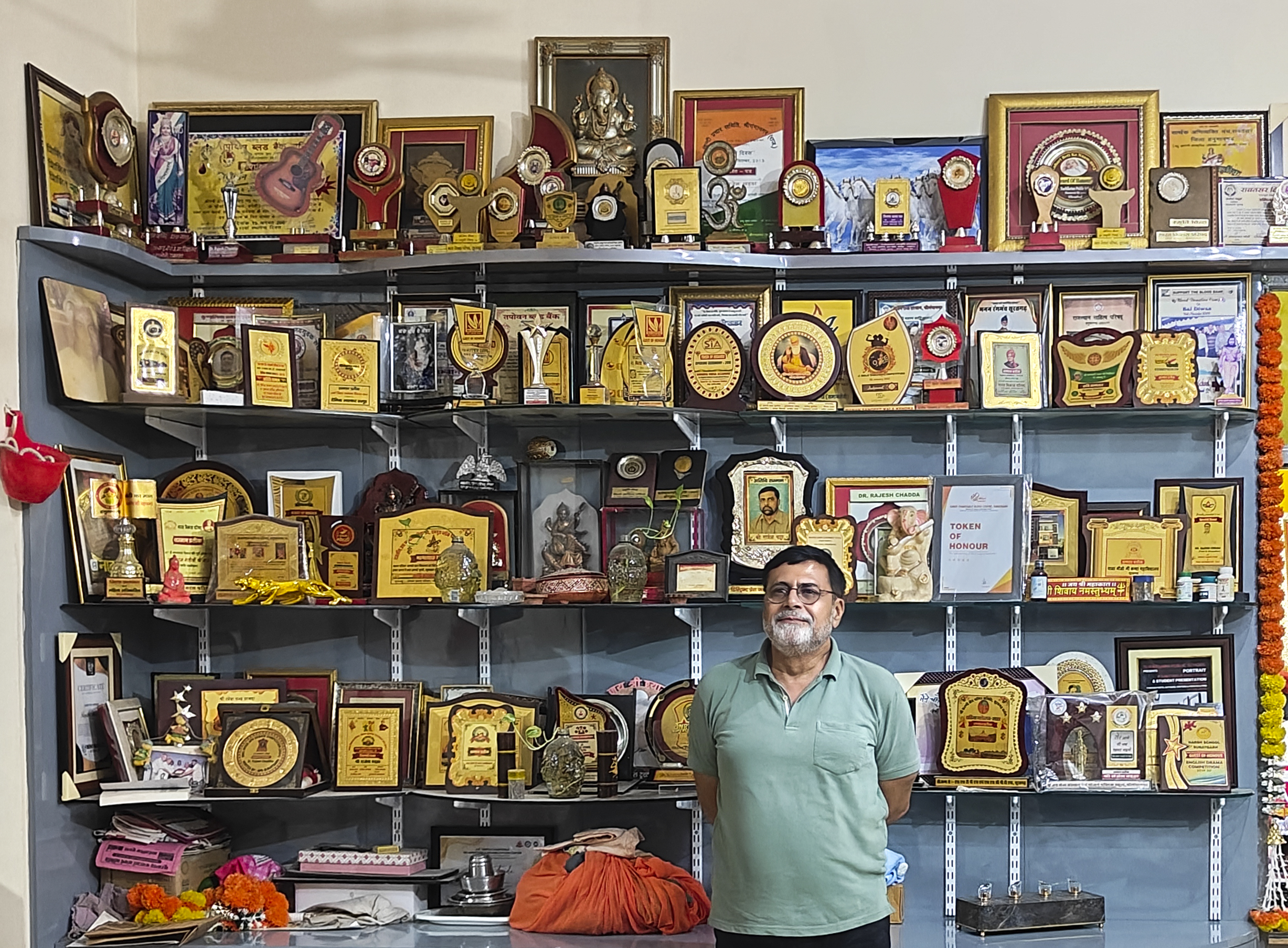
It had been ages since I entered an AIR studio. The last time, I recorded a Radio Play and this time, I recorded Memories, trust me it was fun. The visit was courtesy of brother Raajesh Chadha who served as the Programme Director here for nearly 36 years. During his illustrious career Raajesh’s baritone was much in demand as evidenced by over 500 trophies displayed at his home (picture).
What I thought was a small station, with just about three studios, turned out to be broadcasting on a massive 300 kW transmitter which reaches far beyond India’s borders (AIR Delhi uses only 200 kW). It is one of the most clearly heard Indian radio stations in Central Europe during the winter months. The station relays news, film songs, phone-in programs, world round-up, and Rajasthani folk belted out under the tag line “One voice. A billion hearts.” Programmes for local farmers include weather updates, crop prices, and expert advice on modern farming techniques.
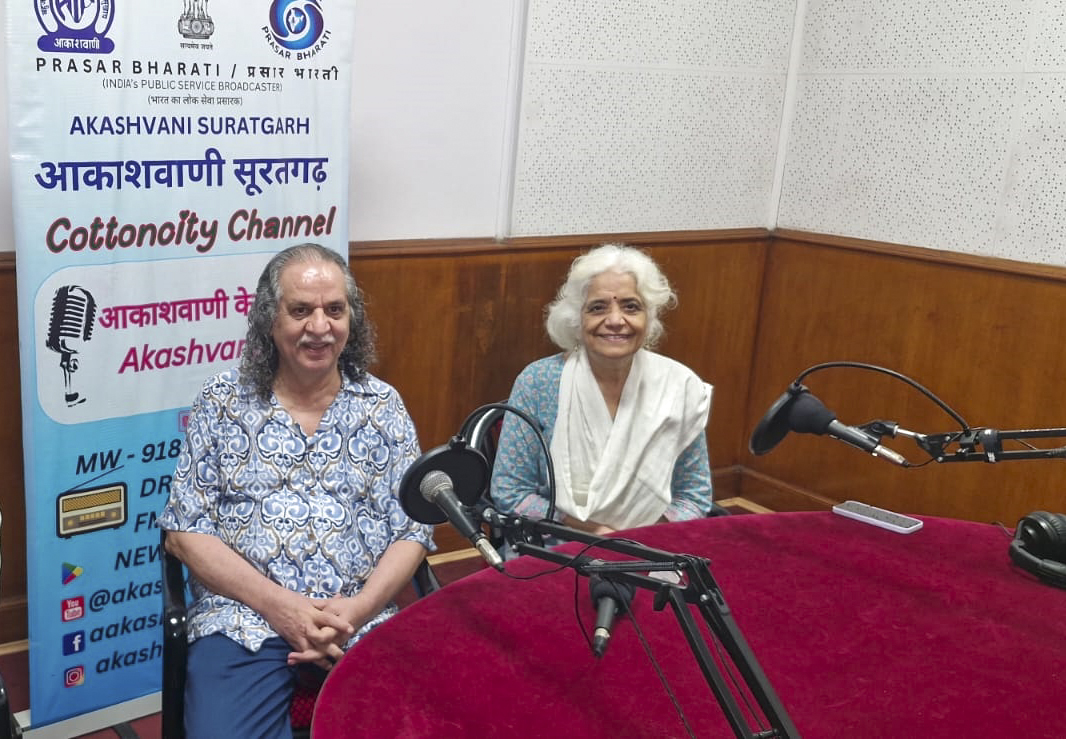
Known as “Cotton City” and “Bowl of grain” of Rajasthan, Suratgarh is 77 km south of its district headquarters Sri Ganganagar city. Maharaja Surat Singh founded the city. Hindi, Bagri, Rajasthani and Punjabi are the widely spoken languages of the city. Well connected with decent highways and a railway station Suratgarh still awaits air connectivity. Other than the desert heat and the sandy dust I am certain the city would be a pleasant place in winters. Thanks bhai for our picture in the studio. <Suratgarh sojourn>
Suratgarh was a significant arena of historical incidents in the ancient past. The city was once called Sodal. Around 3000 BC Suratgarh is believed to have been a lush, green place due to the presence of two big rivers, Sarasvati and Drishadvati. Present sand possessed various botanical and zoological species within the basins of chaste Sarasvati and Drishvati. The emergence of Kalibangan and Barod civilizations was facilitated by the geographical and environmental complements of the Sarasvati, and Suratgarh was a noteworthy testimony to this. The traces of ancient civilization near Rangmahal, Manaksaar and Amarpura show the historical significance of Suratgarh where the Sarasvati civilization receded after 1500 years of stability.
Suratgarh developed greatly under the rule of Maharaja Ganga Singh who built a hunting lodge at Suratgarh and ensured the connectivity of Suratgarh to the train service. Hanumangarh and Bikaner came under the Suratgarh District when the district was established. Establishment of the Ganges Canal in 1927 helped Suratgarh develop; it became a city after partition when refugees from Pakistan came and settled here. An air and military base station, Akashvani and various offices have been established at Suratgarh.


You must be logged in to post a comment.