By the time I reached home he was dead. Traces of white still there on the right side of his face – under the jaw and on his neck. He had finished shaving half his face, the other half still with the stubble of the day before shining in dried shaving cream. He was lying on the warm cement floor with nothing under his head; must have been put there by the neighbours who were standing around him. I didn’t like it and wanted to put him on the settee where he would snooze in the afternoons. That July was much warmer, no rains that year. Sitting in a corner, mother was delirious and wailing. Grief is a river, it must run, I didn’t console her. The neighbourhood doctor, still by his side, got up and held my hand offering condolences. That morning of July 29th I had driven like a maniac only with the hope I would be able to say, ‘Bye Dad’. But no, like always he was in a hurry.
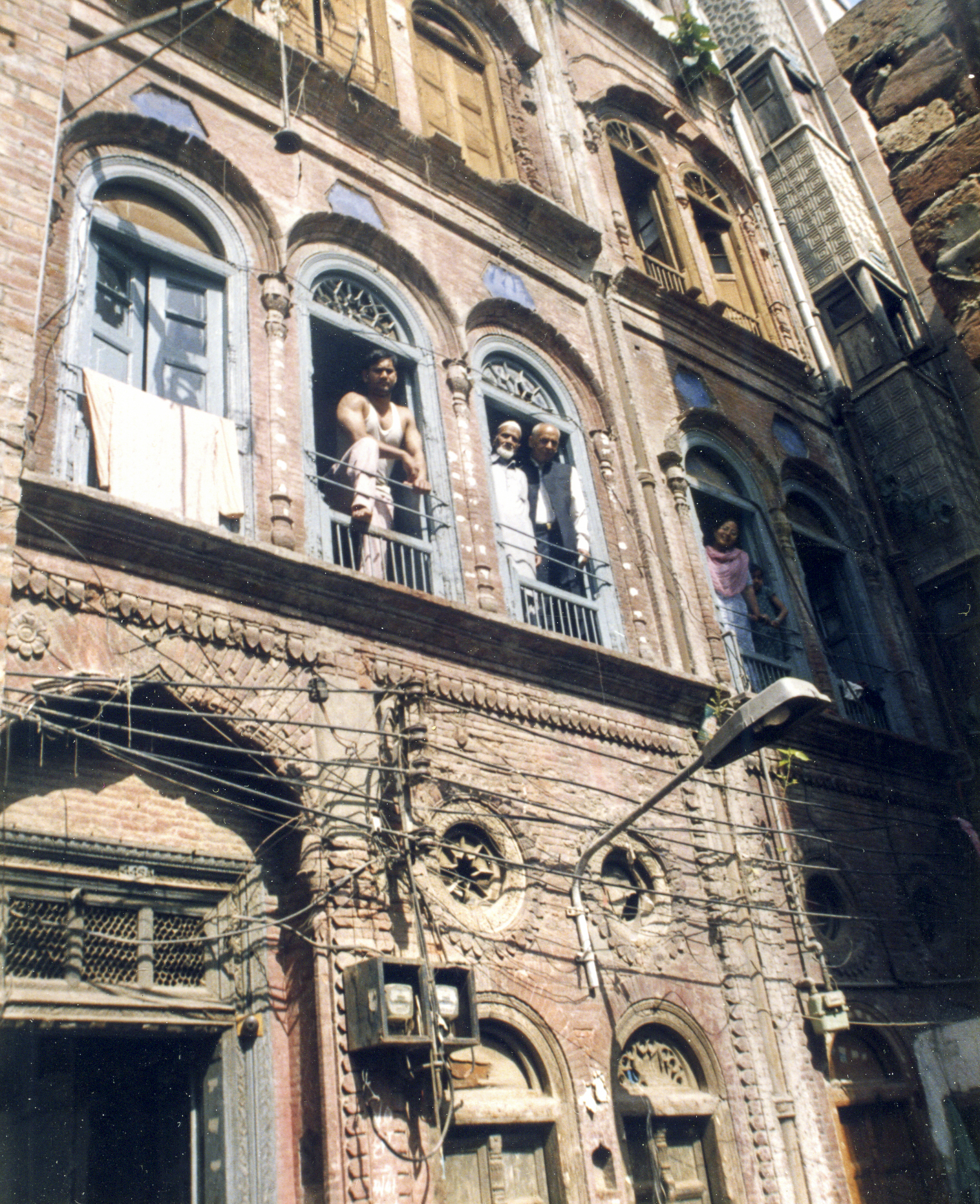
Photo: Daddy (in black jacket) posing for a photo from the jharokha of his house in Lahore. Don’t miss the beautiful cinquefoil arch at the entrance to the house (bottom left) and the lotus on it. The lakhori brick structure has stayed in tact for over 85 years since its construction.
How can ‘design’ help us think differently about death?
A series of interesting conversations among the international design community about “Death and design: the creative projects confronting society’s ultimate taboo.”
“The visual language of death has stagnated, and creatives have a vital role to play in how future generations face its complex subjects. Here, we chat to a design research practice dedicated to death, and delve into some of the topics covered at their recent conference, from symbols of death and branding the end of life, to ‘traumacore’.
Death: it’s a topic that often feels like no one really wants to talk about. Especially, that is, in the buttoned-up culture of avoiding difficult topics that the UK is so well known for. But whether we like it or not, death is something every single person will deal with in their lifetime, and one day encounter themselves.”
Death and Design? While the world deliberates the essential nature and icons of death, I wonder if the Indian design community has ever given it a thought.
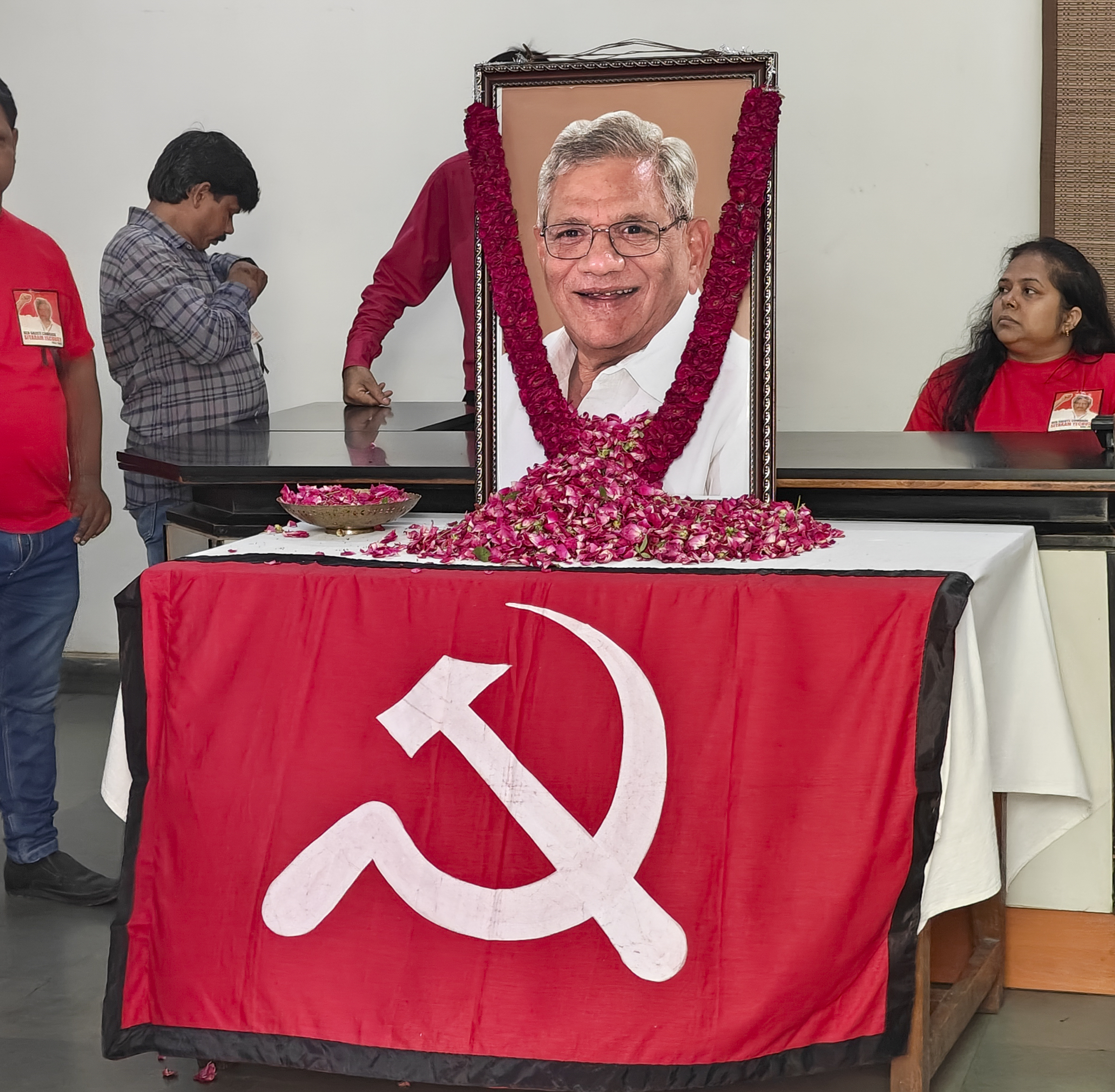
Sitaram Yechury passed away this morning (12 September 2024) around 11.30 at AIIMS. He had been unwell with a lung infection for the past three weeks admitted in the hospital. Our last meeting was at Sahmat, probably on 18 August. All of us had lunch together and then he stepped out for a smoke with Sohail and NK Sharma. His right hand was not steady and it trembled as he took a drag on his stick. He coughed non-stop. Something in me said, he must stop smoking. We had a good time together on Seema’s birthday sometime in Jan this year, again at Sahmat. I have some pictures of them cutting cake and offering it to each other. I recall how unsure or hesitant he was to sign a copy of his book for me for which I had designed the cover. All he wrote was “Greetings”. It was a compilation of his speeches as a Rajya Sabha MP. On 14th Sept his body was brought on a carriage to AKG Bhavan, the Party office, for friends and Comrades to pay their last respects. Sitaram had donated his body to All India Institute of Medical Sciences for research. So Long Comrade.
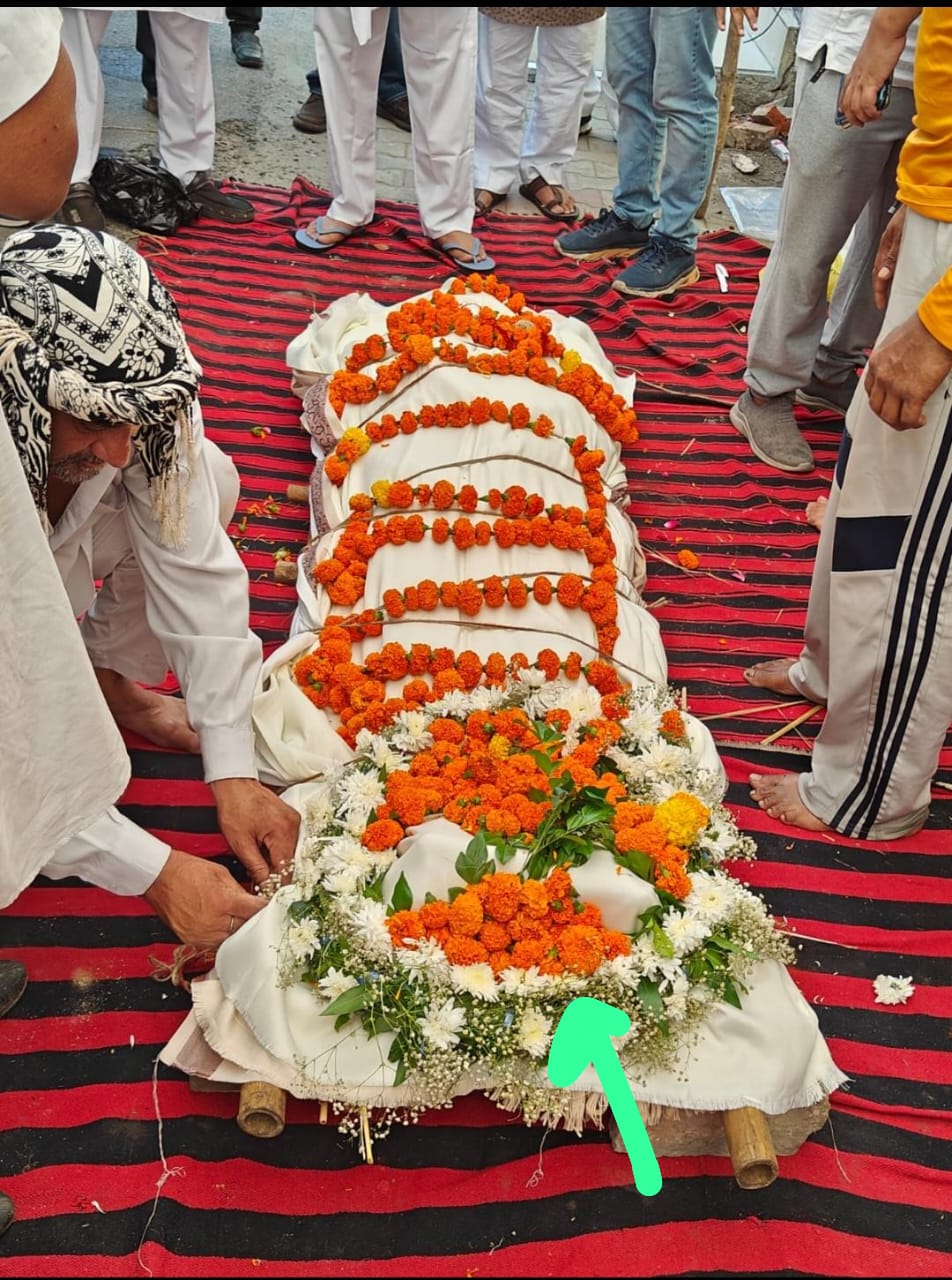
‘It couldn’t be him. It just can’t be. It must be someone else.’, was my first reaction when a common friend sent me a picture of his flower-decked bier lying outside his house in Jalandhar. I recalled Ashok Gupta reciting a Kafi of Baba Bulleh Shah at Zoji La pass where we saw a holy man being carried for burial.
बुल्ले शाह असां मरणा नाहीं गौर पया कोई होर
“It must be someone else, we ‘the immortals’ don’t die”, Ashok had said.
Years before he had said something similar when we had ‘together’ seen death at close quarters.
It was the month of June. Twenty-ninth read the date in the year 1985. By mid-night the temperature was 12 below zero. On the Tibetan plateau our altitude was 17,300+ feet. We were at the western edge of lake Manasarovar. We kiss-drank its partially frozen surface the next morning. Without gloves our hands were slowly turning blue. Strong easterly winds howled the earlier part of that night. I wonder how we survived that night amid nothingness. Yes, survived brutal cold, hunger, fatigue and the fear. The fear of having lost our way in the Himalayan desert. The fear that no one may come looking for us or consider us dead in that Himalayan moonscape. One more night out in the open would have meant certain death for the three of us. But, but Ashok had said “We can’t die here uninvited”.
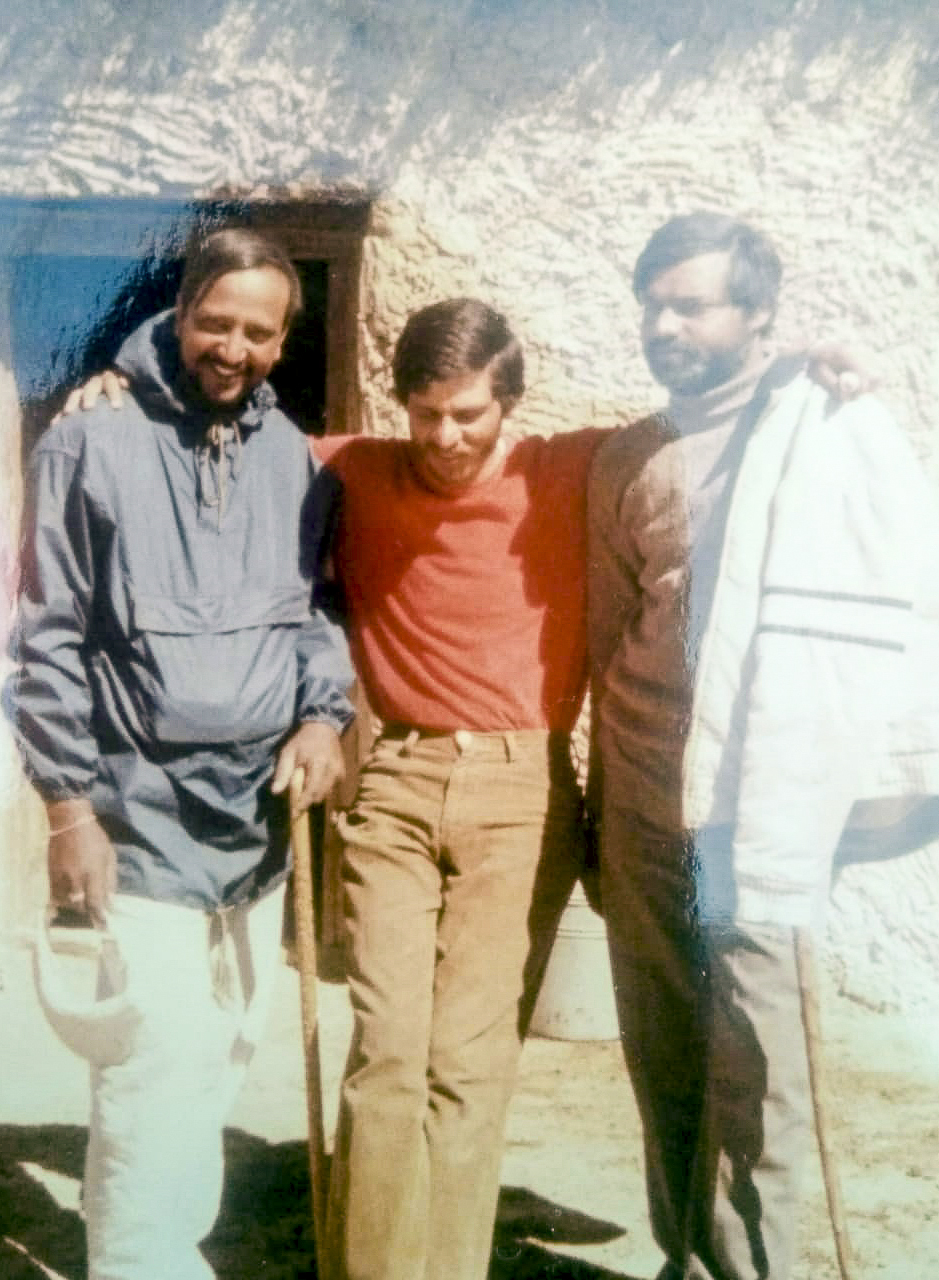
That night Ashok Gupta was wearing his trademark white kurta-pyjama, no thermals inside. The hood of his blue wind-cheater protecting his ears and head. Arun Singhal, our other friend was decently clad in a high neck sweater but not enough for that altitude or the open skies where a little more cold could have frozen us. Unless you are a Mongol nomad, a Tibetan herder or a Chinese military jawan you dont fools around Mt Kailash or Ghurla Mandhata ranges carelessly at night. We were not fooling around, we had lost our way.
Five other members of our group were accompanied by a Tibetan yak herder who was transporting our camping equipment. That night we clung to each other in a tight embrace to conserve body-heat, arms locked we jogged in-sync, we created a tight triangle of bodies using our breath to warm our chests and ward off the cold with our back, we pissed on our feet when our toes were freezing. We cursed ourselves but never once thought that we would die that night. The thought of death came only next afternoon when despite all our efforts we were not able to find the trail that would lead us to our campsite. Our batchmates were supposed to leave for the next campsite by noon. None of us had any communication equipment or anyone to guide.
The morning before was the most inviting one which lured us to make multiple mistakes. We decided to shed extra layers and trek leisurely around the undulating Barkha Plains. The day temperature tempted us to slow down our pace, rest more often, fish in streams, stop to photograph each Marmot peeping at us from its hole, admire and lure herd of Tibetan Wild Ass and the colony of white woolly hare. We were in the awe of the beauty, the sheer scale of the Himalayan plains where a hundred aeroplanes could land together. With no clouds and a bright sun that hurt during noon we enjoyed the stark contrast of the blue skies against white Himalayan peaks and stunning granite rocks. That morning, together, we had spotted a Brahminy Duck diving in Mansarovar for its catch. Ashok had said it was a good sign.
My brown corduroys, a wind breaker and a muffler around the neck worked well during the day but at night I was the worst clad. We hadn’t had a morsel since we left last camp and I was reminded of the Brahminy Duck all the time. How many fish it would have devoured that morning? We trudged up and down a dozen hills that evening before the Lords switched off the light in that stunningly beautiful playground for their ilk to sleep.
To reach our Himalayan Eden we traversed four major valley systems connecting India, Nepal, Tibet and China. We trekked over 129 km in 28 days, without a day’s break, crossing two high-altitude mountain passes one of which, Dolma La, was over 18,470 feet, braved treacherous crevices over unstable glaciers, were beaten down by winds and thunder, negotiated and forded near-freezing streams, glacial melts and rivers. We slipped around gorges; skidded off steep gradients; spent sleepless nights with minimal food; braved freezing winds, rain and snow but we survived. We survived our bursting lungs in rarified atmosphere, yes we survived this and dangers of many other climbs and high-altitude treks. Did we survive to die like this?
Sorry, I can’t say my Alvida, not yet. गौर पया कोई होर Yes, that must be some else.
Ashok’s last journeyFrom left Ashok Gupta, Rajinder Arora, Arun singhal outside Mt Kailash camp June 1985
Father died at home, in his house looking himself in the mirror; guiding the razor upside-down on his thin face, pulling wrinkled skin over shrunken cheekbones, making faces while shaving; grinning, upsetting, teasing, and taunting the mirror, Just then a heart-attack took him in minutes; And the Mirror captured his soul.
The Mirror was fixed on the wall facing the kitchen, where mother worked. She kept her distance from the mirror, feeling sad and scared of looking in it – finally, covering it with a towel that father used.
Father owned the house where he died. ‘Krishna Kutir’, the house was named after my mother, who sold it ten years later and passed the money to his heirs.
No Father, No House. No Mirror. All gone. A lot more went with it, my innocence, my youth. We all grew up in it – a sister, two brothers, mother, father – and the house itself, which had come by chance, really. Father had no money to buy it. He would say. ‘I was lucky’. Yes, he was. Indeed, lucky for an orphan and a refugee to own a house in the capital.
For sure, those days he was lucky, and happy too, having got a raise in salary. He also won two lotteries in six months. First, a ‘lucky draw’ where his name was picked and a small flat allotted to him for small money. Second, a ‘cash prize’ for writing a slogan for a cigarette brand of the working class. He used the money to part-pay the flat. Would you believe, there was a time when one was rewarded to smoke! Very Lucky!
Like his income, the house too was low income. LIG Flat they called it. Dad was proud, ‘I made it like a bee,’ he once told me looking into the mirror. He saved for it, every paisa he could like a bee secreting to make a hive – cutting on his smokes, eats, and bus fare; cycling to work eight miles one way.
Mother sold the house as it had her name. The mirror went with the house. Outside the house, there was a name plate faded, nailed to the wall, having survived forty years of elements, envy, and evil-eye.
When Ma moved, father stayed behind in his house. He didn’t move, he couldn’t. His soul had been seized by the Mirror.
Not everything died with father, a lot survived. His dreams, his books, his letters, his diaries and the Mirror on the soiled verandah wall from which his face followed us everywhere.
Ma brought all she could, tears & trauma in tow and the fading nameplate, ‘Krishna Kutir’. I, for one, couldn’t unhook the Mirror Father held it tight.





 Ankahi. Unsaid.
You must be logged in to post a comment.