Mevlana Rumi

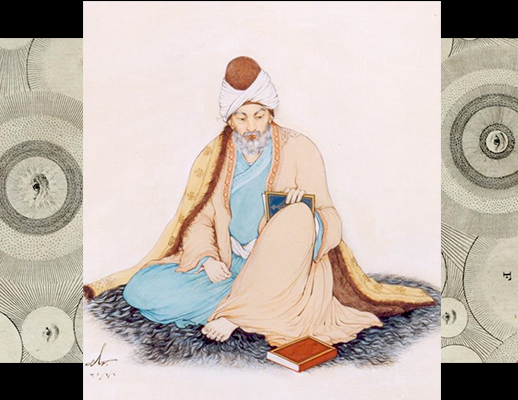
This day 752 years ago (30 Sept 1207 – 17 Dec  1273), one of the greatest Sufi mystic poet, and founder of the Islamic brotherhood known as the Mevlevi Order, RUMI (Jalāl al-Dīn Muḥammad Rūmī) passed away leaving behind not just immeasurable wealth of mystic poetry and Sufi thought (falsafa) but a deep spiritual worldview relevant pretty much today. Sample this:

 Where did the handsome beloved go?
      I wonder, where did that tall, shapely cypress tree go?

The son of an erudite Islamic theologian, Rumi was encouraged to pray, fast, and study scripture as well as mathematics, philosophy, literature, and the languages of Persian, Arabic, and Turkish, all of which shaped his worldview and eventually his poetry. Rumi would follow in his father’s footsteps to become a theologian in Konya, offering sermons to thousands, until around the age of forty when Shams of Tabriz, an itinerant Sufi mystic, drew him from the pulpit into a life of poetry and music. You must read more of Rumi’s life and his poetry which is simply phenomenal. Check this piece by ​Haleh Liza Gafori for New York Review Books at https://lithub.com/a-mystic-a-poet-an-old-friend-haleh-liza-gafori-on-the-enduring-power-of-rumi/

To his poem Where did the handsome beloved go? Rumi adds 
He spread his light among us like a candle.
Where did he go? So strange, where did he go without me?

All day long my heart trembles like a leaf.
All alone at midnight, where did that beloved go?

Go to the road, and ask any passing traveler — 
That soul-stirring companion, where did he go?

   – Translated By Brad Gooch & Maryam Mortaz
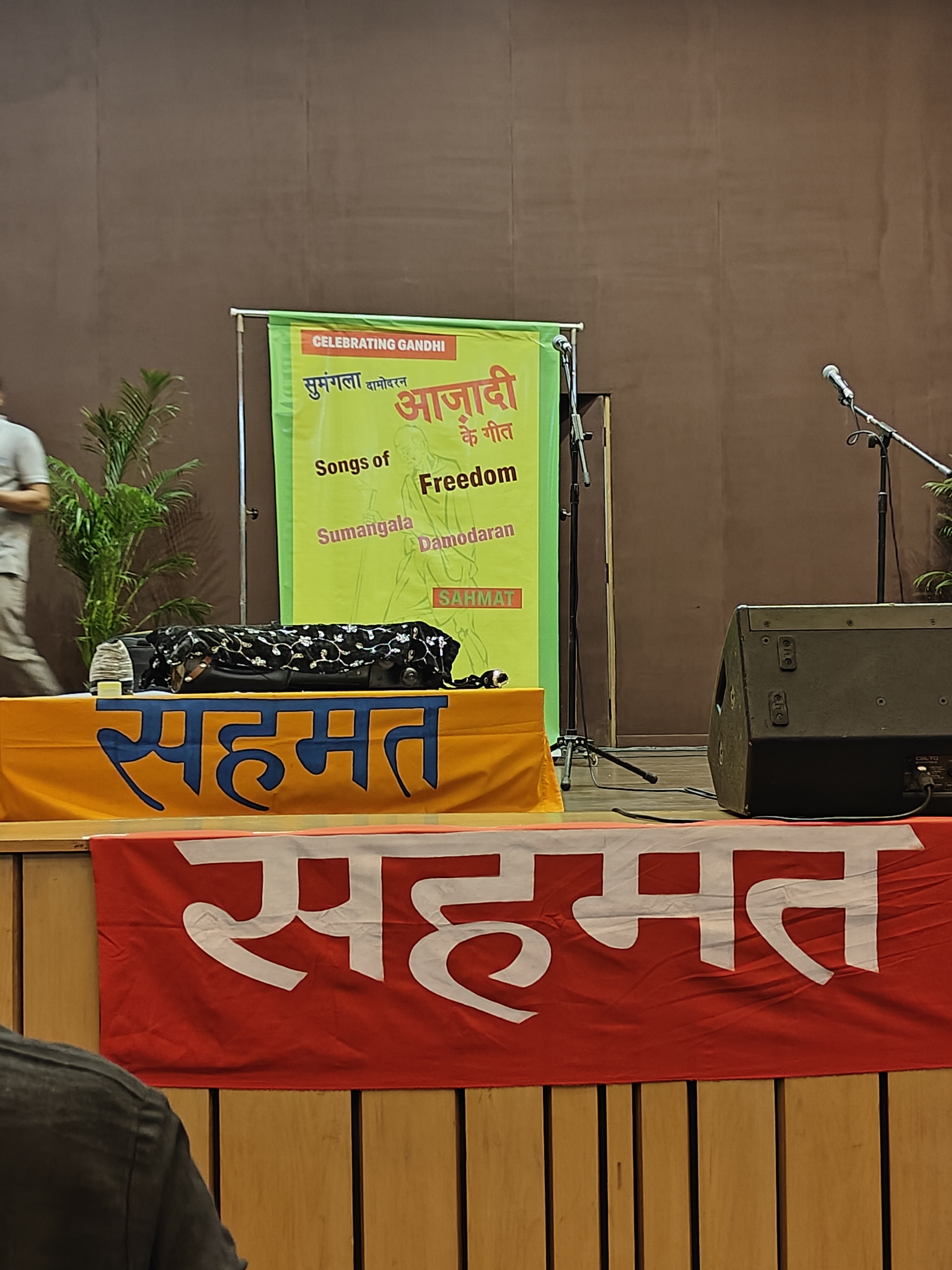
Songs of Freedom – Aazadi ke Geet

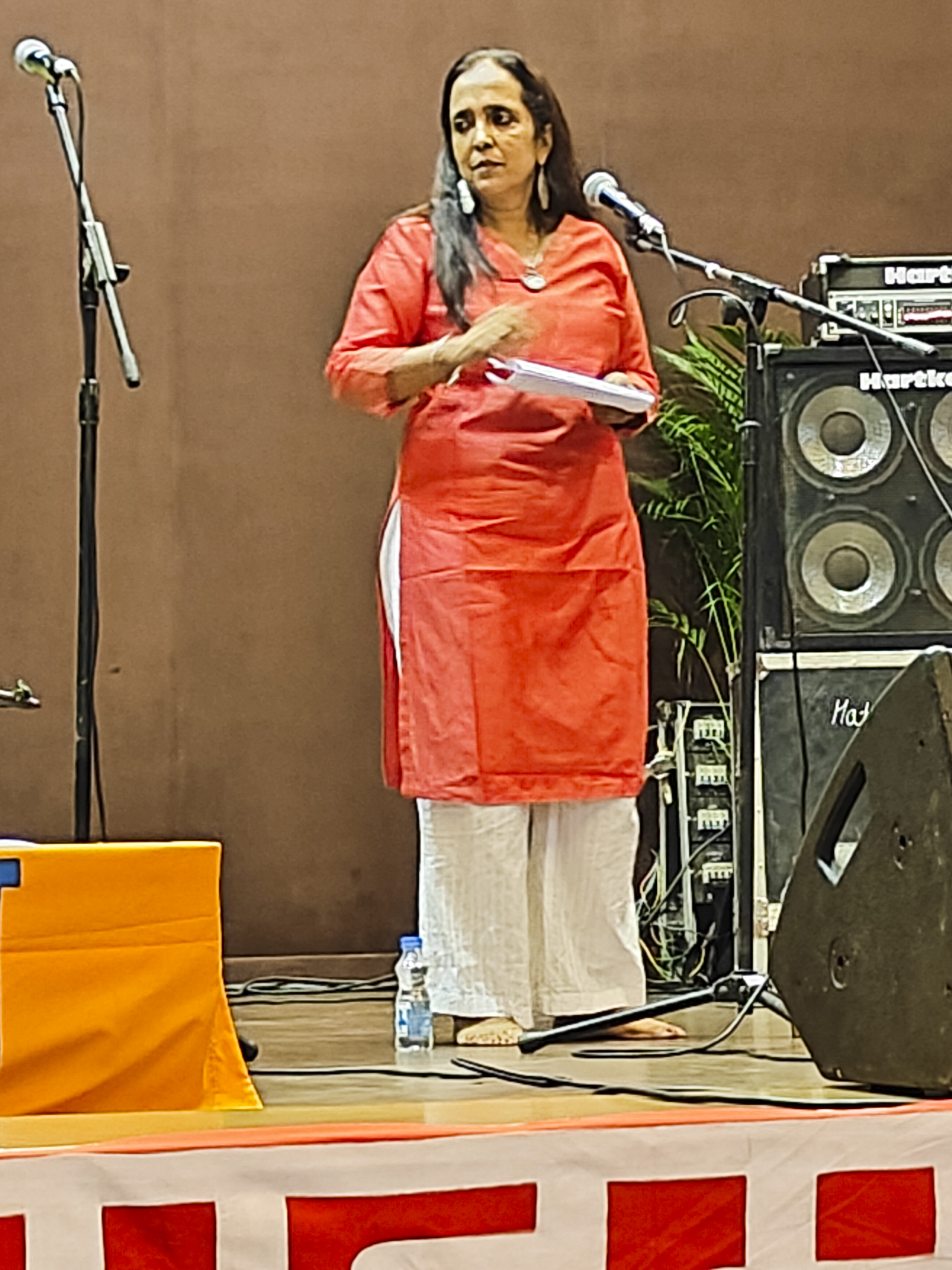
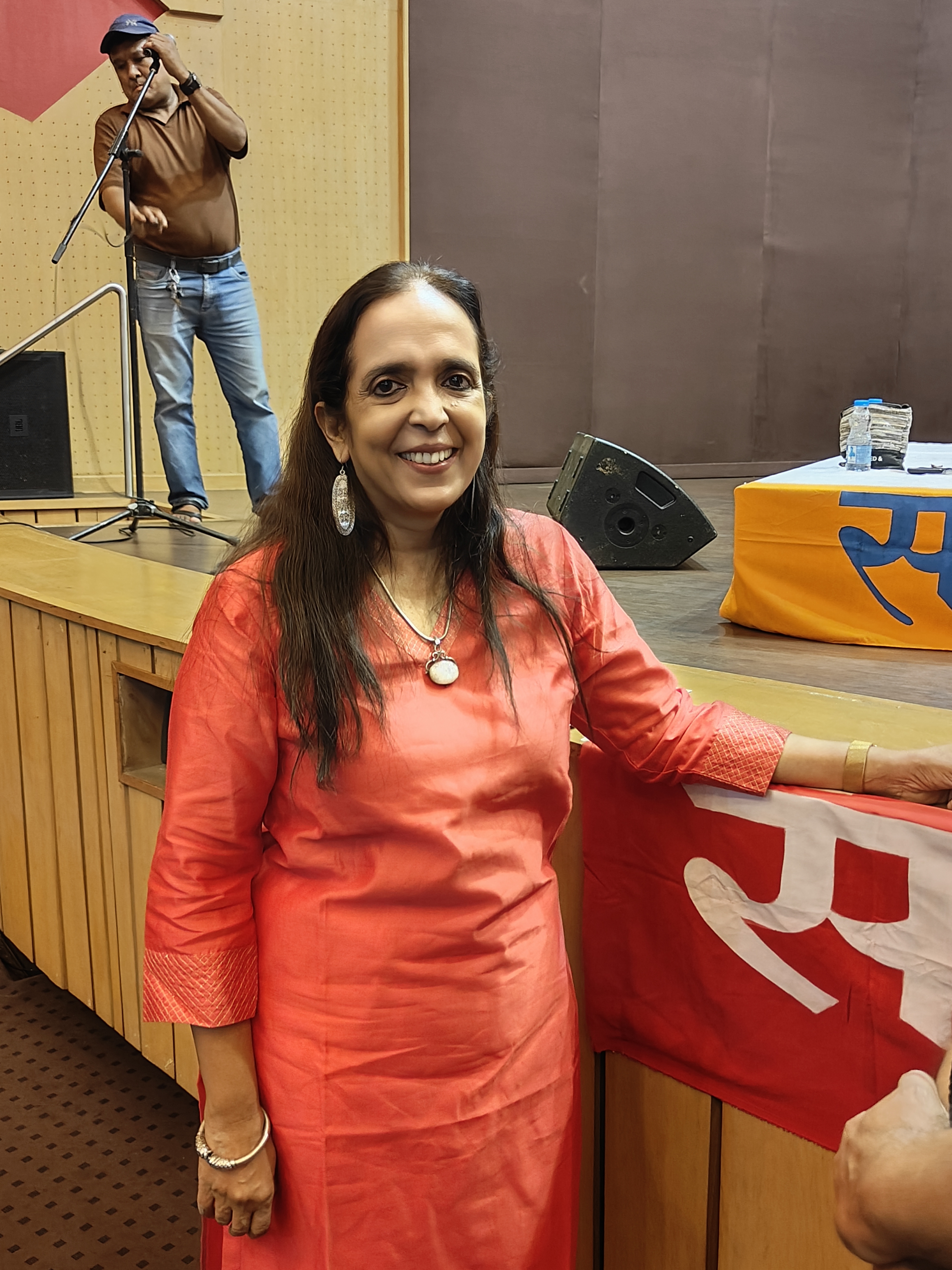
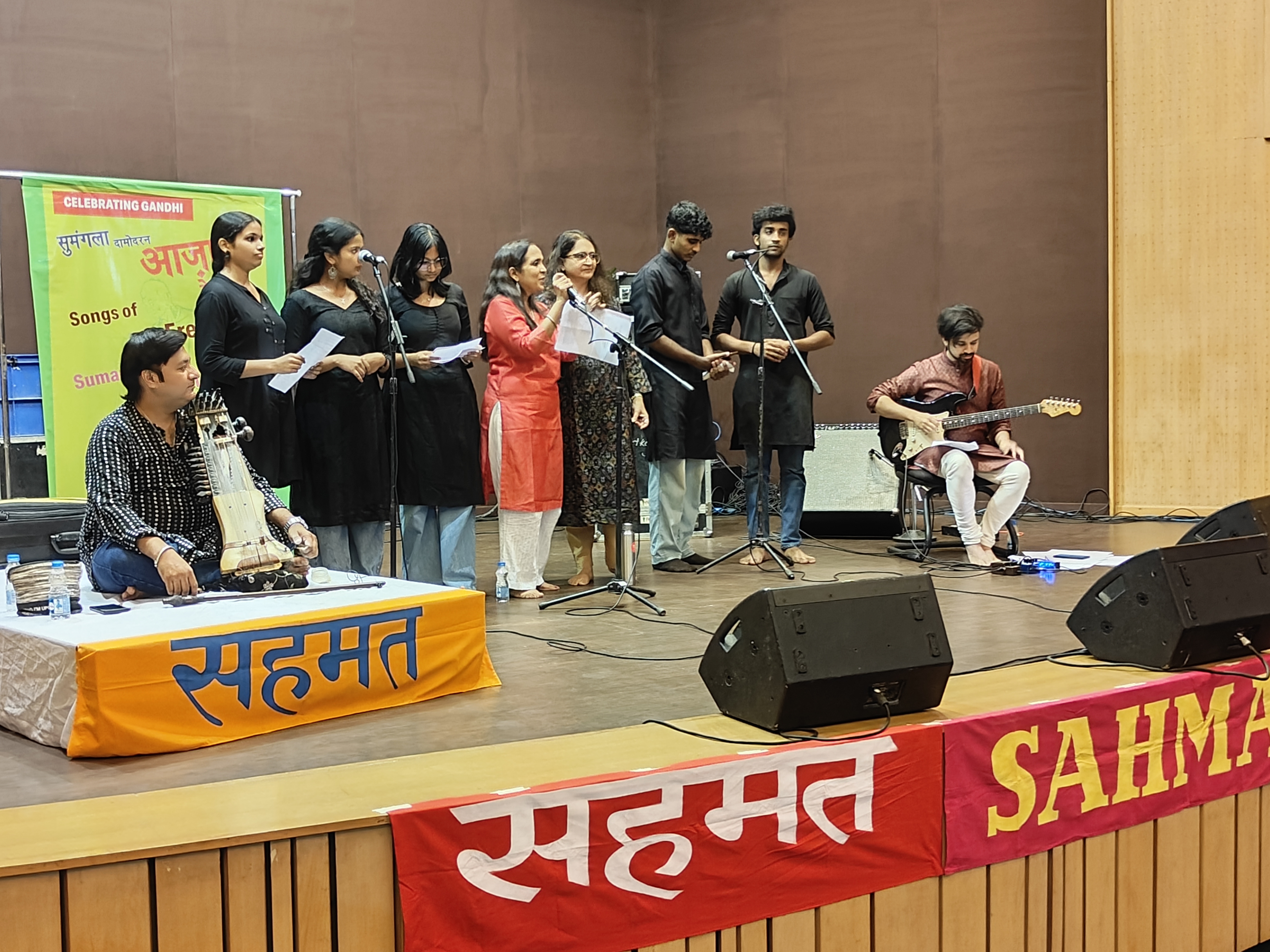
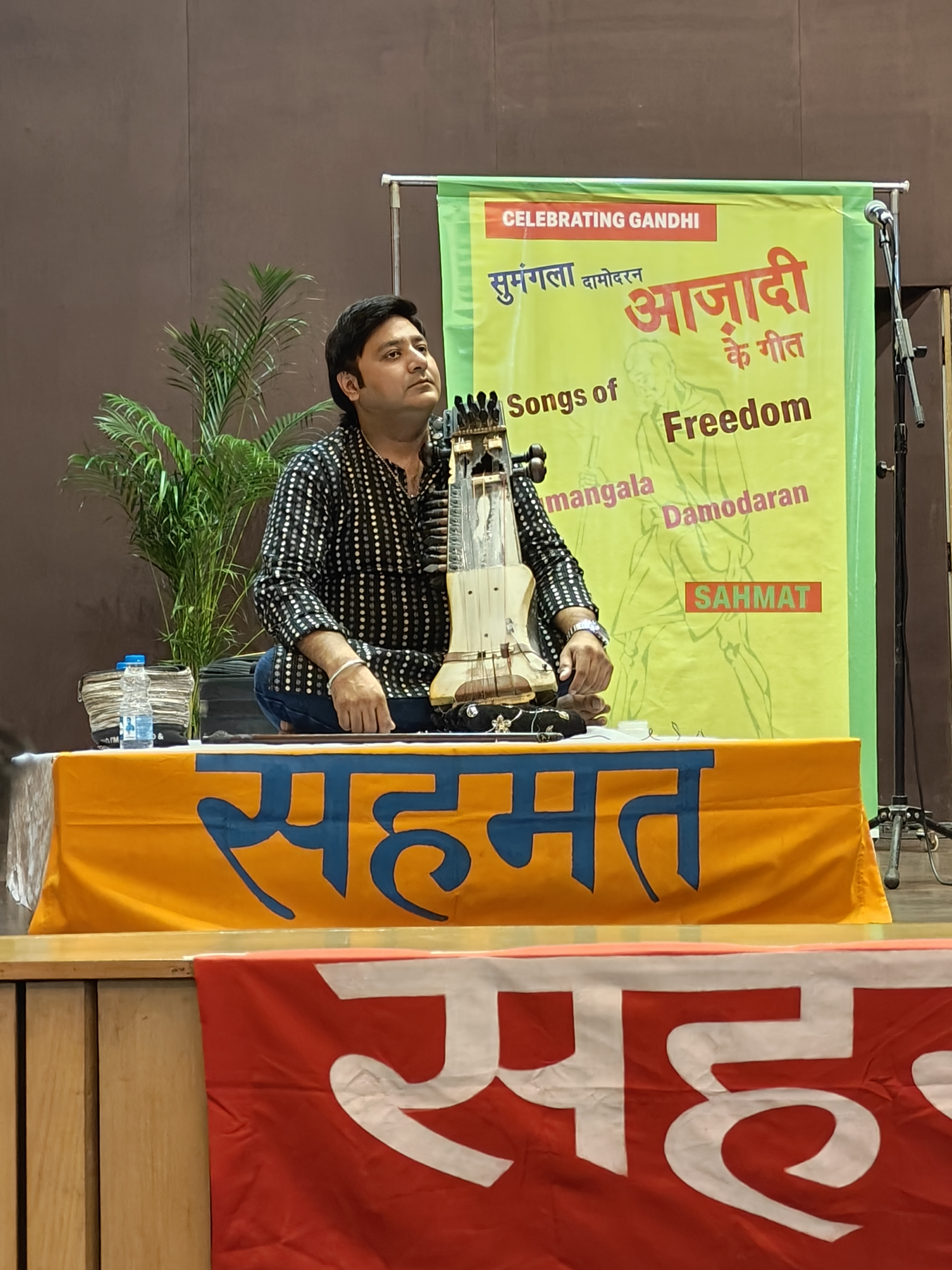
At the ‘Songs of Freedom – Aazadi ke Geet’ concert in Delhi, Sumangala Damodaran sang her heart out on 4th October. Sad, if you missed it. The event was probably the most striking repertoire of songs of resistance, revolution, struggles and Indian Independence Struggle covering the period from 1857 to the present day. Her range was wide between singing of the Jallianwallah Bagh, touching upon Tagore, Gandhi’s fast unto death, the Bengal Famine, the Partition, Delhi riots of 1984, and it was also in solidarity with Gaza.

Sumangala started with “Din khoon ke” (Hindustani) written by an anonymous poet after the Jallianwala Bagh massacre; it was originally sung by Priti Sarkar in the IPTA Bombay Central Squad in the early 1940s. From the Jallianwala massacre of 1919, she moved to 20th Sept 1933 when Mahatma Gandhi was on ‘Fast unto Death’ in Pune. Rabindranath Tagore visited the Mahatma and requested him to break his fast. In turn, Gandhi asked Tagore to sing one of his songs – the song was “Jibon jokhon” (Bangla), which Sumangala sang with a gentle Bangla lilt.

Next in line was a song titled “Vazhga nee emmaan” (Malayalam) which was originally a poem by Subramania Bharati who read it to Mahatma Gandhi when the two met at C. Rajagopalachari’s home in Madras. The next song by Sumangala took the audience by surprise as she sang a love song of a peasant girl to a green parakeet. This song, “Pacchappanamtatte” (Malayalam) used to be performed during the Trade Union Movement in Kerala of the 1940s. This song was originally sung by PK Medini, who is now in her late 90s and is still politically active.

Another surprise awaited the audience when Sumangala sang a “Heer” (Punjabi) written by Sheila Bhatia in Lahore during a rally organized by the Kisan Sabha to create awareness about the Bengal Famine of 1943. The pain and lament in Sumangla’s voice truly conveyed the human tragedy of famine and the story of tragic romance from Punjab.

The song “​Jaane waale sipahi se poochho…” (Hindi), written by Makhdoom Mohiuddin during the Second World War was yet another moving piece which came next. The song was penned when the poet saw poor peasants being mobilized for the war to join the British army. The song was revived by the group Parcham in 1984 after the anti-Sikh carnage in the country. Sumangala continued with another popular Bhojpuri song “Ajadiya“, which was written by Gorakh Pande, a radical poet from JNU, who tragically ended his own life around 1988-89. Yet another moving piece of poetry by Dushyant Kumar was sung by Sumangala with such verve that the audience joined her in reciting the same. “Ho gayi hai peer parvat si..”, this can stir any audience on any occasion.

How can Faiz Ahmad Faiz be missing when one is singing of struggles, revolution, resistance and aazadi. Next on the fare, the second last of the evening, was the ever-green Faiz “Ab tum hi kaho kya karna hai, ab kaise paar utarna hai…” which the poet had written in Beirut and dedicated to Yasser Arafat in his last book of poems.

The concluding number of the “Songs of Freedom” evening organised by Sahmat was “Balikudeerangale“, (Malayalam) the song was originally produced by Kerala People’s Arts Club in 1957, soon after the first Communist ministry took over the government. It was sung as a tribute to the martyrs of the Freedom Struggle of 1857. In this song Sumangala was joined by a few members of the Club.

Sumangala was accompanied by Mark Aranha on guitar and Ehsan Ali on sarangi. She sang in Hindustani, Bhojpuri, Bangla, Tamil, Punjabi and Malayalam.

Sumangala Damodaran is an economist and a scholar of popular music studies. She is also a musician and composer who has archived and written about Indian resistance music traditions. As a development economist, her research and publications fall broadly within the rubric of industrial and labor studies, and more specifically on industrial organization, global value chains, the informal sector, labor, and migration. Apart from her academic involvements, she is also a singer and composer.

– Rajinder Arora, Sahmat, October 2025

Sun God and Mother Earth

A new artwork that we recently acquired is titled “Sun God and Mother Earth”. It is done by eminent Gond tribal artist Mr Veerendra Kumar Dhurvey, based in Bhopal, Madhya Pradesh. The story behind the artwork is mentioned below as given by the artist. The details are: Acrylic paints on canvas, 2024. Size 36 x 48 inch.

There was only water in this world, there was no earth, at that time Mother of the world is sitting on a lotus, on her the form of a deer has been given, Mother Earth is Mother Earth, on which Gond farmers are plowing and tribal villages are celebrating the festival of greenery. Women and men are dancing and celebrating festivals.
And there is a man on the tail of a deer, he is plowing, he is sowing seeds there and there is the Sun God who is coming on his chariot with seven horses and the trees are the whole world. Just as the whole world looks beautiful in the light of the Sun God, I have given the form of the world on my body on the basis of that.

​​पृथ्वी नहीं इस संसार में जल ही जल था वह समय जगत जननी मा कमल पे बैठी है उसके ऊपर हिरण का रूप जो दिया है माता पृथ्वी धरती मां है जिसके ऊपर गोंड किसान हल चल रहा है और हरियाली के त्यौहार मनाते हुए आदिवासी गांव ​की महिलाएं और पुरुष नाचते और त्यौहार मना रहे हैं। और जो ये हिरण की पूंछ पर एक आदमी है ​वह हल चल रहा है वहां पर वे बीज डालते जा रहे हैं और सूर्य देवता हैं जो अपने सात घोड़ों वाले रथ पर चले आ रहे हैं और पेड़ जो हैं वो सारा संसार ​हैं। ​जैसे सारा संसार सुंदर लगता है सूर्य देवता के प्रकाश में उसके आधार पर ही संसार का रूप ही मैं देह पर दिया हूं।

​Prithvi nahin is sansar mein jal hi jal tha use samay Ma Jagat-Janani hai jo Kamal per baithi Hain uske upar Hiran ka roop Jo Diya hun Mata Prithvi Dharti Ma hai jiske upar Gond Kisan hal chala raha hai aur hariyali ke tyohar manate hue aadivasi gond mahilayen aur purush naachte aur tyohar Mana rahe hain aur jo yah Hiran ke Poonch per ek aadami hai Kisan hal chala raha hai vahan per vah bij dalte ja raha hai aur Surya Devta Hain Jo Apne sath ghode Wale Rath per chal rahe hain aur ped jo hai vah sansar hai Jaise Sara sansar Sundar lagta hai Surya ke Prakash mein uske Aadhar per hi sansar ka roop main is ped per Diya hun

Prithvi Nahi Jal hi Jal Tha. Veerendra Kumar Dhurvey

The other end of rainbow

I have moved to the otherside of the linguistic rainbow, hence, my absence from a few platforms where I used to contribute. Thin clouds are hovering under the rainbow but I can see them clearing. The light here – on this side – is soothing, the tones are muted, it is calm, not hurried. The colours are the same but the view from here is different, it is closer home, nearer the childhood, to the beginning, the earliest blabber (or is it babble!) of the first few sounds I mimicked. The first chatter I registered and the sounds that stayed; the words I picked up and the lips I aped are gushing in. Someone familiar is walking closer to where I stand. It is difficult to focus, it is not clear, there is fog – it must be Ma. She is trying hard to regain health after a downhill journey of the past nine months. Nine months! Is she birthing? At Ninety-one? Who? I am jealous. I have been listening to her with both my ears. Listening, storing, sorting, collating and writing. Mostly using the words she uses; broken, incomplete sentences where times, spaces, incidents, objects and people all churn and create a world with newer perceptions and realities unknown to any. 

We have been talking. Yes, a lot. We talk in Hindi. From her fading memory words take time to form and flow. The recall, depending on how far she wants to go, is time taking and difficult. She thinks and many-a-times dismisses me not wanting to exert much. The fragile cervical spine doesn’t let the neck stay still, for long. No longer interested in reading or watching television, Ma spends most of the time lying down with eyes shut. We talk of her time in Lahore and Jhang; of her school; of Partition; of her college in Rohtak and Patna; of her teaching jobs; her marriage, motherhood; time with her husband; her life – the hits and the misses of life. Most of the time she smiles while answering/ talking and brushes off those queries that she doesn’t want to take.We think, converse and write in Hindi. I am glad that I can explore the other side of the rainbow with her.  

Like a child I still watch her lips to make sense of the sounds and the words. It is ‘yesterday once more’ for me – it is the same as she was, as I was, decades back. The stage is the same, it is the same play, same script and same characters though time and age has added few props between us before the curtains come down. Without her dentures her jaw, the cheekbones and the face has shrunk.The pleats on her skin are mingled folds of silk which shines when light falls on her face at a particular angle. The hue and tint of her skin is pinkish-white other than the folds which seem darker (trust me they are not) that’s where light doesn’t shine. The blue veins now show more, especially on days when her heart pumps blood faster and the machine scares us with 210/130. Her toothless smile reminds me of my Nani – who was different – thinner, paler, whiter but cuter version – but Nani won’t smile as frequently as Ma does. Ma doesnt need a conversation or a joke or a tickle to smile – she looks at her granddaughter or grandson and fills the room with her smile. Sometimes she smiles looking at the Ranjha painting which she thinks is her beloved Krishna – both cattle herders – both flute players – both possessive lovers. Krishna or Ranjha – neither she, nor I can decide; but like her even I can see the rustle of kadamb trees even in the painting. She has been the source of my writing forever, but now she is the only source, the snout of the river which feeds me mineral-rich ambrosia. 

To a Mirror, posthumously

Father died at home, in his house
looking himself in the mirror; 
guiding the razor upside-down on his thin face,
pulling wrinkled skin over shrunken cheekbones,
making faces while shaving; grinning,
upsetting, teasing, and taunting the mirror,
Just then a heart-attack took him in minutes; 
And the Mirror captured his soul.

The Mirror was fixed on the wall
facing the kitchen, where mother worked.
She kept her distance from the mirror,
feeling sad and scared of looking in it –
finally, covering it with a towel that father used.

Father owned the house where he died.
‘Krishna Kutir’, the house was named
after my mother, who sold it ten years later
and passed the money to his heirs.

No Father, No House. No Mirror. All gone.
A lot more went with it, my innocence, my youth.
We all grew up in it – a sister, two brothers,
mother, father – and the house itself,
which had come by chance, really.
Father had no money to buy it.
He would say. ‘I was lucky’. Yes, he was.
Indeed, lucky for an orphan and a refugee
to own a house in the capital.

For sure, those days he was lucky, 
and happy too, having got a raise in salary.
He also won two lotteries in six months.
First, a ‘lucky draw’ where his name was picked
and a small flat allotted to him for small money.
Second, a ‘cash prize’ for writing a slogan
for a cigarette brand of the working class.
He used the money to part-pay the flat.
Would you believe, there was a time
when one was rewarded to smoke!
Very Lucky!

Like his income, the house too was
low income. LIG Flat they called it.
Dad was proud, ‘I made it like a bee,’
he once told me looking into the mirror.
He saved for it, every paisa he could
like a bee secreting to make a hive –
cutting on his smokes, eats, and bus fare;
cycling to work eight miles one way.

Mother sold the house as it had her name.
The mirror went with the house.
Outside the house, there was a name plate
faded, nailed to the wall, having survived
forty years of elements, envy, and evil-eye.

When Ma moved, father stayed behind
in his house. He didn’t move, he couldn’t.
His soul had been seized by the Mirror.

Not everything died with father, a lot survived.
His dreams, his books, his letters, his diaries
and the Mirror on the soiled verandah wall
from which his face followed us everywhere.

Ma brought all she could, tears & trauma in tow 
and the fading nameplate, ‘Krishna Kutir’.
I, for one, couldn’t unhook the Mirror
Father held it tight.

— R, March 27, 2024